
back to top
Friday, January 16, 2026
advertise with us
Home Blog Page 278

Iran Says It “Mistakenly” Shot Down Commercial Airplane That Killed 176 People

Iran Says It "Mistakenly" Shot Down Commercial Airplane That Killed 176 People

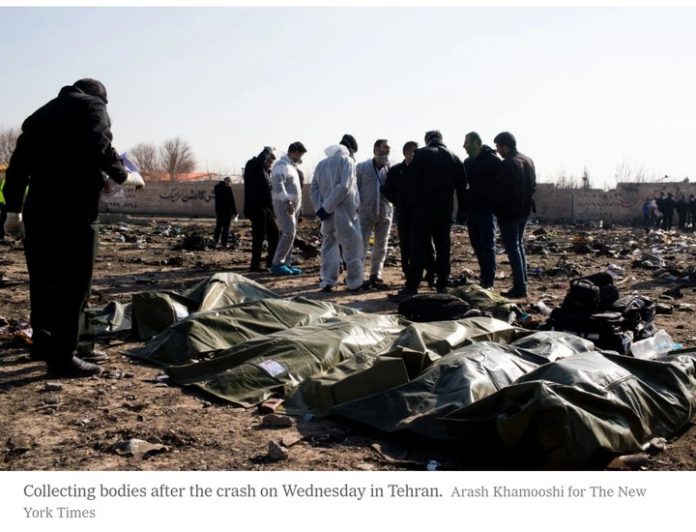
Iran’s military announced early Saturday that it had accidentally shot down a Ukrainian passenger jet, blaming human error because of what it called the plane’s sharp, unexpected turn toward a sensitive military base.

After days of tension since the jet crashed near Tehran on Wednesday, the same day that Iranian missiles struck American bases in Iraq, the admission was a stunning reversal. Iran initially maintained that mechanical issues had brought the Boeing airliner down, killing all 176 people aboard.

“The Islamic Republic of Iran deeply regrets this disastrous mistake,” President Hassan Rouhani said on Twitter soon after the military released its statement. He offered condolences to the victims’ families and said investigations were underway. The military said the person responsible would face legal consequences.

International pressure had been building on Iran to take responsibility. American and allied intelligence assessments had already concluded that Iranian missiles brought down the plane, Ukraine International Airlines Flight 752, most likely by accident, amid the heightened tensions between the United States and Iran.

“The little credibility that the Islamic Republic had among its supporters suffered a major blow tonight,” said Rouzbeh MirEmbrahim, an independent Iran analyst in New York and a consultant with the United Nations. “This tragedy undermines the image Iran has cultivated as a military power and weakened it significantly both regionally and internationally.”

On social media, Iranians began expressing anger toward the military soon after the announcement, many of them using the term “harshest revenge,” which officials had repeatedly promised in the wake of the American drone strike that killed Maj. Gen. Qassim Suleimani, a powerful Revolutionary Guards commander, last week.

“They were supposed to take their harsh revenge against America, not the people,” wrote Mojtaba Fathi, a journalist.

The Iranian military’s statement said the plane “took the flying posture and altitude of an enemy target” as it came close to an Islamic Revolutionary Guards Corps base. It said that “under these circumstances, because of human error,” the plane “came under fire.”

The military said it would undertake “major reform in operations of all armed forces” to make sure that such an error never happened again. It said Revolutionary Guards officials had been ordered to appear on state media and give the public a full explanation.

In a statement of his own, Iran’s foreign minister, Mohammad Javad Zarif, tried to place some of the blame on the United States, saying on Twitter that the disaster was “caused by U.S. adventurism.” The military’s statement said there had been information suggesting the United States was “preparing to aerially target sensitive defense and key sites and multiple targets in our country, and this led to even more sensitive defense posture by our antiaircraft units.”

The State Department had no immediate comment late Friday about Iran’s admission of responsibility.

Suspicions that an Iranian missile had brought down the plane were raised immediately after the crash Wednesday morning — just hours after Iran fired missiles at two bases in Iraq housing American forces.

The Iranians asked the National Transportation Safety Board to help with the investigation, and the State Department granted waivers to allow the American agency to help. A senior administration official said Friday that he thought the Iranians wanted American investigators there to keep up the appearance that they did not know what had caused the crash.

The official, who spoke on the condition of anonymity because he was not authorized to discuss these matters publicly, said the Iranian military had poor command and control, and that this was reflected in what had happened with the airplane. Communications among officials and between units are often lacking, he said, and confusion can be the norm. Western analysts often overestimate the capability of parts of the Iranian military, he said.

State television in Iran aired footage that it said showed two flight recorder units recovered from the crash site. Processing their data could take more than a month, and the investigation could take up to two years, Hassan Rezaeifar, the head of the Iranian investigation team, said Friday.

The military announcement came as something of a surprise. As late as Friday night, officials were weighing whether to blame faulty jet equipment in acknowledging that Iranian missiles brought down the jet, according to four Iranians familiar with the deliberations.

Until Saturday, Ukraine’s main intelligence agency, known as the S.B.U., said only that it had narrowed the cause of the crash to a missile strike or a terrorist act and that it could not confirm Western intelligence that an Iranian missile system was likely to blame.

An Iranian report released on Thursday said that the plane, bound for the Ukrainian capital, Kyiv, was in flames before it hit the ground but sent no distress signal.

When Iran began firing missiles early on Wednesday in retaliation for the killing of General Suleimani by the United States in Baghdad, international airlines rerouted flights away from Iran, and the Federal Aviation Administration barred American carriers from the airspace in the region.

After the crash, experts raised questions about why the Iranian authorities had not stopped flights in and out of Tehran.

In Iran, a debate over how much blame the government bears threatened to destroy the national solidarity that followed the country’s conflict with the United States. Many Iranians said that their anger over the lack of accountability at the highest levels of government had quickly returned.

On Friday, Secretary of State Mike Pompeo said that the United States and its allies had intelligence showing that the passenger jet had been shot down. He was the first American official to publicly confirm the intelligence assessments.

Prime Minister Justin Trudeau of Canada, citing a preliminary review of the evidence, called for a full investigation “to be convinced beyond all doubt.” The jetliner was carrying 57 Canadians among its 176 passengers and crew.

“We recognize that this may have been done accidentally,” Mr. Trudeau said at a news conference in Ottawa. “The evidence suggests very clearly a possible and probable cause for the crash.”

President Volodymyr Zelensky of Ukraine made clear on Friday that Western governments had not initially shared the evidence underpinning their assessments that Iran had brought down the Ukrainian jet, though later a spokeswoman said that American officials had handed over more information.

Ukrainian officials also analyzed the plane’s flight pattern on Friday and determined it had stayed within the normal corridor for flights out of Tehran’s Imam Khomeini International Airport, Ukraine’s foreign minister, Vadym Prystaiko, said at a news conference.

“Our goal is to ascertain the undeniable truth,” Mr. Zelensky said in a statement on Friday. “We believe this is the responsibility of the whole international community before the families of the dead and the memory of the victims of the catastrophe.”
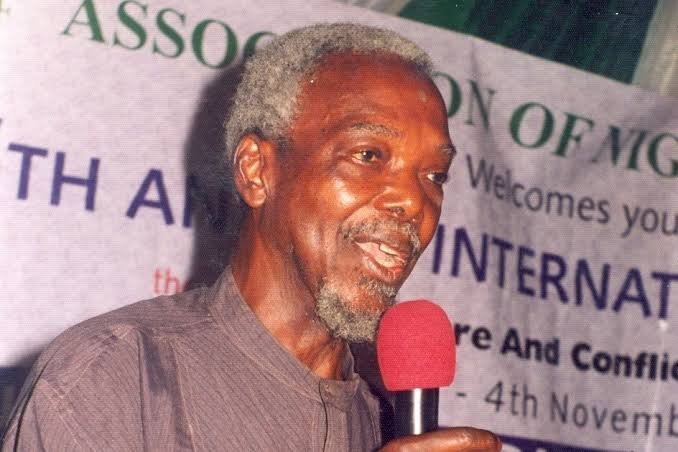

SO SAD: Nigerian Author, Chukuwuemeka Ike, Is Dead

SO SAD: Nigerian Author, Chukuwuemeka Ike, Is Dead

Chukwuemeka Ike, one of Nigeria’s most read novelists, has died.

Ike died on Thursday in Anambra State at the age of 88.

The writer achieved acclaim for his works such as Toads for Supper, his first work published in 1965, The Naked Gods (1970), The Potter’s Wheel (1973), Sunset at Dawn (1976), Expo ’77 (1980), The Bottled Leopard (1985), Our Children Are Coming (1990) among others.

He served as an academic in various roles including as a registrar at the University of Nigeria, Nsukka, and a visiting professor at the University of Jos.

He also served as the registrar of the West African Examination Council, the first Nigerian to hold that position.

Until his death, he was the traditional ruler of Ndikelionwu community in Orumba, Anambra, a position he held since 2008.

EFCC Finally Opens Up On Detention Of Shehu Sani

EFCC Finally Opens Up On Detention Of Shehu Sani

The Economic and Financial Crimes Commission has spoken up on the detention of ex-lawmaker, Senator Shehu Sani.

Sani is being detained for allegedly obtaining $25,000 from an auto dealer, Alhaji Sani Dauda, to bribe EFCC Chairman, Ibrahim Magu, in order to protect him from an investigation by the agency.

The anti-graft agency, in a statement signed by its acting spokesperson, Tony Orilade, said the senator is being treated well and he is detained in a very decent environment, adding that Sani has a case to answer.

“Invariably, claims in some quarters of the breach of his fundamental human rights are merely in the imagination of the purveyors of such claims.

“Let it be stated clearly that Senator Shehu Sani has questions to answer as regards his alleged involvement in name-dropping, and particularly that he obtained $25,000 from Alhaji Sani Dauda, the ASD Motors boss, in order to help shield him from investigations being carried out by the EFCC.

“For certain people to brazenly come out to defend a suspect being probed for a serious offence like the one committed by Sani shows that they are not really conversant with his offence.

“It is unfortunate that certain people are ready to do anything to support evil for pecuniary gains.”

#IranVSAmerica: Iran threatens to bomb Israel and Dubai if the US retaliates over its missile strike

#IranVSAmerica: Iran threatens to bomb Israel and Dubai if the US retaliates over its missile strike

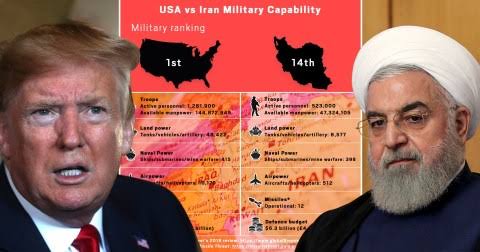
The tension in the Middle East remains and may escalate as Iran has threatened to hit Israel and Dubai with bomb attacks if President Donald Trump of the United States carries out any retaliatory attack.

Recall that Iran had earlier struck the military bases housing the US forces in Iraq with ballistic missiles in what it called revenge for the US airstrike that killed its top military commander, Qassem Soleimani.

After the missile attack, which allegedly killed 80 “American terrorists”, according to Iran’s local media, the country’s Revolutionary Guard warned the US and its allies against further retaliation, Daily Mail reports, citing a statement published by Iran’s state-run IRNA news agency.

“We are warning all American allies, who gave their bases to its terrorist army, that any territory that is the starting point of aggressive acts against Iran will be targeted,” the statement reads partly.

President Trump, while delivering an official statement reacting to Iran’s retaliatory attack on military bases housing the US troops in Iraq, said no Americans or Iraqis were harmed, adding that the bases had minimal damage.

Trump also said Iran “appeared to be standing down” just as he said that the US is ready to embrace peace. He, however, vowed to impose new sanctions on Iran as a result of the retaliatory attack.

The US president said the “powerful sanctions” will remain until Iran changes its behaviour.

“The United States will immediately impose additional punishing economic sanctions on the Iranian regime,” President Trump was quoted to have said.

US vs Iran: House Speaker Pelosi, Democrats move against Trump

US vs Iran: House Speaker Pelosi, Democrats move against Trump

The United States House Speaker, Nancy Pelosi, on Wednesday, announced that House Democrats will take up legislation to restrain President Donald Trump’s military actions amid hostilities with Iran.

“Today, to honor our duty to keep the American people safe, the House will move forward with a War Powers Resolution to limit the President’s military actions regarding Iran,” Pelosi said in a statement Wednesday.

Pelosi stressed that Trump “has made it clear that he does not have a coherent strategy to keep the American people safe, achieve de-escalation with Iran and ensure stability in the region.

“Members of Congress have serious, urgent concerns about the administration’s decision to engage in hostilities against Iran and about its lack of strategy,” Pelosi wrote.

Her announcement Secretary of State Mike Pompeo, Defense Secretary Mark Esper, Chairman of the Joint Chiefs of Staff Mark Milley, CIA Director Gina Haspel and acting Director of National Intelligence Joseph Maguire, briefed members from both parties about the situation

Meanwhile, Turkey and Russia have opposed a fresh war with a call on U.S. and Iran to prioritise diplomacy and de-escalate tensions.

Their joint call was issued in a statement after a meeting between Presidents Tayyip Erdogan and Vladimir Putin in Istanbul.

Iranian forces had fired missiles at military bases housing U.S. troops in Iraq, in retaliation for the U.S. killing of an Iranian general, Qasem Soleimani.

Why Nigerian Cold Is Deadlier Than Australian Fires

Why Nigerian Cold Is Deadlier Than Australian Fires

It is happening! For those that are still waiting for 2030 to start seeing accelerated impacts of climate change, they have the movie now, early release. Nigeria has swapped its climate with Europe, it seems. While Norway just recorded its hottest January at 19 degrees Celsius, we are swathed by a very cold new year, going as low as 7 degrees in a place like Jos, Plateau State.

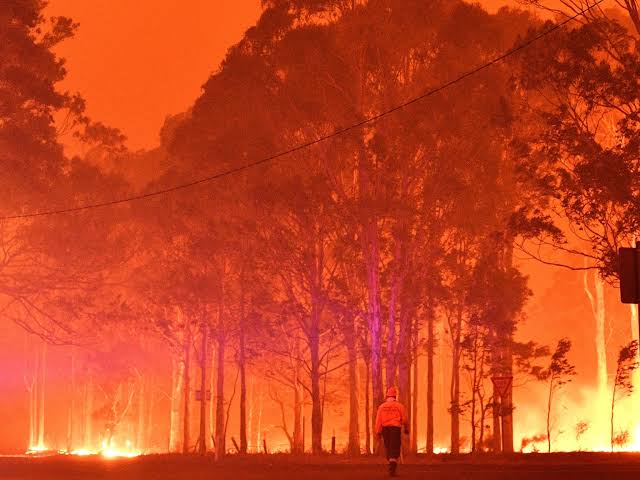
Australia is groaning under the heavy thrashing of what used to be a historically seasonal bushfire. This time around, the fire is something else. It has eaten up more than 5 million hectares of land, with thousands of living quarters, and dozens of human lives obliterated, as it makes its ferocious sortie across the Southern part of the country.

The fire is as high as 200 feet, with heat so intense that all flora and fauna are turned to ashes in its wake. Half a billion animals are already dead, with the country’s famous koala on the verge of a fire-induced extinction. The smoke from the moving inferno has almost totally blotted out the sky even in safe zones like the big city and the capital, Sidney and Canberra. The whole scene is so apocalyptic that concerned global citizens have opened a relief fund-raiser for the country’s most impacted.

On the face of it, there is nothing to compare between the ecological disaster in Australia and the cold wave we are presently witnessing in some parts of Nigeria. The Australian bushfire is way too disastrous even when weighed against the world’s worst forest fires. To fully grasp the damage, we could compare it with the Amazon forest fire and the California fire of 2019. Amazon burnt about 900,000 hectares of forest land; while California had about 1.8 million hectares scorched. The Australian fire has blazed over more five million hectares, and still burning.

Nevertheless, when viewed from a long-term perspective, the Nigerian cold is more lethal than the Australian fire. To start with, what we are witnessing in Nigeria today is quite strange, unlike in Australia where the country is used to the annual bushfires. They have been experiencing it right from medieval times, thousands of years ago, which is why some indigenous Australians are still blaming their government for not working with them to use the methods their ancestors adopted to survive the perennial blaze. To be sure, the ecosystem of the country has so evolved with bushfires to the extent that some plant species need the fire incidents to survive; while others have developed natural fire survival characteristics like epicormic shoots.

Moreover, Australia is a developed country with the ultra-modern infrastructure to fight fire, and the resources to help its citizens relocate to safer grounds and adapt to ecological tragedies. In addition, the citizens on their own can boast of requisite capacity to understand issues relating to weather and climate. They also enjoy unmitigated access to information, and are equipped with the ability to interpret early warning signals.

But in Nigeria, we are still struggling to take care of bare necessities. And because we are not used to it by any standard, the cold caught us unprepared. We are used to our hot climate, and have over the years snugly adapted to it. The clothes we put on, the houses we live in, the roads we move on, indeed everything about us, is about surviving in a hot climate. Our politics, religion, and recreation are all planned around living the outdoor life under a hot sky. Religious prayers (Islamic) are done in the open mosques; evangelistic crusades (Christian) are conducted round the year with the only consideration being the rains. The average Almajiri in the North is dressed scantily, barefooted and with no care in the world about the elements.

But this very season saw us scampering for blankets, for heaters, and for trench coats. It came without warning. The Almajiri children cut a pathetic picture of the climate impact, as they are seen trying to cover themselves with every scrap of clothing they can find. The social media was flooded with pictures of street children curled in the foetal position, trying to keep warm in Kano, Katsina, Abuja and Maiduguri. Some Nigerians are already raising funds and gathering used clothes to send over to these children.

Our situation is worse than Australia because we are a country without a database. Unlike Australia which has a real-time head count of its citizens, and even animals, we cannot know how many Nigerians are harmed by this cold wave. Who will carry out a survey to know the animal and plant species that are destroyed? When Nigerians are dying daily in the hands of Boko Haram and herdsmen, who will now want to differentiate between the ones that cold killed and those that bullets mowed down?

It is this sense of “who-cares?” that makes our own ecological situation more dangerous than Australia’s. Sadly, the set-up will make it difficult to structure a nationwide adaptation strategy for climate change. Where there is no information, people grab at straws, and repeat mistakes of the past.

Secondly, Nigeria is also going to suffer from the immediate and long term effects of the source of energy many of her citizens have turned to. This week, there is a media report that two friends died in Jos from inhaling charcoal fumes which they kindled to fight the cold. There are also other similar cases. The situation is that because we are not used to the extreme cold weather, many families do not have home-heating equipment.

From my personal study, the cheapest form of heating many poor households have embraced is charcoal. Gas and kerosene are expensive and cannot be left to burn throughout the night. So, many have resorted to lighting charcoal stove, and letting the hot embers glow throughout the night, thereby giving the home the needed warmth. This trend is a ticking time bomb. Many do not know that in a house without proper ventilation, it is equivalent to suicide. The carbon monoxide from charcoal combustion is as deadly as the exhaust fume from an I-pass-my-neighbour generator (a certified killer when left inside a house).

With seven in 10 Nigerian households using wood in traditional three stone or metal tripod stoves, our country has the largest number of households without access to clean cooking in Africa. When this cooking system is converted to compulsory heating method, the result will be a wholesale slow-murder. According to the WHO, smoke from the kitchen results to about 93,000 deaths in Nigeria annually. After malaria and HIV/AIDS, this is the third highest killer of mostly women and children in Nigeria. With the cold weather, smoke will no longer be restricted to the kitchen, thereby doubling the risk.

Therefore, instead of shedding vicarious tears for the people of Australia, we should start weeping for ourselves. Even so, let this year’s peculiar harmattan wake us from our slumber. Climate change is real, and it is right here with us. Failure to adapt will prove disastrous in the near future. Our engineers should start thinking of climate-friendly designs, for our houses, our roads and our bridges. Let our government start thinking deep, not only on how to adapt to climate change, but also how to join the international community to mitigate it. Our educators should tweak our school curriculum: we and our children need to know that, environmentally speaking, tomorrow is unpredictable.

By Greg Odogwu

$24,000 Extortion: EFCC Operatives Storm Shehu Sani’s House In Search Of Evidence

$24,000 Extortion: EFCC Operatives Storm Shehu Sani's House In Search Of Evidence

Operatives of the Economic and Financial Crimes Commission on Wednesday searched two houses and an office of the embattled Senator Shehu Sani in Abuja.

The action, it was gathered, was part of the ongoing probe of the former lawmaker for alleged extortion of $24,000 from the Chairman of ASD Motors, Alhaji Sani Dauda.

A senior official said the commission obtained a search warrant from a Chief Magistrate’s Court before carrying out the searches.

“We followed due process by obtaining a search warrant from a Chief Magistrate’s Court and we ensured that the suspect was present during the exercise.

“So far, nothing was found against him during the operation and the former senator has been returned to our custody,” the source explained.

It was further gathered that the EFCC took evidence from the wife of the businessman, who confirmed that Sani met with her husband in their home.

Dauda, also in his petition to the EFCC, had claimed that the former senator demanded N4m from him to give to the Chief Justice of Nigeria, Justice Tanko Muhammad, and other four judges to influence some pending cases in court.

But the CJN on Sunday had denied links with Shehu Sani.

Sani, a fiery critic of the government, has consistently maintained his innocence.

Meanwhile, the People’s Democratic Party has said the arrest and incarceratiom of Sani who represented Kaduna Central Senatorial District between 2015 and 2019, are unprofessional.

The PDP Deputy National Publicity Secretary, Mr Diran Odeyemi, who said this in an interview with one of our correspondents, described as regrettable the continued detention of Sani without arraignment.

He said this suggested that the EFCC had yet to finalise its investigation.

He urged the commission to accord Sani all his rights under the law, noting that the senator remained an accused person and should be treated as an innocent person until otherwise proved.

Odeyemi said, “Senator Shehu Sani ought to be accorded all the rights availed him by our law such as immediate arraignment to avail him of the opportunity to state his case and establish his innocence.

“A professional body such as the EFCC ought to stop placing the cart before the horse. The accepted standard for such operations is to investigate first, then prosecute with the materials gathered over time.”

Government Moves To Introduce 4-Day Week, 6 Hours Working Days

Government Moves To Introduce 4-Day Week, 6 Hours Working Days

Finland’s new Prime Minister has called for the introduction of a flexible working schedule in the country that would involve a four-day-week and six-hour working day.

Sanna Marin, 34, who is the second youngest head of government in the world said it would allow workers to spend more time with their families.

She said: ‘I believe people deserve to spend more time with their families, loved ones, hobbies and other aspects of life, such as culture.

‘This could be the next step for us in working life.’

Before Marin became Prime Minister she held a position as the Minister of Transport for Finland.

While in office in that position, Marin advocated for shorter work weeks to improve employee rapport and productivity.

Iranian Parliament Passes Bill Designating Terrorist Status To All American Forces

Iranian Parliament Passes Bill Designating Terrorist Status To All American Forces
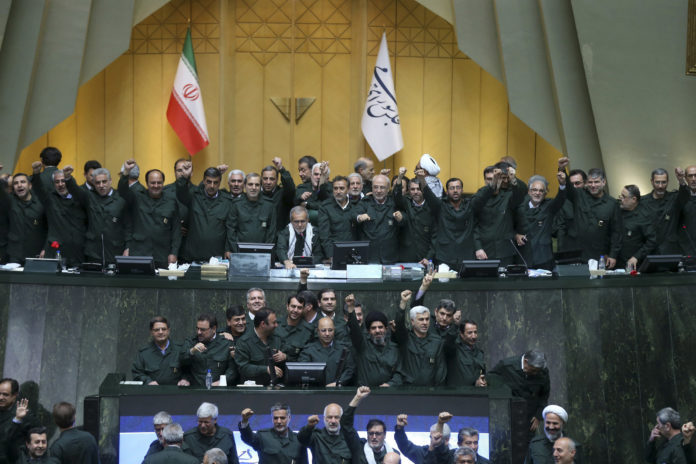
Wearing the uniform of the Iranian Revolutionary Guard, lawmakers chant slogans during an open session of parliament in Tehran, Iran, Tuesday, April 9, 2019. Chanting "Death to America," Iranian lawmakers convened an open session of parliament Tuesday following the White House's decision to designate Iran's elite paramilitary Revolutionary Guard a foreign terrorist organization. (AP Photo/Hamidreza Rahel/ICANA)

Iran’s parliament passed a bill on Tuesday designating all United States forces ‘terrorists’ over the killing of a top Iranian military commander in an America airstrike last week, according to Daily Mail UK.

Qasem Soleimani, head of the Revolutionary Guards’ foreign operations arm, was killed in a US drone strike outside Baghdad airport, Iraq, on Friday, ratcheting up tensions between the arch-foes.

Under the newly adopted bill, all US forces and employees of the Pentagon and affiliated organisations, agents and commanders and those who ordered the ‘martyrdom’ of Soleimani were designated as terrorists.

“Any aid to these forces, including military, intelligence, financial, technical, service or logistical, will be considered as co-operation in a terrorist act,” the Iranian parliament said.

Lawmakers also voted to bolster by £170m the coffers of the Quds Force – the foreign operations arm of Iran’s Revolutionary Guards that was headed by Soleimani.

The bill was an amended version of a law adopted in April last year that declared the United States a ‘state sponsor of terrorism’ and its forces in the region ‘terror groups’.

Iran’s top security body, the Supreme National Security Council, said that the blacklisting came after the US designated Iran’s Revolutionary Guards a ‘terrorist organisation’.

US vs Iran: NATO Finally Takes A Position

US vs Iran: NATO Finally Takes A Position

All members of the Atlantic alliance, otherwise known as the North Atlantic Treaty Organization, NATO, have vowed to stand behind the United States in the Middle East after America briefed NATO on its drone attack that killed Iranian military commander, Qassem Soleimani.

This decision was made public on Monday by NATO Secretary-General, Jens Stoltenberg, according to Al Jazeera.

Stoltenberg spoke after a NATO meeting on Iran and Iraq in which the United States briefed its allies about last Friday’s drone attack.

He warned Iran to refrain from further violence and provocations and also called for a de-escalation of tensions.

“We are united in condemning Iran’s support of a variety of different terrorist groups,” Stoltenberg said.

“At the meeting today, allies called for restraint and de-escalation. A new conflict would be in no one’s interest. So, Iran must refrain from further violence and provocations.”

Two diplomats present confirmed that the two-hour meeting at NATO headquarters went smoothly.

They said that no envoy challenged US State Department and Department of Defense officials, who briefed via video conference, over the merits of Friday’s drone raid.

There was also no discussion or criticism of Trump’s list of targets, that include cultural sites if Iran were to retaliate with attacks on Americans or US assets, the diplomats said.

The meeting, which took place on a day of a huge outpouring of national grief for Soleimani in Iran, centred mainly on NATO’s decision to suspend its training mission in Iraq, after an Iraqi parliamentary resolution called on foreign troops to leave.

While there was concern that the killing of Iran’s second-most powerful man could trigger a war in the Middle East, France, Germany and others said they wanted the Iraq mission to continue.

“It would send the wrong signal if we withdraw,” one NATO diplomat said.

Following Soleimani’s death, NATO had suspended training missions in Iraq. NATO’s spokesman had said the decision was reached following the US killing of Soleimani.