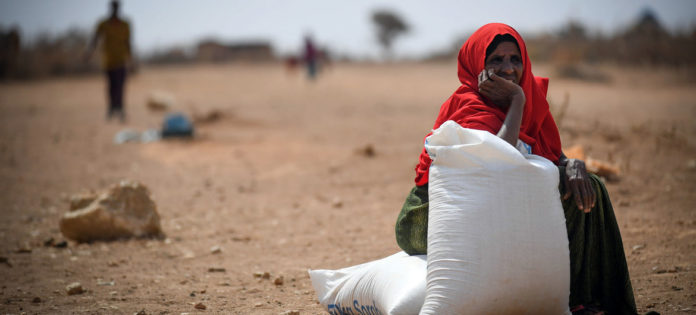
The world is facing multiple famines of “biblical proportions” in just a matter of months, the UN has said, warning that the coronavirus pandemic will push an additional 130 million people to the brink of starvation.
CNN reports that the executive director of the World Food Programme, David Beasley, said famines could take hold in “about three dozen countries” in a worst-case scenario in a stark address on Tuesday.
He cited conflict, an economic recession, a decline in aid and a collapse in oil prices as factors likely to lead to vast food shortages, and urged swift action to avert disaster.
“While dealing with a COVID-19 pandemic, we are also on the brink of a hunger pandemic. There is also a real danger that more people could potentially die from the economic impact of COVID-19 than from the virus itself,” David Beasley told the UN’s security council.
The WFP had already warned that 2020 would be a devastating year for numerous countries ravaged by poverty or war, with 135 million people facing crisis levels of hunger or worse. Their updated projections nearly double that number.
Ten countries were singled out as particularly at-risk, after housing the worst food crises last year; Yemen, the Democratic Republic of Congo, Afghanistan, Venezuela, Ethiopia, South Sudan, Sudan, Syria, Nigeria and Haiti.
Most of those countries have so far been spared the worst of the coronavirus pandemic, with the epicentre moving from China to Europe to North America, but the state of their healthcare institutions means even relatively small outbreaks could be devastating.
The Nigeria Labour Congress has called on the Federal Government not to extend the lockdown order on COVID-19, warning that doing so might cause social unrest in the affected states and the Federal Capital Territory.
In a letter addressed to the chairman of the Presidential Task Force on COVID-19 and dater April 14, 2020, which was signed by the NLC president, Ayuba Wabba, the union also frowned at the method employed by the FG in the distribution of the palliative measure, calling for the expansion of the initiative to all Nigerians affected by the pandemic.
The union said, “While we understand the public health imperatives for extending the lockdown in some parts of the country, it is also very important to underscore the fact that the states currently under total lockdown are the economic and administrative nerve centres of Nigeria.
“This is very dicey. As much as it is important to keep many Nigerians from dying in the hands of coronavirus, loss of income and the accompanying destitution can also be a pathfinder for numerous other sicknesses and deaths. This is the time to play the balancing game.
“The truth is that our economy might relapse into prolonged coma if the current lockdown in the nation’s nerve centres goes beyond the current extension.
“There were widespread acts of civil disobedience, inducement of law enforcement agents to gain passes and even various forms of violent crimes.
“No one is sure how long this dam would hold. We fear that the situation will get out of hand if the lockdown exceeds one month.
“While we commend government for being proactive, we opine that the stimulus package would be best served through consultation with social partners.
“Labour and private sector employers have a good understanding of industries where jobs and production are in most danger.”
Seventy-two Nigerians awaiting evacuation in Guangzhou city, Guangdong Province of China have tested positive for the coronavirus disease.
The results of the tests conducted on 56 Nigerians, which were released on Tuesday, indicated that the affected individuals were asymptomatic, raising concern that they might have infected other people.
It was learnt that that 16 Nigerians had earlier tested positive for the virus, bringing the total number to 72.
65 contacts being traced
The Chinese authorities explained that 65 persons who had contact with the positive cases were being traced.
The Foreign Affairs Office of Guangzhou Municipal People’s Government disclosed this in a note verbale (diplomatic correspondence) to the Nigerian Consulate in Guangzhou dated April 22, 2020.
The note, which was also copied to the Nigerian Embassy in China, as well as the Chinese Embassy in Nigeria, indicated that 16 Nigerians had earlier been confirmed positive.
The correspondence sighted by our correspondent on Wednesday read in part, “According to the data by the Guangzhou Municipal Health Commission on April 21, there are currently 16 confirmed cases and 56 positive test cases among Nigerian citizens in Guangzhou, as well as 65 cases of contact.
“We invite the Consulate General of the Federal Republic of Nigeria in Guangzhou to supervise Nigerian citizens in Guangzhou so they can abide by the law of the People’s Republic of China on the prevention and control of infectious diseases.”
“Asian citizens understand Guangzhou’s epidemic prevention and control; work and cooperate with China’s political support.”
The note verbal was written in Mandarin and translated into English using Google Translate.
The 56 citizens are part of the over 2,000 Nigerians from China, the United States, United Kingdom, the United Arab Emirates and other countries, who had indicated interest in returning to Nigeria on account of the coronavirus pandemic.
The Federal Government had announced plans to evacuate Nigerians in China first following complaints of racism and stigmatisation against them by Chinese officials in Guangzhou.
This was sequel to a viral video showing Nigerians being evicted from their hotels and apartments.
The Minister of Foreign Affairs, Geoffrey Onyeama, had summoned the Chinese Ambassador to Nigeria, Dr Zhou Pingjian, twice last week to register Nigeria’s displeasure over the incident.
The PUNCH also learnt that the acting Nigerian Consul-General, Mr Razaq Lawal, had gone on self-isolation having mingled with the affected Nigerians during their protest against the Chinese authorities.
Lawal could not be reached for comment on Wednesday as his mobile line was unavailable.
4,553 Africans undergoing tests
Our correspondent further gathered that 111 other African nationals also tested positive for COVID-19 during the ongoing tests of 4,553 Africans in Guangzhou city.
Apart from the Africans, reports said that a total of 30,768 foreigners were currently staying in the city, mainly from South Korea (4,600), Japan (2,987), the US, (2,724), Canada (1,832) and Russia (1,422).
This is aside 50,000 others who had yet to return to Guangzhou due to the coronavirus outbreak.
The number of non-Africans who tested positive for the virus could not be immediately ascertained.
However, the Ministry of Foreign Affairs spokesman, Ferdinand Nwoye, said he was not aware of the diplomatic correspondence from the Chinese authorities.
He promised to find out from the Nigerian consulate in Guangzhou.
After one hour, Nwoye said, “Lawal did not respond to my calls; maybe it’s because of the time difference. I will provide an update tomorrow (today).”
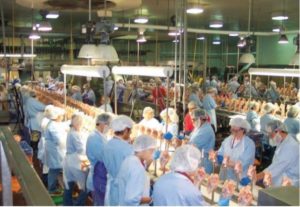
A rash of coronavirus outbreaks at dozens of meat packing plants across the nation is far more extensive than previously thought, according to an exclusive review of cases by USA TODAY and the Midwest Center for Investigative Reporting.
And it could get worse. More than 150 of America’s largest meat processing plants operate in counties where the rate of coronavirus infection is already among the nation’s highest, based on the media outlets’ analysis of slaughterhouse locations and county-level COVID-19 infection rates.
These facilities represent more than 1 in 3 of the nation’s biggest beef, pork and poultry processing plants. Rates of infection around these plants are higher than those of 75% of other U.S. counties, the analysis found.
And while experts say the industry has thus far maintained sufficient production despite infections in at least 2,200 workers in 48 plants, there are fears that the number of cases could continue to rise and that meat packing plants will become the next disaster zones.
“Initially our concern was long-term care facilities”. said Gary Anthone, Nebraska’s chief medical officer, in a Facebook Live video on Sunday. “If there’s one thing that might keep me up at night, it’s the meat processing plants and the manufacturing plants.”
As companies scramble to contain the outbreaks by closing more than a dozen U.S. plants so far — including a Smithfield pork plant in South Dakota that handles 5% of U.S. pork production — the crisis has raised the specter of mass meat shortages.
But experts say there’s little risk of a dwindling protein supply because, given the choice between worker safety and keeping meat on grocery shelves, the nation’s slaughterhouses will choose to produce food.
“If this goes on for a long time, there is a reality of a shortage,” said Joshua Specht, an assistant professor of history at the University of Notre Dame who studies the meat industry. “The politics of this could play out that they reopen at enormous risks to workers, rather than face an actual shortage… I wouldn’t bet against that.”
The meat packing industry was already notorious for poor working conditions even before the coronavirus pandemic. Meat and poultry employees have among the highest illness rates of all manufacturing employees and are less likely to report injuries and illness than any other type of worker, federal watchdog reports have found.
And the plants have been called out numerous times for refusing to let their employees use the bathroom, even to wash their hands — one of the biggest ways to reduce the spread of the coronavirus.
Amplifying the danger is that, in many places, meat processing companies are largely on their own to ensure an outbreak doesn’t spread across their factory floors.
Factory workers, unions, and even managers say the federal government — including the U.S. Centers for Disease Control and Prevention and the Occupational Safety and Health Administration — has done little more than issue non-enforceable guidance. On its website, for example, the CDC has released safety guidelines for critical workers and businesses, which primarily promote common sense measures of sanitization and personal distancing.
State health departments have also taken a backseat role in all but a few places.
A bill introduced in the U.S. House of Representatives on Tuesday would require OSHA to issue enforceable safety standards to protect workers from COVID-19. A day earlier, 32 Democratic and two independent U.S. senators sent their concerns in a letter to the Trump administration, asking what was being done to protect food workers and the supply chain.
“Breakdowns in the food supply chain could have significant economic impacts for both consumers and agricultural producers,” the letter read. “It is also imperative that precautions are taken to ensure the stability and safety of our food supply.”
But rather than increase safety and oversight, the U.S. Department of Agriculture relaxed it in the midst of the pandemic. Just this month, the agency allowed 15 poultry plants to exceed federal limits on how many birds workers can process in a minute.
That’s more than in any previous month in the waiver program’s history. Several worker protection agencies have found that increasing line speeds causes more injuries.
And it could lead to more infections, the United Food and Commercial Workers International Union said in a statement: “These waivers guarantee that workers are more crowded along a meatpacking line and more workers are put at risk of either catching or spreading the virus.”
Most of the plants that received waivers are owned by Tyson Foods and Wayne Farms, according to a department record. One of them — a Wayne Farms facility in Albertville, Alabama — disclosed this week that 75 of its workers tested positive and one died. The plant will slow production to improve safety, it told AL.com.
“This is so dangerous for workers and the public,” Debbie Berkowitz, who spent six years as chief of staff and senior policy advisor at OSHA and is now director of the National Employment Law Project’s worker health and safety program.
Berkowitz said she’s never seen anything like the recent flurry of approvals. “They did this behind closed doors with no input by the public and with no consideration to the impact on food or workers’ safety.”
A spokesperson with the Food Safety and Inspection Service, the USDA agency that grants the waivers, said the agency has stopped accepting additional waiver requests.
Companies say they are taking steps to keep workers safe from outbreaks as they continue to feed the nation.
After the coronavirus sickened nearly 200 workers and killed two at a Tyson plant in Iowa, the company responded by making sweeping safety improvements at all its facilities, said Worth Sparkman, a company spokesperson.
Tyson installed plastic barriers between workers on the lines, allowed more time between shifts and removed chairs in break rooms to keep workers at a safe distance, Sparkman said.
“At all locations we’re working to educate our team members and reinforce the importance of social distancing, wearing protective facial coverings and frequent hand washing outside of work as well,” he said. “This is especially important in locations where there is community spread occurring.”
Tyson reopened its Iowa plant on Tuesday after having closed it April 6 to contain the outbreak.
But meat processing workers elsewhere remain fearful for their safety.
A 50-year-old employee named John at Smithfield’s Sioux Fall plant told USA TODAY that there’s no way to stay six feet apart from coworkers on the production line, in the cafeteria or in the locker room. The employee asked to use only his first name for fear that speaking out would cost him his job.
As people around him at the plant became infected with COVID-19, John said, he started feeling sick and went to get his temperature checked, thinking he needed to leave. But he was stopped, he said.
“They told me I was OK and I needed to work,” said John, who has worked at the plant for a decade. “I said nope, and I came home.”
In early April, he learned he had tested positive for COVID-19.
“Those people don’t care about us,” John said. “If you die, they’ll just replace you tomorrow.”
Plants close, production plummets
By the time it closed its doors on April 12, Smithfield’s Sioux Falls plant had more than 200 confirmed cases of COVID-19. In the days since then, the case count has swelled to nearly 900, including workers and those they’ve interacted with, making it the biggest single cluster of COVID-19 infections in the nation.
A car sports a sign calling for a safe and healthy workplace outside of Smithfield Foods, Inc. in Sioux Falls on April 9. The plant reopened this week after being closed during a coronavirus outbreak among workers.
CDC employees are touring the plant to develop a reopening plan expected to be released this week.
But it’s not just Smithfield. As of Tuesday night, coronavirus infections had spread in at least 48 U.S. meat packing plants, sickening more than 2,200 people and killing 17, USA TODAY and the Midwest Center for Investigative Reporting found. The outbreaks also have prompted the closure of at least 17 facilities, including that of the JBS pork plant in Worthington, Minnesota, on Monday.
The Worthington JBS is among the 153 meat processing plants that USA TODAY and the Midwest Center for Investigative Reporting identified as operating in counties with a high rate of coronavirus. Any rate above one infection per 1,000 people puts a county in the top 25% of U.S. counties reporting COVID-19 infection rates.
Other plants on the list include the Tyson pork-processing facility in Columbus Junction, Iowa, where 186 workers fell ill and two died after COVID-19 swept through the factory.
The Tyson plant is located in Louisa County, where 19 out of every 1,000 people have tested positive for the novel coronavirus. It’s the highest rate of any county with a large meat processor.
A Nigerian gunman has been arrested in the UK after he live-streamed himself on Instagram firing shots from a balcony while rapping to Tupac’s ‘Hit ‘Em Up’.
The incident occurred on Wednesday morning April 22, at a flat on Dock Head Road, Chatham.
The man identified as Flexing Mike on Instagram, who claims to be the CEO of Truth or Dare records sent panicked shoppers in Kent running for their lives as he fired around 50 shots before armed police rushed to the scene and arrested him.
The man who is in his 30s filmed himself shouting out Tupac lyrics while he pulled the trigger, saying: “I see them, they run, dem dey craze?”
They don’t wanna be us, dem dey craze, call the f***ing cops.” He also flaunted several of his “weapons” to the camera in a string of bizarre Instagram videos.
As Ramadan kicks off tomorrow, the Nigerian Supreme Council for Islamic Affairs, NSCIA, under the leadership of the Sultan of Sokoto, Alhaji Muhammad Sa’ad Abubakar, has ordered the suspension of Quranic lectures and congregational prayers in mosques to contain the spread of coronavirus in the country.
The directive came barely 24 hours after the Jama’atu Nasril Islam, JNI, also led by the Sultan, gave a similar directive.
The JNI had in a statement signed by the Secretary-General, Dr. Khalid Abubakar Aliyu, urged Muslims to observe the sit-at-home order during Ramadan and use the internet for sermons and Quranic recitations.
He said despite the challenges of physical and social distancing, Tafsir and other religious teachings could continue, using various information technology (IT) platforms, such as Facebook, Skype, YouTube, Zoom, etc., to live-stream preaching sessions.
He had said: “Reliable information and communication technology (ICT) professionals could be consulted for proper guidance. It is on this basis that the JNI calls on the Ulama to, as usual, make the fear of Allah their watchword, bearing in mind that knowledge is a trust from Allah and shall be accounted for on the day of reckoning, thus it should be handled with the utmost caution it deserves.
“Muslims should fervently pray for an end to the myriad challenges bedeviling the world and Nigeria in particular, and to also seek Allah’s interventions for better well-being and prosperity. While we also pray for our leaders to be well-guided and foresighted, they should equally fear Allah and remember that they will one day account for their respective stewardship; as such, they should as a matter of patriotism ensure that they promote equal distribution of resources and maintain peace in all their respective utterances and actions.”
Reinforcing this yesterday, the NSCIA in a statement signed by the Director of Administration, Mr Yusuf Nwoha, in Abuja, said the decision to give the suspension order was reached at the end of stakeholders engagement of the General Purpose Committee meeting of the council at the National Mosque, Abuja.
He said: “The General Purpose Committee of the NSCIA under the leadership of its President-General, His Eminence, Alhaji Muhammad Sa’ad Abubakar, in view of the current COVID-19 pandemic, considered the reports of the Fatwa Committee and the Ad-hoc Committee on COVID-19 and observed that scholars of Islam throughout the world are unanimous that the Prophet of Islam warned against the spread of contagious diseases and urged Muslims to prevent the spread.
“The closure of the two Holy Mosques in the Kingdom of Saudi-Arabia for both congregational worship and social functions, which is applauded by Islamic scholars throughout the world, is a pointer to its compliance to the Prophetic teachings on the subject matter.’’
He noted that one of the obligatory religious activities, such as the weekly Friday prayers, was suspended as part of measures to prevent the spread of coronavirus among Muslims.
“Jum’ah, as an obligatory religious activity, which is temporarily suspended to prevent the spread of COVID 19 outweighs the performance of any meritorious religious act such as congregational Tarawih and the conduct of Tafsir.
“Consequently, the Council directs that congregational Tarawih in the Mosque and the various Majalis Tafsir (sessions) and I’tikaf during the month of Ramadan of 1441 A.H be suspended.
“Individual scholars and organisations are, therefore, encouraged to employ available means of disseminating information such as radio, television, other virtual facilities, print, social and traditional media for dissemination of Tafsir and other Da’awah activities,” he said.
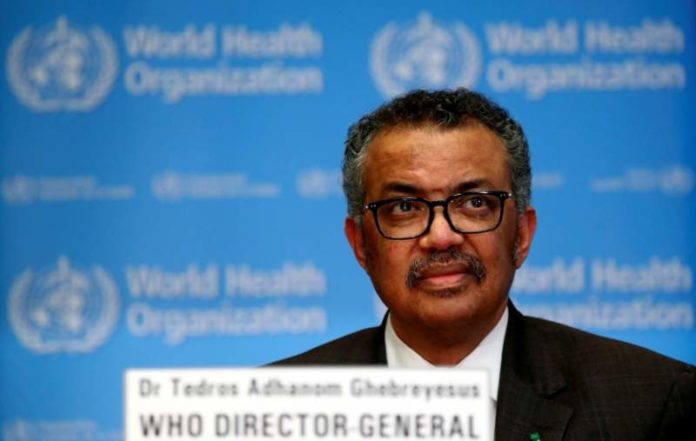
The head of the World Health Organization has warned of worrying upward trends in coronavirus cases in Africa, Central and South America and Eastern Europe.
Tedros Adhanom Ghebreyesus told a video news conference in Geneva that while most of the epidemics in western Europe appeared to be stable or in decline, for many countries the disease was just getting started.
Dr Tedros said some countries which had appeared to do well in the initial stages of the pandemic were now seeing an upsurge in cases.
“Most countries are still in the early stages of their epidemics and some that were affected early in the pandemic are now starting to see a resurgence in cases,” he said.
“Make no mistake, we have a long way to go. This virus will be with us for a long time.”
One of President Muhammadu Buhari’s bodyguards, Warrant Officer Lawal Mato, on Tuesday, passed away.
He died after three years of struggling with diabetes, presidential spokesman, Garba Shehu, announced in a statement.
The President described the officer, who had been working with him for many years before he won the 2015 elections, as “very thorough, trustworthy and dependable soldier who carried out his duties with diligence and focus.’’
He prayed that Allah would ease his passage to paradise and grant his family, government and people of Jigawa State the fortitude to bear the loss.
Warrant Officer Mato was part of a team that former President Umaru Musa Yar’adua restored to President Buhari as personal security and he had been off full duty for three years due to his ailment.
Willy Anumudu, the owner of Globe Motors, is dead.
The Nigerian billionaire was 68 years old.
News of his demise filtered through on Tuesday morning.
It was gathered that he was due to travel to Germany for treatment before his demise.
Media mogul, Dele Momodu, confirmed Anumudu’s demise on his Twitter handle.
He tweeted: “One of Nigeria’s biggest car dealers Willy Anumudu has died! The Chairman of Globe Motors, Victoria Island, suffered some health challenges a few days ago and “was tested for COVID-19 which came out negative”.
“At the time of his death, Willy Anumudu was happily married to his effervescent wife, Nkiru, who sadly was in London when the tragedy occurred in Lagos early this morning. He is survived by four children, Uzoma, Eyinna, Zinna, and Zikky. May his sweet soul Rest in Peace”.
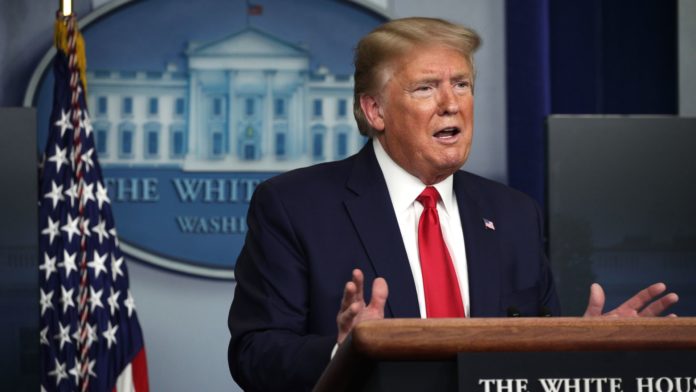
US President Donald Trump said he will sign an executive order to temporarily suspend immigration into the United States, saying he needs to protect American jobs as coronavirus ravages the economy.
The move, announced in a late-night post on Twitter, effectively achieves a long-term Trump policy goal to curb immigration, making use of the health and economic crisis that has swept the country as a result of the pandemic to do so.
“In light of the attack from the Invisible Enemy, as well as the need to protect the jobs of our GREAT American Citizens, I will be signing an Executive Order to temporarily suspend immigration into the United States,”, Trump said on Monday.
In light of the attack from the Invisible Enemy, as well as the need to protect the jobs of our GREAT American Citizens, I will be signing an Executive Order to temporarily suspend immigration into the United States!
— Donald J. Trump (@realDonaldTrump) April 21, 2020
He offered no details as to what immigration programmes might be affected by the order. The White House did not immediately elaborate on Trump’s announcement.
The development is the latest in a string of moves cracking down on immigration as the coronavirus spreads in the United States.
The US has by far the world’s largest number of confirmed coronavirus cases, with more than 42,000 deaths and 774,000 infections on Monday.
In late March, Trump said the US would swiftly return any migrants who attempted to cross into the country from Mexico and Canada. He argued migrants crossing the border threatened to worsen the US’s coronavirus outbreak.
Monday’s decision drew swift condemnation from some Democrats, who accused the president of creating a distraction from what they view as a slow and faulty response to the coronavirus.