
back to top
Saturday, January 24, 2026
advertise with us
Home Blog Page 195

Kashamu’s Death Ends Case In The United States

How USA Falsified Criminal Case Against Buruji Kashamu - Lawyer Breaks Silence
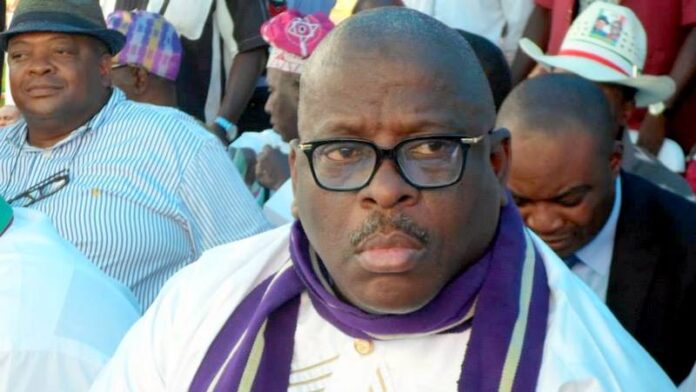
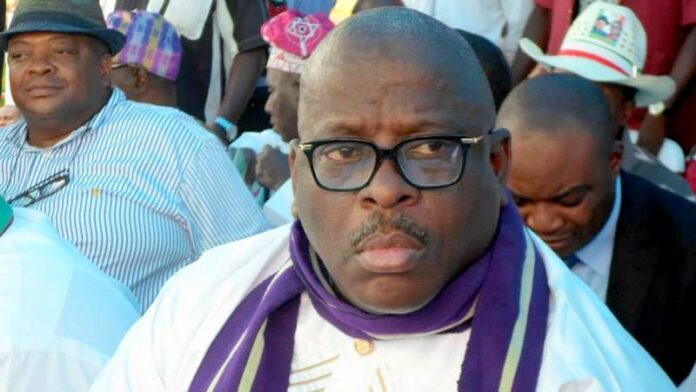
Buruji Kashamu

Buruji Kashamu, until his death had used the last 22 years fighting the plans to extradite him to the United States to face a drug charge filed as Case No. 1:94-cr-00172.

The United States since 1998 had tried to get him to face trial, first by filing two extradition requests against him in the UK. But the moves failed.

The battle continued in Nigeria.

Kashamu, a dual citizen of Nigeria and Benin, was charged in an indictment returned by a federal grand jury in Chicago, Illinois, along with 13 other persons, with conspiracy to import heroin into the United States and distribute it in 1998.

The Jury had agreed that Kashamu was the leader of the drug cartel and he was indicted both in his own name and under what the government believed to be two aliases that he used: “Alaji” (the principal alias, the government thought) and “Kasmal”.

But Buruji used the instrumentality of the law and consistent pleading of innocence and mistaken identity to avoid being shipped to the U.S.

P.M News has reprinted the case, which has even been the subject of a movie.

United States of America v. Hayes et al

Illinois Northern District Court, Case No. 1:94-cr-00172

District Judge Charles R. Norgle, Sr, Presiding.

After lawyers to Buruji Kashamu moved a Motion to quash the arrest warrant issued by Judge Charles R. Norgle in this case, US government’s issued a detailed response saying the motion should be denied because principles of res judicata do not apply to extradition proceedings and the government may initiate multiple extradition proceedings against Kashamu in an effort to secure Kashamu’s appearance in this case.

I. Background

In March 1994, defendant Kary Hayes, a passenger arriving at O’Hare International Airport (“O’Hare”) on a flight from Zurich, Switzerland, was arrested after he tried to smuggle into the United States a suitcase containing approximately 14.16 pounds of heroin. Hayes was one of a long line of couriers in a heroin smuggling operation led by Kashamu. Kashamu arranged: (a) the pick up of the heroin by the couriers in Europe and Indonesia; (b) the transfer of the heroin to others once the heroin entered the United States; (c) the payment of the couriers and the people who supervised them; and (d) the carrying by couriers of large sums of cash during the couriers’ outbound trips from the United States for delivery to him in Europe and elsewhere. The government charged Hayes and other couriers after this initial arrest. Many of these couriers cooperated and provided information about their contacts with Kashamu.

A. The charges against Kashamu

On May 21, 1998, a grand jury charged Kashamu and others in a Second Superseding Indictment with conspiracy to import heroin into the United States in violation of Title 21, United States Code, Section 963. Between July 7, 1998 and January 27, 1999, nine of the fourteen defendants named in the Second Superseding Indictment pled guilty. These nine defendants admitted their participation in the heroin smuggling organization and all acknowledged that Kashamu, the man they called “Alaji” or “God,” was the person ultimately in charge of the heroin smuggling organization. Some of these couriers, including defendants Catherine Cleary Wolters and Nicholas Fillmore, Jr., had visited with Kashamu at his residence in Benin in connection with the heroin smuggling organization. One of the couriers, defendant Ellen Wolters, had a romantic relationship with Kashamu. The smuggling trips and trips to visit Kashamu in Benin were documented by, among other things, money transfer orders from Western Union and American Express, flight records, credit card charges, hotel records, and telephone call detail records. The telephone records, for example, reflected calls from the couriers to Kashamu’s residence in Benin.

B. Kashamu’s arrest and the initiation of extradition proceedings

The government requested the issuance of a provisional arrest warrant against Kashamu based on information that he travelled to London, England on occasion. On December 18, 1998, the Metropolitan Police arrested Kashamu in London, England when he arrived on an inbound flight. Kashamu was found in possession of approximately $230,000 in cash at the time. Kashamu travelled under the name “Kashamu” and possessed identification documents including a passport from Benin, “Carte Nationale D’Identite” from the Republique du Benin, and a business card bearing the notation “Group Kasmal International, Import-Export-Industrie, Representant Exclusif, Daewoo & Sang Yong Motor.” One of the addresses listed for “Group Kasmal International” on the business card was a location in Cotonou, Benin. Three of the defendants had described to the government prior to Kashamu’s December 18, 1998 arrest what they understood to be some of the businesses with which they understood “Alaji,” the leader of the heroin smuggling conspiracy, to be associated. Catherine Wolters, for example, stated that “Alaji” owned “Kasmal Exports” in Benin. Fillmore stated that “Alaji” owned in Benin an import/export company called “Kasmal” and an automobile dealership called “Daewood.” Barry J. Blow stated that “Alaji” lived in Benin and imported rice and was involved in a car dealership in Belgium.

Kashamu was ordered detained following his December 1998 arrest and he was incarcerated in London’s Brixton Prison during the pendency of extradition proceedings based on the government’s warrant in the instant case. Kashamu’s arrest triggered the commencement of the time limit for the government’s submission in support of extradition. Extradition proceedings arising from warrants issued in pending federal cases are coordinated through the Department of Justice’s Office of International Affairs (“DOJ OIA”). The paperwork in support of the extradition, including the affidavits in support of the extradition, however, is compiled initially at the local level, in this case by the undersigned attorney. The government is required, as a part of the extradition proceedings, to establish identity, i.e., a link between the person arrested and the person charged. The undersigned attorney compiled affidavits from, among others, Catherine Wolters and Fillmore concerning their interaction with Kashamu and their identification of him in a photospread.

Both Catherine Wolters and Fillmore had, prior to Kashamu’s December 18, 1998 arrest, identified a photograph of Kashamu from a photospread as the person whom they knew to be in charge of the heroin smuggling organization. The case agents referred to the photograph of Kashamu as the “surveillance” photograph because the agents believed at the time that overseas law enforcement officers had taken the photograph while on surveillance. The government obtained a copy of Kashamu’s December 18, 1998 arrest photograph and placed it into a photospread The government showed Fillmore this second photospread at some point after Kashamu’s arrest and before transmitting the extradition paperwork to DOJ OIA. Kashamu’s arrest photograph appeared in Position 7 of the photospread.

As Fillmore viewed the arrest photospread, Fillmore stated “it’s not jumping out at me” and that he knew what “Alaji” looked like. Fillmore told the agents that the photograph in Position 3 looked like a bad photograph of “Alaji” and that the photographs in Positions 2,4,6, and 7 did not look like “Alaji” at all. Fillmore stated that the photograph in Position 5 looked a lot like “Alaji” but also did not look like him. Fillmore ruled out the photograph in Position 1 and stated that the photograph in Position 5 looked the closest to “Alaji.

In February 1999, agents from the United States Customs Service showed another cooperating defendant, Brian Christman, Kashamu’s arrest photograph. Christman could not make a positive identification of Kashamu, the person whom he also knew as “Alaji,” from the photograph. The arrest photograph of Kashamu was not a part of a photospread when agents showed the photograph to Christman.

In February 1999, while preparing the extradition paperwork, the undersigned attorney advised the DOJ OIA lawyer assigned to the extradition case that Fillmore had not identified Kashamu’s arrest photograph in a photospread and had instead indicated that another photograph in the photospread looked more similar to the person whom he knew as “Alaji.”

The undersigned attorney also explained Christman’s inability to positively identify “Alaji” from the arrest photograph. The undersigned attorney asked the DOJ OIA lawyer whether the government needed to disclose the information about the viewing by Fillmore and Christman of the arrest photograph in the affidavits of Fillmore and Christman attached to the extradition submission. The DOJ OIA lawyer advised against the inclusion of the information because the extradition treaty between the United Kingdom and the United States did not require that such disclosures be made.

C. The first extradition proceeding

In approximately February 1999, the United States, through DOJ OIA, and the Crown Prosecution Service, the representative of the United States in the extradition proceedings, timely submitted the extradition package to the London court. In May 2000, as part of the extradition proceedings, Kashamu submitted documents in which he claimed for the first time that, prior to his December 1998 arrest, he cooperated with law enforcement authorities in Benin, Togo and Nigeria and that he told these authorities that his brother, Adewale Kashamu, was involved in drug trafficking activity. The government had no knowledge of any alleged cooperation by Kashamu or of the existence of any alleged brother before Kashamu made these claims. The undersigned attorney again raised with the DOJ OIA attorney the issue of disclosing the results of the viewing by Fillmore and Christman of the arrest photograph. The DOJ OIA attorney again advised against disclosing the information.

On or about May 28, 1999, Metropolitan Magistrate Timothy Workman committed Kashamu to prison to await extradition to the United States. GEx4. On or about June 11, 1999, Kashamu through counsel sought permission to apply for judicial review to quash the committal order. At some point, during the pendency of this review, the government, through the Crown Prosecution Service disclosed the information about the viewing by Fillmore and Christman of the arrest photograph. On October 6, 2000, the High Court of Justice, Queen’s Bench Division, ruled that the “committal order must, in the circumstances, be quashed by reason of the unfairness of the proceedings resulting from the non-disclosure of crucial evidence [the Fillmore response to the arrest photograph], as accepted by the Government.” The Court noted that “[i]f they seek to proceed, the Government need to seek a fresh warrant.” Id. at 7, ¶ 29.

D. The second extradition proceeding

The government obtained a new warrant against Kashamu and executed it before Kashamu was released from custody. A second extradition proceeding was thereafter initiated before Magistrate Workman, the same judge who had considered the first proceeding. The government submitted additional materials to show that Kashamu, the person in custody, was the same person as “Alaji,” the leader of the heroin smuggling conspiracy. The government, for example, showed the arrest photospread separately to defendants Catherine Wolters and Ellen Wolters. Both Catherine Wolters and Ellen Wolters identified the photograph in Position 7 (Kashamu) as the person whom they knew as “Alaji.” The government also separately played for Catherine Wolters and Ellen Wolters a recording of a telephone conversation Fillmore had with “Alaji” in 1996 after Fillmore began to cooperate with the government. Both Catherine Wolters and Ellen Wolters, as Fillmore had previously, identified the voice on the recording as that of “Alaji.” The Wolters sisters were in different states when they each viewed the arrest photospread and listened to the recorded conversation. The government’s submission included affidavits from Catherine Wolters, Ellen Wolters and Fillmore setting forth these identifications, and an affidavit from Special Agent Daniel.

Morro describing the process he employed in showing the arrest photospread and in playing the recorded conversation. The Fillmore affidavit also described Fillmore’s earlier viewing of the arrest photospread and Fillmore’s responses. The government also included a copy of the recorded conversation in the submission as well as a transcript of the conversation. On or about November 29, 2000, the DOJ OIA, through the United States Embassy in London, presented these new submissions, as well as the submissions from the first extradition proceeding, to the Crown Prosecution Service for use in Kashamu’s second extradition proceeding.

On or about December 2, 2000, the undersigned attorney informed one of the Crown Prosecution Service attorneys representing the United States in the second extradition proceeding that the case agents had learned that the photograph referred to as the “surveillance” photograph of Kashamu had been supplied by a confidential informant. The Crown Prosecution Service relayed this information to Kashamu’s attorney in the second extradition proceeding.

On March 13, 2001, Magistrate Workman refused to hear and determine Kashamu’s claim that the institution of the second extradition proceeding amounted to an abuse of process and that the proceeding was oppressive. Magistrate Workman suggested that the abuse of process claim be submitted to the High Court for review to determine the appropriate forum in which such claims should be considered. Kashamu filed an application for habeas corpus and judicial review with the High Court in connection with Magistrate Workman’s refusal to hear his abuse of process claims. At some point in 2000, Chicago attorney Thomas Anthony Durkin notified that government that he had been retained as Kashamu’s United States-based attorney. The High Court combined Kashamu’s habeas application with that of two other individuals whose extradition was also being sought by the United States.

On November 23, 2001, the High Court ruled that the Magistrate’s Court, and not the High Court, was the appropriate forum to hear evidence and submissions and making findings of fact as to abuse of process. The High Court returned the case to the Magistrate Court for the resumption of the second extradition proceeding.

The second extradition proceeding before Magistrate Workman focused primarily on two claims raised by Kashamu to challenge his identity: (1) Kashamu was a cooperator with the Nigerian Drug Law Enforcement Agency (“NDLEA”); and (2) Kashamu told the NDLEA, among other things, that his alleged brother, Adewale Adeshina Kashamu, whom Kashamu claimed looked remarkably similar to him, was a drug trafficker. The parties submitted evidence about Kashamu from Nigeria, through various officials including those associated with the Nigerian Drug Enforcement Administration “NDLEA”), as well as from other West African countries including Benin and Togo. This foreign evidence was at times contradictory.

Throughout the second extradition proceeding, Kashamu’s counsel levied accusations of misconduct against the government’s identification evidence and the responses the government had obtained from foreign officials.

E. The identification of Kashamu’s arrest photograph by the Wolters sisters

On or about October 23, 2001, Akhtar Raja, Kashamu’s counsel, submitted an affidavit to Magistrate Workman in which he claimed that the additional identification evidence was “profoundly tainted” because the undersigned attorney had “given [to the Wolters sisters] details of the [October 6, 2000] judgment” of the first extradition proceeding which referenced the position of Kashamu in the arrest photospread. The undersigned attorney had not disclosed to either Catherine Wolters or Ellen Wolters, or to their respective attorneys, the position of Kashamu’s photograph in the arrest photospread.

On or about November 16, 2001, the undersigned attorney submitted to the Crown Prosecution Service letters dated November 6, 2001 from Alan A. Dressler, attorney for Catherine Wolters, and from Steven R. Shanin, attorney for Ellen Wolters. Mr. Dressler stated that the claim that he had been given details of the October 6, 2000 judgment was “categorically untrue.” Id. Mr. Dressler stated that neither he nor his client knew in advance of viewing the photospread the position of Kashamu’s photograph. Id. Mr. Shanin stated in his letter that to the best of his recollection he never received copies of any of the documents concerning the extradition proceedings and that neither he nor his client had any advance knowledge of the position of Kashamu in the photospread or even if the photospread contained Kashamu’s photograph. Id. Mr. Shanin further stated that Ellen Wolters’s identification of Kashamu “was spontaneous, without any hesitation, and without any impropriety whatsoever on the part of any government agent including AUSA MacArthur.” Id.

F. The contradictory evidence concerning Kashamu’s status as a cooperator

The United States government sent an inquiry to Interpol in Benin, Togo and Nigeria about whether Kashamu ever acted as a cooperator with their law enforcement agencies. In April 2000 (received by the undersigned attorney in October 2000), Interpol Benin responded that Kashamu, “a well-known businessman in Cotonou,” “collaborated with the police of Benin (BCN-IP Cotonou) within the scope of the fight against drug trafficking from 1993 to 1995.”

In July and August 2000, Interpol Togo relayed that Buruji Kashamu “had provided service to Togo” from 1990 to 1997 “in the area of information concerning narcotics traffickers” and that the “Chiefs of the Immigration Service … and Interpol” confirmed that Kashamu provided “confidential information concerning his brother the man named Adewale Adeshina Kashamu who also belonged to a drug trafficking network.”4 The undersigned attorney forwarded these responses to DOJ OIA and to the Crown Prosecution Service for production to Kashamu’s counsel.

On or about October 11, 2001, the undersigned attorney received from the United States Drug Enforcement Agency (“DEA”) office in Lagos, Nigeria a telex referring to “information” received by the DEA from the NDLEA on March 12, 2001. GEx8. On or about November 8, 2001, the undersigned attorney received by facsimile transmission from DEA Special Agent Vincent Fulton, who was stationed in the DEA’s Lagos office, a “fax transmittal sheet” with an attached letter dated March 12, 2001 from the NDLEA. Id.. The NDLEA letter was addressed to “The Ambassador of the Embassy of the United States of America” and was signed by B. Lafiaji, Chairman of the NDLEA.

The March 12, 2001 letter from Chairman Lafiaji represented that Kashamu “had, at no time, been an informant of this Agency (NDLEA) nor has the Agency had cause to reward him for anything.” Id. The letter also stated that “Alhaji Adewale Adeshina Kashamu, a wanted drug suspect, was already dead by the time Buruji Kashamu was wanted by this Agency in 1994, having died while attempting to run away from Customs investigation for involvement in drugs.” Id.

Kashamu presented in the second extradition proceeding a letter dated January 24, 2000 on NDLEA letterhead purportedly signed by O. O. Onovo, “Chairman, Chief Executive, NDLEA.” The letter stated that “[y]our client [Kashamu] has been very helpful to us in the area of fighting crime and we are surprised that he is being incarcerated on wrong accusation of drug trafficking in the UK.”

On November 9, 2001, the day after receiving the NDLEA letter Initially, in June 2000, Interpol Togo responded that “the man named Buruji Kashamu [with the same date of birth as “Buruji Kashamu”] … is unknown in the Anti-Narcotics Brigade of the National Central Bureau–Interpol Lome.”

Representing that Kashamu was not a cooperator, the undersigned attorney requested by facsimile transmission that DEA Lagos seek a response from the NDLEA about these conflicting letters. Id. On or about November 15, 2001, the undersigned attorney received from Special Agent Fulton a letter on NDLEA letterhead dated November 15, 2001 signed by U. Amali, the Special Assistant to the Chairman and Chief Executive of the NDLEA. Id.. The letter stated that the letter submitted by Kashamu dated January 24, 2000 (as well as a letter dated January 13, 2000) were “bogus” and their contents “absolutely false.” Id. The undersigned attorney informed the Crown Prosecution Service of these responses. Kashamu thereafter submitted affidavits which purported to be from Iliya Mshelia, Chief Prosecutor and Deputy Director in the Legal Services Department of the office of the NDLEA Chairman/Chief Executive and Samson Aboki, Director of Public Prosecution of the NDLEA.

The undersigned attorney received these submissions on or about February 4, 2002. Magistrate Workman had scheduled a hearing in the second extradition proceeding on February 7, 2002. The undersigned attorney immediately requested Special Agent Fulton’s “rapid assistance” in finding out from the NDLEA, if possible, whether the two new affidavits were valid and whether the purported affiants even existed. GEx8. The next day, on or about February 5, 2002, the undersigned attorney received from Agent Fulton a letter on NDLEA letterhead dated February 5, 2002 from Usman Amali, Chairman/Chief Executive of NDLEA. Id. Chairman Amali stated in the letter that Kashamu “has never been an informant or source of this Agency, rather he is a fugitive drug offender on the run from arrest, please.” Id. The undersigned attorney forwarded this response to the Crown Prosecution Service.

Magistrate Workman’s February 28, 2002 Decision to Allow the Second Extradition Proceeding to Move Forward to the Defense Case. On or about February 28, 2002, at the conclusion of the government’s presentation of its case, Magistrate Workman held that, “subject to any further evidence I am asked to consider, I am of the view that these issues [of the identification process] touch upon the fairness of the trial itself and, if there is any abuse of process, it will be for the trial judge to consider whether a fair trial is possible rather than whether it is unfair to try the defendant. For my own part I think these issues are essentially matters of admissibility and credibility rather than an abuse of process.” Magistrate Workman concluded that “[i]n the light of this decision the court will now have to move to consider the evidence and the sufficiency of the arguments.” Id. The proceedings then shifted to Kashamu’s affirmative presentation of evidence, including witness testimony, and the government’s rebuttal of that evidence.

G. Kashamu’s affirmative presentation of evidence

On or about May 9, 2002, Magistrate Workman conducted a hearing in Kashamu’s second extradition proceeding. Before the hearing, Kashamu presented a letter in which NDLEA “Chairman” Amali purported to represent that Kashamu was not arrested in 1994 and was not “on the list of persons wanted for prima facie drug offenses by the Agency, per se.” The letter also represented that Kashamu’s brother had not died in the custody of the Nigerian Customs Service. Kashamu’s submission revealed that Kashamu had sued the NDLEA because the NDLEA had not, in Kashamu’s view, retracted the negative information in its letters about him. The undersigned attorney received Kashamu’s submission on or about May 5, 2002 and immediately thereafter requested that Special Agent Fulton in Lagos find out why there had been such an apparent change in the NDLEA’s position on Kashamu’s status. Id. The request to Agent Fulton contained certain questions to pose to the NDLEA representative. Id.

On May 8, 2002, the day before the hearing, the undersigned attorney received from Agent Fulton a letter on NDLEA letterhead dated May 8, 2002 signed by Usman Amali, Special Assistant to the Chairman/Chief Executive of the NDLEA, which contained answers to the posed questions. Id. The letter stated that “[t]he Agency stands firmly by its earlier assertion that Buruji Kashamu has never been a cooperator with NDLEA” but that, after being presented with a passport issued in 1990 to Adewale Kashamu, the Agency found it “difficult to continue to assert [its] earlier conclusion that Adewale Kashamu died in the custody of the Nigerian Customs Service before the establishment of NDLEA in 1989.” Id. The letter confirmed that Kashamu’s attorneys had “threaten [ed] to take legal action against the Agency and the Federal Government of Nigeria if the letters were not retracted.” Id. The undersigned attorney forwarded the response to the Crown Prosecution Service.

On or about September 17, 2002, through DOJ OIA, the United States Embassy presented to the Crown Prosecution Service an additional submission for use in the second extradition proceeding. This submission compiled the communications between the undersigned attorney, the DEA agents in Lagos, and the NDLEA responses. The submission also included, among other affidavits, sworn affidavits dated July 29, 2002 from NDLEA Chairman Lafiaji and Special Assistant Amali. Chairman Lafiaji confirmed that his statement in his March 12, 2001 letter that Kashamu remained a wanted suspect in Nigeria was accurate based on information that had been compiled and was known at that time.

SAHARA REPORTERS
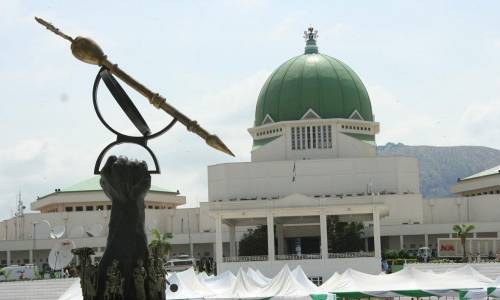
NDDC Lists 23 Companies Allegedly Used By National Assembly To Receive Contracts

NDDC Lists 23 Companies Allegedly Used By National Assembly To Receive Contracts

The Niger Delta Development Commission has again listed 23 companies that allegedly benefitted from contracts awarded by the commission.

A document sighted by SaharaReporters has names of companies allegedly provided by the National Assembly to the NDDC to award contracts before the lawmakers could harmonise the 2019 budget of the commission.

The contracts were awarded and paid between March 17 and 26, 2020.

The 23 companies got a total of N9trn contracts from the NDDC with the highest going to one Grandfox Global Services Ltd.

Grandfox Global Services Ltd was awarded the contract titled ‘Emergency at Ope Road Okigwe LGA’ and was paid 580,438,578, on March 17, 2020.

Also awarded contracts were Crism Constr. Building Ltd; Aritel Oil and Gas; and PDH Global Logistics Ltd, who got contracts of N561,592,377; N550,100,132; and N543,247,587 respectively.

Listed among the companies was also Webster Global Ventures Ltd, who allegedly got four contracts from the commission.

The contracts include instruction of emergency repairs of failed and unmotorable sections of Benin Township Road Lot 2 Oredo LGA for N357m; remedial works of failed and unmotorable sections of Akuku Illah Road Oshimili North LGA for N463m; remedial works of failed and unmotorable sections of New Ogorode Road Lot2 Sapele LGA for N466m and instruction for emergency repairs of failed and unmotorable sections of Abigborodo Road Lots 2 Warri North LGA for N466m.

But debunking the claims made by the Interim Management Committee of the NDDC, Webster Global Ventures Limited described its inclusion on the list of companies allegedly coerced to be paid by the National Assembly as a deliberate effort to destroy the company’s reputation.

It described the statement credited to the Acting Managing Director of the NDDC, Prof Kemebradikumo Daniel Pondei, as false, inaccurate and misleading, adding that the National Assembly never influenced any payment made to it by the NDDC.

Director of Operations of the company, Mr Opeolu Adarae, in a statement on Saturday said, “We are a company of international repute and no one should dent our image.

“The National Assembly never influenced payment made to our company because we completed all projects we handled. We have been in operations for more than 20 years and we have never been linked to any form of fraud as a corporate company.

“Nobody gave us any recommendation and we do not have any business with the National Assembly. As a matter of fact, the Executive Director, Project for the NDDC, Dr Cairo Ojougboh, inspected our project and certified it satisfactorily completed before payment was made.”

Also debunking the claims by the NDDC, Olubunmi Tunji-Ojo, former Chairman of the House Committee on NDDC, said the commission had been engaging in extra-budgetary expenses, adding that the agency had not been transparent with its budgetary spending.

He said, “All these things are just falsehood. The commission said they are old jobs and said the National Assembly asked them to pay for the old jobs.

“We did not get the job and we are only doing our jobs.

“As the legislature, we are supposed to be the one checking the excesses of the executive but they are trying to blackmail us.

“With what they are trying to do now, they are trying to blackmail us so they will have a free hand to do what they want to do.”

SAHARA REPORTERS

Kashamu: He Evaded Justice But Not Death – Obasanjo

Kashammu: He Evaded Justice But Not Death - Obasanjo
Late Buruji Kashamu

A former president, Olusegun Obasanjo, has described as sad the death of a former governorship candidate of the Peoples Democratic Party in 2019 election in Ogun State, Senator Buruji Kashamu.

He, however, added that Kashamu allegedly used the instruments of law and politics to evade justice.

In a condolence message titled ‘Letter of condolence,’ addressed to the State Governor, Obasanjo said, “I received the sad news of the demise of Senator Esho Jinadu (Buruji Kashamu), a significant citizen of Ogun State.  Please accept my condolences and that of my family on this irreparable loss.

Kashammu: He Evaded Justice But Not Death - Obasanjo
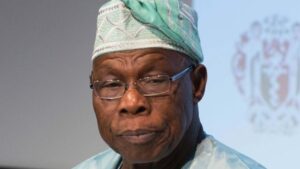
Former President Olusegun Obasanjo

“The life and history of the departed have lessons for those of us on this side of the veil. Senator Esho Jinadu (Buruji Kashamu) in his lifetime used the manoeuvre of law and politics to escape from facing justice on alleged criminal offence in Nigeria and outside Nigeria.

“But no legal, political, cultural, social or even medical manoeuver could stop the cold hand of death when the creator of all of us decides that the time is up.

“May Allah forgive his sins and accept his soul into Aljanah, and may God grant his family and friends fortitude to bear the irreparable loss.”

Obasanjo had in 2014 resigned his membership of the party when he wrote to the then Chairman of the Peoples Democratic Party, Alhaji Bamanga Tukur, that he would cease to be a member of the party unless the party dissociated itself from Kashamu, who appeared to be the leader of the party in Ogun State.

In the letter dated January 7, he said, “Buruji Kashamu has been so extolled in PDP in South-West geo-political zone which I personally find unsavoury. Politics played by any national political party must have morality, decency, discipline, principles and leadership examples as cardinal practices of the party.

“While I continue to remain a card-carrying member of PDP, I cannot and I will not subscribe to a wanted habitual criminal being installed as my zonal leader in the party; a criminal for whom extradition has been requested by the US government. In the meantime, I will consider withdrawing my activity with PDP at local, state, zonal and national levels until the anomalous and shameful situation is corrected.”

Obasanjo later tore his party card openly and left the party.

Politicians Should Learn From Oshiomhole’s Attack on Ize-Iyamu in 2016

Politicians Should Learn From Oshiomhole's Attack on Ize-Iyamu in 2016

A professor of law and former Edo State Governor, Prof Oserheimen Osunbor, speaks to JOHN ALECHENU about the current political situation in Edo, the crisis in the All Progressives Congress, the contentious clause in the Nigeria – China loan agreement, and court orders that gave victories to governors in Imo, Zamfara, and Bayelsa, among other issues

As a former senator and governor, give a general political assessment of what is happening in your state – Edo – at the moment?

At the moment, intense campaign is going on preparatory to the governorship election coming up on September 19, about six weeks away. There is tension and apprehension everywhere. This is not unexpected considering that the stakes are very high because whoever wins will have a rare chance of affecting the destiny of our people by impacting their lives in diverse ways, including the siting of projects, provision of infrastructure and generally stamping their name in history, good or bad. It is my hope that the campaigns and the election itself will be conducted peacefully and without bloodshed. Elections in Edo State have generally been peaceful and I expect it will be so again this time.

The governorship election is coming up in September and with the polity already heated up, what can and should be done to avoid violence?

The candidates themselves and party leaders should eschew hateful and inciting statements. They should rein in on the excesses of their followers and supporters. Everyone must abide by the rules and comport themselves in accordance with the law. The security and law enforcement agencies have a duty to be proactive by deploying their intelligence-gathering apparatus to pre-empt and avoid violence.

The APC which is your party has had its share of turbulence at both the national and state levels. The incumbent governor, Godwin Obaseki, had to leave to join the Peoples Democratic Party. With the benefit of hindsight, do you think the situation could have been better managed?

Absolutely, the situation could have been better managed. It is not just a matter of hindsight, because I foresaw the danger and so did many others who tried to broker reconciliation and restore calm in the face of the looming turbulence. Crises within political parties are ordinarily not unusual, especially for a ruling party like the APC. Every major political party at one point or the other experiences internal dissensions and upheavals. However, it is the ability to resolve internal crises that shows true leadership. With regard to the events leading to the exit of Governor Godwin Obaseki, I tried my best to broker peace to no avail and so did many others, including the Christian Association of Nigeria. I will refer you to my press statement published in the Vanguard Newspaper of June 6, 2020 as well as in many online publications. In the publication I pleaded that the crisis should be quickly resolved by the national leadership of the party, otherwise the PDP would be gifted the governorship position. That caution has turned out to be prophetic. Edo State is now, regrettably, a PDP-controlled state even before the election and the APC will be going into the election as an opposition party.

Some say the ex-APC Chairman, Adams Oshiomhole, is finding it difficult to sell Osagie Ize-Iyamu to Edo people because of certain comments he made earlier in 2016. What lessons do you think the party has learnt from this?

There are lessons to be learnt, not just by the APC, but by everybody. It is that words spoken can never be taken back; that you must never say things which you might regret in future and that you must leave room for reconciliation. We must learn to make politics in Nigeria less acrimonious and practise politics without bitterness.

As a lawyer, who was equally active on the floor of the Senate during your time, which aspects of our electoral laws do you think should be amended to strengthen our electoral system?

First, I expect that the flaws in the last Electoral Act Amendment Bill 2019 for which reason the Bill was vetoed by the President will be corrected. Second, we must continue to explore ways by which we can deploy technology to improve on our electoral system. In my time as Chairman of Senate Committee on the Independent National Electoral Commission, we introduced electronic registration of voters. However, there is currently a clamour for the introduction of electronic voting and electronic transmission of results, but we must be wary of booby traps and mindful of our limitations and vulnerabilities. Both the software and hardware to support electronic voting and transmission of results are likely to be imported with hardly any produced in Nigeria. That will make our elections vulnerable to cyber-attacks launched from any part of the world against which we will be helpless to prevent. Can we be certain that election results being transmitted electronically cannot be intercepted and doctored in transit in favour of a candidate who has enough money to hire the best hacker in the world? We heard about allegations of Russia’s interference in the US presidential elections in 2016 by breaching computer systems. If US elections can face cyber threats, what about Nigeria?

Third, I expect the National Assembly to revisit the provisions of section 140 (2) of the Electoral Act 2010 and incorporate it into the Constitution. That provision stipulates that where the election of a candidate has been nullified, the courts should no longer declare any other person the winner but can only order a re-run. The courts have refused to comply, saying that it is unconstitutional, being an attempt to erode their powers. By incorporating it into the Constitution, the courts will have no option but to comply and so bring to an end the current worrisome trend that questions and casts a slur on the integrity of our judicial system.

The crisis that forced Oshiomhole out of the party has 2023 Presidency undertones aside from the local Edo politics. Do you think we have heard the last of such squabbles?

First of all, Comrade Adams Oshiomhole is still a member of the APC as far as I know, though under suspension. He was only removed as national chairman consequent upon the dissolution of the National Working Committee. Squabbles and contests for ideas and positions are normal in politics. Your assumption may be true and you should expect more, not only in the APC, but in other political parties as well.

What do you make of agitations in some quarters that power should return to the South-West in 2023?

It is legitimate and perhaps even deserving for power to go to the South-West. At the same time, we are not unmindful that there are agitations from other zones as well. No zone, except the North-West, should be ruled out at this stage (because the incumbent is from the North-West).

What is your view about the APC zoning power to the South-East in 2023?

The Constitution of the APC does not provide for zoning of power. Some other parties may provide for such. Having said that I recognise that the APC Constitution envisages rotation of power. Every political party, including the APC would normally field a candidate that can attract winning votes.

The Methodist Prelate last week said some parties use courts to get undeserved victories. Looking at the manner you left Government House, do you think this is true?

The Prelate voiced what many people have known and been saying over the years, especially since after the 2007 general elections. We have seen persons who lost elections at the polls and several others who did not even participate in the elections at all being declared winners in the court. In my own case, 203,000 of my votes were nullified, leaving me with 125,000 and the man who scored 166,000 was declared winner of the election after 30,000 of his votes were nullified as well. As you may know, I was a victim of high-level politics involving the top leadership of government. I have tried to put all that behind me, unless people ask questions. Interestingly, the beneficiary, Comrade Oshiomhole, was widely reported in the media on March 4 this year as condemning the judiciary for giving undeserved electoral victories to persons who lost at the polls, describing the practice as “undemocratic”. His frankness is commendable and an open repudiation of the judgment that removed me from office and made him governor. The recent shocking cases of Zamfara, Bayelsa and Imo governorships should serve as a wake-up call that we must halt this disturbing trend of court-ordered electoral victories in the interest of our democracy. The media should spearhead the campaign and perhaps revisit the “cold case files” as we see in criminal investigations in order to expose the injustices that the nation has sadly witnessed in this regard.

What is your take on the issue of zoning and rotation of Presidency?

As I said before, my party’s constitution does not provide that the office of President should be zoned but once a presidential candidate has emerged, the other top elective positions are in practice zoned. This is a matter of pragmatism because if a political party is to do well in a general election, it must ensure that all sections of the country have a sense of belonging in the party. For the same reason, rotation of presidency is also good in order to give every segment of the country a sense of belonging. This will help build nationhood and patriotism. I am aware that some people are opposed to rotation and insist that all that we need is competence but my question is – competence in what field? Who sets the examination question and what is the scoring formula for determining the most competent person? Unless these are known, you cannot in all honesty say that this person is more competent than the other or others. At any rate, democracy is not about electing the most competent person. You cannot claim that the winners of presidential elections all over the world have been the most competent in each country at the time of their elections. The evidence suggests otherwise in most cases.

Would you say the presidential system has worked for us as a nation?

Yes, it has although it may not be perfect and there are rooms for improvements. The main criticism against our presidential system is that it is too expensive. My response to this is that it is the people operating it that make it expensive. Given the same sets of politicians and operators, any other system can be equally expensive, if not more – not only in monetary terms but in terms of political stability, peace and progress. The parliamentary system operated under the 1963 Constitution failed after only two and a half years and that failure cost Nigeria a lot in monetary terms and in human lives. How much cost can you put on the human lives that were lost due to the political instability? The presidential system, which has worked for 21 years based on clear evidence, is definitely preferable to me. Presidential system works well in many countries and there is no reason it cannot work well in Nigeria if the people want it to.

What in your opinion is the reason behind the desperation among politicians to occupy public office?

Not all politicians are desperate. Some are desperate because outside of politics, they cannot sustain their lifestyles and standard of living and will quickly fade out of the limelight.  They have no skills, business or vocation to ply nor a second address so to speak. Politicians with a second address tend to exhibit desperation less or practise “do-or-die” politics because they have something they can fall back on and a life outside of politics. It is good therefore to encourage persons with a second address to venture into politics so as to eliminate or minimise the do-or-die syndrome.

Corruption has become a recurring decimal in our everyday life. How can this be tackled?

There is a write-up titled “Chronology of Corruption in Nigeria, ” which has been trending on the social media and which traces the history of corruption in Nigeria from 1947. It shows that corruption is not a recent development in Nigeria. In fact, all the military coups in Nigeria, starting from January 15, 1966 cited corruption as a reason for the coup and yet did not end corruption. On the contrary, they worsened the situation. We need a multi-dimensional approach to tackle the cankerworm of corruption and I discussed these in detail in my Founders’ Day Lecture of the Nigerian Institute of Advanced Legal Studies on March 17 this year. Apart from relying on laws like Independent Corrupt Practices and Other Related Offences Commission Act, Economic and Financial Crimes Commission Act and others, we need more international collaborations of the sort we have through the National Financial Intelligence Unit, which has made money laundering difficult to hide. We need other international collaborations such as the International Standards Organisation Good Governance Models. Above all, we need a change of our value system and attitude which encourages mediocrity and celebrates wealth, no matter the source, ill-gotten or not. The fight against corruption must be rigorous and sustained over a long period in order for it to take root and succeed.

Is the absence of requisite laws responsible for the rising insecurity in Nigeria?

Nigeria has an abundance of laws to tackle insecurity and all forms of criminality, including terrorism, kidnapping and wanton killings which have created a state of fear, insecurity and utter disregard for the sanctity of human lives in Nigeria. Whilst there will always be room for improvements in our laws, the major problem now is that these acts of criminality appear to have over-stretched the capacity of the security and law enforcement agencies. In other words, what is lacking is full and effective implementation of our laws. The situation has been seriously compounded by a myriad of social factors. Foremost among these, in my opinion, is the alarming growth rate in our population, which is probably the fastest in the world. Whilst our population is growing at a rate of over three per cent per annum, the economy is growing at a rate of less than two per cent. The implication is that the population is growing faster than the economy can cope with and this manifests in growing poverty and desperation on the part of many to survive, hence their resort to crime. It beats my imagination that in this day and age, some men can still be bragging about having 30 children or more. Many such fathers may not have the means to provide a good upbringing as well as the time and attention to raise all of those children to be decent citizens. Instead, the responsibility is passed on to the government to provide all the needs of these children and the entire family with little or no contribution from the parents. Growing up under extreme deprivation may harden some of those children as they grow into adulthood and they can easily be sucked into a life of criminality and vent their anger on society. In the olden days, there was good economic reason for men to have large families in order to have many hands working on their farms and contributing to the family’s prosperity. But that has changed. Government has a responsibility to speak up on the population time bomb and take necessary actions otherwise, the situation can only get worse in the future.

There is a raging controversy raised by the House of Representatives that Nigeria has ceded her sovereignty to China over a loan agreement with China for $400m. As a professor of law, what is your opinion?

Like most people, I was amazed that such a thing could happen and I decided to read the said loan agreement by myself. To my surprise and relief, what I saw does not amount to and cannot be interpreted as Nigeria ceding her sovereignty to China which, by the way, is quite impossible. The relevant clause reads as follows: “The borrower (Nigeria) hereby irrevocably waives any immunity on the grounds of sovereignty or otherwise for itself or its property in connection with any arbitration proceeding pursuant to Article 8(5) thereof with the enforcement of any arbitral award pursuant thereto, except for the military assets and diplomatic assets.”

The ordinary meaning of that clause is that in the event of a default in repayment and the lender takes the matter to international arbitration, Nigeria cannot plead sovereign immunity as a defence. Rather, where an arbitral award is entered against Nigeria, it can be enforced against any of our national assets excluding military and diplomatic assets. This is the standard in international investment agreements and Nigeria, being a signatory to the relevant convention cannot avoid its obligations to repay the loan or comply with the outcome of an arbitration. If Nigeria repays the loan, there will be no need to go to arbitration and the question of enforcing an award against our national assets will not arise. What is important is for us to ensure that the loan is utilised judiciously.

By the way, we all know that to borrow money from a bank, you will be required to provide security by way of a mortgage of assets such as a building or factory. In the event of a default, the bank reserves the right of foreclosure and may seize and auction the assets. It is an offence for bank directors to approve a loan which is not secured and they risk imprisonment. In a similar manner, foreign governments can demand security as a condition for a loan otherwise they risk political backlash from their own people.

In the light of revelations in the P & ID case, it is understandable that Nigerians have become wary of arbitration clauses in agreements but there appears to be some elements of exaggeration in this instance.

The PUNCH.

BREAKING NEWS: Buruji Kashamu Is Dead

How USA Falsified Criminal Case Against Buruji Kashamu - Lawyer Breaks Silence

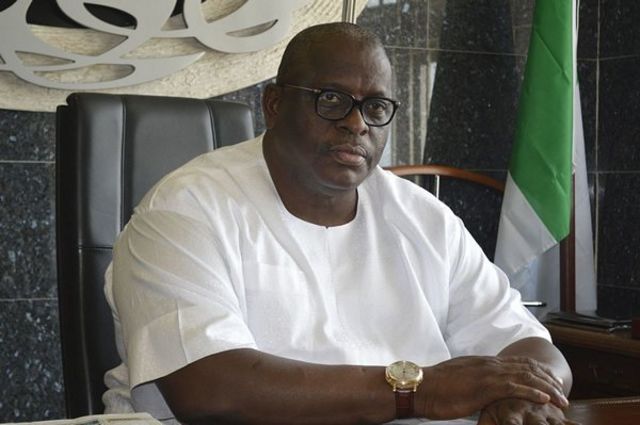
The former senator and businessman, Buruji Kashamu, is dead.

Mr Kashamu died Saturday at the First Cardiology Consultants Hospital in Lagos, his friend and former colleague at the Senate, Ben Murray-Bruce, confirmed.

“I have just lost my good friend of forever to #COVID19. Until his death, Sen. Buruji Kashamu and I were inseparable. He died today at First Cardiology Consultants, in Lagos. May his gentle soul rest in peace. I pray his family and loved ones the fortitude to bear this heavy loss,” Mr Murray-Bruce wrote on Twitter.

The cause of death was not immediately clear although the former lawmaker had been reported to have been ill from COVID-19, the deadly respiratory infection caused by the coronavirus.

Nigeria has so far recorded over 45,000 infections since the pandemic broke out in February.

Mr Kashamu was the founder of Western Lotto Limited, one of Nigeria’s lottery operators.

He served as the senator representing Ogun East in the eighth National Assembly and for years was wanted in the United States for alleged drug offenses. He always denied wrongdoing.


Wondering Why Women Cheat? Here Are Major Reasons Why Women Cheat

Wondering Why Women Cheat? Here Are Major Reasons Why Women Cheat
This is about one of the biggest and most puzzling question for men. No one can exactly wrap his/her head around why anyone cheats, not to talk of women who are always, usually, the contented ones in relationships. The truth is, even women themselves don’t exactly know why they cheat, but best believe that if a woman ever makes it past the decision to cheat and actually goes ahead to commit the crime, there is no going back.

There are few but very intense reason why women would generally consider cheating on their men; and these reasons can actually be worked on if the men in their lives just sits and listen. Let me break down what I mean.

1. TO FILL AN EMOTIONAL VACUUM

This is one of the most important reason why any woman would ever consider cheating in a relationship. If she feels an emotional void or vacuum that a relationship with you hasn’t yet filled, then she will look to fill that vacuum in someone else. To women, their emotional needs is as important as every other need in the life, probably more important than food. It is why as you meet her financial needs as the provider, it is never going to be enough until you actually make her feel your presence emotionally. Women are like flowers, they blossom when being cared for and when their soul are fed with love. So, if all you do is meet your girlfriend’s financial needs, but never truly find time to take her out once in a while, write her love notes, steal kisses randomly and just stare at her like she is the most beautiful woman in the world, she is going to go find that fulfillment somewhere else.

2. BOREDOM

Women can be somewhat as adventurous as men: and usually do crazy stuff when they get bored, just like men. Ask yourself where your current relationship stands. Is the spark that used to burn at the beginning of the relationship still there? Do you feel as intensely drawn to this person as you used to? If No is your answer, then you probably know or have a hint of how she must be feeling in that relationship. Boredom in a relationship opens up the window for unwanted guests who can come make your girl feel that there must be something she is missing with you. It is at the point of maybe exploring at something new that most women find themselves cheating in relationships. If this is your relationship, you owe it a responsibility to get it working again.

3. FINANCIAL SECURITY

Everybody finds this excuse as flimpsy as it comes, but best believe, one of the major reasons women cheat is to gain financial security. No, she hasn’t stopped loving you. No, she doesn’t have doubts about you. No, she isn’t greedy. She just found someone who promises a more financially secured future for her than you can provide; and if we are being honest, you will realize that woman probably need twice the amount of financial aid to survive than a man will. Because women are used to having men as the providers as the society has designed it, they look up to the men to provide irrespective of whether they can fend for themselves or not. So yes, most women cheat so they never have to worry about the things that money can buy at a particular time, pending when you can start to provide like she wants.

4. SEXUAL EXPLORATION AND SATISFACTION

It is not just important that your girl is financially and emotionally satisfied in a relationship with you, it is important that she is also sexual satisfied. Ask yourself when last you guys did anything crazy or explored with your sexual life. When last did you make out in public, do PDAs or even had mind blowing foreplay. Are you the one style man? The man who considers it a taboo to eat out his lady but wants to get mind-blowing blow job? Are you a selfish man during sex, only seeking to take but never really giving? Then there is a high tendency that the reason she is seeing other people is because finally, someone else is putting her sexual needs first before his, and she is finally getting the sexual satisfaction that she truly deserves and that her body is finally getting worshiped like it truly deserves. If you need for her to be back as your girl, then you need to do (and be) better.

5. REVENGE

Believe it or not, there are still women who cheat in the 21st century as a means of revenge for men’s countless betrayals in relationships. So, if your babe is one of those babes who will go explore as you are exploring, then, you really have no reason to be mad.

I am guessing that by now, you have a glimpse into the thought process of women and why they cheat. It doesn’t have to sound rational to you, but it is what it is. So take some time out and communicate with your lady: find out where you guys are both lacking and fix it.

Juventus Sack Sarri After Champions League Exit

Juventus Sack Sarri After Champions League Exit
Maurizio Sarri

Juventus have sacked Maurizio Sarri following their Champions League exit at the hands of Lyon.

The Continassa hierarchy held a meeting following the Old Lady’s failure to progress to the quarter-finals of Europe’s premier club competition, with Sarri’s future at the club the only point on the agenda in the wake of the continental disappointment.

It was decided that the 61-year-old former Chelsea and Napoli boss is no longer the man to take the club forward, with Juve’s signing of Cristiano Ronaldo from Real Madrid making clear that their intention was to win the Champions League after several years of near-misses.

A club statement read: “Juventus announces that Maurizio Sarri has been relieved of his post as coach of the first team.

“The club would like to thank the coach for having written a new page in Juventus’ history with the victory of the ninth-consecutive championship, the culmination of a personal journey that led him to climb all the divisions of Italian football.”

Sarri’s future had been previously called into question despite leading the club to a ninth-successive Scudetto, with the former banker admitting himself that he had been struggling to impose his famous ‘Sarriball’ style on the squad.

Indeed, following the first-leg defeat against Lyon, Sarri stated that his charges had been moving the ball too slow but that he would continue working with his players until “sooner or later this concept will get into their heads”.

That admission will have done the Italian few favours as the board considered their options, with the feeling amongst those in charge that the head coach had failed to win over the players and that a new approach would be required to see the club progress.

It is no secret that Simone Inzaghi is well liked by those at Continassa following his successful season with Lazio, while Zinedine Zidane – still under contract with Real Madrid – is another name that is never far from discussions in Turin.

Mauricio Pochettino, currently out of work despite having led Tottenham to the Champions League final last season, also forms part of the list of names being considered to replace Sarri and he has been out of work since being sacked by Tottenham in 2019.

Former Juve bosses Massimiliano Allegri and Antonio Conte have also been linked in recent weeks alongside club legend Andrea Pirlo, who recently took on his first coaching role with the Bianconeri’s Under-23 side.

For now, however, it is understood that internal discussions are still in their infancy and no moves have been made to contact potential successors.

Bauchi Government Speaks On Special Assistant On “Unmarried” Women Affairs Appointment

Bauchi Government Speaks On Special Assistant On “Unmarried Women” Affairs Appointment
Bauchi State Governor, Bala Mohammed

The Bauchi State Government has cleared the air on the recent appointment of Balaraba Ibrahim as Special Assistant on Women Affairs (Unmarried) to Governor Bala Abdulkadi Mohammed.

According to a statement by Mukhtar Gidado, Senior Special Assistant to Mohammed on Media, the word “unmarried” was an error inadvertently introduced into the letter.

He said, “Anyone who is familiar with the socio-cultural and economic environment of Bauchi State will agree that widows and divorcees, in many cases for no cause of theirs, constitute a very significant segment of the vulnerable population of the state and who, by the fact of citizenship, deserve to be addressed and accorded some special attention. It is instructive that some states in the Northern part of the country have long recognised the importance of rehabilitating this group whose plight, if not ameliorated, could and most often, lead to other social problems.

“It is a matter of interest that, in recent times, members of these groups, who are mothers, sisters, friends, ex-wives and above all, citizens and human beings, have been sending representations to the Government to establish a channel of communication whereby their plight can be addressed like those of other groups in the state.

“After due consideration and in keeping with his campaign pledge not to leave anybody behind, the governor graciously acceded to their request hence the appointment of a special assistant on women affairs, with the specific responsibility of handling matters related to widows and divorcees, not “unmarried” women. As was clearly stated in the letter, Balaraba Ibrahim’s choice was based on her abilities and gender advocacy.

Unfortunately, while producing it, the word “unmarried” was inadvertently introduced into the letter. This is a clear mistake of the head; not of the heart which the Government sincerely regrets. Governor Bala Mohammed is sincerely pained that this error could have caused the women of Bauchi State and elsewhere, considerable distress and embarrassment. He has therefore directed that his personal apologies be conveyed to all women of Bauchi State, particularly the  the widows and divorcees whose interests he has vowed to protect and advance, always.

“Finally, Governor Bala Mohammed enjoins the good people of Bauchi State to put this matter behind us so that, together, we can sustain the achievements that have been recorded, so far, in diverse areas such as youth empowerment, infrastructural development, rehabilitation of schools and primary healthcare centres, amelioration of the plight of senior citizens and retirees and the harmonious relationship between the executive and the legislature.”

SAHARA REPORTERS

We Are Worried, Disappointed Over Edo Politics — US

We Are Worried, Disappointed Over Edo Politics — US
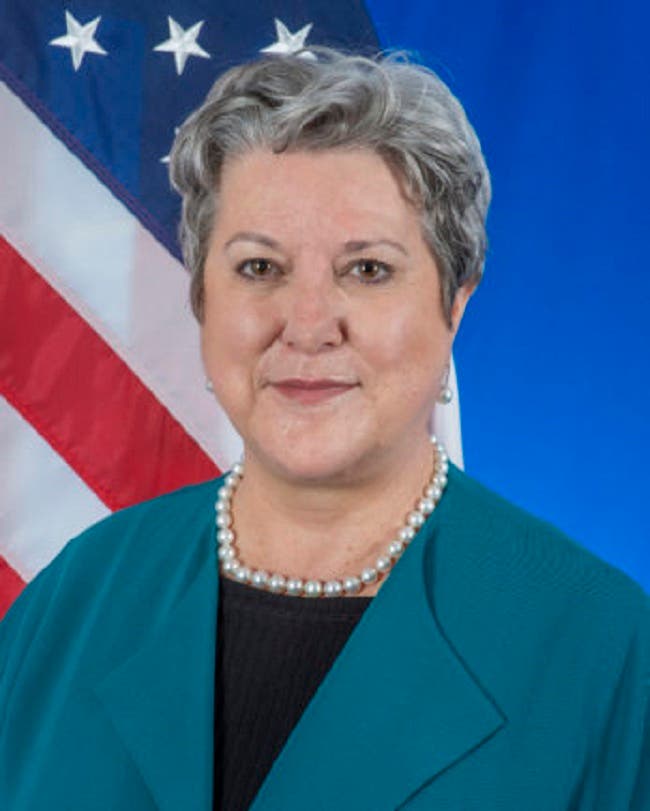
Mary Berth Leonard, US Ambassador.

THE United States on Friday said it was concerned with reports of the deteriorating political climate in Edo State.

The US Mission in Nigeria, in a statement on its social media platforms, also said that it was disappointed with the role of some political actors in the state.

The statement reads: “As long-time friends of Nigeria, we continue to follow political developments ahead of off-cycle elections in the country. The United States supports a democratic process where the will of the Nigerian people is reflected in the results, and does not favour any party or candidate.

“We are concerned with reports of the deteriorating political climate in Edo State and are disappointed with the role played by some political actors in the state. We are especially concerned with allegations of interference by security forces in political matters, which we will continue to monitor closely in the run-up to gubernatorial elections in the state in September.

“As we approach the 2020 off-cycle elections in Edo and Ondo, we urge all stakeholders to work towards a free, fair, transparent, and peaceful process. We encourage all stakeholders, including INEC, political parties, and the security services, to continue to improve the electoral process.

“We look to Nigeria as an important leader on the African continent. As a democratic partner of Nigeria, the United States remains committed to working together to achieve our mutual goals of peace and prosperity for the citizens of both our countries.”

NIGERIAN TRIBUNE

Obasa, State Speakers Condemn Obaseki Over Siege On State Assembly

Obasa, State Speakers Condemn Obaseki Over Siege On State Assembly
Mudashiru Obasa: Chairman, Conference of Speakers.

The Chairman of the Conference of Speakers of State Legislatures in Nigeria, Rt. Hon. Mudashiru Obasa has condemned the recent siege on the Edo State House of Assembly by men suspected to be loyal to governor of the State, Mr Godwin Obaseki.

In a statement he personally signed on behalf of the Conference of Speakers, Obasa said the removal of the roofs of the hallowed Assembly is an injury to Nigeria’s democracy and must be condemned by all well-meaning Nigerians.

According to the statement, the Speaker and his colleagues in the country described the brazen manner the suspected political thugs took over the Assembly, removed the roof and broke the symbolic mace, which was all captured in a recorded video, as sheer recklessness.

The Conference accused the state government headed by Obaseki as autocratic and dictatorial in this regard adding that whatever defence the latter has for the action does not ‘hold any water’.

“It is sheer recklessness and proof of dictatorship for a governor who is supposed to be the head of the executive arm of government to decide to take charge of another arm through questionable means as it happened in Edo.”

“There were reports linking the removal of the roof and the offloading of gravel at the complex to purported plans by the government to renovate the Assembly but we think this is an afterthought,” the Speakers declared.”

The Conference wondered how the idea of renovating the Assembly suddenly came up just weeks to the governorship election in the state and in such manner creating a mockery of the electioneering process and democracy.

“Why is the government just realising the need renovate the complex at the twilight of the administration?”

“What happens to the building if the governor does not return? What happens if the next administration does not take that direction?”

Obasa’s statement on behalf of his colleagues further questioned the role played the Commissioner of Police in the state in the entire drama.

The statement accused the Police Commissioner of allowing himself to be used as a tool to perpetrate an attack on democracy in the way the drama panned out at the Assembly complex in the state.

While strongly warning the governor and those participating in the electoral process in the state to desist from doing anything that would affect the smooth running of the Edo House of Assembly, the Speakers reminded Obaseki that the removal of the Assembly roof does not stop the lawmakers from sitting as the constitution of the country does not limit plenaries to the hallowed chamber alone.

NIGERIAN TRIBUNE