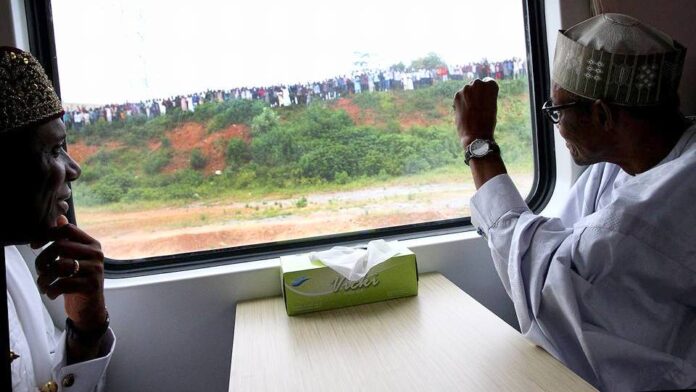
President Muhammadu Buhari has approved a 100 percent increase in fares on the Abuja-Kaduna train service from N1,500 to N3,000 for the economy class, N2,500 to N5,000 for the business class, and N6,000 for the VIP class coaches.
Four months after commercial services on the train route was suspended as a result of the Covid-19 pandemic, operations on the ever busy corridor are set to resume on Wednesday, July 29, 2020.
Rotimi Amaechi, Nigeria’s minister of transportation, told journalists during a test run of the newly delivered Diesel Multiple Units (DMUs) consisting of two locomotives and eight coaches, that the hike in fares was to ensure that physical distancing is maintained as well as cover the running cost of the operations.
According to the submission of the minister, “In a month, we get about N120million and if we run like this, we will realize about N60million. It then means that, we need another N60million to complement the running cost. What the president did to approve the new fare was to say, once you can get your running cost, it is okay.”
Reacting to questions on the affordability of the new fare especially by the low and middle income earners, the minister insisted that people using not poor and as a result can afford the fares. He said that a lot of people are of the opinion that the fares is nothing compared to the risk of kidnappers on the road.
While admitting that, there was pressure on them to resume operations before the Sallah celebrations , he disclosed that the Nigerian Railway Corporation, (NRC) is increasing operations from the initial 8 operational service on both routes before the outbreak of Covid-19 to 14 commercial operations daily.
Providing an update on the Lagos-Ibadan rail project, Amaechi stated that the project is moving at a slow pace now. Due to the Covid-19 pandemic the Chinese contractors reduced the number of workers from 1000 to 10, and because of this, the big stations are not yet completed.
”The two things we can do is to either run skeletal services and be running 2 services; one going and one coming. That means, they will be using the double tracks, but they won’t be using the stations”.
”If they have to use the stations, nobody should complain that they are uncompleted stations. We will only do that if there is heavy pressure on traffic, if not they may have to wait till the stations are ready.” He said.
Rotimi Amaechi recalled that the federal government had targeted May this year and they were working towards it, but unfortunately Covid-19 came, so we told them to complete the small stations.
”’That is easy to complete because 10 persons can complete that station, but the biggest station in Ebutte Metta will need about 1000 workers on site and we don’t want to risk that because of spread of the virus.”
Love is like a flower: sweet, beautiful, and sometimes very colorful! Love is also like a flower in that it requires frequent pruning and watering for it to grow. Therefore, without the necessary ingredients, love may wilt and fade altogether.
It is an understatement to say life can be hard for a woman who has been left by her spouse. Hopefully this is something you have not (and will never) experience. It can feel like the end of the world. The partner who did not do the leaving may have so many questions, and no answers. Trust me when I say it is the hardest time of a woman’s life.
Have you ever been loved so much by someone that it never crossed your mind that they may someday abandon you? Well, even though love is real, sometimes emotions change. Sometimes things just happen.
Here’s my story: All my life, I have loved just one man. And he loved me too. He loved me so much that I was sure our love would last forever. However, we dated for only three years when things started going south. I pondered and wondered where I had gone wrong. I tried asking him, but he only said he wanted to pursue further studies. I felt shocked stupid by his response. But there was nothing I could do about it.
Well, if you have experienced something similar and are left wondering why, here are some reasons why men leave women they love.
Why Men Leave Women They Love:
DISSATISFACTION IN THE BEDROOM
As women, we have to accept that our men love intimacy. But it is funny that a man will never tell you to your face that he wants intimacy. But if he grows tired from asking for it, he may just walk away. Research shows that men express their love for their women through intercourse. Denying him intimacy is equal to denying him a chance to show you his love. Also, frequent denial lowers their self-esteem. This is because you make your man feel undesirable. I mean, who does not like being desired?
So, if a man does not get intimacy from you or if he is not getting enough from you, my dear sister, he may begin considering thoughts about leaving you. This might sound harsh, but it is important to know the facts of how men tend to think and operate. If he is not being satisfied intimately in a relationships, he will likely move on to find a woman who will satisfy him.
CHEATING
In most cases, dissatisfaction leads to unfaithfulness. Roughly 70% of men who cheat tend to leave the women they love shortly afterward. Not all men can give their love and affection to two different women at the same time. So, they tend to leave the woman they once loved for the one they have grown intimate towards. In all honesty, they may have mistaken this new romance for love.
Some say that men cheat because women allow them to. That if a woman does not treat her man right, another woman will. Although this might seem completely unfair, sadly, in many cases this turns out to be true. Sometimes men seek an outside relationship if they feel their current partner no longer gives him the love, care, and affection he desires.
LACK OF INTIMACY
Over the years, you have likely read articles emphasizing men’s love for intimacy. However, it has never been indicated that men crave affection. Intimacy involves bonding with your spouse through kissing, hugging, cuddling, and sharing your innermost feelings and thoughts. When you wake up in the morning and kiss your man, that is being intimate.
Wait a minute, have you sent your man a simple text during lunchtime asking him how he is doing? Do you call him frequently to tell him you love him? If you have done this in the past, are you still doing it or have you stopped?
Women tend to feel comfortable and sometimes take intimacy for granted once they get into a relationship. They forget that love requires day-to-day actions. You have to work on it to keep the fire burning. Lack of intimacy is one of the reasons why men leave women they love.
BOREDOM
Men love women who add joy to their lives, not someone who is always angry and does not enjoy anything. Boredom is one of the reasons why men leave women they love. Men want women who are open to new ideas that add zest to a relationship. Let’s face it, some people are boring to be with. Decide that you won’t be boring and that you will do what it takes to keep that deep connection alive.
FEAR OF LOSING FREEDOM
Ladies, although men crave times of intimacy, they also want their freedom. Do not hinder him from watching a football match with his friends. You should know that men highly value their boy time. A man may end up leaving the woman he loves if fears that he will lose the freedom to do the things he loves.
LOSS OF ATTRACTION
Men love with their eyes. Sometimes women neglect taking care of themselves. If you forget to dress well and make your hair, this action may be driving him away. A man loves it when he sees his woman making an effort to be beautiful for him.
Loss of attraction is one of the heartbreaking reasons why men leave women they love.
TRYING TO FIX HIM
This is an important item on the list. Men hate being made into something they are not. When you try making him into what he is not, he will leave you the minute he notices. And even if he stays, he may grow resentful or bitter that you do not accept him for who he is. We all want to be loved and a huge part of love is acceptance. So, do not try to take control of your man’s life in that way. Respect each other for differences, even weak points, because that makes you both who you are.
LACK OF EMOTIONAL BONDING
A man who loves his woman shows his vulnerability to her. He shares with her all his fears, weaknesses, and failures. This is not easy for any man, because they like to be strong. So when a woman is hard to approach, it becomes very difficult to bond emotionally.
When this happens, a man just might leave a woman he loves.
LACK OF RESPECT AND APPRECIATION
Love begins with mutual respect and attraction. Unfortunately, some women tend to disrespect their men by calling them abusive names or even badmouthing them. When this happens, a man feels disrespected and has no reason to remain.
Also, some women do not appreciate what their men do for them and are always comparing them with other men. Lack of appreciation is one of the reasons why men leave women they love because it lowers a man’s self-esteem, which drives him away.
EMOTIONAL CO-DEPENDENCE
Some women use phrases such as, “Without you, I would die,” or, “I could never love another man,” to try to keep their men from leaving them. It becomes very dangerous if your joy depends on your man being in your life.
CLOSING THOUGHTS
Naturally, you’ll want to do what you can to make your man happy. You should be someone that he can rely on emotionally. You need to respect and appreciate him. But remember that, above all, you are a strong and worthy woman. You deserve love and respect. Even if a relationship does not continue the way you hope, or ends sooner than you would like, you can make it through this. You can come out stronger than before.
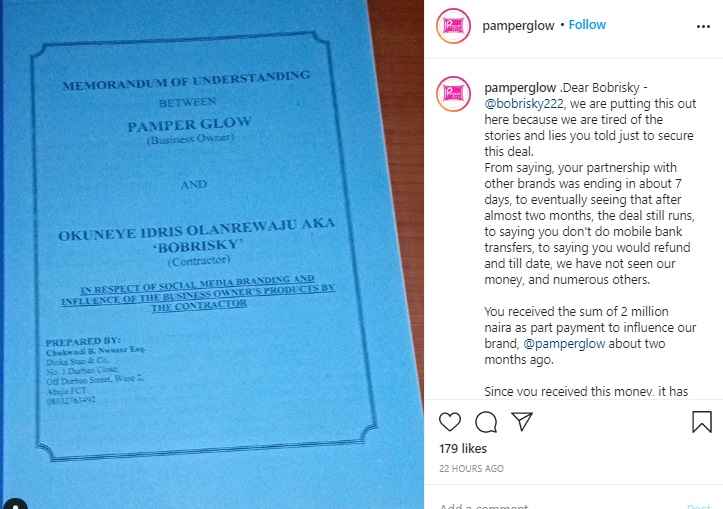
Nigerian cross dresser, Bobrisky has been dragged by a skin care brand for breaching a contract after receiving the sum of N 2 million to influence the brand.
The skin care brand, “Pamper Glow”, revealed that the cross-dresser failed to realize his contractual obligations after signing the contract and refused to fulfill the supposed agreement.
The brand took to their Instagram to lambaste the popular crossdresser saying:
”Dear Bobrisky, we are putting this out here because we are tired of the stories and lies you told just to secure this deal. From saying, your partnership with other brand s was ending in about 7 days, to eventually seeing that after almost two months, the deal still runs, to say you don’t do mobile bank transfers, to saying you would refund and till date, we have not seen our money and numerous others You received the sum of 2 million naira as part payment to influence our brand about two months ago. Since you received this money, it has been difficult reaching you as against how you frequently called even in the midnight before this payment was made. And when you finally responded, it was another story. Having found out all these, we asked for a refund and we expected to receive the payment immediately but you said you don’t do mobile transfers and you gave us a date, the date came and passed with no sign of the money. Calls and messages sent to you were ignored. Took you many days to come up with another story. We are tired and no brand deserves this.”
Bobrisky, is yet to make any statement as regards the allegations levied against him as at the time of filing this report.
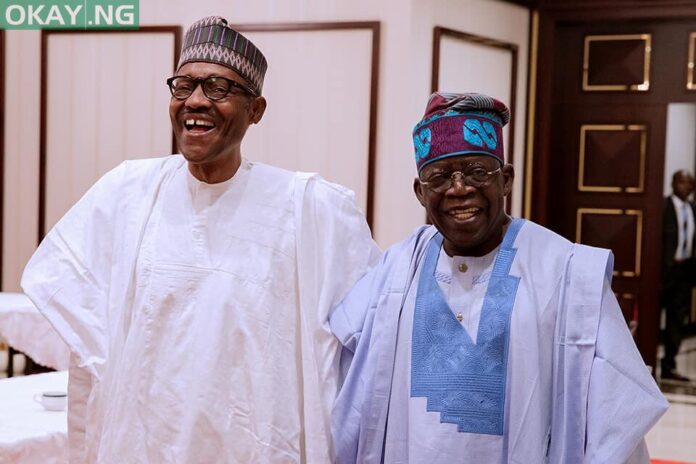
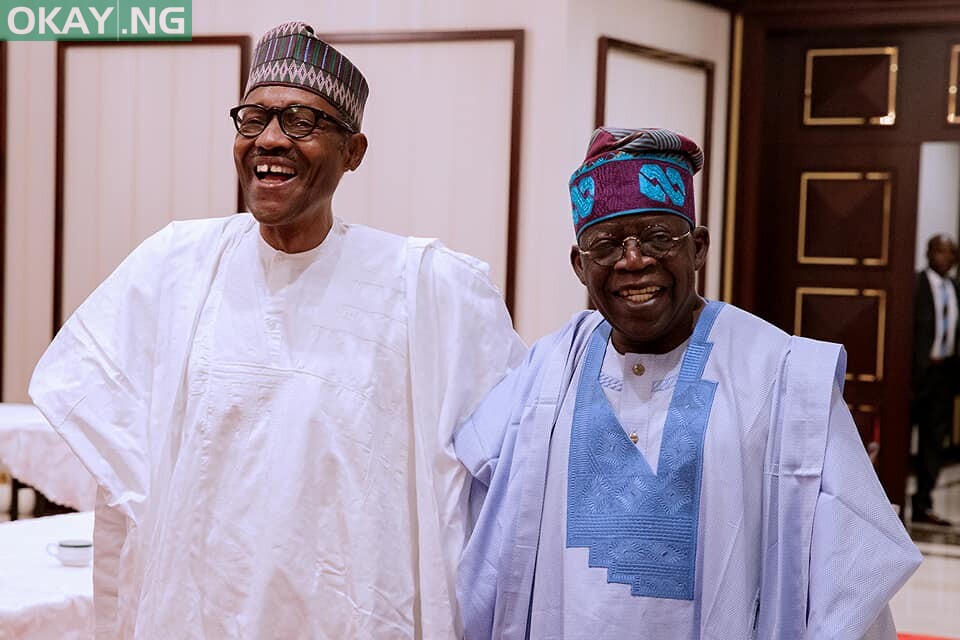
President Muhammadu Buhari has approved the naming of several train stations after 23 “prominent Nigerians”.
This was announced in a statement issued by the Ministry of Transportation on Monday.
According to the statement, the “deserving citizens have contributed to the progress and development of their respective communities and the nation at large.”
Below is a full list of the Nigerians who were conferred with names of train stations:
The Lagos-Ibadan with extension to the Lagos Port Complex at Apapa railway station
Bola Ahmed Tinubu (Apapa station)
Mobolaji Johnson (Ebute Metta Station)
Babatunde Raji Fashola (Agege station)
Lateef Jakande (Agbado station)
Prof. Yemi Osinbajo (Kajola station).
Funmilayo Ransome-Kuti (Papalanto station)
Prof. Wole Soyinka (Abeokuta station)
Aremo Segun Osoba(Olodo station)
Chief Ladoka Akintola (Omio-Adio station)
Chief Obafemi Awolowo (Ibadan station)
Chief Alex Ekwueme (Operation Control Centre)
The Itakpe-Ajaokuta/Aladja-Warri Railway
Alhaji Adamu Attah (Itakpe station)
Dr. Olushola Saraki (Ajaokuta station)
Admiral Augustus Aikhomu (Itogbo station)
Brigadier General George Innih (Agenebode station)
Anthony Eromosele Enahoro (Uromi station)
Chief Tom Ikimi (Ekehen station)
Brig. Gen. Samuel Osaigbovo Ogbemudia (rtd) (Igbanke station)
Goodluck Ebele Jonathan (Agbor Station Complex)
Brigadier General David Ejoor (Abraka station)
Micheal Ibru (Opara station)
Alfred Rewane (Ujevwu station)
Vice Admiral Mike Akhigbe (Railway Village, Agbor)
Self-doubt and imposter syndrome permeate the workplace, but women, especially women of colour, are particularly likely to experience it. Why is this – and how can it be changed?
Although I haven’t worked in an office in more than 20 years, I still remember the feeling I used to have at my nine-to-five magazine job. No matter how well I did, I always felt that I wasn’t good enough for the rarefied publishing world. I didn’t come from a pedigree; I just was a hard-working black woman. I felt (and sometimes literally was) unacknowledged in the hallways, and my voice was hardly heard. It wasn’t unusual that ideas I presented at meetings got a lukewarm reception, but two meetings later someone else suggested a similar thought, which was instantly deemed a must-write story.
Even though I knew I was capable of doing the work, I was riddled with doubt. It was years later that I learned there was a term for what I felt: imposter syndrome.
You may not be able to see it around you, but imposter syndrome permeates the workplace. It’s a feeling that many people can identify with: why do I feel like a fraud even though I’m eminently qualified for this job? Despite having education and training, many have never been able to break free of doubting their worthiness and step into any a higher level of success.
But although anyone can ask this question, imposter syndrome has an outsize effect on certain groups.
We’re more likely to experience imposter syndrome if we don’t see many examples of people who look like us or share our background who are clearly succeeding in our field – Emily Hu
“Women, women of colour, especially black women, as well as the LGBTQ community are most at risk,” says Brian Daniel Norton, a psychotherapist and executive coach in New York. “When you experience systemic oppression or are directly or indirectly told your whole life that you are less-than or underserving of success and you begin to achieve things in a way that goes against a long-standing narrative in the mind, imposter syndrome will occur.”
If you doubt yourself even when you’re doing all the right things, are you doomed to feel like an imposter, no matter what? And why, exactly, do we feel imposter syndrome – and what can we do when that feeling starts to boil up?
Stacked odds
Corporate culture exacerbates the problem of imposter syndrome, particularly for women.
According to Lean In, a US organisation that focuses on women in the workplace, women are less likely to be hired and promoted to manager. Its 2019 research shows that for every 100 men brought onto teams and elevated to management, only 72 women experience the same thing. Men hold 62% of manager-level positions, while women hold just 38%. And although one-third of the companies Lean In surveyed set gender representation targets for first-level manager roles, 41% of them didn’t for senior levels of management.
CEOs who are women of colour are still rare. Xerox’s Ursula Burns was the only black, female CEO of a Fortune 500 firm, who left the company in 2016 (Credit: Alamy)
And despite progress in the boardroom, where diverse voices have been historically absent, women still don’t have near-equal representation. According to Catalyst data for 2019, women in the US held 26.1% of directorships, up from 20.3% in 2016. Women in the UK fared slightly better, holding 31.7% of directorships, up from 25.3%. But even in the top-rated country, France, women only hold 44.3% of directorships, up from 37.6% in 2016. Additionally, women of colour are all but non-existent on corporate boards: Catalyst reports that fewer than 5% of US corporate board seats are held by women of colour, despite being 18% of the US population. The only black woman to ever head up a Fortune 500 company as CEO was Xerox’s Ursula Burns, who left the company in 2016.
The lack of role models for marginalised communities has a major impact on making people feel like they do – or don’t – belong in these corporate environments. Without this representation, there’s no “signal of the possibility of advancement… [or] how they managed the realities of stereotype, stigma and oppression in order to advance”, says Thema Bryant-Davis, a black psychologist and professor of psychology at Pepperdine University in California.
“We’re more likely to experience imposter syndrome if we don’t see many examples of people who look like us or share our background who are clearly succeeding in our field,” adds Emily Hu, a clinical psychologist in Los Angeles. “This is especially true for black and indigenous people, for whom overall representation across almost all white-collar fields is alarmingly low.”
For years I thought Nasa only hired me because they needed women – Maureen Zappala
But lack of physical representation is just one of the factors that feeds into imposter syndrome. For instance, pervasive racist and sexist stereotypes can cause marginalised people to doubt themselves, says Bryant-Davis. She points to common messaging such as that women are not good leaders because they’re too emotional; women are not good at maths or science; black, indigenous and other people of colour are lazy, unintelligent or lack integrity.
Even the traditional focus on female beauty can make an impact on self-doubt. “If you’ve grown up with messages that you’re only valued for your looks and your body, not your skills or intelligence, you may end up getting a certain job or position and wondering whether you truly deserve it or if the hiring manager just thought you were a pretty face,” says Hu.
‘Underqualified and in over my head’
Maureen Zappala is a former propulsion engineer – a literal rocket scientist. But despite working at the US’s renowned National Aeronautics and Space Administration (Nasa) for 13 years in the 80s and 90s, and reaching a mid-level management position, Zappala was still beset with self-doubt.
“For years I thought Nasa only hired me because they needed women. I felt under-qualified and in over my head. I worked long hours to try to prove myself. I was too afraid to ask for help because I thought if I’m really as smart as they think I am, I shouldn’t need the help, and I should be able to figure this out on my own,” she says.
Even after being promoted, she constantly second-guessed her decisions. “Even though people raved about my people skills, and how I knew the facility inside out, and how I was really good at project management, I refused to objectively look at that data that said I was qualified,” says Zappala, who is now a professional speaker and author of Pushing Your Envelope: How Smart People Defeat Self-Doubt and Live with Bold Enthusiasm.
That never-ending doubt can do damage both professionally and personally.
Though society is changing, girls are often conditioned to think that they shouldn’t go into maths or science, which can manifest as imposter syndrome in adulthood (Credit: Alamy)
Jaime-Alexis Fowler is founder and executive director of Empower Work, a San Francisco-based non-profit that provides a crisis text line for workers, and says that imposter syndrome is one of the top issues that people reach out about. “They’re overwhelmed, stressed, in many ways paralysed by this sense that no matter what they are doing, it’s not enough, or that someone is going to find out that they don’t know what they think they know. They feel like a ‘fraud’, or that they’re never going to be qualified enough,” says Fowler. The professional anxiety spills over into their day-to-day mental health, she adds. “They have anxiety, stress, lack of sleep, an inability to focus and more.”
Doubt and stress from imposter syndrome can thwart your career trajectory, too. “You may not seek better opportunities due to fear of being exposed as a fraud, or it could cause your management style to not be as effective due to micro-management, perfectionism and lack of confidence,” says Richard Orbé-Austin, psychologist and co-author of Own Your Greatness: Overcome Impostor Syndrome, Beat Self-Doubt, and Succeed in Life.
From fear to faith
Even if you know the sources of your imposter syndrome, the feeling can still be hard to shake.
“Talking about your imposter syndrome is the first step to dealing with it, rather than suffering in silence,” says Orbé-Austin. “Identify allies and advocates in the workplace who believe in you and are supportive of you professionally.”
Check in with your colleagues and peers in the field, especially other women and people of colour. “Don’t be afraid to admit you’re struggling. Ninety-nine percent of the time, you’re not the only one doubting yourself,” says Hu. This goes a long way toward validating the way you’re feeling, which can be helpful for convincing yourself that the imposter syndrome actually isn’t real the next time you experience it, she says.
I was a woman in a foreign country with no business experience, working in a field that is to this day overwhelmingly white and male. How could I be an executive? – Rana el Kaliouby
Hu adds that it’s also important to silence your inner critic, and look toward your strengths. “We tend to over-focus on the negatives when we feel imposter syndrome, only paying attention to supposed failures or deficiencies,” she says. “Give yourself credit for your accomplishments. It may be hard at first because your mind will try to keep minimising the good stuff that you do, but keep trying.”
And know that it is possible to get past your sticking points.
Several years ago, Rana el Kaliouby left Egypt to move to the US to pursue a career in artificial intelligence. She worked at MIT and did well, which led her to co-found Affectiva, an emotion-measurement technology company in Boston.
“I had no faith in my ability to lead,” says el Kaliouby. “I was a woman in a foreign country with no business experience, working in a field that is to this day overwhelmingly white and male. How could I be an executive? I told myself I couldn’t, and we opted to hire a seasoned business executive to serve as CEO.”
After a few years with the company, their first CEO moved on. Some board members recommended Kaliouby step into the role, but she had a lot of doubts. “I’d never been a CEO before, so how could I take this on? The voice in my head told me I can’t, I shouldn’t and that I’d fail.”
But after Affectiva’s head of sales raised his hand to take the job, despite never having been a CEO either, el Kaliouby says that she “realised that women often don’t raise their hand unless they check all of the boxes. But when I sat down and thought about what a CEO does – and what I was doing – I realised I was not only ready for the job, but I was already doing it. I summoned my courage, approached the executive team and the board, and ultimately stepped into the role.”
Four years later, el Kaliouby isn’t totally free of self-doubt – but she’s in a much better place with her imposter syndrome. “Sometimes I still hear the ‘Debbie Downer’ voice in my head. But I have learned to reframe the message. It is now my advocate, not my adversary, challenging me to move forward out of my comfort zone.”
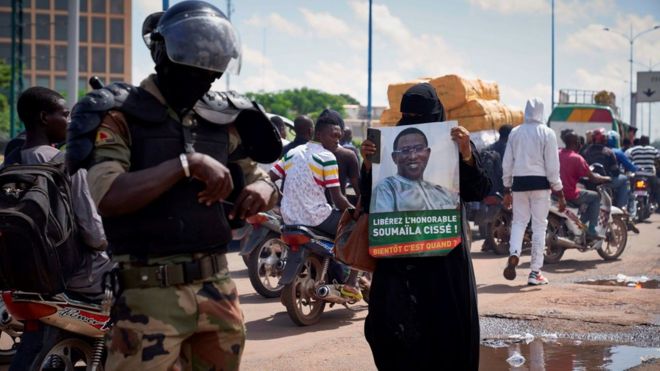
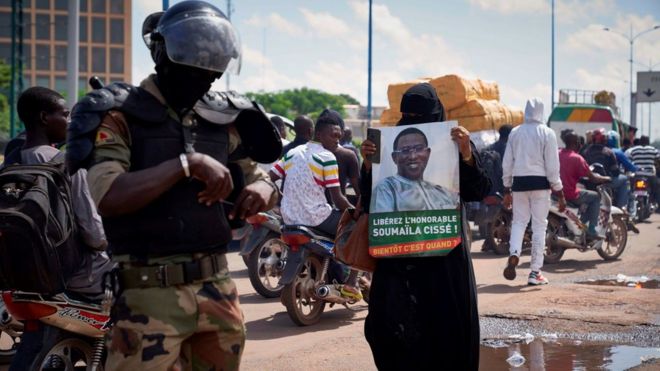
Soumaila Cissé – seen here in a protester’s picture – was voted into parliament days after he was kidnapped (Photo credit – Getty Images)
West African presidents have demanded the release of one of Mali’s opposition leaders, Soumaila Cissé.
He was kidnapped by an unknown group just days before the now-disputed parliamentary elections on 25 March.
The demand was made as part of a plan by the West African regional bloc Ecowas to resolve Mali’s ongoing political crisis.
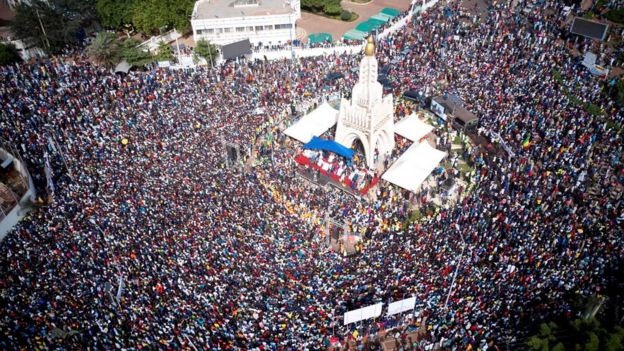
Tens of thousands of people have taken part in protests since June, with at least 11 protesters dying.
Mali imam challenges President keita
The women keeping peace in the deadliest place
The war in the desert
The protests started after the Constitutional Court threw out 31 results from parliamentary elections in April, benefiting President Ibrahim Boubacar Keita’s party.
On 5 June, thousands of people went out onto the streets in the first of a series of demonstrations. The protests turned deadly on the second weekend of July, when at least 11 people were killed.
Tens of thousands of Malians have demands the president steps down, including at this protest in June (Photo credit – AFP)
On Monday, after meeting up by video conference, the West African heads of state made a series of recommendations, hoping to bring the unrest to a close.
They insisted that the Malian authorities “intensify efforts” for Mr Cissé’s release, while also asking for an inquiry into the protesters’ deaths on 10-12 July.
They further asked that 31 MPs whose results are contested should resign and allow for new elections, and recommended a unity government, which includes the opposition, be formed.
They said their plan should be implemented within 10 days and recommended sanctions against people who get in the way.
They did not, however, recommend the protesters’ main demand – that President Keïta resign.
The proposals are similar to previous plans, which the opposition coalition – a group called M5-RFP – has rejected.
The BBC’s Ishaq Khalid says it is not clear if they will reject these resolutions as well.
Mali’s neighbours are afraid that the crisis could slide into chaos as many are concerned that the situation could play into the hands of armed groups if not properly managed.
On Monday, June 27, the Federal Government asked schools in the country to reopen for graduating pupils effective August 4.
It also announced that this year’s West African Senior School Certificate Examination (WASSCE) would commence on August 17.
This was contained in a statement signed by the Director, Press and Public Relations, Federal Ministry of Education, Ben Goong.
In the statement titled, ‘Exit Classes To Reopen August 4th’, the ministry said the agreed dates were part of the resolution reached after a consultative meeting with the education commissioners of the 36 states of the federation and other stakeholders.
The PUNCH had earlier reported that the FG initially announced that the 2020 WASSCE would start on August 4 through September 5 but later cancelled the planned reopening of schools for graduating pupils citing health concerns amid the coronavirus pandemic which had necessitated the closure of schools across the country since March.
However, the statement signed by Goong on Monday read, “Secondary schools in the country are to reopen from the 4th of August 2020 for exit classes only.
“Students will have two weeks with which to prepare for the West African Examinations due to start on the 17th of August 2020.
“These were the unanimous decisions reached today at a virtual consultative meeting between the Federal Ministry of Education, Honourable Commissioners of Education of the 36 states, the Nigerian Union of Teachers, the proprietors of private schools and the Chief Executives of examination bodies.
The Niger state police command has arrested Sani Garba, a 32-year-old man, for allegedly raping a 60-year-old woman.
According to PUNCH, Garba, who was paraded by the command on Friday, revealed that he was attracted by the “shaking buttocks” of the elderly woman.
The suspect also said he enjoyed having sex with old women within his vicinity because he had no money to maintain a girlfriend.
He added that he had forcefully had sex with more than three elderly women in the community. He described his arrest as unfortunate, noting he regretted involving himself in what he called “nonsense”.
“Since I didn’t have money to maintain a girlfriend, I resorted to having sex with old women in my area and I enjoyed doing it. At times I would ask myself ‘why am I into this nonsense?’ It is quite unfortunate that I found myself in this situation,” he said.
Wasiu Abiodun, the command’s spokesman, said Garba was arrested by operatives attached to ‘B’ Division in Suleja axis of the state.
Abiodun added that the suspect would be arraigned in court after investigations into the matter are completed.
The suspect was said to have criminally trespassed into the elderly woman’s house on July 18 around 4:30 pm and allegedly raped her.
The development comes amid growing concerns over cases of sexual assaults in Nigeria.
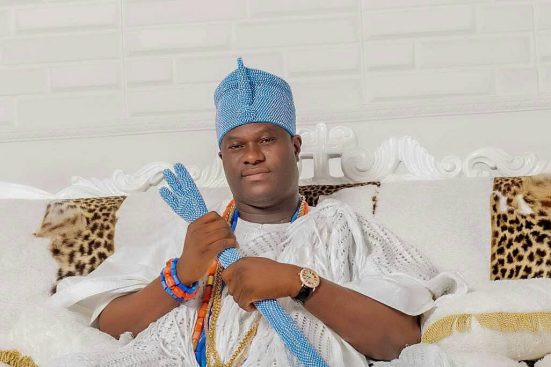
The Ooni of Ife, Oba Adeyeye Ogunwusi has stated that it is unfair to address Osun worshippers as idol worshipers.
The monarch said this while hosting Osun devotees in his palace as the ancient city celebrated the Osun festival on Sunday July 26.
He also noted that the pandemic is still ravaging the country and further urged Nigerians to follow laid down precautionary measures and avoid circulation of fake news.
Ooni of Ife said;
“Unlike the way we used to have it in Ife, we were forced to restrict this celebration which is a major festival in Ife.
“Our restriction made us to ensure that we don’t create more problems while trying to solve the one at hand. Osun festival as the world knows is the celebration of water and we all know that water is life.
“We’re using this instance to reconnect with our creator through nature to cleanse the world, and especially to end the pandemic. We are remembering our ancestors and it is unfair to call us idol worshipers.”
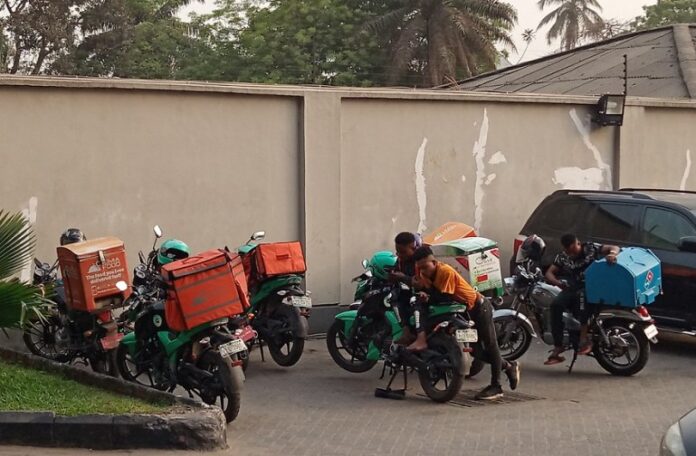
Some courier and logistics companies in Lagos State are closing shops for three days to protest spiking rates of harassment of their riders by policemen and touts.
An official of Courier Services Association of Lagos (COSAL) told The Guardian on Monday that touts, allegedly working for local governments in the state, are frustrating their operations.
“[The] voluntary withdrawal of our services for three days – Monday to Wednesday – this week is a sign of concern over extortionist agents on the roads, including [local government] councils, VIS, MOT,” the official said.
“We are ready to pay whatever legitimate fees due to the state and Local Government to operate our businesses in Lagos State. We just don’t want harassment from touts for no just cause because they impound our bikes daily and demand payments for documents we already have.”