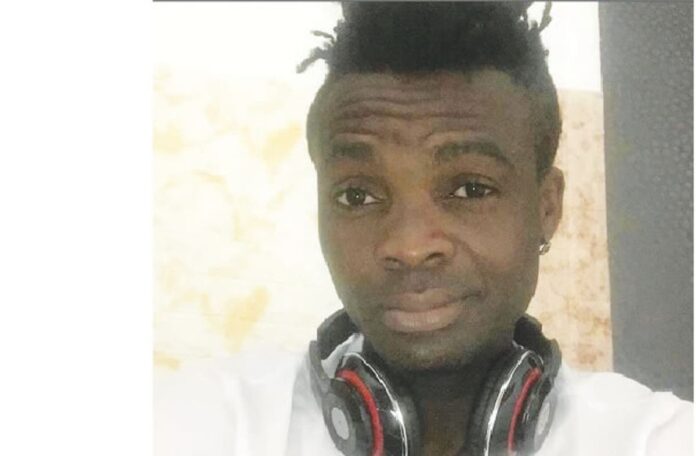
Nigerian Footballer, Ifeanyi Vincent, has voiced his shock following the recent explosions in Beruit, the capital of Lebanon.
According to reports, the explosions occurred at the Port Area in the Lebanese capital with at least 100 people killed and an estimated 4,000 others injured.
Ifeanyi arrived Lebanon early this year for a trial with one of the football clubs in the Lebanese League, but hasn’t been able to sign an official contract because of the Corona Virus outbreak.
The Dora-based footballer was reported to have told newsmen: “I was shocked and confused when the blast occurred.”
“We just heard a sound, I shouted Jesus! I didn’t know what happened, there was smoke all over the place and I went down because the building shook.”
“I used to see how these things happen on Television when I was in Nigeria, but I saw it live here. It was a terrible and scary experience for me.”
“My plan is to leave the city to try somewhere else since what I came for did not work out. I am wasting here in Lebanon. I’m trying to see if I can get an offer and leave as soon as possible,” he concluded.
Not a few have reacted to the blasts in Lebanon, expressing support for the Asian country.
Men of the Lagos State Police Command have clamped down on residents who joined the #RevolutionNow protest in the state.
The PUNCH gathered that no fewer than 20 of the protesters, including Nigerian journalist, Agba Jalingo, were arrested.
One of the protesters, Jamiu Towolawi, said the police also attacked members of the group around the Ikeja Along area, adding that 15 people are missing.
He said, “As at the last count, we have confirmed the arrest of 20 people and 15 are still missing. They shot tear gas at us at Ikeja Underbridge and brutalised our people. Agba Jalingo is among those arrested.”
Towolawi said more than 100 of the protesters had converged on the Ikeja office of the Committee for the Defense of Human Rights for a press briefing.
The state Police Public Relations Officer, Bala Elkana, did not take his call.
Responding to a text message from PUNCH correspondent on the alleged police attack, Elkana promised to get back after getting “briefs across the state.”
The West African Examinations Council has released the examination date, time and duration for subjects to be taken in the 2020 West African Senior School Certificate Examination, The PUNCH can confirm.
According to a copy of the timetable obtained by our correspondent from WAEC Nigeria, candidates would sit for Mathematics on August 17 and write English Language papers on August 26.
It said Mathematics (Essay) holds between 9:30 a.m and 12:00 noon while Mathematics (Objective) holds from 3:00 p.m. to 4:30 p.m. both on August 17.
The examination body said English Language (Essay) holds August 26 from 9:30 a.m. to 11:30 a.m. while English Language (Objective) holds between 11:30 a.m. and 12:30 p.m.
Biology practicals hold on August 31 from 09:30 a.m. while Essay and Objective hold August 25 from 09:30 a.m.
Chemistry practicals hold August 7 and 18 from 09:30 a.m. while Essay and Objective hold September 2 from 02:00 p.m.
Physics practicals hold August 8 and 20 from 09:30 a.m. while Essay and Objective hold August 28 from 09:30 a.m.
Economics (Essay and Objective) hold August 19 from 09:30 a.m. while Agricultural Science (Essay and Objective) hold same day from 02:00 p.m.
History (Essay and Objective) hold August 20 from 02:00 p.m.
Literature-In-English (Prose, Objective, Drama and Poetry) hold August 21 from 09:30 a.m.
Principles of Cost Accounting 2 (Essay and Objective) hold August 26 from 02:00 p.m.
Geography 2 (Essay and Objective) hold August 27 from 09:30 a.m.
French (Essay and Objective) hold August 29 from 09:30 a.m.
Further Mathematics (Essay and Objective) hold September 1 from 09:30 a.m.
Christian Religious Studies (Essay and Objective) and Islamic Studies (Essay and Objective) hold September 2 from 09:30 a.m.
Government (Essay and Objective) hold September 3 from 09:30 a.m.
Foods and Nutrition 2 (Essay and Objective) hold September 4 from 09:30 a.m.
Yoruba/Hausa/Igbo/others (Essay and Objective) hold September 8 from 09:30 a.m.
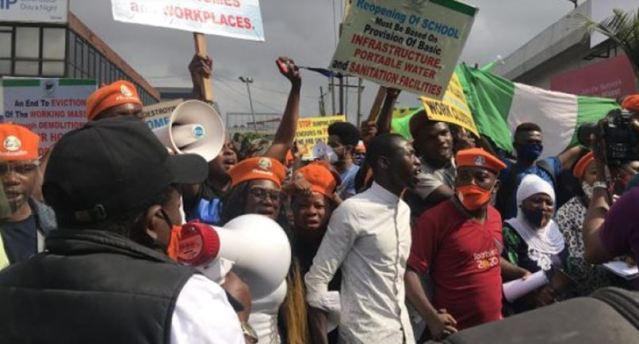
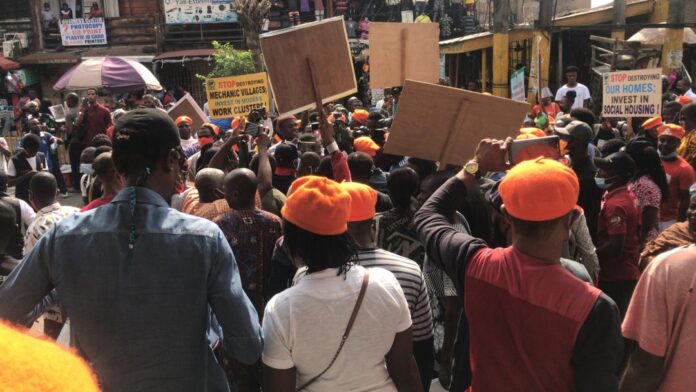
Several #RevolutionNow protesters were arrested by the police and the Nigerian Army in the Abuja metropolis on Wednesday.
The protesters carrying placards and banners had set out as early as 8 am to demand good governance.
Some of the banners read, ‘Nigerians are sick and tired of poverty, corruption, injustice and untimely death’; ‘Say no to injustice’, ‘Yes to living wage for unemployed youths’.
The protesters, many of whom wore orange berets, converged on the Unity Fountain, Shehu Shagari Way, Maitama, and were about to begin their procession when policemen stormed the venue and dispersed them.
Soldiers and other security operatives also cordoned off adjoining streets including Aguiyi Ironsi Street to prevent the protesters from marching.
Human rights lawyer, Tope Akinyode, said he witnessed security agents beating protesters for no just cause.
Akinyode said, “They arrested about 29 of our people. Security officials made them to lie down and beat them. Even as a lawyer I was harassed. They pushed me around. This is very undemocratic.”
It was learnt that the protests are ongoing in other states, including Lagos. The protesters in Osogbo were also arrested by members of the Nigeria Police Force.
The leader of the group, Omoyele Sowore, who is a former Presidential candidate, was detained last year for about three months while court orders for his release were ignored.
He was eventually released following pressure from the international community and human rights organisations. Several protesters who were arraigned in court won their cases.
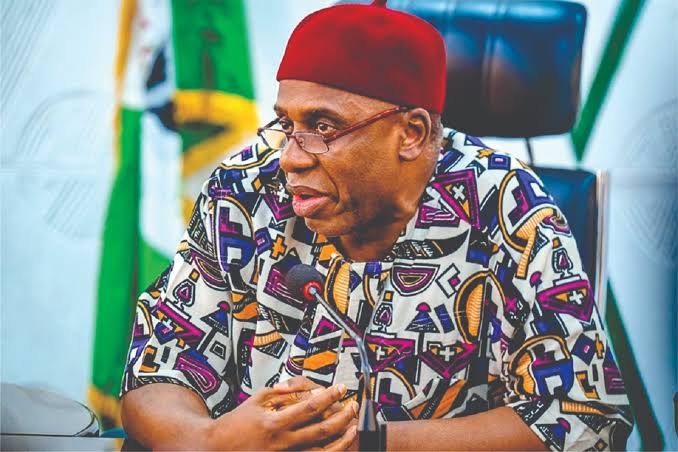
The Minister of Transportation has again given reasons he asked the National Assembly not to probe the Chinese loans.
The clause in the agreement signed by the Federal Ministry of Finance on behalf of Nigeria and Chinese Bank on September 5, 2018 has generated a lot of controversies in the country in recent days.
Part of the agreement said that: “The borrower hereby irrevocably provides waives any immunity on the grounds of sovereign or otherwise for itself or its property in connection with any arbitration pursuit to Article 85 thereof with the enforcement of any arbitral award pursuit thereto except for the military asset and diplomatic asset.”
However, the Minister told Channels Television’s Politics Today on Tuesday, that he asked the lawmakers not to go ahead with the probe in order not to scare the lender.
Amaechi further explained that the country was about to apply for about $3billion loan from China to execute the rail from Port Harcourt to Maiduguri.
“The reason why I said that is because we have already applied for $5.3billion to execute the rail from Ibadan to Kano.
“We are about applying for about $3billion to execute the rail from Port Harcourt to Maiduguri.
“Don’t forget the National Assembly approved that loan. It is unconstitutional and impeachable if you take a loan without the approval of the National Assembly,” he said.
He wondered why the same lawmakers who approved the loan were now questioning the same loan and the terms of the loan having looked at it before.
“If I am the lender, I will be worried. If they get worried, they will say ‘No, we will not approve the remaining loans you have applied for,” he said.
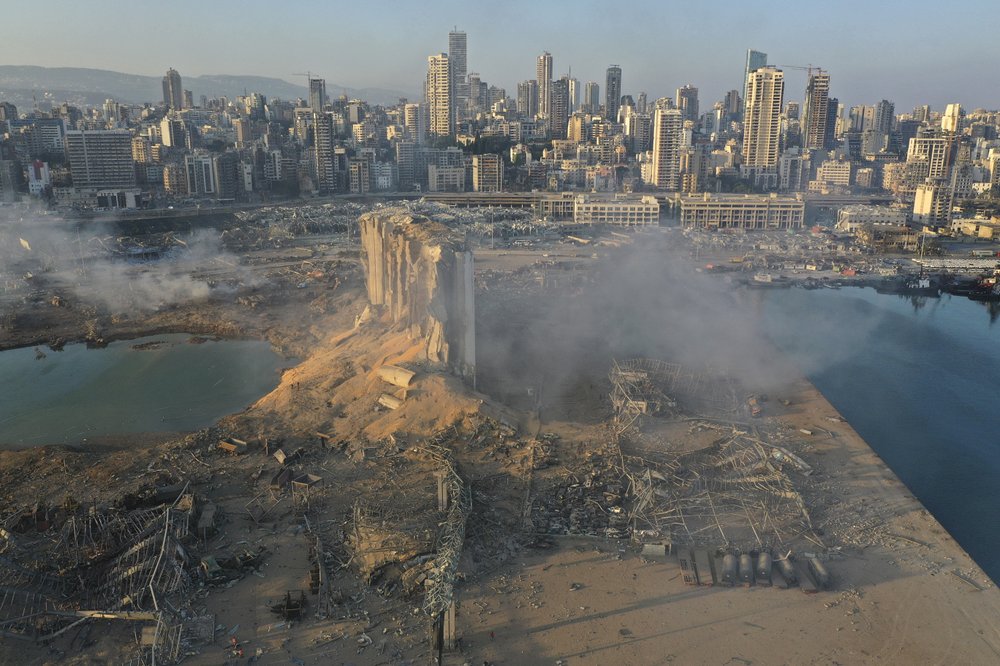
Residents of Beirut awoke to a scene of utter devastation on Wednesday, a day after a massive explosion at the port sent shock waves across the Lebanese capital, killing at least 100 people and wounding thousands.
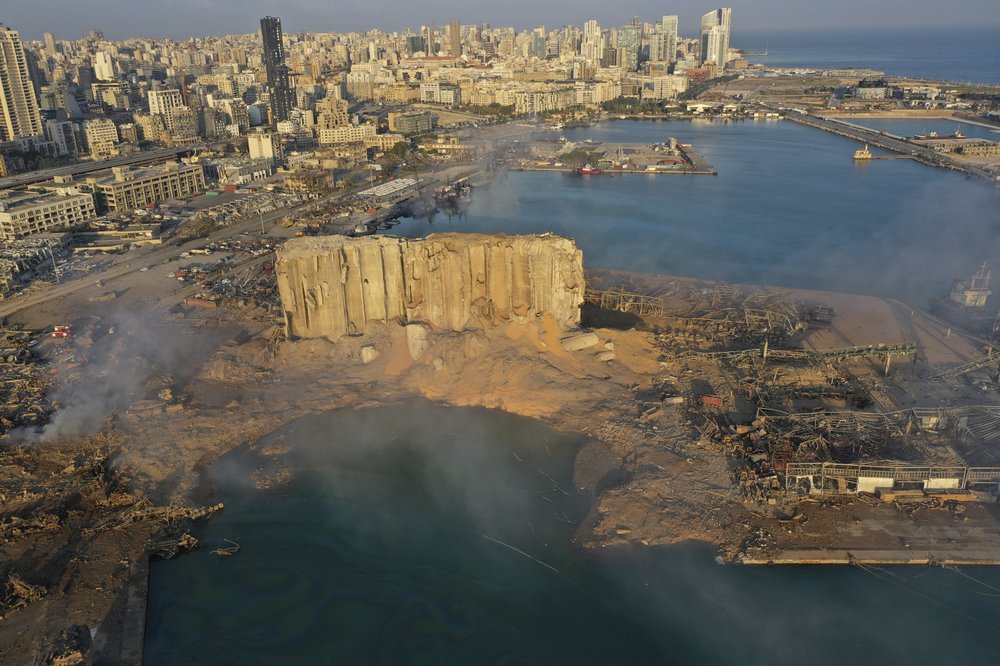
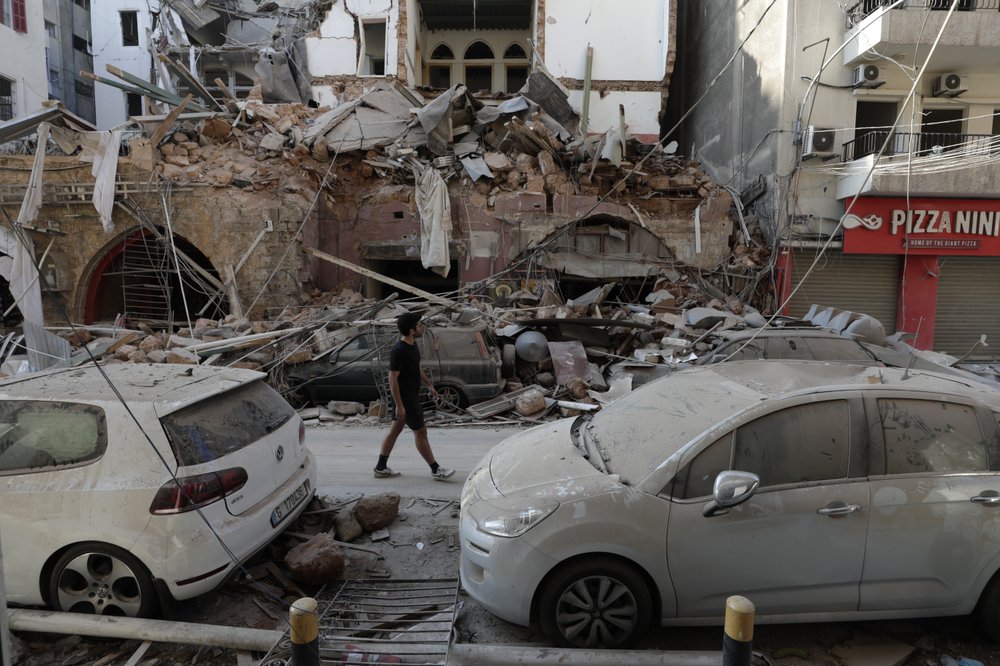
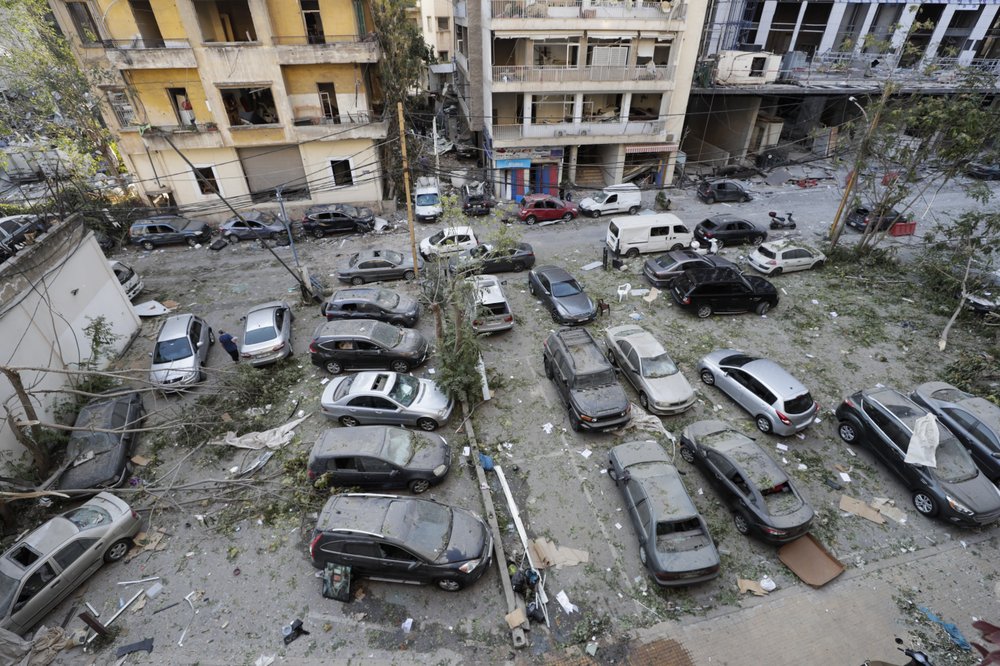
Smoke was still rising from the port, where huge mounds of grain gushed from hollowed-out silos. Major downtown streets were littered with debris and damaged vehicles, and building facades were blown out.
An official with the Lebanese Red Cross said at least 100 people were killed and more than 4,000 were wounded. The official, George Kettaneh, said the toll could rise further.
Scores of people were missing, with relatives pleading on social media for help locating loved ones. An Instagram page called “Locating Victims Beirut” sprang up with photos of missing people, and radio presenters read the names of missing or wounded people throughout the night. Many residents moved in with friends or relatives after their apartments were damaged and treated their own injuries because hospitals were overwhelmed.
It was unclear what caused the blast, which appeared to have been triggered by a fire and struck with the force of an earthquake. It was the most powerful explosion ever seen in the city, which was on the front lines of the 1975-1990 civil war and has endured conflicts with neighboring Israel and periodic bombings and terror attacks.
“L’Apocalypse,” read the front page of Lebanon’s French L’Orient Le Jour newspaper. Another paper, al-Akhbar, had a photo of a destroyed port with the words: “The Great Collapse.”
Lebanon was already on the brink of collapse amid a severe economic crisis that has ignited mass protests in recent months. Its hospitals are confronting a surge in coronavirus cases, and there were concerns the virus could spread further as people flooded into hospitals.
Interior Minister Mohammed Fahmi told a local TV station that it appeared the blast was caused by the detonation of more than 2,700 tons of ammonium nitrate that had been stored in a warehouse at the dock ever since it was confiscated from a cargo ship in 2014.
Witnesses reported seeing an orange cloud like that which appears when toxic nitrogen dioxide gas is released after an explosion involving nitrates. Ammonium nitrate is a common ingredient in fertilizer but can also be highly explosive.
Ammonium nitrate was used in the Oklahoma City bombing in 1995, when a truck bomb containing 2,180 kilograms (4,800 pounds) of fertilizer and fuel oil ripped through a federal building, killing 168 people and wounding hundreds more.
There is no evidence the Beirut explosion was an attack.
Videos showed what looked like a fire erupting nearby just before, and local TV stations reported that a fireworks warehouse was involved. The fire appeared to spread to a nearby building, triggering the explosion, sending up a mushroom cloud and generating a shock wave.
Security forces cordoned off the port area on Wednesday as a bulldozer entered to help clear away debris. A young man begged troops to allow him to enter and search for his father, who has been missing since the blast occurred. He was directed to a port official who wrote down his details.
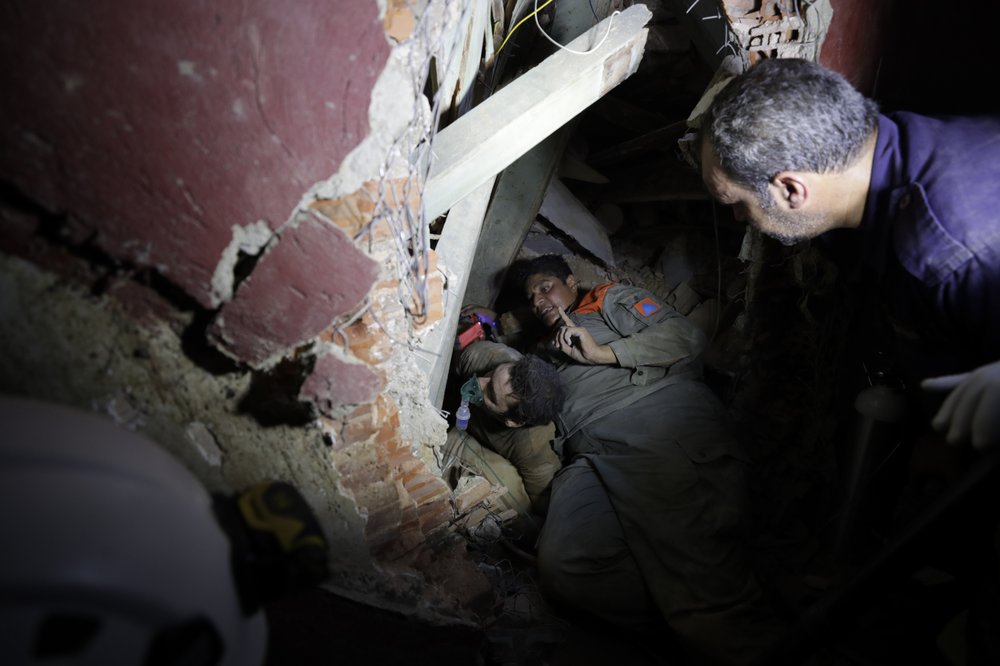
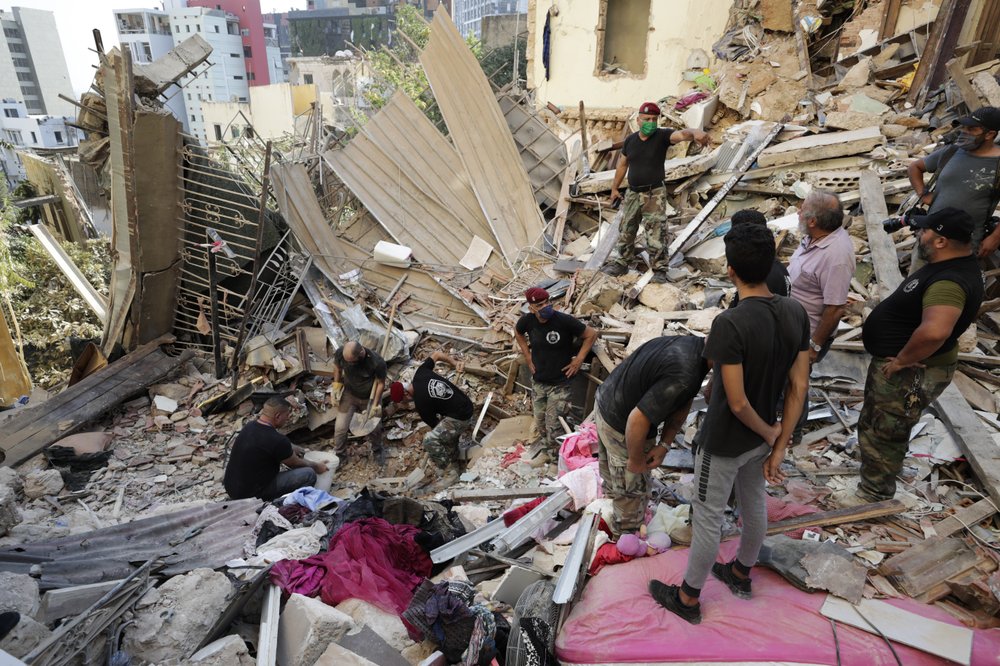
In Beirut’s hard-hit Achrafieh district, civil defense workers and soldiers were working on locating missing people and clearing the rubble. At least one man was still pinned under stones from an old building that had collapsed. Volunteers hooked him up to an oxygen tank to help him breathe while others tried to free his leg.
The blast destroyed numerous apartment buildings, potentially leaving large numbers of people homeless at a time when many Lebanese have lost their jobs and seen their savings evaporate because of a currency crisis. The explosion also raises concerns about how Lebanon will continue to import nearly all of its vital goods with its main port devastated.
Prime Minister Hassan Diab, in a short televised speech, appealed to all countries and friends of Lebanon to extend help to the small nation, saying: “We are witnessing a real catastrophe.” He reiterated his pledge that those responsible for the disaster will pay the price, without commenting on the cause.
There is also the issue of food security in Lebanon, a tiny country already hosting over 1 million Syrians amid that country’s years long war.
The port’s major grain silo is run by the Lebanese Ministry of Economy and Trade. Drone footage shot Wednesday by The Associated Press showed that the blast tore open those grain silos, dumping their contents into the debris and earth thrown up by the blast. Some 80% of Lebanon’s wheat supply is imported, according to the U.S. Agriculture Department.
Estimates suggest some 85% of the country’s grain was stored at the now-destroyed silos.
Lebanon’s state-run National News Agency quoted the Raoul Nehme, the minister of economy and trade, as saying that all the wheat stored at the facility had been “contaminated” and couldn’t be used. However, he insisted Lebanon had enough wheat for its immediate needs. Nehme said Lebanon also would import more wheat.
The tiny Mediterranean nation’s economic crisis is rooted in decades of systemic corruption and poor governance by the political class that has been in power since the end of the civil war. Lebanese have held mass protests calling for sweeping political change since last autumn but few of their demands have been met as the economic situation has steadily worsened.
Here are 7 words Nigerians use every day which do not exist. These are the kind of words you type into your phone or computer, and it draws a red line underneath it.
Please read on and educate yourself.
(1.) GO-SLOW: Although the word ‘go-slow’ appears in the dictionary, it is wrongly used by many Nigerians. The word go-slow means a form of industrial action in which work or progress is deliberately delayed or slowed down. It does not mean congested traffic, so it is wrong to use it in that way.
(2.) INSTALMENTALLY: There is no such word in the English dictionary, this word exists only in the Nigerian edition dictionary (if such a book exists). The correct thing to say is ‘in installments’
(3.) OPPORTUNED: How many times have you said “I was not opportuned to come?” The correct variants that exist are ‘opportune’ or ‘opportunity’. The word ‘opportune’ has no past tense.
(4.) CUNNY: “That guy is very cunny”. This is wrong, the word is ‘cunning’, not cunny. If you want to refer to someone who is sly or deceitful, use the word ‘cunning’, ‘cunny’ simply does not exist.
(5.) WAKE-KEEPING: I’m sure most people will argue with this, but argue as you may, what you will find in the dictionary is ‘wake- keep’.
(6.) SCREENTOUCH PHONE: “Oyinbo” people made these devices and called it ‘touchscreen’: by the time the phones entered “Naija”, we renamed them ‘screen-touch’.
(7.) DISVIRGIN No, you did not dis virgin that babe, you deflowered her, you took away her virginity, but you certainly did not disvirgin her, because the word ‘disvirgin’ simply does not exist!
President Muhammadu Buhari has ordered rejig of operational strategies of the nation’s security network to effectively counter the security situation across the country.
The National Security Adviser (NSA), Major General Babagana Monguno (Rtd.), disclosed this to State House Correspondents on Tuesday after the National Security Council meeting held at the State House.
He also revealed that the administration was working on a solution to the security crisis in some parts of the country, saying that the Minister of Defense, Major General Bashir Salihi Magashi (Rtd), was “working on something” to give effect to President Buhari’s earlier marching orders to service chiefs.
The NSA also disclosed that the council noted that proliferation of drugs is driving insecurity in the country.
Monguno said the manner of killings of their victims can only mean one thing and that is, the bandits, kidnappers and terrorists are out of their minds.
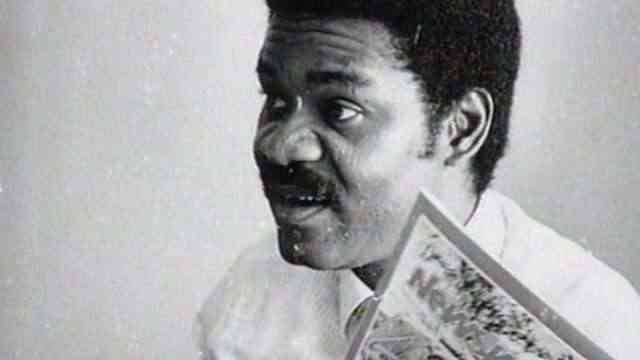
The death of the famous Nigerian journalist, co-founder and Editor-in-Chief of Newswatch Magazine, Dele Giwa, reads more like a page from an espionage screenplay than a real-life event.
It is however as real as day. On October 19, 1986, the muckraking Giwa died after opening a parcel bomb at his residence in the Lagos state capital, Ikeja.
A little less than 34 years after, Dele Giwa’s assassination has become one of the most high profile cold cases in the country, rivalled perhaps, by the assassination the then Minister of Justice and Attorney-General of the Federation, Bola Ige on December 23, 2001.
Over the years, Dele Giwa’s death has floated across the hallways of time and sadly has become a cautionary tale for those in pursuit of the truth. His untimely death was a big blow to Nigerian journalism, a dent that can still be felt.
Sumonu Oladele “Baines” Giwa was born on March 16, 1947. He came from a very humble background. His poor family worked in the palace of Oba Adesoji Aderemi, who was the then Ooni of Ife.
He first attended Authority Modern School in Lagere, Ile-Ife, and moved to Oduduwa College when his father secured a job as a laundryman in the College.
For his higher education, the young Giwa earned an admission to study English at the Brooklyn College. He graduated in 1977 and later enrolled for a Graduate Program at Fordham University.
He would get solid journalism experience working as a News Assistant for the New York Times. After four years working with the bastion of journalistic excellence, he moved back to Nigeria and secured a job with Daily Times .
In 1984, he co-founded Newswatch with fellow journalists Ray Ekpu, Dan Agbese and Yakubu Mohammed. The first edition of the weekly news magazine came out a year later.
According to the ‘International Afro Mass Media: A Reference Guide’, Newswatch “changed the format of print journalism in Nigeria [and] introduced bold, investigative formats to news reporting in Nigeria.” As of 1996, the weekly magazine circulated 150,000 copies in Africa, Europe and North America.
The IBB years
On August 27, 1985, Ibrahim Badamasi Babangida came into power after a palace coup that ousted General Muhammadu Buhari. Within the first year of his administration, Newswatch had a favourable view of the new military ruler.
According to ‘Africa’s Second Wave of Freedom: Development, Democracy, and Rights’, “Babangida was on the magazine’s cover four times, the first three in the first three months. He was also the subject of three favourable editorials in the magazine. Indeed, the editor’s opinion columns ‘criticized anyone…who attempted to make life unpleasant for Babangida’.”
After the initial wave of positive coverage, the magazine would take a harder stance on IBB’s regime.
On Sunday, October 19, 1986, Dele Giwa’s son received a parcel at their home: No 25B, Talabi Street, off Adeniyi Jones, Ikeja, Lagos. Billy Giwa gave the parcel to his father in his study with Mr Kayode Soyinka , the London bureau chief of Newswatch.
According to several reports, an envelope was on the parcel and written on it was “From the Office of the C-in-C” (Commander-in-Chief), with instructions that only the addressee should open it.
As soon as his son left the study, Dele Giwa tried to open the parcel and the bomb went off.
Giwa was taken to First Foundation Medical Centre, Opebi, Ikeja where he passed away around noon from injuries he sustained from the blast.
Aftermath
There have been several attempts to find who sent the parcel bomb to Dele Giwa, but they have all disappeared in the midst of conspiracy theories and stonewall blockades.
A 1993 story from TELL Magazine claims that the late human rights activist and lawyer Gani Fawehinmi “filed at least 32 cases and made 315 court appearances on the Dele Giwa issue.”
The question “Who Killed Dele Giwa?” vehemently echoes the saying: ‘justice delayed is justice denied.’ The mystery of the assassination of one of Nigeria’s most foremost journalists is a sad reminder that justice is nothing more than a 7 letter word in our country.
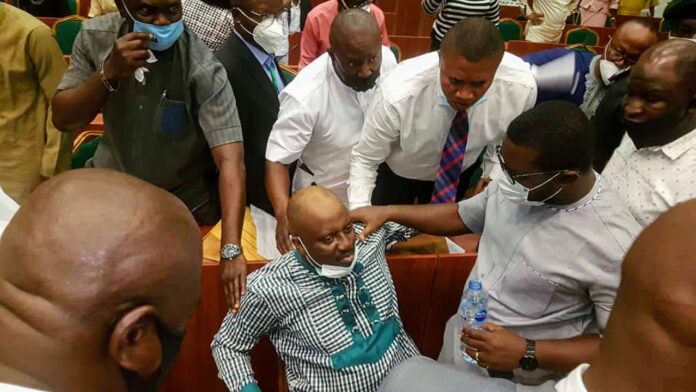
NDDC Boss Pondei, faints during Senate Committee probe
The Senate report on the alleged financial recklessness in the Niger Delta Development Commission has revealed how the top management of the agency shared N4.9bn among themselves in the guise of medical checkup.
The document also showed that the management paid N114.9m as supplementary medical allowance to 26 staff member during the same period.
It stated that both disbursements were made when the nation was under lockdown to check COVID-19 spread.
The report was adopted and approved by the Senate shortly before it proceeded on its annual recess penultimate week.
A copy of the document obtained by our correspondent in Abuja on Monday, indicated that the monies were paid to the individual accounts in March and April this year.
The document indicated that the acting Managing Director, Daniel Pondei, and the two executive directors got N14.2m each.
The report noted that no such payment took place during the first Interim Management Committee led by Joi Nunieh.
It nonetheless, stated that available data showed that the allowance had been in existence even though it appeared to have no specific policy underpinning it.
The report stated, “The three members of the Interim Management Committee received the highest amount of N142m each.
“Two other people, namely Evan Caroline Nagbo and Ms Cecilia Akintomide, took N12,387,500 each, while Peter Uwa Edieya was paid N10,340,000.
The report further added that four other members of staff collected about N8m each while 140 others collected an average of N7m each.
The NDDC management also paid 75 others N6m each while 153 staff members were paid N5.5m.
Four other category of staff were paid between N4.1m and N4.8m while seven others got about N3m each.
The document further indicated that 804 staff members collected between N2.4m and N2.9m each.
Apart from these, the document showed that the management paid N114.9m as supplementary medical allowance to 26 staff members.
No fewer than 15 of them got N7m while one of them collected N5.2m.
The rest however collected between N375, 000 and N550, 000 each.
The report indicated that “payment to all the 1,401 staff who received the allowance was made on 16 March 2020.”