The Nigerian Bar Association has withdrawn its invitation to Kaduna State Governor, Nasir el-Rufai, following protests from some lawyers.
The NBA said this in a tweet on Thursday via its Twitter handle @NigBarAssoc.
The tweet read, “The National Executive Committee of the Nigerian Bar Association at its ongoing meeting resolves that the invitation to the Kaduna State Governor, H.E. Nasir El-Rufai, by the 2020 Annual General Conference Planning committee be withdrawn and decision communicated to the Governor.”
A petition to stop the governor from attending the Annual General Conference which was started by a lawyer, Usani Odum, had garnered over 3,150 signatures on Change.Org as of 4 pm on Thursday.
In a separate letter titled, ‘Request to Withdraw the Offer of Platform at the 2020 Annual General Conference of the NBA to Mallam Nasir el-Rufai,’ addressed to the Chairman, Technical Committee on Conference Planning, NBA, Prof. Koyinsola Ajayi, some lawyers said the governor must not be allowed to speak at the conference.
The letter, which was signed by Silas Onu and Auta Nyada, listed 10 allegations against el-Rufai and his son, Bello, who is a Special Adviser to Kaduna Central lawmaker, Senator Uba Sani.
They faulted the NBA for inviting el-Rufai, citing his alleged poor human rights record and his inability to stop the killings, particularly in southern Kaduna.
The lawyers also referenced many controversial utterances of the governor, including a threat during the run-up to the general elections in 2019 that any foreigner that interfered in the poll would leave Nigeria in body bags.
The NBA virtual conference, which holds from August 24-26, 2020, is expected to have Vice-President Yemi Osinbajo and the Attorney-General of the Federation, Abubakar Malami (SAN), in attendance.
Others expected to speak at the event include former Governor Peter Obi of Anambra State, Governor Wike of Rivers State and a former Minister of Education, Oby Ezekwesili.
The theme of the conference is: ‘Am I a Nigerian – A Debate on National Identity, the Indigeneship-Citizenship Conundrum.’
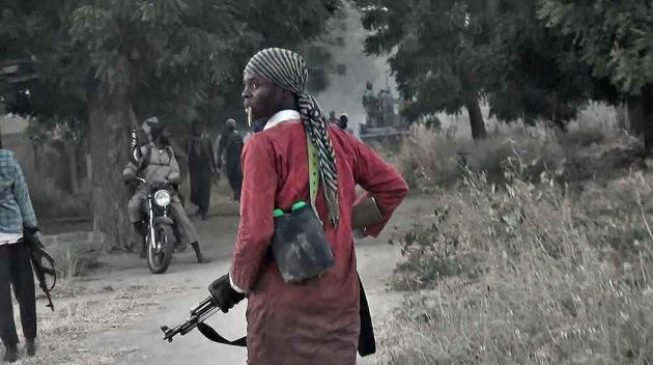
The Islamic State West Africa Province has taken hundreds of hostages in Kukawa, Borno State, AFP reports.
According to sources, who spoke with the news agency, ISWAP, a breakaway group of Boko Haram, on Tuesday night launched an attack on Kukawa town after arriving in the area in about 22 trucks.
Babakura Kolo, head of a local militia, who spoke with the news agency said, “The terrorists attacked the town in 22 trucks around 4:00pm and engaged soldiers guarding the town in a fierce battle.”
Residents of Kukawa on August 2 returned back to the town two years after they had been living in camps in Maiduguri following a bloody attack in November 2018.
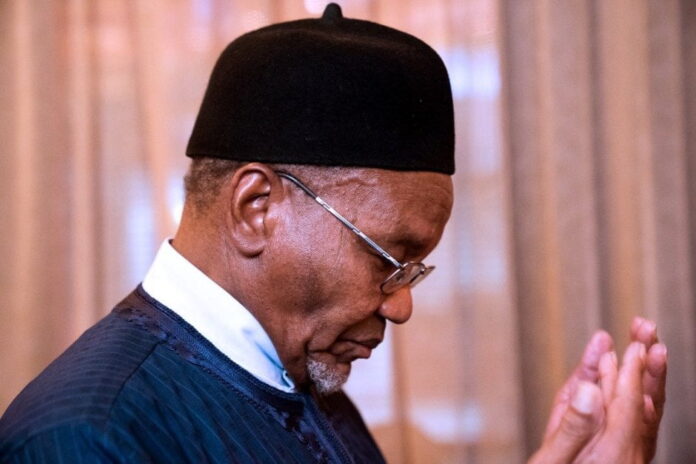
As speculations continue to trail the health condition of Mallam Mamman Daura, a nephew of the President, Muhammadu Buhari who has reportedly flown abroad for urgent medical treatment, a family source has said that the trip was a routine one that was long-planned.
An online news platform had reported that Daura, known to be one of the powerful men behind the Buhari Presidency, was flown to the United Kingdom.
“Daura, 79, was said to have been flown in a private jet to the UK on Wednesday after exhibiting respiratory difficulties with symptoms similar to coronavirus since last Friday,” the report had stated.
But a source close to the family who spoke to Vanguard on the condition of anonymity said that there was no truth in the report which alleged that Mallam Daura exhibited respiratory difficulties with symptoms similar to COVID-19 pandemic.
According to the source, “He (Mamman Daura) is there (in London) on a routine trip, it was long-planned. There is nothing wrong with Mamman Daura. You should ignore the online platform.”
Vanguard reports that Daura’s routine trip came at a time the Federal Government was yet to lift the ban imposed on international flights as one of the ways of curtailing the further spread of COVID-19 in Nigeria.
The Federal government had on Monday announced that international flights will resume August 29, 2020.
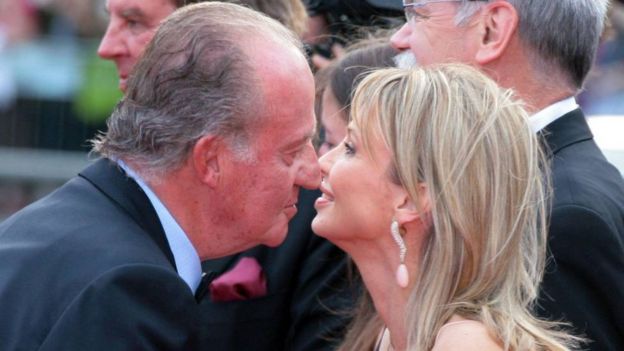
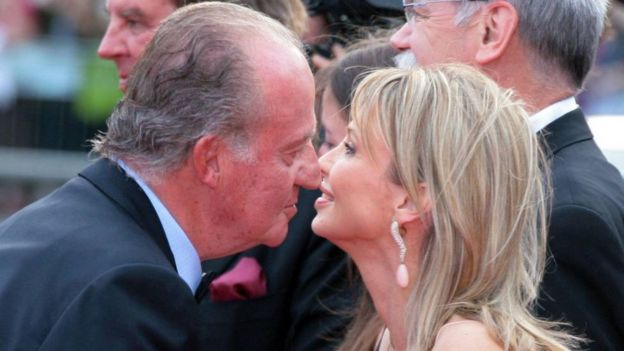
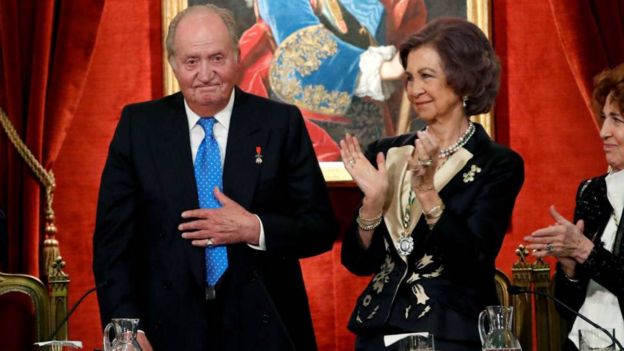
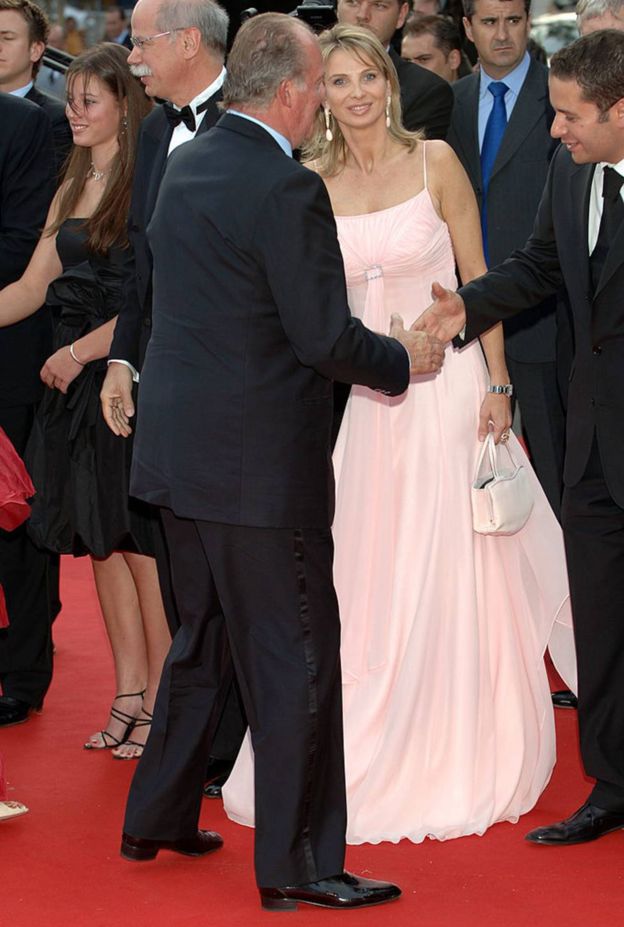
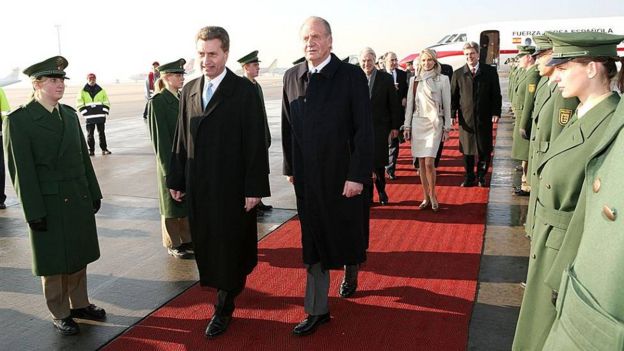
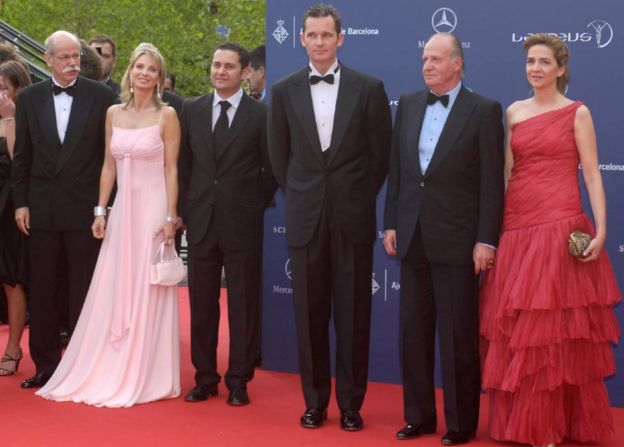
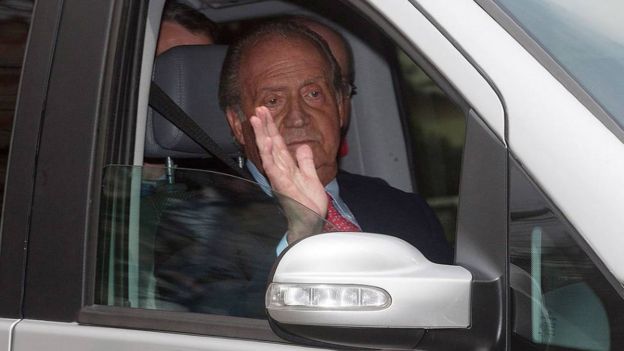
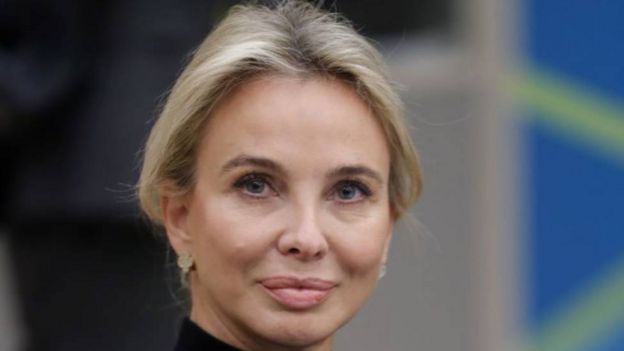
In early August, Spain’s former King, Juan Carlos, left the country following allegations of financial wrongdoing. But the country’s affection for its monarch began to unravel as far back as 2012, following an ill-fated elephant hunt. With the king on that safari was his former lover Corinna zu Sayn-Wittgenstein. She talks exclusively to the BBC about a multi-million euro gift from Juan Carlos, her claims of harassment by Spain’s secret service – and that elephant.
Except Corinna zu Sayn-Wittgenstein does not really want to talk about the elephant – the one King Juan Carlos shot dead on 11 April 2012. The media reported the animal was 50 years old and weighed five tonnes, with tusks more than a metre long.
Not that she is able to verify the creature’s vital statistics when asked about the incident. “I have no idea,” says the Danish-born business consultant, who was brought up in Germany. Yes, she was on the safari with the king, but she says she was at a distance when the shooting took place.
“I saw it afterwards because everybody goes to see it,” she says. “But I walked away after two minutes. I’m a hunter, but I’ve never killed an elephant in my life and never would. For me, the whole hunting experience was traumatic in that sense.”
The safari in Botswana was a present from the king to her son on his 10th birthday. Juan Carlos had become close to zu Sayn-Wittgenstein’s children during his romantic relationship with her from 2004 to 2009 – a relationship which the Spanish public knew nothing about at the time. Since 1962 he has been married to Queen Sofia.
“I wasn’t keen on going on this trip,” zu Sayn-Wittgenstein says. “I felt that King Juan Carlos was trying to get me to come back to him, and I didn’t want to give a false impression. I almost had premonitions about this trip.”
With good reason, as it would turn out. Before dawn on 13 April 2012, the king fell in his luxury safari tent, fracturing his hip.
On his return to Madrid, the media fell on the safari story like a voracious lion on a fragile gazelle. The revelation of the elephant hunt came very soon after a corruption investigation began into the king’s son-in-law, Iñaki Urdangarin – he is still in prison.
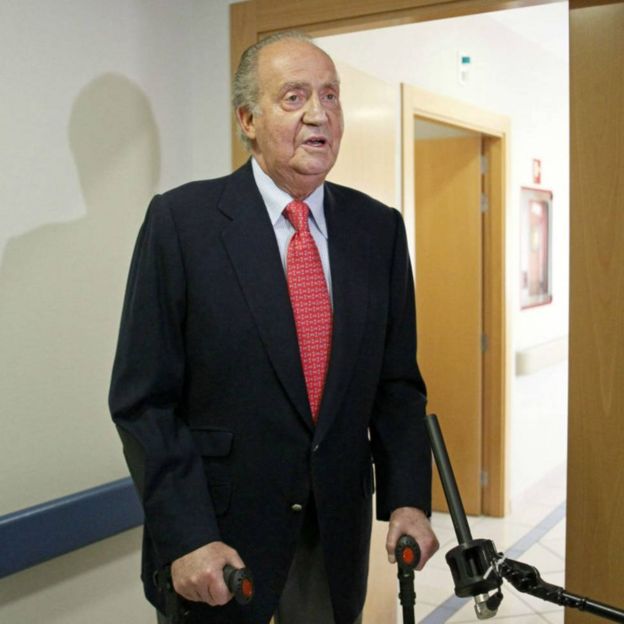
This was a time of real hardship in Spain, with unemployment running at 23%. After undergoing an operation, King Juan Carlos made his first tentative public appearance in hospital using a walking stick. He was asked how he was.
“I’m sorry,” he said. “I made a mistake, and it won’t happen again.”
King Juan Carlos had been largely untouchable because of his place in Spain’s tortured, bloody history. As head of state after Francisco Franco’s death in 1975, the king had overseen Spain’s transition from dictatorship to democracy and faced down a coup attempt in 1981. Now the damage to the popular monarch was immense.
“The crisis blew up because the Botswana trip put several things on the table,” says Jose Antonio Zarzalejos, a former editor of Spain’s right-wing, monarchy-supporting newspaper ABC.
“Firstly, that the king was openly unfaithful to Queen Sofia. Secondly, that in the midst of an economic crisis, Juan Carlos visited a country where Spain had no diplomatic representation. So the king – as head of state – was off the radar of the Spanish government. And thirdly, this was a very expensive trip – we didn’t know who paid for it. It created a lousy image of the king.”
King Juan Carlos and zu Sayn Wittgenstein met at a shooting party in February 2004.
She says the king was having trouble with his shotgun. “And I’m quite knowledgeable about all that, so I could explain what was wrong,” she says. “I think he was quite surprised.”
The relationship moved slowly.
“We ended up speaking on the phone for a few months,” she says. “The first date was in early summer. We always laughed a lot. We immediately clicked on many things, and we had many common interests – politics, history, fantastic food, wines…
“I was living in London at the time, having just started my own consultancy business. And I was a single mother of two. So we would meet in Madrid in a small cottage on the larger estate, and we travelled together.
“In the first year it was more difficult because I was very busy and he had a full agenda, but he would phone me up to 10 times a day. I mean, it was an immediately very strong, deep and meaningful relationship.”
At one point, zu Sayn-Wittgenstein says she asked the king how all this would sit with his wife, Queen Sofia.
“He said they had an arrangement to represent the crown, but they led totally different, separate lives. And the king had just come out of a nearly 20-year relationship with another lady who also had a very important place in his heart and in his life.”
The king and zu Sayn-Wittgenstein became close. She spent time with the king’s friends and she met his children.
In 2009, her father received a visit from Juan Carlos.
“He called me up and said the king had come see him and told him he was very much in love with me, and intended to marry me,” she says. “He also told my father he couldn’t do it straight away, it might take some time. He wanted my father to know he was very serious about me.”
It was earlier during the same year that zu Sayn-Wittgenstein says King Juan Carlos had proposed.
“Obviously, it’s a very emotional moment when something like that happens,” she says. “And I was very much in love with him, but I foresaw – I’m a political strategist – that this would be very difficult. And I thought it might destabilise the monarchy.
“That’s why I never really encouraged it – I just took it as a token of the seriousness of the relationship, rather than something that would actually materialise.”
The romance would end that same year.
“My father was suffering from pancreatic cancer and had been given only a few months to live,” zu Sayn-Wittgenstein says. “So I decided to spend time with him – we were very close. To my great shock, just after his funeral, the king told me he’d been carrying on a relationship with another woman for a period of three years.
“It literally devastated me – it was the last thing I expected. I really needed emotional support after the death of my father, and the news created a monumental shock for me emotionally. I was just not expecting it after he’d asked me to marry him and gone to see my father. I was very unwell for a few months.”
Apart from Queen Sofia, zu Sayn-Wittgenstein says, she believed she was in an exclusive relationship with King Juan Carlos.
“I’d made it very clear I wouldn’t tolerate him having relationships with other women at the same time,” she says. “I think in the end he was mortified by what he did. But for me, that was something I could never overcome.”
Although the relationship was over, the two remained friends – partly because the king was close to zu Sayn-Wittgenstein’s children. At the end of 2009, Juan Carlos asked to see her.
“He had some bad news to tell me. He’d been diagnosed with a tumour on his lung and he was convinced it was cancer. He was terrified. He said his family didn’t know about it. And I didn’t want to abandon him. So I remained a very devoted, loyal, close friend during the time he was very unwell.”
When the king was due to have an operation in 2010, zu Sayn-Wittgenstein says he asked her to be in the hospital with him.
“I slept on a couch next to his bed prior to the surgery because he was very nervous about it,” she says. “But the biopsy showed the tumour was benign.”
Then the king’s family arrived.
“I was unceremoniously asked to leave by some not-so-very-kind member of his staff,” she recalls. “When Queen Sofia and some of the courtiers realised how serious the king was about me, quite a high level of hostility had developed.”
Even so, zu Sayn-Wittgenstein says her friendship with Juan Carlos continued.
“He recovered very slowly from the surgery,” she says. “So I would go to Madrid from time to time to see how he was doing with his rehabilitation, how he was recovering.”
Which brings us back to 2012 – Botswana, a dead elephant, and the king’s fractured hip.
“It’s never been reported that I actually organised his repatriation, because there was no plan in place,” zu Sayn-Wittgenstein says.
“We flew in on a private plane, and I was mindful of the fact that the king was not in good health – he had two doctors with him – which is why I was apprehensive. So I kept the plane close by. It was a huge responsibility – he was prepped up ready for surgery. And I was very, very nervous that we wouldn’t get him home alive.”
Quickly, the safari story became a media sensation – and zu Sayn-Wittgenstein believes this was all pre-planned.
“I think this trip would’ve been leaked regardless of the accident,” she says. “Scandals involving the king’s son-in-law and daughter started to emerge at the end of 2011, and I think that set in motion various factions inside the establishment and the royal family.
“There were forces at work inside the palace that were working on moving Juan Carlos on, trying to speed up an abdication,” she says.
The royal party arrived back in Madrid from Botswana late at night. King Juan Carlos went straight to hospital.
“From the moment I came back from that trip I was under full-blown surveillance,” says zu Sayn-Wittgenstein.
“This was the beginning of a campaign to paint me as this Wallis Simpson, Lady Macbeth, evil character who’d led this wonderful man astray on this trip during a big economic crisis.”
It was after this African trip that zu Sayn-Wittgenstein claims she began to receive unwelcome attention from Spain’s intelligence service, the Centro Internacional de Inteligencia (CNI). First she claims her flat in Monaco was targeted.
“The apartment was occupied when I was travelling,” she says. “I suddenly received messages from a security company saying, ‘We’ve been contacted by your friends in Spain.’ And I was texting the king, saying: ‘Who are those people, what’s going on?’ He told me they were there to protect me from the paparazzi.
“But had he been concerned about my security, he could have called his close friend, Prince Albert [of Monaco], who’s also a longstanding friend of mine, and said, ‘We have some security concerns – could you keep an eye on Corinna’s flat?'”
So what were they looking for?
“Documents – and in a very thorough way… They stayed for weeks and weeks.”
She says she does not know what kind of papers they were searching for.
On a business trip in Brazil, zu Sayn-Wittgenstein says she was followed. And that she received an anonymous death threat telling her there were many tunnels between Monaco and Nice – a reference to the crash that killed Princess Diana. In her Swiss apartment, she says, a book was left in her living room about the princess’s death.
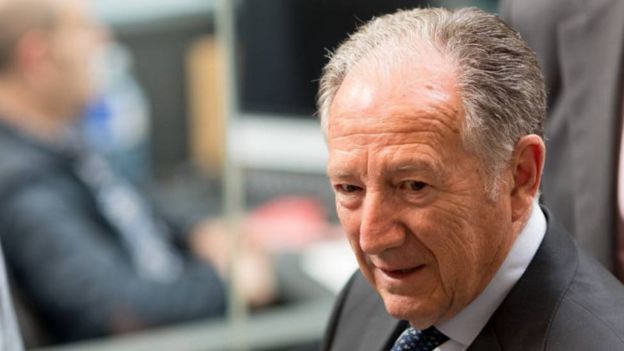
Later in 2012, she claims she was visited in London by the head of Spanish intelligence, Félix Sanz Roldán.
“He said he was sent by the king,” she says. “The primary warning was not to talk to the media.
“He said if I didn’t follow these instructions, he would not guarantee my physical safety or the physical safety of my children.”
The BBC tried to contact Felix Sanz Roldan (who is no longer head of Spanish Intelligence) via the CNI, about these serious allegations. There was no reply to these inquiries. And Iberdrola, a Spanish company whose advisory panel he sits on, refused to facilitate contact with him.
Certainly, Félix Sanz Roldán is known to be very close to King Juan Carlos.
“When Félix Sanz was appointed director of the CNI, an intense friendship grew between them – he totally protected the king,” says Fernando Rueda, an academic at Villanueva University, and an expert in the Spanish intelligence service.
“But Félix Sanz was not the first head of the CNI to tell the king that the relationship with Corinna was very negative, and that Corinna was not to be trusted,” he adds.
So what does he make of zu Sayn-Wittgenstein’s claims of harassment?
“Nobody knows if it’s true or not,” he says.
“But it wouldn’t surprise me, because if the intelligence service considered the security of the Spanish state was in danger, they would use all mechanisms to get someone to return documents.”
In Spain, King Juan Carlos was not able to shake off the curse of the elephant. In 2014 he abdicated in favour of his son Felipe. As emeritus king, he was still busy with official engagements, trade trips and international travel – especially to the Middle East.
And it is those very close contacts Juan Carlos has in the Middle East that have become the subject of intense scrutiny – especially from prosecutors. Judicial inquiries began after the recordings of a rogue Spanish police officer became public. He taped all his conversations with the rich and powerful – including with zu Sayn-Wittgenstein.
In 2018 that audio was published in the Spanish media. In one of the recordings, a female voice asks rhetorically in Spanish about the emeritus king: “How does he get money? He takes a plane, goes to Arab countries……and he returns with the cash in suitcases – sometimes with five million. He has a machine to count it – I’ve seen it with my own eyes.”
Corinna zu Sayn-Wittgenstein has never officially confirmed it was her on the recording. But the revelations from those tapes were sensational, and they became the catalyst for the opening of investigations in Switzerland and, more recently, in Spain.
At the heart of the proceedings is a $100 million payment from the late king of Saudi Arabia that was placed in a Swiss bank account linked to a Panama-based offshore foundation in 2008. The beneficiary was King Juan Carlos.
The Swiss prosecutor is investigating three people with ties to the former king. And he is looking into whether this money was connected to the awarding of a massive contract to a Spanish consortium to build a high-speed rail link in Saudi Arabia three years later. In other words, was it a kickback?
In Spain, the Supreme Court has opened an investigation into emeritus King Juan Carlos himself – but it can only examine alleged wrong-doing after he abdicated in 2014, when he lost his immunity from prosecution.
Then in early August 2020, weeks after he was linked to the inquiry, the ex-king made the shock announcement that he had left Spain; after two weeks of speculation about his whereabouts, the Spanish royal palace said he was living in the United Arabs Emirates.
So where does Corinna zu Sayn-Wittgenstein fit in? She is one of the individuals being investigated by the Swiss prosecutor. And that is because in 2012, after the Botswana debacle, the then-King Juan Carlos transferred what was left of that $100 million from Saudi Arabia – around €65m – to her.
“I was very surprised because it’s obviously an enormously generous gift,” she says. “I will say, though, that conversations about him managing his will during his lifetime had taken place in 2011. He started to talk about his death and what he wanted to leave in his will.
“He also mentioned he wanted to take care of me, but no amounts were ever discussed. He was worried that the family wouldn’t respect his wishes,” she claims.
She says she received the money after her flat in Monaco was ransacked and she was visited by the head of the CNI.
After the transfer was made, she flew to Madrid to thank the king, she says, and he told her that he felt guilty about what had happened to her: “I think he was very shocked to understand the extent of pressure I’d been put under, and the extent of the reputational destruction that had taken place.”
In testimony to the Swiss prosecutor, zu Sayn-Wittgenstein said she believed the king had given her the money out of love.
“I think it was recognition of how much I meant to him, how much [her son] meant to him,” she says. “It was a gratitude for looking after him during his absolutely worst moments.
She insists the king was not trying to hide or launder this money by bequeathing it to her – even though in 2014, he asked for the money back.
“In 2014 he made desperate attempts to get me to come back to him,” she says. “At some point he realised I wasn’t going to return, and he went completely ballistic. He asked for everything back. I think it was just a tantrum he threw.
“So he’s confirmed to the Swiss proceedings that he actually never asked for the money back, and that I never carried money on his behalf.”
In Spain, Juan Carlos’ multi-million euro gift to zu Sayn-Wittgenstein has generated intense interest – and outrage. The news broke as Spain confronted one of the worst coronavirus outbreaks in Europe.
Ivette Torrent, a young lawyer from Barcelona, began an online petition calling for the cash to be transferred to the Spanish public health care system.
“Exhausted health personnel were working a thousand hours with minimal resources,” she says, adding that allocating the funds to them would be the “fairest thing”.
Close to 250,000 people signed. So what would Torrent like the king’s former lover to do with the cash gifted to her?
“I don’t know if this money is illegal,” she says. But if the ongoing investigations establish an illegal origin for this money, “they should return it”.
And zu Sayn-Wittgenstein’s response?
“I will leave this up to the Swiss prosecutor,” she says. “Putting me under pressure on that is not the right way to go forward.
“Because I think in that case, everybody needs to return everything. What I find extraordinary is they’re rolling 40 years of the modus operandi of a family enterprise into a focus on one person. And that’s me… Because there will be hundreds of other accounts in other jurisdictions.”
Corinna zu Sayn-Wittgenstein maintains the obsession with her and the money she received from the emeritus King is part of a still on-going, pernicious campaign partly orchestrated by Spain’s CNI.
She has supplied the BBC with a catalogue of police crime numbers relating to incidents she claims have occurred in the UK over the past few years.
“The harassment has never ceased – it’s intensified if anything,” she says.
“But we will be talking about this in the proceedings coming up in the UK. The case will treat all elements of the abuse campaign. Juan Carlos will be the defendant, but he may not be the only defendant.”
Those English legal proceedings are yet to be issued.
For Fernando Rueda, the expert on Spain’s CNI, there is a question mark over her claims.
“It no longer makes sense for the Spanish secret service to harass her in the UK when things are already public. What she’s doing is trying to defend herself by presenting herself as a victim,” he says.
“Corinna’s problem is that she’s facing legal cases, and she has to explain and justify why she has €60m. She could be charged. But Juan Carlos, according to Spanish law, cannot be charged,” he adds.
In spite of the judicial hot water she finds herself in, zu Sayn-Wittgenstein says she does not have misgivings about her early relationship with the emeritus king.
“I do not regret at all my romantic relationship with Juan Carlos,” she says. “I have very sincere feelings for him. And I am extremely saddened by the turn it has taken.”
The President of the Centre for Socio-Legal Studies, Prof. Yemi Akinseye-George (SAN), says the regime of the President, Major General Muhammadu Buhari (retd.), is fighting corruption with “old tools,” hence its little or no result.
Akinseye-George said, for instance, Nigerian judges have been on the same salary for the past 13 years, while the Administration of Criminal Justice Act, which is the main law being used by the regime to fight corruption, was signed by former President Goodluck Jonathan in 2015.
He also pointed out that the Code of Conduct Bureau was being deliberately underfunded by the political elite to incapacitate it, adding that it had become outdated to have the Code of Conduct Tribunal only in Abuja and with just three arbiters, attending to cases from all over the federation.
Akinseye-George said these at a recent webinar, with the theme, “No escape for the corrupt: Lifting the lid on assets declarations in Nigeria,” organised by Socio-Economic Rights and Accountability Project.
The SAN said, “The political elite are not very keen about fighting corruption. The problem that the CCB has is the same problem that the judiciary has. Judges have been on the same salaries for 13 years; no decent retirement benefits; after working and retiring at 65 years, judges still have to look for rented accommodation. I think it is a shame.
“We expected that when this administration came on board, we were talking about change. The only law now that government is using to be able to fight corruption in the courts, the Administration of Criminal Justice Act, was passed in 2015, signed by the former President. The necessary legislative intervention, constitutional amendments, structural adjustments that are required to give teeth to the anti-corruption fight have not been made. The government is using old tools to fight the battle, yet this government claims their priority is anti-corruption.”
Akinseye-George told our correspondent that his organisation would be going to court to demand salary increase for judges.
He added, “It is sad that despite rising inflation, declining value of the naira and increasing workload of judges, their salaries have remained frozen for 13 years. This is absolutely unacceptable. The Centre for Socio-Legal Studies shall soon institute a legal action in the court to seek mandamus compelling a raise in the salaries and allowances of judges.”
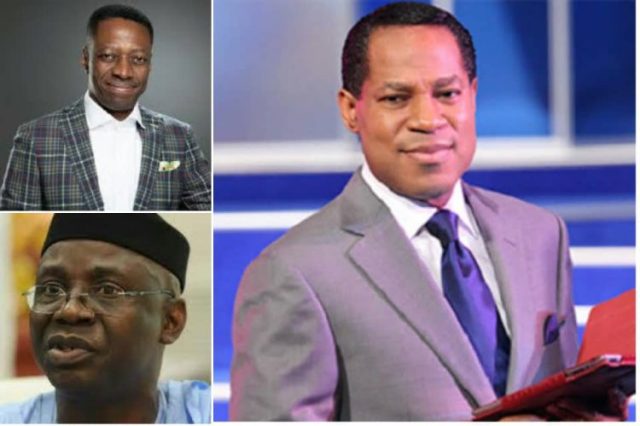
Founder, Christ Embassy, Pastor Chris Oyakhilome has lashed out at churches that refused to open for worship in Lagos State, describing them as fake.
Founder, The Citadel Global Community Church, formerly known as Latter Rain Assembly, Pastor Tunde Bakare; founder, Day Star, Pastor Sam Adeyemi and some others have refused to open their churches for services after the Lagos State Government lifted the ban on religious centres’ re-opening.
But Oyahilome during a service said ” if you refuse to open church for fear of being infected, you were never a believer.
“This is a great concern because there were churches that were thought to be churches until recently. We find a lot of ministers who were thought to be advocates of the gospel advocating for shutting down the churches. (Because they cannot guarantee safety).
“It is pressure like this that reveals what is a church and what is not. Do they really believe in God, the same God of the patriarchs in the Bible?
“I have laid hands on some of the most infectious people on earth and had no fear of being infected. The Word of God guarantees life in Christ.
“When you get to that point where you are afraid of opening churches for fear of being infected, you have denied the faith. You never believed,” he said.
He said one could be a preacher but “your fear and unbelief has put you in bondage. If Jesus is real and you have him inside you, shouldn’t you be a healer of diseases? Should you be afraid? The Bible says ‘if they shall drink any deadly thing, it shall not hurt them’. Don’t you believe that? Do you question the validity of the words of Jesus?
If these things are not true, then what is true? If one part of the Bible is not true, then what is true?
“What the Lord expects us to do: There was a time the Church didn’t have knowledge of anything going on.
I believe why God allowed the Churches to be shut down was because God wanted to get our attention.
Usually there should be a separation of Church and State. But different leaders started making rules about wearing masks before we worship.”
Oyakhilome added that “these guys don’t have any research that shows that using a mask saves you from the COVID-19. On the contrary we have abundant research results that prove that the mask doesn’t save you: in fact it kills you slowly. So why the mask: it keeps you subject to them. It reminds them of their power over you.
“Don’t look at the USA because its not a good example for any country to follow right now. It’s been politicized. They are caving in to the protagonists of the left to reduce criticism. I tell you, after the elections, nobody will wear masks.”
He stated that the testing for COVID-19 is one of the biggest fraud.
According to him, “from different countries we have heard complaints of this fraud of a test. Those who are doing the test are behind the fraud. Every government needs to wake up now and question the fraud! Paid Journalists had better be sincere to themselves, their country and to God. I have done my research. You do yours! Get the right information.”
The United Nations Security Council has issued a stern directive to the Malian military to immediately return to the barracks.
The warning came on Wednesday as mutineering soldiers took over the government in Mali as the President, Ibrahim Boubacar Keita, and Prime Minister, Boubou Cisse, were arrested by the soldiers.
The President was subsequently forced to resign.
The 15-member council was briefed after soldiers ousted Mali’s President in a coup.
A resistance group, M5, also insisted that the constitutional court must be dissolved, while the President must resign before peace can return to the country.
The crisis had erupted after the court nullified results of 31 parliamentary seats in the country’s polls, awarding victory to some other contenders, which the resistance group said was at the instigation of Keita.
On July 10, riots led to the killing of some protesters by security agents.
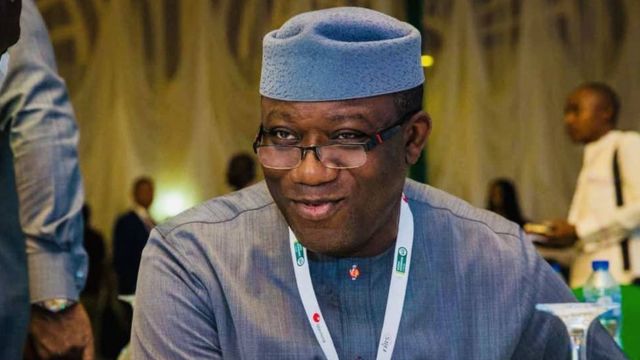
The 2023 presidential campaign posters of Ekiti State Governor, Dr Kayode Fayemi, which appeared on social media have sparked public debate on various social media platforms across the state.
The posters had a photograph of the governor dressed in a sky blue Agbada with a blue striped cap popularly called “Awolowo” was sponsored by the Chairman of Ikere Council area of Ekiti State, Mr Femi Ayodele.
Ayodele said he did the posters, with the campaign message, ‘Support His Excellency Dr John Kayode Fayemi for President 2023’ “to show my unalloyed and uncompromising loyalty to Governor Fayemi” to dispel speculations that he was working against him.
The council boss said the governor was fit enough for the exalted office considering his array of outstanding credentials, administrative shrewdness and political acumen, saying, “Fayemi’s commitment, resourcefulness and pedigree put him in good stead to lead Nigeria in the next political dispensation.”
However, the Chief Press Secretary to Governor Fayemi, Yinka Oyebode, who said his principal did not know anything about the posters, said, “The sponsor is merely expressing a personal opinion.”
He urged members of the public to discountenance the posters.
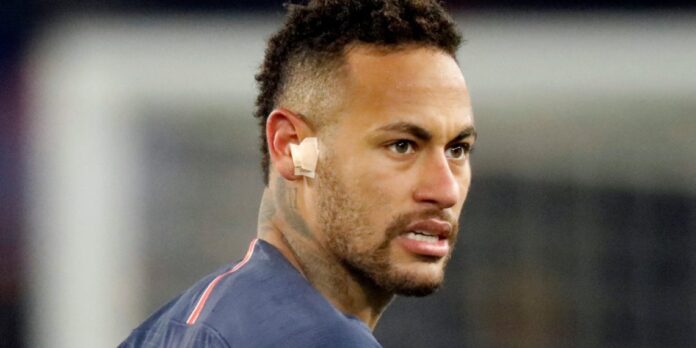
Paris Saint-Germain star, Neymar, is reportedly at risk of being banned for the Champions League final by UEFA after swapping shirts following his side’s semi-final success against RB Leipzig.
After PSG prevailed with a 3-0 victory against RB Leipzig in Portugal, Neymar swapped shirts with Leipzig’s Marcel Halstenberg.
Neymar is at risk of being banned for the Champions League final after breaking coronavirus rules.
Reports prior to the Champions League’s resumption indicated that players swapping shirts after games would receive a one game suspension and would have to self isolate for twelve days.
PSG will take on Bayern Munich in the final on Sunday.
Following the military coup in Mali, the Heads of State and Government of the Economic Community of West African States will today (Thursday) hold an extraordinary summit on the situation in the country.
This is coming as the ECOWAS suspended Mali and directed member countries to close their borders against the landlocked West African nation.
Recall that soldiers arrested the Malian President, Ibramin Keita; and the country’s Prime Minister on Tuesday.
The President resigned on Wednesday.
According to a statement on Wednesday by ECOWAS Commission titled, ‘Heads of State to hold Extraordinary Summit on the socio-political situation in Mali,’ the summit would hold virtually through videoconference.
It read, “The Extra-ordinary Summit was convened following the military coup d’etat in the Republic of Mali.
“ECOWAS has strongly condemned the undemocratic change of government as it is against the ECOWAS Protocol on Democracy and Good Governance.”
Earlier, ECOWAS in a statement said the military action would impact negatively on peace and stability in Mali and in the sub-region.
It reads partly, “ECOWAS Suspends Mali from all ECOWAS decision-making bodies with immediate effect, as per the Additional Protocol on Democracy and Good Governance, and this, until effective reinstatement of the constitutional order;
“Decides to close all land and air borders, as well as to stop all economical, trade and financial flows and transactions between the ECOWAS Member States and Mali, and encourages all partners to do the same.”
In the same vein, the Federal Government called for the activation of the Economic Community of West African States standby force.
The Minister of Foreign Affairs, Geoffrey Onyeama, stated this on his official Twitter handle on Wednesday.
Onyeama’s tweet read, “The Nigerian Government unequivocally condemns the coup d’état that took place in #Mali Monday and demands the immediate and unconditional restoration of constitutional order. We welcome the urgent activation of the #ECOWAS Standby force.”
Meanwhile, The United Nations Security Council on Wednesday ordered the Malian mutineers to release the country’s President, Ibrahim Keita, other detained officials and return to their barracks.
AFP reports that the 15 members of the council, in a statement released on Wednesday before a closed-door security council meeting requested by France and Niger emphasised on the urgent need to restore the rule of law and to move towards the return to constitutional order.
In a fresh development, a Malian army officer, Colonel Assimi Goita, on Wednesday announced himself as the coup leader who overthrew President Ibrahim Keita.
AFP reports that Goita announced his new position after a meeting with top civil servants on Wednesday.
He said, “Let me introduce myself, I am colonel Assimi Goita, chairman of the National Committee for the Salvation of the People.”



 The President was subsequently forced to resign.