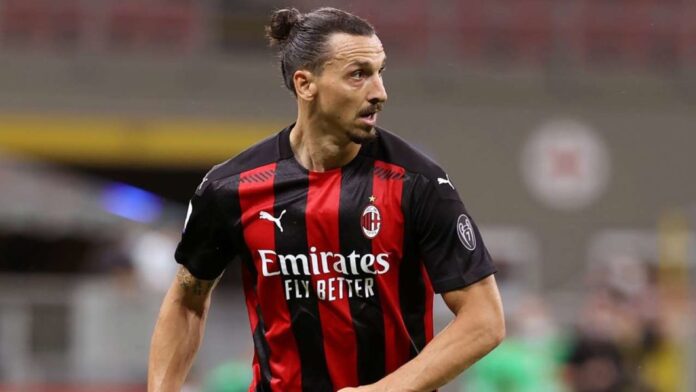
Zlatan Ibrahimovic, back in Italy to sign a contract extension with AC Milan, said he intends to “help the club get back to where it deserves to be”, in a video posted on Sunday.
The video, posted on the AC Milan website and entitled “Iz Back”, started with a small plane landing at the city’s Linate airport on Saturday evening and then showed the 39-year-old Swede, who was decked out in club gear, declaring he was delighted to return “to where he feels at home”.
Ibrahimovic has yet to sign the extension but, according to Italian press reports, the star striker and Milan have agreed an extra year’s contract, with an annual salary of 7 million euros (8.33 million dollars).
He rejoined the club last December on a six-month contract from the Los Angeles Galaxy, on a salary of 3.5 million euros with an optional extra year. He scored 11 times in 20 Serie A and Italian Cup matches.
“As I said before, I’m not here to be a mascot, but to bring results, to help the club, the team and the coach get back to where Milan deserves to be,” he said in Italian on the video.
“We’ve done great things in the last six months but we haven’t gained anything. Now I have the chance to be there from the very beginning, we have to keep going and do the same thing,” said the Swede.
The Italian season starts on September 19.
“Ibrahimovic is our priority,” AC Milan technical director Paolo Maldini said last Tuesday, without ruling out a Plan B as negotiations with the Swedish giants dragged on.
“We know it will be a short pre-season, so we want to complete the deal in a very short time.” Maldini added.
AC Milan’s stated aim is to return to the Champions League, a competition the Rossoneri have won seven times but have not played in since 2014.
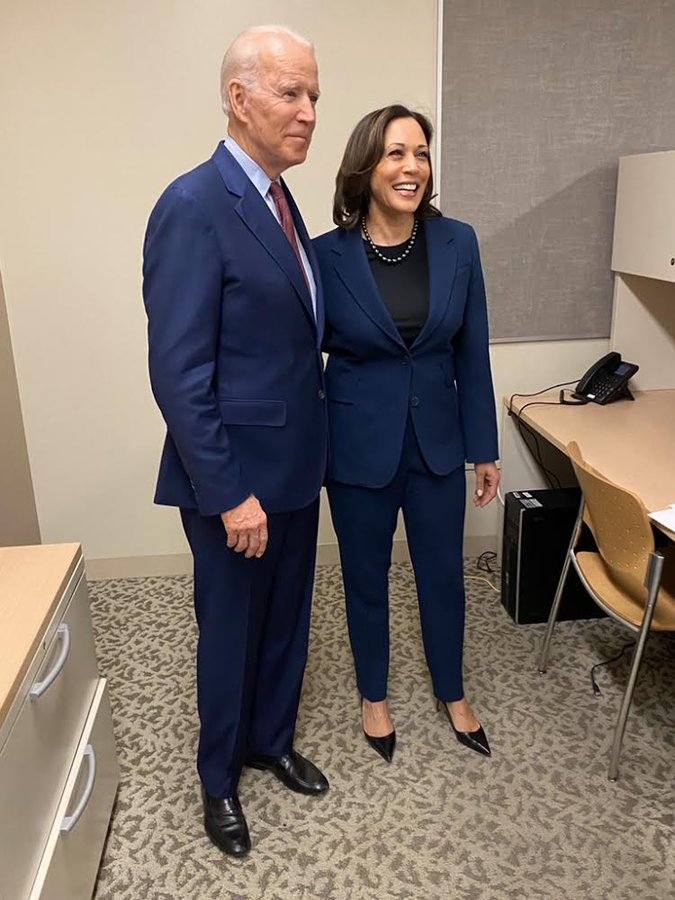
Barack Obama’s plea for his friend and her running mate was contained in a recent tweet. But what’s the point in Barack Obama pleading for his friend, Joe Biden and her running mate, Kamala Harris? Is such a plea even necessary? Will it influence the choice of Americans in the incoming November presidential elections? Was the plea made because the former president decoded that his former vice president was starting the race to the White House on bad footing? All of these questions can be answered.
It is the bond of friendship between the former president and his vice that informed his recent tweet in which he called on American voters to ensure that the democratic party wins the incoming elections. It is also a sense of patriotism which gave birth to that plea. Obama has come to the realization that Donald trump, the current president, is deficient in certain qualities. Therefore, it behooves patriots like Obama to call American electorates to the high altar of reason. Obama doesn’t want Americans to make the same mistake twice, because if that happens, it would cease to be an error at the pools, but a case of outright blindness. Most democrats are of the opinion that America’s current president has bungled all chances he had to convert his detractors and advance the glowing arguments of those who had rooted ecstatically for him, when he first ruptured onto the political marketplace, with no outright qualities in politics. Donald Trump’s most visible talent was an intimidating credential as a successful real estate developer.
Barack Hussein Obama owes it a duty to his friend to campaign for him since he believes he is the right man to “make America great again.” Former vice president Joe Biden, comes into the presidential race with values that can make a difference in how America handles the world. Having served in the white house for eight good years, he must have learnt a thing or two about foreign policy and how governments work for the people. Additionally for the former VP, he left office without any blemish of note. But he has other demons that he has to contend with.
His son, Hunter Biden, and his business interests at Burisma natural gas company have been subjects of interests to Donald Trump’s lawyers and other members of his inner circle. While not yet proven guilty by any competent court, Hunter’s transactions in Ukraine have raised points of concern which Trump wants the Ukrainian president Volodymr Zelensky to clarify for him. Donald Trump seems prepared to destroy Biden with epistles from Ukraine. However, Trump has failed to prove that Joe Biden is guilty of wrong doing by simply being the father of a son who has business interests in Ukraine. To make things easy for himself, and afford his critics nothing to rumble over; Joe Biden just has to distinguish between Joe Biden the father, Joe Biden the politician and Joe Biden the man linked to another Biden who is allegedly using his father’s huge influence to do businesses across the globe. This sort of clarification will engender confidence from the electorate, despite the fact all three personalities are held together by one being.
Barack Obama must reckon himself as a great influence on voters to have tweeted: “As Michelle said, we’ve got to do everything we can to elect @JoeBiden and @KamalaHarris. So make sure you have a plan to vote. Vote early. And tell everybody you know to register to vote at iwillvote.com.” The tweet is a heartfelt plea for a friend and one who has America and all her friends at heart. But the complex issues of power and votes cannot be reduced to bird sounds. It transcends that social media noise and goes deep into the what the people want and the issues hurting them at the moment.
Unemployment is a disturbing issue in America at the moment, just as the gruesome murder of George Floyd and the Black Lives Matter protests have since opened up the rear flanks of Donald Trump. Tweets will not decide this historic election in which for the first time, a black woman will be standing for the office of vice president on the ticket of a major political party. It is the approach of Biden and Harris to black and marginalized lives, covid-19, and unemployment and livelihoods which will determine who gets the most votes. Positions on abortion, homeland security, foreign policy, immigrants and housing policies will also be deciding factors in how the pendulum of votes swings. To simply urge people to vote using a tweet, will not be enough to do the magic. The democratic party has got to convince Americans that she can be great again or that indeed, she was once great. This is the position taken by George Flyod’s niece at his funeral service, where she wondered if America had ever attained greatness before.
Obama’s tweet is a bid to untangle Biden from certain webs. He wants to convince the electorate that his is solidly behind his friend and a man whom he believes possesses the necessary credentials to rebuild bridges across racial divides. His tweet has freed Biden from webs of doubts about whether his former boss believes he can unite America once again. Obama’s tweet seeks to align with Michelle’s speech at the Democratic national convention. This further illustrates that the president is simply trying to join forces with his wife to trounce Trump. Obama finds Trump beatable, but wouldn’t want to take chances. His tweet is an attempt to tie up loose ends.
The plea in Barack Obama’s tweet must be read in the context of one friend rooting for another. It can also be interpreted as an attempt to close all openings which Trump may sneak through to remain in the White House. Obama once told us “yes we can,” his pleading bird sound is a reminder that Americans can indeed dislodge Donald Trump from the White House if they so desire. His tweet is an endorsement and a reiteration of friendship. It is left to be seen if America’s incoming presidential election will be greatly influenced by the personality of Barack Obama and his cordial twitter pleas; and whether Hunter Biden’s business engagements in Ukraine will end up hobbling his father’s presidential ambitions. We will not be waiting for too long to find out.
P:S: Steve Ogah is a creative writer whose writings have appeared across print and online platforms.
The so-called Igbo struggle is an enterprise. Individuals from the South-East, who find themselves in position of political influence, hawk the ‘’Igbo agitation’’ as merchandise in self-seeking ventures. These politicians pursue personal gains robed in the collective agenda. And this is largely because of the people who have become addlepated by barbiturated sentiments, conspiracy theories, and nerve-raising nothings.
There are 15 lawmakers from the South-East at the Senate and more of this number at the house of representatives, but no single region-centred legislation has reached fruition. In March 2020, these lawmakers in league with their colleagues approved the $22.7bn loan request of President Muhammadu Buhari unfettered.
But a week after some public-spirited Nigerians raised the alarm that the South-East was excluded in the projects the loan was meant for, these lawmakers in caucuses retreated to playing to the gallery and lacquering their action. They resumed the accustomed showmanship and grandstanding in the face of an obvious fait accompli. Nothing happened afterwards.
Also, most of the lawmakers from the south-east are members of the opposition — the Peoples Democratic Party (PDP) — but clearly, they have failed in providing leadership in opposition. Some contentious bills were passed right under the stoned watch of these lawmakers. Currently, there are two anti-citizen bills – on hate speech and social media. But these lawmakers do not think they are worth advocating over. These are bills targeted at garrisoning the civic space, the media and the populace.
Considering the disaffection of a section of the South-East with the Buhari administration and juxtaposing that with those who have been operational in their dissent against the administration, is it not logical that the opposition secure the fort of varied voices by working to extirpate these gag bills?
Perhaps, the bills when passed will put a hedge around them – to protect them from minatory probes by their constituents whom they have been remiss in representing. The legislation serves them.
There is now an exhumation of the interred National Water Resources Bill which reposes control of the country’s water resources – both over and underground – in the executive, and which requires Nigerians to get a licence before drilling a borehole (in a nation that cannot provide pipe-borne water for citizens). This legislation, with implications of slavish proportions, is already at an advanced stage at the house of representatives – where there are lawmakers from the South-East — which will be maximally impacted by this bill when passed. This is where Igbo political leaders, particularly those in the national assembly, should be leading the charge. Whatever development we want in the south-east must proceed from the law; so, change must begin from parliament.
Why have I zeroed in on lawmakers from the south-east? Well, because they are the representatives of the people of the region and they form a bulk of the opposition in the legislature. Naturally, they should wear the shoes of the commoner in the region and feel his pain. They should be the voice of the region. They should be in the vanguard of whatever the people are agitating for provided it is within the remit of the constitution. I have no doubt that whatever they set to achieve for the region in parliament, regional and national consciences will be mobilised in support as long as the agenda is not jaundiced.
But these politicians have commoditised the Igbo interest, blaring hot air on issues affecting the region. They know the people are very emotive and unthinking, so they flagellate the usual marginalisation slant and other conspiracy theories to thrust themselves into public consciousness. And they remain there by constantly reinventing the wheel and stroking the people sore with sentimental nothings.
Some unarmed young men were mowed down by guilty bullets in Enugu a few days ago. Though the DSS said two of its operatives were killed in an encounter with some Biafra agitators. This incident, no doubt, deserves a thorough investigation and the culprits punished at the end of a credible hearing. We cannot keep losing citizens to summary executions. I believe this is a matter on which the voice of lawmakers from the South-East should be loudest. They should not only speak up when it is politically convenient to do so.
I have been threatened by these agitators, but I strongly believe it is against natural propriety if my voice is muted out of grudge on this case. Every Nigerian deserves to live; even if there is an offence, the law must take its course. Summary executions are a reprise of the military era; they have no place in a democracy.
Really, the biggest adversary of the Igbo is not the Hausa, the Yoruba or the Fulani, but fiendish leaders of the ethnic group who secrete their interest in the ‘’Igbo agenda’’; who pit the people against their neighbours and other groups, and who flagellate ethnic emotions for insular ends.
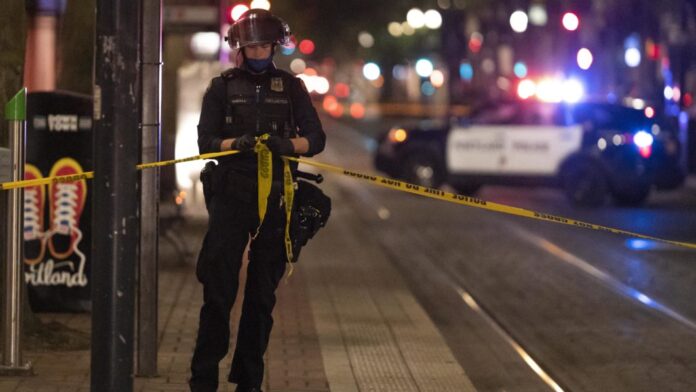
A person was shot dead Saturday in Portland following clashes between Black Lives Matter protesters and supporters of US President Donald Trump, Police said.
The Oregon city has been an epicenter of BLM protests since the police killing of unarmed black man George Floyd in Minnesota in late May, and according to local media a “caravan of hundreds of cars” of Trump supporters also converged there on Saturday.
Portland Police tweeted a political rally was “caravanning throughout downtown Portland,” adding: “There have been some instances of violence between demonstrators and counterdemonstrators. Officers have intervened and in some cases made arrests.”
OregonLive reported “clashes” and “tense moments” between the groups, although police did not say whether the shooting was related to the demonstrations.
The shooting occurred at around 8:45pm downtown, police said later in a statement, adding a homicide investigation was under way.
“Portland Police officers heard sounds of gunfire from the area of Southeast 3rd Avenue and Southwest Alder Street,” the statement said.
“They responded and located a victim with a gunshot wound to the chest.”
Karma Agagowei, Councilor representing Ward 6 Sagbama Council Area of Bayelsa State was on Saturday evening shot and killed by some gunmen.
He was killed along Opolo while returning from the Peoples Democratic Party ward congress.
The deceased was rushed to two different hospitals including Gloryland Hospital and Federal Medical Centre, Yenogoa, but was denied treatment for lack of a police report.
He died shortly afterwards.
Another person, who was with Agagowei in a commercial tricylce at the time of the incident, was attacked with machetes by the hoodlums but fled with the injury.
When contacted, spokesperson for the police in Bayelsa, Anisim Butswat, said the matter had not been reported to them.
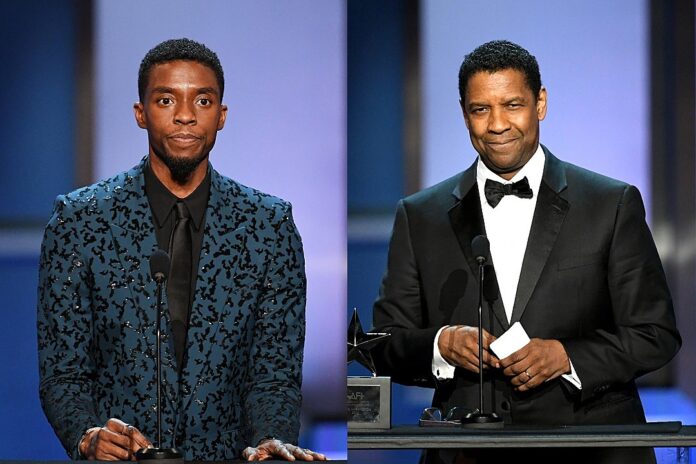
Hollywood actor, Denzel Washington, has reacted to the death of Black Panther star, Chadwick Boseman, whom he once helped with tuition fees at a prestigious theatre program.
Chadwick Boseman died on August 28 after battling colon cancer for four years.
His wife, Simeone Taylor, and members of his family were by his side when he died at his Los Angeles home.
“He was a gentle soul and a brilliant artist who will stay with us for eternity through his iconic performances over his short yet illustrious career,” Denzel Washington said in a tribute statement.
In June 2019, Chadwick Boseman narrated before an audience how he and nine others were sponsored by Denzel Washington to study at Oxford University.
“Many of you already know the story that Mr. Washington, when asked by Phylicia Rashad to join her in assisting nine theatre students from Howard University, who had been accepted to a summer acting program at the British Academy of Dramatic Acting in Oxford, gracefully and privately agreed to contribute. As fate would have it, I was one of the students that he paid for,” he said.
“Imagine receiving the letter that your tuition for that summer was paid for and that your benefactor was none other than the ‘dopest’ actor on the planet. There is no Black Panther without Denzel Washington,” the actor added.
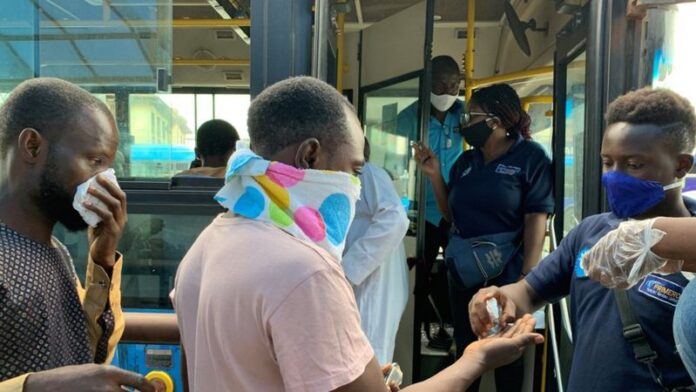
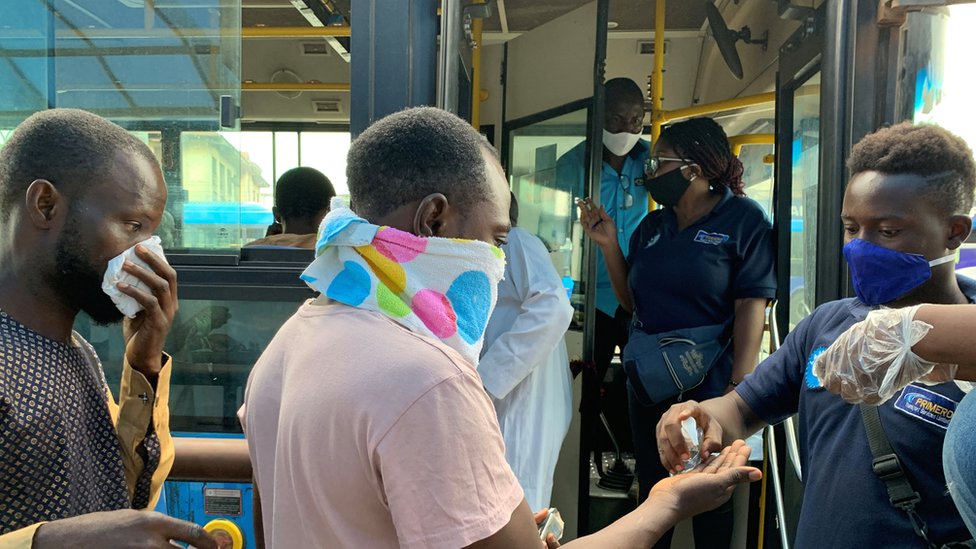
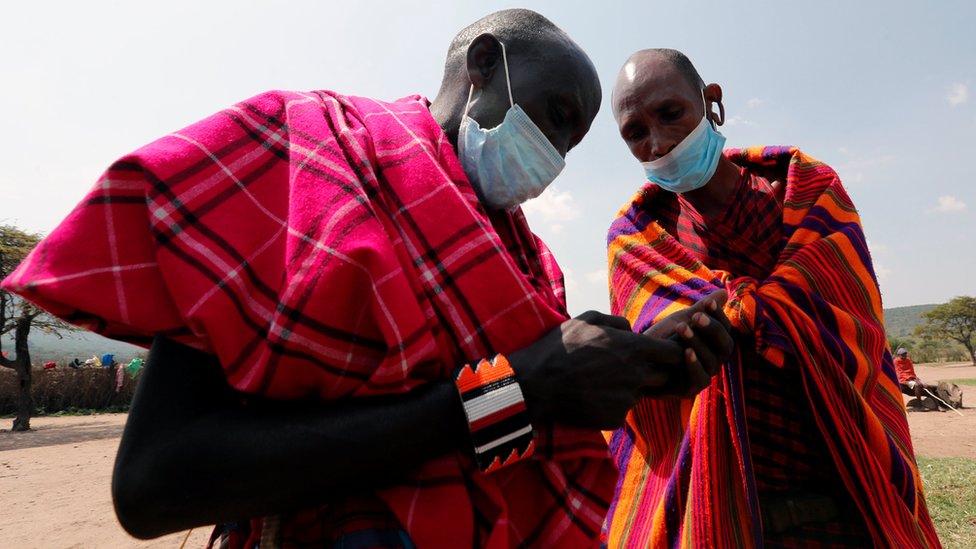
Passengers boarding a bus in Lagos being given hand sanitizer Image Credited to Reuters
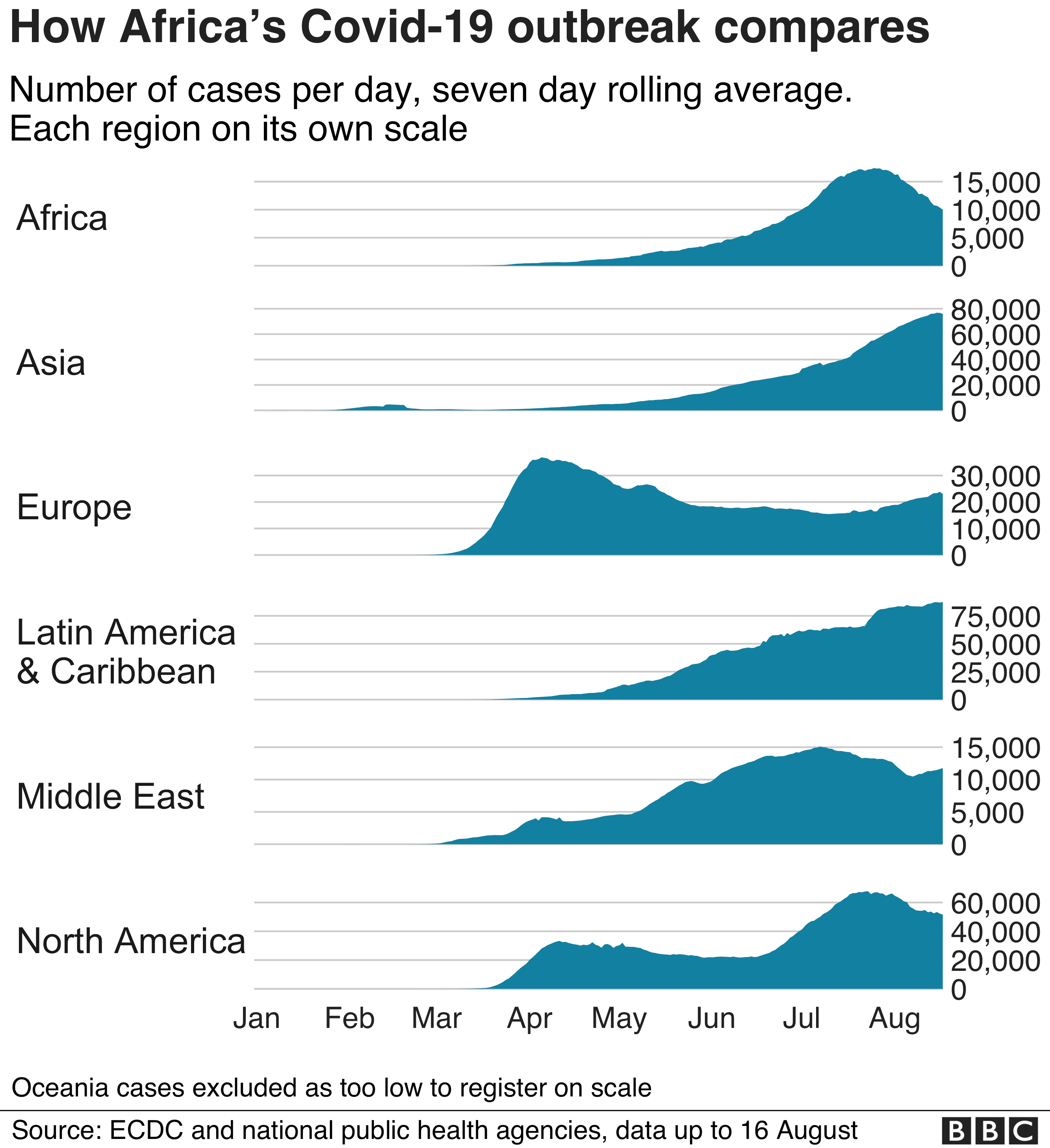
The World Health Organization (WHO) has said the Covid-19 outbreak in Africa may have passed its peak, but it warns governments not to be complacent as countries relax their restrictions.
The number of new daily confirmed cases overall has been dropping for a month now, although some countries are experiencing a rise in cases. So what do know about the course of the disease in Africa?
At what rate is coronavirus spreading?
Over the past four weeks, there has been an average 17% fall in the number of weekly new cases being reported. “We have had what seems to have been a peak and now have the daily number of cases being reported overall at the regional level going down,” says WHO’s Africa region head Matshidiso Moeti. That may be because the rate of increase has slowed in some of the most populous countries in the region, like South Africa, Egypt and Nigeria. But there’ve been increases in cases in some countries in East and North Africa, according to the Africa Centres for Disease Control (CDC).
Africa accounts for five per cent of all global cases and three per cent of deaths Image credited to Reuters
Uganda and Rwanda have also experienced an increase in cases recently, while cases in Kenya and Somalia have been dropping.
In North Africa, Morocco and Tunisia are experiencing a sustained increase in cases, and there has been a rapid increase in cases in Libya, according to the WHO.
However, both Algeria and Egypt have seen a decline in confirmed cases over the past month. Other countries recording a decline in new cases include Ghana, Gabon, Madagascar and Zambia.
The global humanitarian relief body, the International Rescue Committee, says it believes the true scale of the pandemic may be hidden because of a lack of testing and issues with data.
And the WHO says their figures should be treated with caution as they may be affected by changes in testing capacity and strategy, and delays in reporting data.
Some countries have abandoned random testing and are testing only in areas where positive cases have already been found.
Others like Ethiopia have boosted testing, via a campaign aiming at conducting 400,000 tests in one month. It has now seen an increase in cases.
Where are Africa’s hotspots?
The Africa CDC (Centres for Disease Control and Prevention) says just five countries account for more than 72% of all reported cases.
South Africa has the highest recorded number of total cases and reported deaths in Africa, and the fifth highest number of cases in the world. Reported deaths appear lower compared with other countries in the world badly hit by coronavirus.
Daily reported numbers and hospital admissions have been falling, but the number of deaths is not falling at the same rate. This could be explained by the time lag between a patient being infected, and then becoming ill enough to eventually die. But a change in testing policy in South Africa could also have had an effect on the numbers reported.
“The country’s current policy of testing only those who present with symptoms makes full interpretation of case numbers difficult,” WHO says.
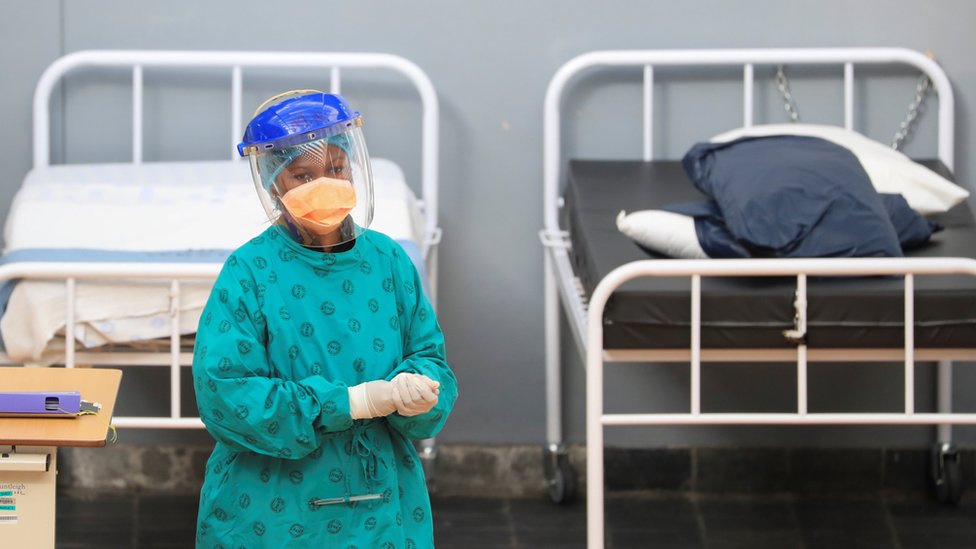
New cases and hospital admissions have been falling in South Africa Image credited to Reuters
And research from the South African Medical Research Council (SAMRC) indicates the number of people who have died from the virus could be much higher than reported.
It says excess deaths, which is the difference between deaths over a particular period and the historical average, rose by 17,000 – that’s a 59% increase compared with previous years.
Could South Africa’s fatality rate be misleading?
Gauteng province, which includes Johannesburg, accounts for more than a third of the total cases. But Western Cape province (where Cape Town is located) has reported most deaths.
Egypt has the second highest number of cases and deaths, but new infections in the country have also been dropping.
How many people are dying in Africa?
The reported death rate per capita has been low compared to other parts of the world, despite the poor health infrastructure in many African countries. The WHO says this could be partly because of the relatively young population in Africa – more than 60% under the age of 25. Covid-19 is known to have a higher mortality rate for older age groups.
Health problems common to richer countries, like obesity and type 2 diabetes, are also less common in Africa.
In terms of what proportion of people who get Covid-19 go on to die, there were nine African countries with rates comparable with or higher than the global average rate of 3.4% on 27 August. Githinji Gitahi, the head of Amref Health Africa, an NGO which specialises in health matters, says the higher fatality rates could be an indication of much higher infection levels than are being detected by testing. The fewer tests you carry out, the fewer cases you find, and so the number of deaths appears relatively high.
How much testing is done in Africa?
Eleven countries account for about 80% of the total tests conducted – South Africa, Morocco, Ethiopia, Egypt, Ghana, Kenya, Nigeria, Rwanda, Uganda, Mauritius, and Cameroon. There are wide variations in testing rates, with South Africa doing the most and Nigeria doing relatively few compared to its large population, according to Our World in Data, a UK-based project which collates Covid-19 information.
By 18 August, South Africa had done 58 tests per 1,000 people, compared with 180 in the UK and 208 in the US. Nigeria had carried out 1.7 tests per 1,000 people by then, while Kenya had done 7.4 and Ghana 13.9. About half of the countries on the continent have a tests-per-positive-case ratio lower than the recommended 10. Countries which have conducted more than 100 tests per positive case include Uganda, Rwanda and Mauritius.
It’s also worth pointing out that for some African countries, it is impossible to know what exactly is happening due to a lack of any data or data being incomplete.
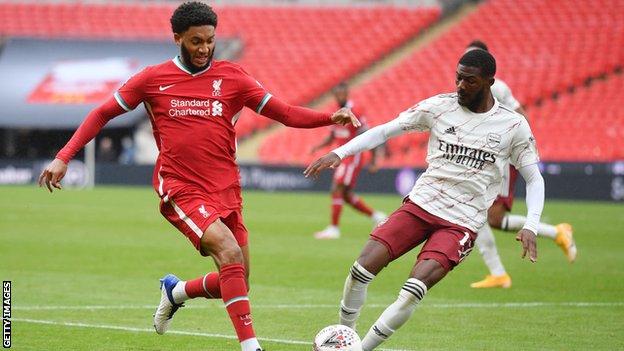
Pierre-Emerick Aubameyang scored a superb goal and netted the winning penalty in a shootout as Arsenal beat Premier League champions Liverpool in the Community Shield at an empty Wembley Stadium.
Liverpool striker Rhian Brewster, brought on in stoppage time, hit the crossbar with his penalty – the only one not converted in the shootout.
Aubameyang’s curling strike gave FA Cup winners Arsenal the lead in the first half before Liverpool substitute Takumi Minamino equalised after the break.
Minamino’s flicked pass to Mohamed Salah bounced back kindly for him to slot home from close range.
There was a quick VAR check for handball by Salah but the replay showed no clear contact.
It is the second year in a row Liverpool have lost on penalties after Manchester City’s victory in 2019.
Aubameyang leads Arsenal to move silverware
Aubameyang’s importance to Arsenal was once again shown in another impressive performance.
The Gabon international, who scored twice in the FA Cup final at the same stadium this month, cut inside from the left and whipped the ball into the far corner in emphatic style to open the scoring.
He continued to terrorise Liverpool’s defence, exposing young right-back Neco Williams.
And when Aubameyang stepped up to take the final penalty, with the score 4-4 in the shootout, there was no way he was going to miss.
He has netted 71 goals in 110 Arsenal appearances and no Gunners player has scored more than his five goals at the venue.
Arsenal boss Mikel Arteta said on Friday he was “pretty confident” the skipper will sign a new contract after a long, painful wait for supporters.
After lifting their second piece of silverware in a month, it would cap off a very pleasing summer for Arsenal if Aubameyang does eventually put pen to paper.
Stuttering Liverpool fall short again
Liverpool were without regular starters Trent Alexander-Arnold and Jordan Henderson but they fielded a side many would feel were capable of beating Arsenal.
They started off on the front foot, with Sadio Mane getting in behind on numerous occasions on the left and linking up with full-back Andy Robertson.
But sloppiness crept into their game as the first half wore on – Virgil van Dijk berated Georginio Wijnaldum and Fabinho on separate occasions for giving the ball away too easily in midfield.
Arsenal’s Ainsley Maitland-Niles was impressive and caused problems, while Bukayo Saka was busy in and around the Liverpool box.
However, Liverpool had plenty of chances to score. An unmarked James Milner headed over the bar, Van Dijk almost got on the end of a Mane flick-on and Roberto Firmino had the ball in the net, only for it to be ruled out for offside.
Liverpool grew more dominant in the second half – Minamino deservedly drew them level with more than 15 minutes to play – but they could not find a winner.
Arsenal’s Joe Willock had a brilliant chance to make it 2-1 with five minutes to go when he miscued his header following Cedric Soares’ cross from the right.
Liverpool manager Jurgen Klopp brought off Wijnaldum, who had his penalty saved in last year’s shootout by City, and replaced him with 20-year-old Brewster, but the England youth international crashed his spot-kick off the bar.
There is certainly no need to panic but the air of invincibility Liverpool had throughout most of the 2019-20 league campaign has worn off in recent months following a patch of two defeats and a draw in seven games at the end of the season.
Man of the match – Ainsley Maitland-Niles
Ainsley Maitland-Niles was excellent when called up to defend and he was a threat on the overlap for Arsenal going forward. He coolly stepped up to score his penalty in the shootout too
‘You never get used to winning’ – what they said
Arsenal boss Mikel Arteta, speaking to BT Sport: “You never get used to winning. I knew the challenge we faced today against this incredible opponent. Thank you very much to the players for the effort and performance.
“The courage of the team, how aggressive we were without the ball and against the Liverpool press. I am pleased and knew in the second half we would suffer. But in the penalties we had courage to do them right.
“In the last 10 minutes we took the ball and played in the final third. I am pleased how they competed. It creates belief.”
Liverpool manager Jurgen Klopp, speaking to BT Sport: “We deserved the equaliser and could have scored more but we didn’t do that.
“When you play against a formation like this then you need to be really fresh in the final third and you need to force it, create angles. The rhythm for that fell a little bit. Today it was not enough.”
Penalty shootout domination – the best of the stats
Arsenal have won the Community Shield for a 16th time (including shared titles), overtaking opponents Liverpool (15 times) and only behind Manchester United (21). The Gunners have won the trophy in four of the last seven seasons.
Liverpool are the first side ever to lose the Community Shield on penalties in back-to-back years; this is also the first time the Reds have participated in the competition twice in two seasons without winning it (including shared) since the 1983 and 1984 matches.
Arsenal have won the Community Shield as FA Cup winners seven times (including as league/cup double winners and including shared titles) – more than any other side. Each of their last four Community Shield victories have come as FA Cup winners.
They are the only the second side to win the Community Shield after a penalty shootout more than once, after Manchester United (five times).
Arsenal have won nine of their last 11 penalty shootouts in all competitions, including two in the Community Shield. Meanwhile, Liverpool have lost three of their last five shootouts, including two in the Community Shield.
Aubameyang is now Arsenal’s joint-top scorer in games played at Wembley Stadium (5, level with Alexis Sanchez). Aubameyang’s five goals at the ground have come in the space of just 42 days.
Only Kevin De Bruyne (22) and Trent Alexander-Arnold (15) have provided more assists for Premier League sides in all competitions since the start of last season than Arsenal’s Bukayo Saka (13).
Minamino is the first player to score his first ever goal for Liverpool at Wembley, netting this goal in his 15th appearance and with his 12th shot for the Reds in all competitions.
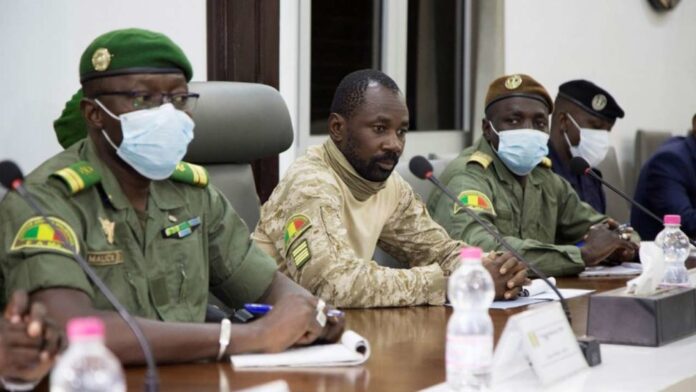
Mali military rulers said on Saturday they were postponing their first meeting over the transfer of powers due to “organisational reasons” nearly two weeks after ousting the president in a coup.
The junta had invited civic groups, political organisations and former rebels to consultations on Saturday, but said in a statement that the meeting was postponed to a later date.
A protest coalition that had campaigned against former President Ibrahim Boubacar Keita, the June 5 Movement, had not been invited to participate in the meeting.
The group has demanded that the military junta give it a role in the transition to civilian rule which the military has promised, though without a timetable.
After an escalating series of mass protests, young army officers mutinied on August 18, seizing Keita and other leaders and declaring they now governed the country.
The coup shocked Mali’s West African neighbours and ally France, heightening worries over instability in a country already struggling with an Islamist insurgency, ethnic violence and economic malaise.
Mali’s influential imam Mahmoud Dicko, a key player in the mass opposition protests that led to Keita’s ouster, said Friday that the new military rulers did not have “carte blanche”.
His comments came as a new document published on the Malian government’s Official Journal said the junta’s head had been effectively invested with the powers of head of state.
West African leaders, meanwhile, on Friday demanded an immediate civilian transition and elections within 12 months as they considered sanctions.
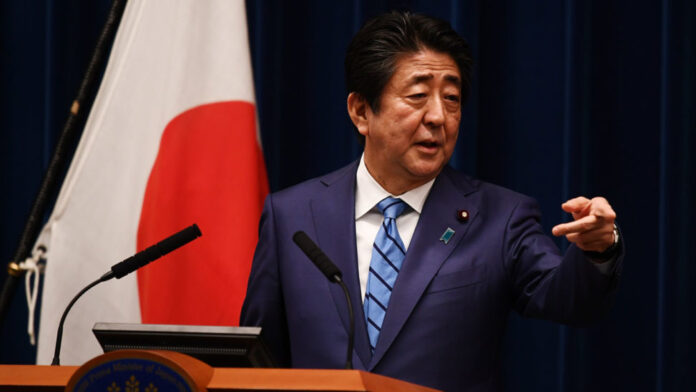
The race to succeed Prime Minister Shinzo Abe kicked off informally on Saturday, with several contenders announcing their plans to stand, a day after Japan’s longest-serving leader announced his resignation.
Abe said he was suffering a recurrence of ulcerative colitis, the condition that forced him to cut short his first term in office, but that he would stay on until his successor is decided.
Exactly how the process will unfold was still unclear, with local media reporting on Saturday that several options were being considered.
Abe’s ruling Liberal Democratic Party could opt for a more traditional leadership election, involving lawmakers but also members of the party nationwide.
But the urgency of the situation, as well as the constraints imposed by the coronavirus outbreak, could see the party instead opt to poll only its lawmakers and regional representatives — a faster process.
A decision on how the election will be held, and when, is expected early next week, along with more clarity on who will stand for the post.
A few would-be candidates have already thrown their hats into the ring, including party policy chief Fumio Kishida, a mild-mannered former foreign minister considered Abe’s personal choice for successor, and ex-defence minister Shigeru Ishiba, who is seen as more popular with voters but commands less party support than some other candidates.
Finance Minister Taro Aso, himself a former prime minister and long considered a likely successor to Abe, has announced he will not stand.
Other possible candidates include powerful chief cabinet secretary Yoshihide Suga, viewed by many as a frontrunner, and current defence minister Taro Kono, a social-media-savvy former foreign minister who is seen as something of a longshot.
One woman is among those expected to stand so far: Seiko Noda, a former cabinet minister whose chances are thought to be slim.
– No drastic changes -Whoever comes out on top, analysts said, little major shift in policy is expected.
“Key policies –- diplomacy and economic measures — won’t be changed drastically,” Shinichi Nishikawa, a professor of political science at Meiji University in Tokyo, told AFP.
“His successor could be a caretaker,” effectively, Nishikawa added, given that the LDP will hold another leadership election in September 2021, with general elections likely the following month.
Yoshinobu Yamamoto, an honorary professor of international politics at the University of Tokyo, said Abe’s successor would not produce any surprises but would face “big challenges”.
Most immediate will be the ongoing response to the coronavirus pandemic, with heavy criticism of Abe’s government so far for policies viewed as contradictory and slow.
But there are also diplomatic challenges on the horizon, including on relations with China.
Ties had been warming, but with rising tensions between Beijing and Washington and concerns domestically about issues including the coronavirus outbreak and the situation in Hong Kong, the next prime minister faces a balancing act.
Abe is also leaving office with the issue of the Tokyo 2020 Olympics still unresolved. The Games were postponed by a year over the pandemic and are now scheduled to open in July 2021, but questions remain about whether the event can be held safely.
And the next prime minister will inherit an economy that had swung into recession even before the coronavirus crisis hit and may face further hits if additional waves of infection force business shutdowns again this winter.
Tokyo markets slumped on Friday on news of Abe’s resignation but recovered slightly before the end of trade, and economists said disruption would be minimal because economic policy was not likely to change.
“We believe the current monetary easing policies and expansionary fiscal policies will continue for the duration of the Covid-19 pandemic,” wrote Naoya Oshikubo, senior economist at SuMi TRUST.
“Thus the impact on the market should be limited in the mid-to-long term.”