back to top
Monday, January 26, 2026
advertise with us
Home Blog Page 169

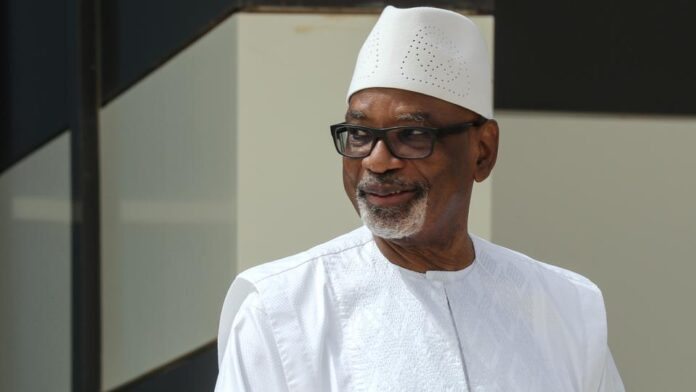
Mali Military Leader Visits Ousted President Keita In Hospital

Mali Military Leader Visits Ousted President Keita In Hospital
Former Malian President, Ibrahim Keita

The head of Mali’s new junta on Thursday visited the man he ousted, Ibrahim Boubacar Keita, at a hospital where the former president is being treated for a mini-stroke, family and medical sources said.

“A delegation from the ruling military, led by Colonel Assimi Goita, visited (the) former president in the clinic,” a doctor told AFP, speaking on condition of anonymity.

Relatives of Keita confirmed the visit.

Keita, 75, was admitted to a private health facility in the capital Bamako on Tuesday after suffering a so-called transient ischaemic attack, a doctor said on Wednesday.

This occurs when the blood supply to the brain is disrupted for a few minutes, causing stroke-like symptoms such as numbness on one side of the body, vision difficulties or confusion in understanding speech.

These events typically last only a few minutes, but are viewed seriously by doctors as they can be a precursor for a full-fledged stroke.

Another doctor said on Thursday that Keita “is doing well.”

“He spent a second night here, more for the peacefulness of the surroundings than anything else,” the source said.

The president was forced out on August 18 by young military officers who mutinied at a base near Bamako before heading into the city, where they seized Keita and other leaders.

Pressured by the West African bloc ECOWAS, the junta released Keita on August 27 and returned him to his residence in Bamako, where according to his entourage he is under surveillance, with limited access to a phone and the internet.

The junta has said that Keita is authorised to leave the country for medical care if need be.

Keita was ousted after two years of his second five-year term.

In the weeks before the coup, he had been struggling with protests fuelled by his handling of a jihadist insurgency and failure to turn around Mali’s floundering economy.

AFP

Nigerian Government Relaxes Curfew: Restriction Now From 12am To 4am

Nigerian Government Relaxes Curfew: Restriction Now From 12am To 4am

The Nigerian Government has modified the nationwide curfew hours.

It will now begin from 12am till 4am, instead of 10pm till 4am.

Dr Sani Aliyu, National Coordinator of the Presidential Task Force on COVID-19, disclosed this on Thursday.

The government had on May 4, 2020 imposed a nationwide curfew from 6pm to 8am. It later reviewed the timing to between 10pm and 4am.

“I will first of all start with general movement. We are modifying the curfew to commence from 12 midnight to 4am nationwide, effective from 12:00am today.

“This does not apply to people on essential services and international travellers that might be returning from abroad.”

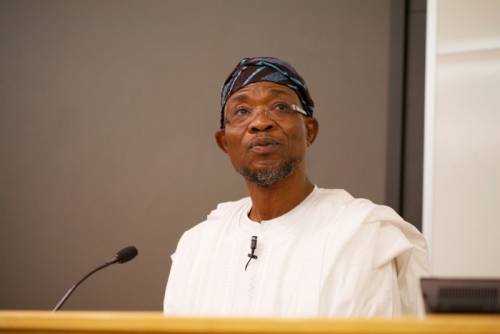
Lawyer Writes Aregbesola Over Plight Of Nigerians Illegally Detained In Cameroon

Lawyer Writes Aregbesola Over Plight Of Nigerians Illegally Detained In Cameroon
Minister of Interior, Rauf Aregbesola

A lawyer, Abdul Oroh, has written to the Minister of Interior, Rauf Aregbesola, over the plight of some Nigerians in illegal detention in Cameroon.

In a letter dated September 3, 2020, Oroh alleged that the Nigerians were being illegally detained in various prisons in Cameroon for several years without trial.

Their names as contained in the letter are John Amaechi, Victor Abantele, Chimezie Nwachukwu, Onyo Igwe, Justice Chukwendu, Patrick Nwosu, Francis Nweke, Ernest Chigbo, Chiwandu Agwulobi and Mrs Chinenye Mary-Jane Okeke.

The lawyer said they had suffered untold hardship like torture and other forms of cruel, inhuman and degrading treatment in the hands of Cameroonian security forces and prison officials over the years.

He said, “We write to draw your attention to the flagrant violation of the fundamental human rights of Nigerians held in various prisons in Cameroon. Some for over three years without trial. Nigerians have suffered untold hardship like torture and other forms of cruel, inhuman and degrading treatment in the hands of Cameroon security forces and prison officials over the years.

“We implore you to use your good offices to intervene and secure their release henceforth.

“Those held at the Kondenui Maximum Prisons in Yaoundé are John Amaechi, Victor Abantele, Chimezie Nwachukwu, Onyo Igwe, Justice Chukwendu, Patrick Nwosu, Francis Nweke, Ernest Chigbo, Chiwandu Agwulobi,  Mrs Chinenye Mary-Jane Okeke.”

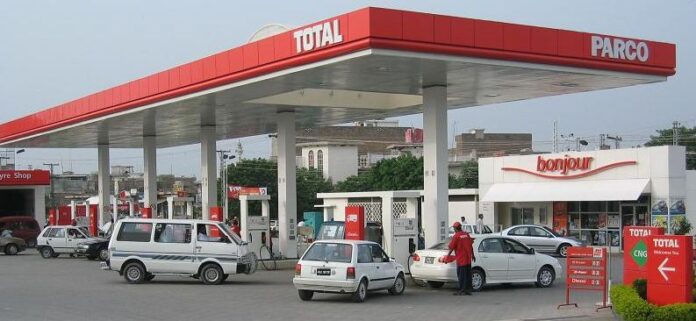
Confusion As Petrol Marketers Fix Fuel Price At N162 A Litre

Confusion As Petrol Marketers Fix Fuel Price At N162 A Litre
• Marketers blame govt for chaos • Say govt still toying with subsidy
• Increase unacceptable, House minority caucus declares
• PDP describes the hike as callous, cruel, punishing
• SPN asks NLC, TUC to lead a protest
Barely two days after electricity tariff was increased by about 300 per cent, oil marketers yesterday fixed the pump price for Premium Motor Spirit (PMS), popularly called petrol, at N162 per litre. The marketers fixed the new price following the Federal government’s announcement that the product would now be sold to marketers at the depot price N151.56.
But no sooner had the government and marketers announced the new price regimes than a hail of attacks and criticism greeted them.
Among those that rejected or kicked against the hikes were the minority caucus of the House of Representatives, Peoples Democratic Party (PDP), Socialist Party of Nigeria (SPN), and Advocacy for Integrity and Economic Development (AIED).
Marketers’ new price announcement came as Petroleum Products Pricing Regulatory Agency (PPPRA), the agency expected to modulate the price monthly, failed to announce the new retail price.
They claimed the absence of the PPPRA’s template created confusion coupled with the issuance of two conflicting statements by a subsidiary of the NNPC, Petroleum Products Marketing Company (PPMC). The two statements fixing two ex-depot prices: N147.67 and N151.56.
The PPMC, in the first statement dated September 2, 2020, with reference number PPMC/IB/LS/020, notified stakeholders that the price had increased to N151.56 per litre.”The same agency, in the second statement, with reference number PPMC/MOD/SALES/346, put ex-depot price at N147.67 for petrol.With an ex-depot price of N151.56, some marketers noted that additional charges for distribution margin, transporter allowance, retailer margin, bridging fund, marine transport as well as administration charges would push the retail price up to an average of N162 per litre, based on market fundamentals.

As of the time of filing this report, the Independent Petroleum Marketers Association of Nigeria (IPMAN) was uncertain of the price as the association’s Vice President, Abubakar Shettima, told The Guardian the situation was being weighed.

The Southwest Zonal Chairman of IPMAN, Dele Tajudeen, however, told The Guardian the association had directed its members to dispense the product at N162 per litre.

Tajudeen alleged that the NNPC had been selling to their retail outlets at different prices, bringing disparity in the system, especially for other marketers.

“This pits us against the masses. Government has been insensitive to people’s plight”, he said.

REACTING to the hike, the minority caucus in the House of Representatives, in a statement by its leader, Ndidu Elumelu, described price increase as unacceptable.

The caucus said the hike would worsen high cost of consumer goods and services and economic hardship suffered by Nigerians.

Elumelu said: “The minority caucus in the House of Representatives rejects the announced increase in the pump price of fuel.

“This is because such increase will directly result in more hardship on our citizens, particularly at this critical time when the majority of Nigerians, across the country, are struggling to survive under the burden of the high cost of living and low purchasing power occasioned by the prevailing economic challenges.’’The caucus asked PPMC to revert to former price.The Peoples Democratic Party (PDP) described the increase as callous, cruel and punishing.

The party called on the National Assembly to caution the APC Federal Government and prevent it from plunging the nation into chaos.

The party demanded reversal of the prices to avert national crisis, stating that the increase “will result in upsurge in costs of goods and services and worsen the biting hardship faced by Nigerians, who are already impoverished and grappling with high cost of living in the last five years.”

In a statement by its National Publicity Secretary, Kola Ologbondiyan, the party said increasing fuel price from N87 per litre to N151 and hiking electricity tariff from N30.23 per kwh to over N66, had left no one in doubt that APC’s agenda was to inflict pain and hardship on Nigerians to satisfy their selfish interests.

The party challenged the APC and the Buhari administration to publish parameters with which they arrived at the increase of fuel price, arguing that with the prevailing values in the international market, the appropriate price template for domestic pump price in Nigeria ought not to be above N100 per litre

SIMILARLY, Socialist Party of Nigeria (SPN) condemned the price increase.

The party, in a statement signed by its acting National Chairman, Abiodun Bamigboye, and National Secretary, Chinedu Bosah, described the increment as one too many. It called on the Nigerian Labour Congress (NLC) and the Trade Union Congress (TUC), not to only issue statements but to mobilise to fight back.

It said, “SPN strongly condemns this increase and demands its immediate and unconditional reversal to pre-May 2020 price. But condemnation in words alone will not be enough, especially for an obdurately anti-poor capitalist regime which has made it clear to everyone it is desperate at offloading economic catastrophe on the heads of working class and poor Nigerians.

“We, therefore, call on the Nigerian Labour Congress (NLC) and the Trade Union Congress (TUC) not to simply issue statements as it has been doing for months now, condemning in strong terms one anti-poor government policies or another without taking any serious action to mobilise to fight back, thus effectively allowing the capitalist ruling elite to condemn the masses to suffer in silence while disarming the advanced layers of the working class and youths who are rearing to fight back but need bold and militant leadership.”

Advocacy for Integrity and Economic Development (AIED) described the hike as “draconian anti-masses policy by a heartless administration.”

In a statement on Wednesday by its Director of Media and Publicity, O’Seun John, the organisation urged the Federal Government to revert to old price and tariff.

The statement read, “We received with shock the report of yet another increase in the price of petrol at the depot just two months after it was hiked.’’

A Professor of Economics, at the Babcock University, Segun Ajibola, noted that hiking prices of essential products such as electricity and petrol would worsen the standard of living and increase poverty level.

Idayat Hassan, who is the Director of the Centre for Democracy and Development (CDD), noted that the hike would undermine efforts to reduce cases of COVID-19, saying the masses would be forced to look for means of survival in the absence of palliatives from the government.

“Income has not increased but prices of basic amenities are going up at a time when people are losing jobs. It shows our government is not thinking,” she stated.

The Guardian

Nigerian University Students’ Union Rejects Petrol Price Increment

Nigerian University Students’ Union Rejects Petrol Price Increment

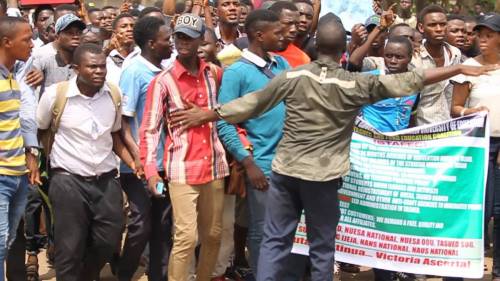
The Students’ Union Government of Tai Solarin University of Education, Ijagun, Ijebu-Ode, Ogun State, has condemned the increase in the pump price of Premium Motor Spirit from N148 to N151.56k per litre.

The Petroleum Product Marketing Company on Wednesday announced that the Nigerian National Petroleum Corporation retail outlets would now sell petrol for N151.56k per litre, while the Independent Petroleum Marketers Association of Nigeria had directed its members in the South-West to sell at N162.

Abdul-Azeez Lekan Soneye, TASUED Students Union President, said the Nigerian Government had declared war on Nigerian students and it was time for them to fight back or lose it all.

He said, “War is coming. And it will consume everyone of us here if care is not taken. Electricity fee has been hiked by 300%. Petrol is now #160. I mean 160 in some places and not 150 as reported.

“It means landlords would increase house rent to meet up with electricity bills. We shouldn’t forget we were still envisaging problem that will arise as students won’t find it easy to pay for house they didn’t occupy for several months after a pandemic that has affected their sponsors’ income.

“With increase in fuel price, shuttle fare on campuses would increase. Price of food items has also increased. It means, cost of living would be so high that it won’t be reasonably affordable to students.

“There is a war far beyond clamour for resumption. And we either confront the government on the street now or face humiliations when school resumes. The war shall consume us all of we do not fight now.”

Coronavirus in Africa: Scientists Explore Surprise Explanation For Low Death Rate

Coronavirus in Africa: Scientists Explore Surprise Explanation For Low Death Rate

Is there a link between poverty, crowded accommodation, and Africa’s bafflingly low infection and death rates from the pandemic.

As the number of infections dips sharply in South Africa, and stays relatively low across much of the continent, experts are reaching towards a startling hypothesis.

Crowded townships. Poor hygiene. The impossibility of social distancing in communities, where large families often share a single room.

For months health experts have been warning that living conditions in poor, urban communities across Africa are likely to contribute to a rapid spread of coronavirus.

“Population density is such a key factor. If you don’t have the ability to social distance, the virus spreads,” said Professor Salim Abdool Karim, the head of South Africa’s ministerial advisory team on Covid-19.

But what if the opposite is also true?

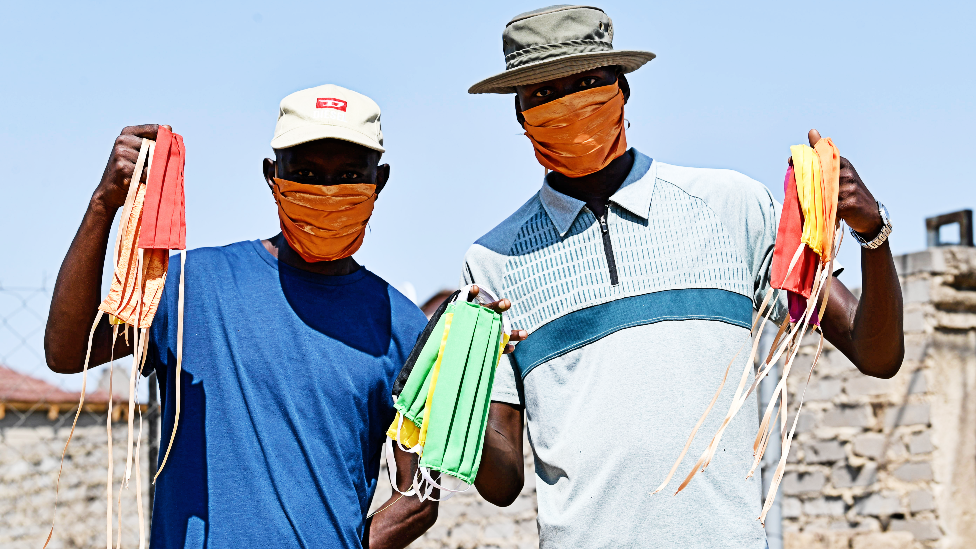
Men wearing and holding up face masks in South Africa's Nkowankowa Township during lockdown - 27 April 2020

What if those same crowded conditions also offer a possible solution to the mystery that has been perplexing experts on the continent for months?

What if – and this is putting it rather crudely – poverty proves to be the best defence against Covid-19?

‘It’s an enigma’

Let’s start with that mystery.

In the early stages of the pandemic, all the experts and all the modelling agreed that Africa was in trouble.

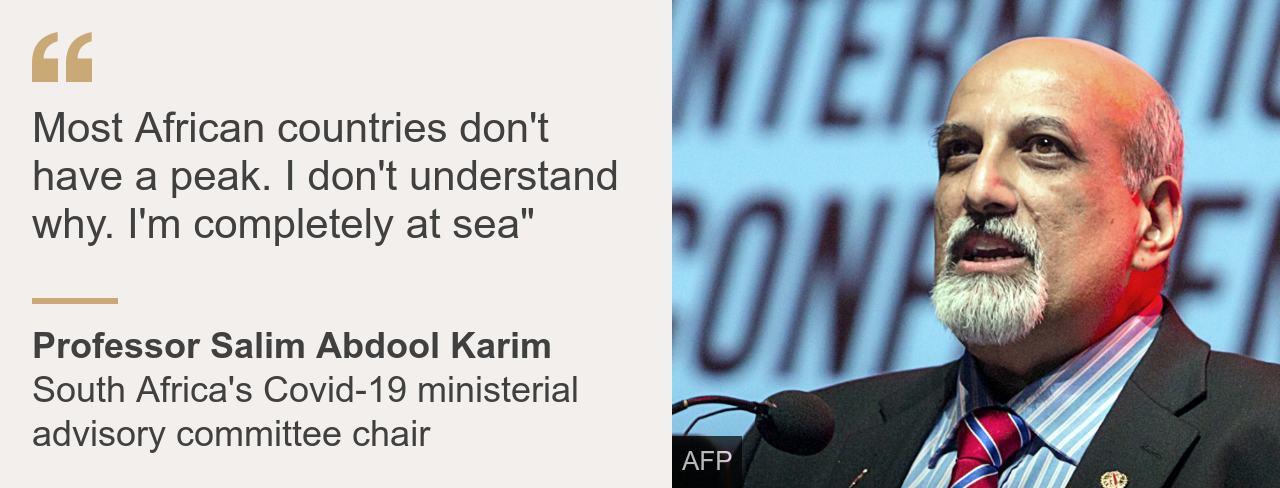
Quote card. Professor Salim Abdool Karim: "Most African countries don't have a peak. I don't understand why. I'm completely at sea"


“I thought we were heading towards a disaster, a complete meltdown,” said Professor Shabir Madhi, South Africa’s top virologist.

Even the most optimistic predictions showed that the nation’s hospitals – and the continent’s most developed health system – would be quickly overwhelmed.

And yet, today South Africa is emerging from its first wave of infections with a Covid-19 death rate roughly seven times lower than the UK’s.

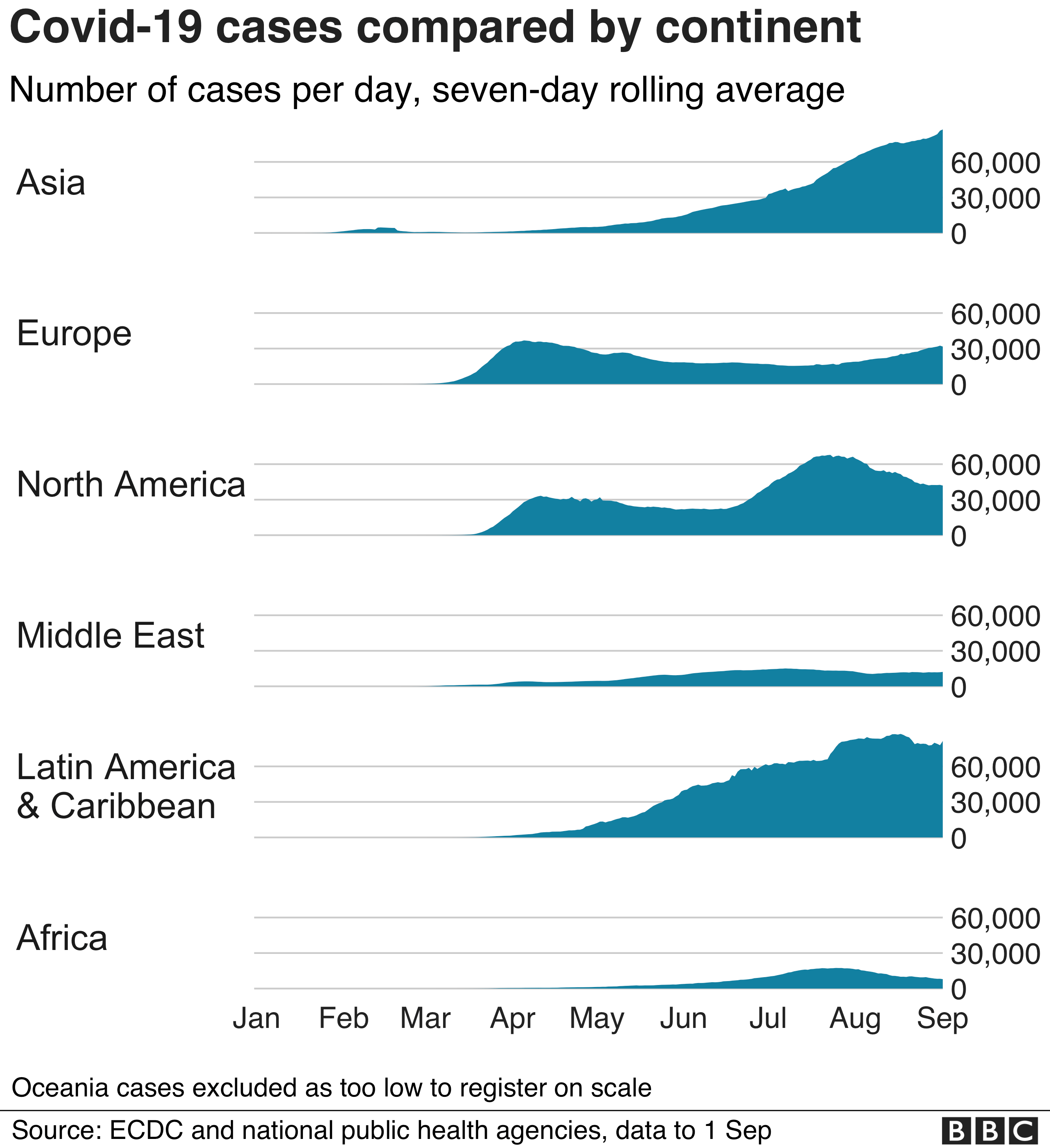
Chart showing Covid-19 cases compared by continent. Updated 2 Sep.
2px presentational grey line


Even if deaths have been under-reported here – perhaps by a factor of two – South Africa has still performed impressively well, as have many other parts of the continent, where hospital beds remain stubbornly empty, and where infection graphs have almost entirely avoided the pronounced peaks and sharp angles seen in so many other parts of the world.

“Most African countries don’t have a peak. I don’t understand why. I’m completely at sea,” admitted Prof Karim, a leading voice on South Africa’s pandemic response.

Professor Madhi agrees: “This is an enigma. It’s completely unbelievable.”

For a while now, experts have cited a youthful population as the best explanation for Africa’s relatively low infection rates. After all, the average age on the continent is roughly half that in Europe.

Far fewer Africans live into their 80s, and so are less likely to succumb to the virus as a result.

“Age is the highest risk factor. Africa’s young population protects it,” said Tim Bromfield, a regional director of the Tony Blair Institute for Global Change.

But as the pandemic drags on, and the statistical evidence builds up, analysts appear increasingly reluctant to give demographics all the credit for this continent’s successes.

“Age is not such a big factor,” said Prof Karim.

Early, and aggressive lockdowns here in South Africa and elsewhere on the continent have clearly played a crucial role.

Clear messaging about masks and the provision of oxygen supplies have also been important.

Other theories – about the impact of altitude or warmer temperatures – have generally been pushed aside.

Some experts warn that a vast and poorly connected continent may simply be biding its time, and that the virus could strike hard in the coming months.

“I would not venture to say that Africa is over its worst. I’m not sure whether one day the epidemic is going to spread like crazy here,” said Prof Karim.

Other coronaviruses

But in recent days, scientists at the Vaccine and Infectious Disease Analytics unit, at Baragwanath hospital in Soweto, have been wondering if the missing factor – the answer to what they see as the continent’s pandemic mystery – might lie inside a glorified chest freezer in their laboratory, on the outskirts of Johannesburg.

The freezer, whose temperature is kept at minus 180C, thanks to liquid nitrogen – contains metal cannisters storing five-year-old human blood samples.

Or to be more specific, extracts from blood cells – known as PBMCs – acquired during an earlier influenza vaccine trial in Soweto.

Quote card. Professor Shabir Madhi: "The protection might be much more intense in highly populated areas, in African settings. It might explain why the majority [on the continent] have asymptomatic or mild infections"


The idea is that, by studying the PBMCs, the scientists might find evidence that people had been widely infected by other coronaviruses – those, for instance, responsible for many common colds – and that, as a result, they might enjoy some degree of immunity to Covid-19.

“It’s a hypothesis. Some level of pre-existing cross-protective immunity… might explain why the epidemic didn’t unfold [the way it did in other parts of the world],” said Prof Madhi, explaining that data from scientists in the US appeared to support the hypothesis.

Colds and flu are, of course, commonplace around the world.

But the South African scientists wondered whether, because those viruses spread more effectively in overcrowded neighbourhoods, poorer communities might have been more widely exposed and therefore, enjoy a larger degree of immunity towards Covid-19.

The same, of course, could apply to other parts of the world, like India, with similar challenges.

“The protection might be much more intense in highly populated areas, in African settings. It might explain why the majority [on the continent] have asymptomatic or mild infections,” said Prof Madhi.

“I can’t think of anything else that would explain the numbers of completely asymptomatic people we’re seeing. The numbers are completely unbelievable,” he said, savouring the irony of the possibility that Africa’s entrenched poverty might “for once” work in the continent’s favour.

Sceptics though might point to countries like Brazil, with its crowded favelas, and its high infection rate.

Unfortunately, as the scientists began preparing to test the PBMC samples in their laboratory, they spotted a problem.

A quality-control test revealed that the icy temperature inside the cryo-containers had fluctuated over time – too much for the rigorous standards required for such an important and delicate experiment.

“We’re very disappointed. We were all ready but unfortunately this thing happened,” said Doctor Gaurav Kwatra, who was leading the experiment.

There was no-one to blame – not even South Africa’s notorious power-cuts. It was just one of those things.

The team is now busy hunting for new samples to test, but that may take months. In the meantime, the mystery of Africa’s relatively mild pandemic lives on.

BBC

Kano Musician Sentenced To Death For Blasphemy Appeals Judgment

Kano Musician Sentenced To Death For Blasphemy Appeals Judgment

Yahaya Sharif-Aminu, a musician sentenced to death for blasphemy against Prophet Muhammad by a Kano Shari’a Court, has appealed the judgment.

Sharif-Aminu was sentenced to death on August 10, 2020, and was given 30 days by the court to appeal the judgment, meaning that the time would lapse on Wednesday, September 9.

In a suit filed on Thursday at the Kano State High Court by his lawyer, Kola Alanipini, Sharif-Aminu said he is dissatisfied with the judgment of the Shari’a Court.

He described the Kano State Penal Law 2000 as unconstitutional, null and void, having grossly violated and conflicted with the constitution of the Federal Republic of Nigeria (1999) as amended and having violated the Human Rights and the Universal Declaration of Human Rights respectively.

Frank Nweke Jr Emerges President Of Harvard Kennedy School Alumni Association

Frank Nweke Jr Emerges President Of Harvard Kennedy School Alumni Association
Former Minister of Information, Frank Nweke Jr

A former Minister of Information in Nigeria, Frank Nweke Jnr, has emerged President of Harvard Kennedy School Alumni Association of Nigeria.

Nweke served as Minister of Inter-governmental Affairs; Special Duties and Youth Development; and later Information and Communications under former President, Olusegun Obasanjo’s government.

Nweke was elected alongside Aminu Mukhtar Dan’amu (Vice President).

Dan’amu is a former Kano State Commissioner for Finance and Economic Development and served as Economic Adviser to two governors in Kano State.

In his acceptance speech, Nweke Jnr said, “As beneficiaries of a Harvard education and its accompanying networks and pedigree, the burden of responsibility is upon us to do all that we can to lead in navigating this new world by contributing our knowledge, skills, experience, network, and resources, towards transforming our country, society and communities for the better.”

HKSAAN leverages on resources at the Kennedy School and its alumni network in hosting informed policy discussions that can help contribute to greater growth and development in Nigeria.

SAHARA REPORTERS

‘Kill Me Instead Of Destroying My Weed Farm’ – Suspect Tells NDLEA

'Kill Me Instead Of Destroying My Weed Farm' - Suspect Tells NDLEA

A suspected Indian hemp farmer, Clement Akor, has begged the National Drug Law Enforcement Agency to take his life instead of destroying his 10-hectare cannabis plantation.

Akor, a 42-year-old father of six from Enabo village in the Ankpa Local Government Area of Kogi State, and his accomplice, David Ameh, were arrested by the Kogi State Command of the NDLEA.

Akor, who claimed to have invested so much in the business and could not afford to lose everything, said he learnt dealing in Indian hemp from Owo, Ondo State.

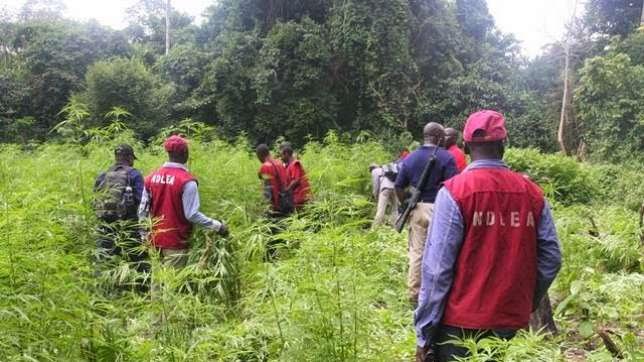
The suspect, who cried profusely and attempted to stop the men of the NDLEA, led by the commander, Alfred Adewumi, from destroying his farm in Oketepe, Okula community, about 10 kilometres from Ejule, said he preferred to die than watch the officers destroy what he worked hard for in the last one year.

He noted that he was aware of the ban on the sale of Indian hemp, but insisted that it was a risky business.

Akor stated, “I am the owner of this farm. I learnt it in Yorubaland. When I cultivated the produce last year, it was stolen. So, this year, I bought the seed from Yorubaland and planted it before I was caught.

“The Indian hemp business is by luck. In this farm, I can get many bags. I do sell one bag for N20,000, depending on the area where I am selling it to. It can be me more. I spent N12,000 on cultivating this farm. It is better for you people to kill me than destroy this farm.”

“This is my business. I spent a lot to allow this plant to grow up to this level. In the next two weeks, I am supposed to harvest it. Now, you people have come here to destroy it. Just kill me so that I won’t see you people destroying what I have laboured for. I am looking for money because I am illiterate. I don’t want to engage in armed robbery or kidnapping, that is why I am into this business of Indian hemp cultivation and sale.”

Adewumi, however, calmed him down but insisted that the war against illicit drug use was on course in the state.

Addressing journalists shortly after the destruction of the farm, Adewumi lamented the increasing wave of cultivation illicit and use of cannabis sativa in the state.

He stated that the two suspects were arrested through intelligent gathering by officers of his command.

The commander noted that the latest breakthrough came three days after the command arrested Endurance Samson and Abah Sunday for alleged possession of 36.2 kilograms of Indian hemp.

Adewumi stated, “What you are seeing today is certainly more than three football fields put together.  Just look around that is a huge expanse of cultivated cannabis land. We just left the first farm, which is equally a huge cannabis plantation.

“This is very unfortunate. I am worried about this unfortunate development. I have thought that Kogi State will not descend to this point. As things stand today, it will be self denial to begin to say that Kogi State is not planting cannabis sativa, because the evidence itself suggests the fact that there is high rate of cannabis sativa cultivation in the state.”

He added that the suspects would be charged as soon as investigation was concluded into the case.

The PUNCH.

Federal Executive Council Approves November 1 As National Youth Day

Federal Executive Council Approves November 1 As National Youth Day

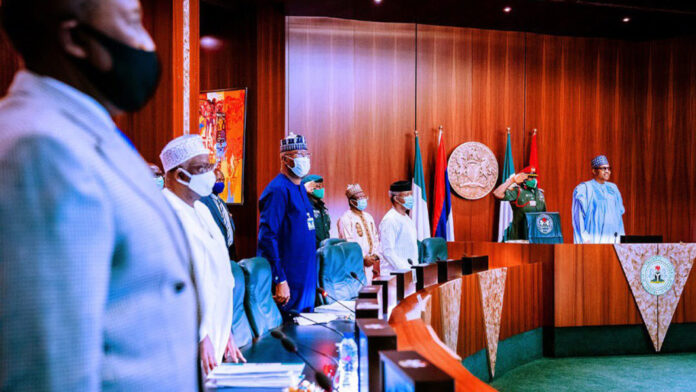
The Federal Executive Council (FEC), yesterday, announced the adoption of November 1 of every year as National Youth Day. This followed the approval of the report of the Cabinet Committee on the institutionalization of a National Youth Day on November 1 of every year through a memorandum by President Muhammadu Buhari.

The Cabinet Committee was set up to consider a memorandum by the Minister of Youth and Sports Development, Sunday Dare, on the National Youth Day.With the designation, November 1 will now be marked as a day to raise awareness on issues concerning youth in Nigeria and for organising public information activities on youth-related matters.

According to a statement by the Youth and Sports Ministry, “every commemoration would have a theme around which activities will revolve across the states and the Federal Capital Territory, with each one of them bidding to host the event although Abuja will host the maiden edition.”

The statement said the Council directed the Youth and Sports Development minister to present the memorandum to the National Economic Council and the Council of State for adoption and the buy-in of state governments.

Dare said: “The approval by Mr. President in Council for the commemoration of the National Youth Day on November 1 every year is further testimony to how this administration sees the youth as a resource to be harnessed and invested in.

“This development, coming on the heels of a similar approval for the establishment of the Nigeria Youth Investment Fund, has further energized our resolve to prioritize issues relating to the youth.”

This is a separate commemoration from the International Youth Day observed every August 12. International Youth Day is an awareness day designated by the United Nations to draw attention to a given set of cultural and legal issues surrounding youth. The first International Youth Day was observed on 12 August 2000 after the United Nations General Assembly in its resolution 54/120 endorsed the recommendation made by the World Conference of Ministers Responsible for Youth on 17 December 1999.