
back to top
Monday, January 26, 2026
advertise with us
Home Blog Page 167

FG Weakens Power Of EFCC Chair As Director Deneral Is Created In New Bill

FG Weakens Power Of EFCC Chair As Director Deneral Is Created In New Bill
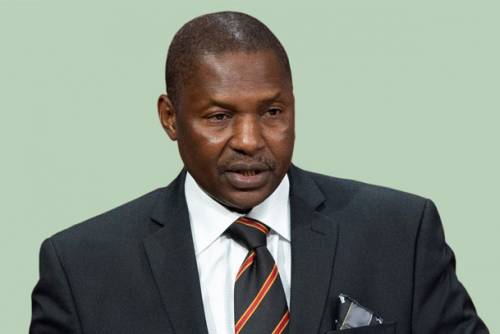
Attorney General and Minister of Justice, Abubakar Malami (SAN)

A new bill seeking to amend the Economic and Financial Crimes Act has weakened the Office of the Chairman of the EFCC and created a new position known as the Director-General of the EFCC, it has been reported.

The bill, which was obtained by this newspaper, is titled, ‘An Act to Repeal the Economic and Financial Crimes Commission (Establishment) Act, 2004 (act no. 1 of 2004) and Enact the Economic and Financial Crimes Commission Act Which Establishes a More Effective and Efficient Economic and Financial Crimes Commission to Conduct Enquiries and Investigate All Economic and Financial Crimes and Related Offences and for other Related Matters.’

The bill, it was learnt, is being put together by the Attorney General, Abubakar Malami (SAN), on behalf of the Federal Government for onward transmission to the National Assembly.

The proposed law was initiated barely weeks after the suspended acting Chairman of the EFCC, Mr Ibrahim Magu, accused Malami of frustrating the anti-corruption war of the President, Major General Muhammadu Buhari (retd).

According to the proposed law, the director-general will be appointed by the President based on the recommendation of the AGF and subject to confirmation by the Senate.

The director-general, and not the chairman, will be in charge of the running of the daily affairs of the commission.

Section 8 of the bill reads in part, “There shall be for the commission, a director-general who shall be appointed by the President on the recommendation of the Attorney General subject to the confirmation by the Senate.

“Subject to the provisions of subsection (3) of this section, the Director-General shall be a retired or serving member of any government institution, including any security or law enforcement agency not below the rank of a director or its equivalent or a person from the private sector.

“A person shall not be appointed as a director-general unless he is of proven integrity and has 15 years cognate experience in security, forensic or financial crimes investigation; forensic accounting or auditing; or law practice or enforcement relating to economic and financial crimes or anti-corruption.”

The director-general, according to the proposed law, shall hold office for a period of four years subject to reappointment by the President for a further term of four years and no more.

The bill states that the chairman of the EFCC shall be the head of the EFCC board.

Other members of the board shall include the director-general, a representative of the Federal Ministry of Justice, a representative of the Central Bank of Nigeria, the Director of Nigerian Financial Intelligence Unit, two other Nigerians with 15 years cognate experience in legal, finance, banking or forensic auditing and the Director of Administration who shall be the secretary of the board.

The proposed law states that the chairman and members of the management board shall be appointed by the President, on the recommendation of the Attorney General subject to confirmation by the Senate; and for a period of four years in the first instance, renewable for another period of four years and no more.

The EFCC board headed by the chairman will be in charge of establishing policy guidelines for the commission; review and approve the strategic plans of the commission; oversee the due performance of the functions of the commission in accordance with the provisions of this Act; and do such other things which in its opinion are necessary to ensure the efficient and effective performance of the functions of the Commission under this Act.

Sunday PUNCH observed that the Secretary of the EFCC, which is a creation of Section 8 of the existing EFCC Act is not mentioned in the new bill, indicating that the position has been scrapped.

The current EFCC Secretary, Ola Olukoyede, who has also been suspended by Buhari pending investigation, is in charge of the secretariat of the commission and is responsible for the administration of the secretariat and the keeping of the books and records of the commission.

The proposed law not only restates the power of the AGF to discontinue the prosecution of criminal cases as guaranteed in Section 174 of the 1999 Constitution, it empowers the AGF to cancel the prosecutorial power of the EFCC when he sees fit. Section 45 of the new bill states that the AGF may, after notifying the EFCC, intervene in court proceedings, at first instance or on appeal,  where, in the opinion of the AGF, public interest, the interest of justice and the need to prevent abuse of legal process so demand.

It further reads, “On receipt of the notice under subsection (2) of this section, the commission shall hand over to the Attorney-General the prosecution file and all documents relating to the prosecution and provide him with such other information as he may require on the matter within the time specified by him.

“The commission shall furnish returns of all cases handled by it annually and in such manner and at such intervals as the Attorney-General shall direct.

“Where the commission fails to comply with the provisions of this section, the Attorney General may, subject to prevailing circumstances, revoke the power to prosecute from the commission.”

Efforts to get a reaction from the AGF’s office on Saturday proved abortive as his spokesman, Umar Gwandu, did not answer telephone calls.

However, in a statement signed by Gwandu on August 25, 2020, the AGF said the constitution already gave him enormous powers to supervise the EFCC and other agencies regardless of the EFCC Act.

The statement titled, “I don’t need more powers to supervise agencies’, read in part, “The Attorney General of the Federation does not need the tinkering of the current EFCC (Establishment) Act 2004 to enable him to regulate the institution and could, therefore not, in any way, seek to sponsor any bill for more powers to control the commission.

“It is trite to say that by virtue of the extant laws of the land as well as rules and legislation governing the conduct of the governmental operations, the Attorney General of the Federation has indisputable statutory powers to regulate the operations of the commissions without recourse to any additional legislation.

“Section 43 of the EFCC Act has made it abundantly clear that ‘the Attorney General of the Federation may make rules or regulations with respect to the exercise of any of the duties, functions or powers of the Commission under this Act.”

The bill states that the director-general shall be the chief executive of the EFCC and be responsible for the day-to-day administration of the commission; the execution and implementation of the policies of the commission; the organisation, control and management of the affairs of the commission.

Other responsibilities of the director-general include the implementation of the commission’s functions, the direction, supervision and control of the employees of the commission; the maintenance of transparent accounting records in accordance with applicable laws governing statutory bodies;  and ensuring that the commission is guided by the laws of Nigeria and international best practices.

CACOL Kicks Against Bill, Demands Autonomy For Anti-Graft Agency

A civil society organisation, Centre for Anti-Corruption and Open Leadership, has said that the proposed bill seeking to amend the Economic and Financial Crimes Act was in bad taste for the commission, adding that the anti-graft agency deserved to have more autonomy.

The CACOL Executive Director, Debo Adeniran, in an interview on Saturday, noted that putting the EFCC head under the AGF’s recommendation would only make the commission dance to the tune of corrupt politicians and reduce the effectiveness of the commission.

The director said, “The AGF is a politician and a political appointee who may be tempted to want to protect the interests of some of the politicians who are under EFCC’s investigations.

“The National Assembly also may want to reduce the powers of the commission because some of its members are being probed by the anti-graft agency. Instead of passing this new bill, the EFCC should be given more autonomy and made answerable to the President or at least, the Vice-President.

“We demand that the bill is dropped; it is unwarranted and it is against the spirit of progressivism and anti-corruption efforts.”

Magu’s Pastor Sues Bank For N5bn Over Alleged False Report

The General Overseer, Divine Hand of God Prophetic Ministry, Prophet Emmanuel Omale, has sued First City Monument Bank Plc for N5bn.

Omale, who claims to be the spiritual guide of the suspended acting Chairman of the EFCC, Magu, said FCMB falsely reported to the Nigerian Financial Intelligence Unit that N570m was paid into his church account, thereby leading to accusations that the money was used in purchasing a house in Dubai for Magu.

The suit, marked FCT/HC/CV/2020, was instituted by Omale, his wife, Deborah Omale, and the church, the Incorporated Trustees of the Divine Hand of God Prophetic Ministry.

The claimant stated that in 2016, the FCMB falsely reported to the NFIU that N570m was paid into the church’s bank account marked 1486743019 which caused security agents to put the account under surveillance for four years.

The statement of claim read in part, “Sometime on or about the 6th day of July 2020, the former acting Chairman of the EFCC, Mr Ibrahim Magu, was arrested and summoned to the Presidential Villa, Abuja, to appear before the Presidential Investigation Committee on the Alleged Mismanagement of the EFCC, Federal Government Recovered Assets and Finances from May 2015 to May 2020.

“That is one of the key allegations levelled at the Presidential Investigation Committee against Mr Ibrahim Magu, was that the 2nd claimant (Prophet Omale) fraudulently and corruptly purchased a real estate property for Mr Ibrahim Magu in Dubai, the United Arab Emirates, with the said sum of N573,228,040 allegedly credited as an inflow into the 1st claimant’s (church’s) Corporate Current Account No: 1486743019 in the year 2016.”

The claimant stated that due to the investigation and negative media reports, they were exposed to public hatred, injury  and contempt in their religious calling.

The cleric said on August 6, 2020, he and his wife were summoned to appear on August 10, 2020 before the said Presidential Investigation Committee at the Presidential Villa, Abuja.

Omale and his wife, accompanied by their lead senior counsel, Chief Gordy Uche (SAN), and a team of four senior lawyers, appeared before the panel on August 10, 11 and 12 and were grilled for hours on their alleged roles in respect of the sum of N573m used in fraudulently and corruptly purchasing a real estate property for Magu in Dubai.

The cleric said they paid Uche (SAN) & Co the sum of N15m to appear and represent them for three days before the said Presidential Investigation Committee and attached a copy of the receipt to the statement of claim.

He said they all denied the allegations of fraud, adding that he never bought any property for Magu when grilled by the panel.

He said in all, he had lost N180.5m due to payment of legal fees and personal losses.

Meanwhile, the panel led by Salami has grilled a Kaduna-based bureau de change operator, Ahmed Shanono, who was accused of running 158 accounts and receiving huge sums of funds on behalf of Magu.

A counsel for Magu, Mr Tosin Ojaomo, said Shanono was indeed grilled by the panel but stated that he didn’t even know Magu.

“It is true. The bureau de change operator was grilled by the panel and he told them that he didn’t even know Magu. You know the allegation was that it was this bureau de change man that was used to convert the N570m that Prophet Omale used in buying a house for Magu in Dubai.

“But everything has turned out to be a lie. Of all the people that have testified against Magu, none has accused him of collecting a bribe,” Ojaomo said.

Lawyers React

Lagos-based lawyer and Public Affairs Analyst, Jiti Ogunye, said if there was such a bill, it would tamper with the limited autonomy of the commission.

He said, “If the EFCC Act is to be further amended, it is to strengthen the agency and make it less dependent on the executive. Our hope is that National Assembly members would rise up like men to resist this irresponsible proposal, because it means the law is being proposed on the basis of selfish interest.

“In the development that we have witnessed recently, it is clear that this AGF has gone far beyond his predecessors in the wish to micromanage, nay pocket the EFCC and that is not acceptable.”

Senior Advocate of Nigeria, Ahmed Raji, said there was nothing wrong in the proposal of having a director-general running the anti-graft agency.

He, however, cautioned that such a move should not affect the autonomy of the commission.

There is nothing wrong in involving the Attorney General in the appointment of such a big functionary. The President has the prerogative to act on the recommendation or otherwise.

“However, the autonomy is desirable so that they (director-general) can do their work without fear or favour. The additional thing that should be done is that nobody should function in an acting capacity more than six months so that if somebody is not approved, they won’t be kept there and be running a term as if it is in a substantive capacity.”

Mike Ozekhome, SAN, expressed concern over the EFCC being singled out, but said he was wary of commenting without seeing the bill.

He said, “I do not know whether it will not be counterproductive if the EFCC is suddenly removed. If they are removing it, what of the Independent Corrupt Practices and Other Related Offences Commission? There are so many things to look at. That is why I can’t just comment without looking at the bill.”

In his reaction, Dr Kayode Ajulo, however, said there was no way the commission could be totally independent since its officers “are to be appointed by the President”.

Ajulo said though he had yet to see the proposed bill, he however urged Nigerians to “know that there is no autonomy even in the Independent National Electoral Commission because the President still has the power to hire and fire any of its officers”.

“Every federal agency is subject to control of one officer or the other in the present structure of the government,” he added.

A Senior Advocate of Nigeria, Joe Agi, said the supervision of the AGF was necessary for the EFCC, noting that the bill was in order.

He said, “Even under the present dispensation, the EFCC is under the AGF. The AGF is the Chief Law Officer of the federation. For some reasons, the AGF presently appears to have lost control of the EFCC and they are now a law to themselves. But frankly speaking, there should be some level of supervision for the agency. You can see how many cases they take to court and how many they win.”

The PUNCH

UNUSUAL JOB: The Companies That Help People Vanish

UNUSUAL JOB: The Companies That Help People Vanish

All over the world, from the US to Germany to the UK, some people decide to disappear from their own lives without a trace – leaving their homes, jobs and families in the middle of the night to start a second life, often without ever looking back.

In Japan, these people are sometimes referred to as “jouhatsu”. That’s the Japanese word for “evaporation”, but it also refers to people who vanish on purpose into thin air, and continue to conceal their whereabouts – potentially for years, even decades.

“I got fed up with human relationships. I took a small suitcase and disappeared,” says 42-year-old Sugimoto, who’s just going by his family name for this story. “I just kind of escaped.” He says that back in his small hometown, everybody knew him because of his family and their prominent local business, which Sugimoto was expected to carry on. But having that role foisted upon him caused him such distress that he abruptly left town forever and told no one where he was going.

From inescapable debt to loveless marriages, the motivations that push jouhatsu to “evaporate” can vary. Regardless of their reasons, they turn to companies that help them through the process. These operations are called “night moving” services, a nod to the secretive nature of becoming a jouhatsu. They help people who want to disappear discreetly remove themselves from their lives, and can provide lodging for them in secret whereabouts.

“Normally, the reason for moving is something positive, like entering university, getting a new job or a marriage. But there’s also sad moving – for example, like dropping out of university, losing a job or escaping from a stalker,” says Sho Hatori, who founded a night-moving company in the 90s when Japan’s economic bubble burst. At first, he thought financial ruin would be the only thing driving people to flee their troubled lives, but he soon found there were “social reasons”, too. “What we did was support people to start a second life,” he says.

Sociologist Hiroki Nakamori has been researching jouhatsu for more than a decade. He says the term ‘jouhatsu’ first started being used to describe people who decided to go missing back in the 60s. Divorce rates were (and still are) very low in Japan, so some people decided it was easier to just up and leave their spouses instead of going through elaborate, formal divorce proceedings.

“In Japan, it’s just easier to evaporate,” says Nakamori. Privacy is fiercely protected: missing people can freely withdraw money from ATMs without being flagged, and their family members can’t access security videos that might have captured their loved one on the run. “Police will not intervene unless there’s another reason – like a crime or an accident. All the family can do is pay a lot for a private detective. Or just wait. That’s all.”

‘I was shocked’

For the loved ones who get left behind, the abandonment – and resultant search for their jouhatsu – can be unbearable.

“I was shocked,” says a woman who’s remained anonymous, and whose 22-year-old son went missing and hasn’t contacted her since. “He failed after quitting his job twice. He must have felt miserable with his failure.” She drove to where he was living, searched the premises and then waited in her car for days to see if he showed up. He never did.

She says the police haven’t been helpful, and says they told her they could only get involved if it was a suspected suicide. But since there was no note, they won’t help.

“I understand there are stalkers – information can be misused. This is a necessary law, perhaps. But criminals, stalkers and parents who cannot search for their own children? All of them are treated the same way due to the protection. What is this?” she says. “With the current law, without money, all I can do is check if [a] dead body is my son – the only thing left for me.”

The disappeared

For the jouhatsu themselves, feelings of sadness and regret stick with many of them long after they leave their lives behind.

“I constantly have a feeling that I’ve done something wrong,” says Sugimoto, the businessman who left his wife and kids in the small town. “I haven’t seen [my children] in a year. I told them I’m on a business trip.” His only regret, he says, was leaving them.

Sugimoto is currently staying in a home tucked away in a residential district of Tokyo. The night-moving company that’s housing him is run by a woman called Saita, who’s also going by her family name only to preserve anonymity. She was a jouhatsu herself, who went missing 17 years ago. She ‘disappeared’ after being in a physically abusive relationship, and says “in a way, I’m a missing person – even now.”

“I have various types of clients,” she continues. “There are people who run away from serious domestic violence or ego and self-interest. I don’t judge. I never say, ‘Your case is not serious enough’. Everybody has individual struggles.”

For people like Sugimoto, her company helped him address those struggles of his own . But even though he managed to disappear, it doesn’t mean that traces of his old life don’t linger. “Only my first son knows the truth. He’s 13 years old,” he says. “The words I can’t forget are, ‘What Dad decided is Dad’s life, and I can’t change it’. It sounds more mature than me, doesn’t it?”

BBC

No Going Back On Planned Protest Against Fuel Price Hike – TUC

No Going Back On Planned Protest Against Fuel Price Hike – TUC

The Trade Union Congress on Saturday says it will not go back on its decision to embark on a protest on Tuesday against the increase in the prices of fuel and electricity tariff despite speculations about a court order stopping the proposed demonstration.

TUC Deputy National President, Chika Onuegbu, who disclosed this to The PUNCH, said the union had begun to mobilise its members for the protest and strike.

Explaining that the TUC was not aware of any court order to stop the planned protest, Onuegbu condemned the increase of fuel price, adding that the Federal Government’s action had become a burden on Nigerians.

He said, “I must say that we are mobilising our members for the planned protest on Tuesday. Some are talking about a court order; but to the best of my knowledge, we are not aware of any court order stopping our planned protest.

“I am also not aware that our secretariat has received any court order; our people have not been served. As a matter of fact, we are preoccupied with mobilising our members for the protest.

“The increase in fuel price is an extra burden on us and our families; the increase in electricity tariff is an extra burden on us and our families; the increase in Value Added Tax is an extra burden on us and our families; and the general increase in food prices.

“While all these are happening, our members are being owed salaries, gratuities and pensions. Honestly speaking, we have a lot that we are bothered with this period. I think we have to really make a statement that Labour is united in the struggle for a better Nigeria.”

Onuegbu called on the Federal Government to immediately revert to the old prices of fuel before the recent increase to avert the protest.

“Again, the National Secretariat has not given any counter-order to say we should not proceed with the protest/strike.

“The last order I know is that we have to go ahead with the strike and it is that order we are working on. The government should immediately revert to the old price of petrol before these increases,” he maintained.

Ondo Governor, Akeredolu, Gifts Pro-government Lawmakers New Cars

Ondo Governor, Akeredolu, Gifts Pro-government Lawmakers New Cars

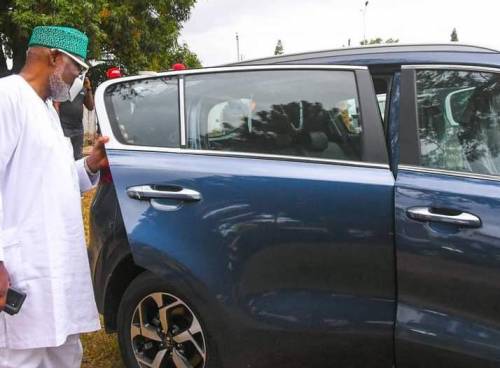
Barely a month to the October 10 governorship election in Ondo State, Governor Rotimi Akeredolu has presented Sports Utility Vehicles to members of the state’s House of Assembly especially those loyal to his government.

Akeredolu handed out the car gifts to the lawmakers on Friday in order to further enjoy their loyalty ahead of the election next month.

The governor, however, ignored lawmakers not loyal to him in the latest spending of state resources for personal goal.

The lawmakers ignored were those, who kicked against a plot to impeach deputy governor of the state, Agboola Ajayi, last month.

Presenting the vehicles to the Assembly members, Akeredolu said he had been able to fulfill his promises to them.

He said, “We have been on this car issue for a while and luckily it came today. Nobody is doing it for political reasons. This is an improvement on what we had last.”

Speaker of the House of Assembly, Bamidele Oloyegun, who received the vehicles on behalf of members, said they were ready to perform their legislative duties optimally.

Pharmacist Detained For Months Over Twitter Comment Against Buhari

Pharmacist Detained For Months Over Twitter Comment Against Buhari
Solomon Akuma

A pharmacist, Solomon Akuma, is currently in the detention of the Nigeria Police Force and has spent more than six months in custody for allegedly making a social media post against President Muhammadu Buhari and his late Chief of Staff, Abba Kyari.

Akuma, a pharmacist intern with NAFDAC, was arrested for tweeting that he will “pay a Russian sniper to eliminate Buhari and Kyari” in response to a Twitter post asking “if $1m hits your account, your next move?”. The pharmacist spent almost three months in detention without a court order or trial until he was eventually arraigned at the Federal High Court for charges bordering on terrorism, sedition, criminal intimidation of the President, and threat to life of Buhari.

The court denied his bail application, effectively confining Akuma to detention of over 150 days now and still running.

The next adjourned date for his trial is October 7, 2020.

Lawyers have described the charges of “terrorism, sedition, criminal intimidation of the President, and threat to life of the President” against Akuma as baseless.

Also, the pharmacist’s detention for close to three months without a court order or arraignment negates the provisions of the Nigerian constitution.

The Buhari government is notorious for clamping down on voices of dissent, shrinking the civic space, disobeying court orders and violating citizens’ fundamental rights.

SAHARA REPORTERS

Femi Falana, Bobi Wine To Open #RevolutionNow Protest Against Tyranny

Femi Falana, Bobi Wine To Open #RevolutionNow Protest Against Tyranny

Senior Advocate of Nigeria and rights campaigner, Femi Falana, and Ugandan freedom fighter, Bobi Wine, are set to declare open a global RevolutionNow online protest to condemn oppression and freedom of speech under President Muhammadu Buhari’s administration.

The global protest to take place via Zoom, will see participants demand the resignation of Buhari and his cabinet members over their failure to address basic problems affecting Nigerians.

“Under Buhari’s regime there have been unabated killings and insecurity in Northern Nigeria, corruption and mindless looting of public wealth, rising poverty and unemployment.

“There have also been lack of political will to reopen campuses under safe conditions, complete abandonment of public health, flagrant disregard for human rights, court orders and rule of law, violent repression of free speech, civil rights, religious freedom and protest.

“We want a country that works for all and not a corrupt few.

“The online global action will take place on September 5, 2020 at 4:00pm.

“We“troublemakers” would like to protest online by carrying placards to denounce the wrongs plaguing the land for about an hour. No teargass, no police presence.

“The protest will demand the resignation of Buhari and his “kitchen” cabinet over.

“Registeration can be done via:
https://us02web.zoom.us/meeting/register/tZEkf–gpzsrH9xCMxo3yvhbTVdMAyI5GpXa and after registering, you will receive a confirmation email containing information about joining the meeting,” one of the protest organisers said.

SAHARA REPORTERS

‘Pastor’ Accused Of Killing Native Doctor In Anambra Over Hindrances

'Pastor' Accused Of Killing Native Doctor In Anambra Over Hindrances

A 21-year-old man, Uchenna Chukwuma, said to be a pastor has allegedly killed a native doctor in Anambra State.

The suspect claimed he was divinely sent to kill the 60-year-old herbalist identified as Chukwudi Ugwu.

The incident happened at Nkpor, near Onitsha, in the Idemili North Local Government Area of the state.

Chukwuma claimed the herbalist had been disturbing him spiritually, thereby hindering his progress.

The Spokesperson for the Police in the state, Haruna Mohammed, said the suspect confessed to the crime during interrogation.

He said,” There was a report of alleged murder of a native doctor, one Oliver Chukwudi Ugwu, 60, of Umusiome, Nkpor but hailed from Umuavor village Abor in the Udi Local Government Area of Enugu State by a self- acclaimed pastor one Uchenna Chukwuma, 21,  of Ugwuezue street, Umusiome Nkpor in the Idemili North LGA of Anambra State.

“He further alleged that the victim was disturbing him spiritually and had not allowed him to progress financially.

“Police detectives attached to Ogidi Division visited the scene of the crime and rushed the victim who was found in a pool of his blood to Iyi Enu Hospital Ogidi for medical attention where he was certified dead by a medical doctor on arrival. The corpse was deposited at the hospital’s mortuary for autopsy.”

Mohammed said a machete allegedly used in perpetrating the crime was recovered as an exhibit while the case had been transferred to the State Criminal Investigation Department, Awka for discreet investigation.

Professor Who Posed As Black Wouldn’t Teach – George Washington University

Professor Who Posed As Black Wouldn't Teach - George Washington University
Jessica Krug

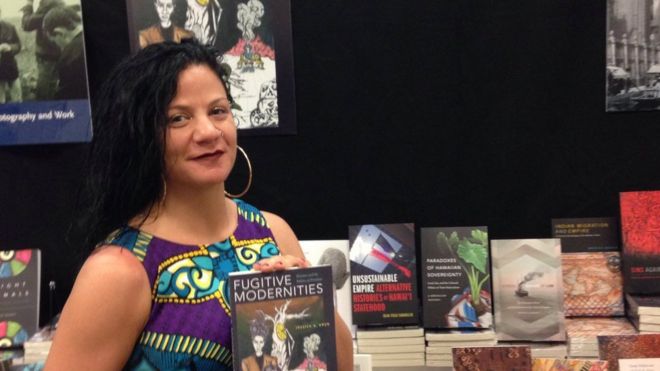
A US academic who said she lied about being black will not teach classes this semester, George Washington University has confirmed.

Jessica Krug, an associate professor whose work focuses on Africa and the African diaspora, admitted in a blog post that she was in fact a white Jewish woman from Kansas City.

The post read: “I have built my life on a violent anti-black lie.”

Her colleagues said they were “shocked and appalled” by her admission.

In a Medium post published on Thursday, Ms Krug said she had falsely assumed identities “that I had no right to claim: first North African Blackness, then US rooted Blackness, then Caribbean rooted Bronx Blackness”.

In a statement, George Washington University said Ms Krug would not teach classes and acknowledged “many students, faculty, staff and alumni are hurting.” It said it was “reviewing” the case.

Her employment status at the university is unknown. Ms Krug has not commented.

What has the reaction been?

Ms Krug’s colleagues at GWU’s Department of History released a joint statement calling for her to resign from her post or for the university to remove her tenure.

“She has betrayed the trust of countless current and former students, fellow scholars of Africana Studies, colleagues in our department and throughout the historical discipline, as well as community activists in New York City and beyond,” the statement said.

“The discipline of history is concerned with truth telling about the past. With her conduct, Dr. Krug has raised questions about the veracity of her own research and teaching.”

A student at GWU who was due to start Ms Krug’s class on Latin American history on Monday told the Washington Post: “It just breaks my heart that these students came in, very bright-eyed and eager, to learn about Latin heritage and the history. We all placed a lot of trust in her.”

Ms Krug’s academic work includes the 2018 book “Fugitive Modernities: Kisama and the Politics of Freedom”, focuses on the politics and culture of African and African diaspora societies.

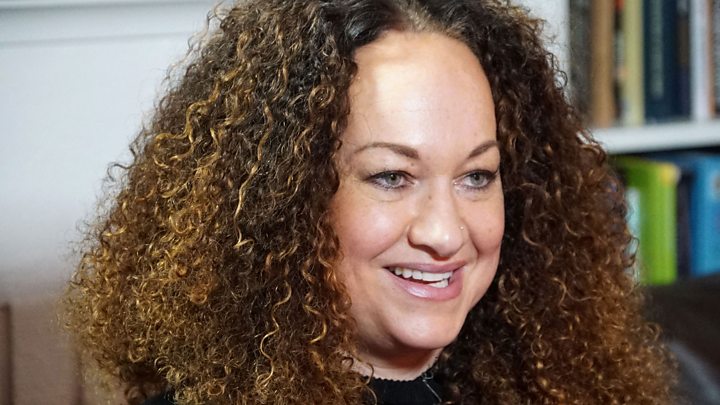
Her case bears strong parallels to race activist Rachel Dolezal, a white woman who claimed to be black. After her parents outed her in 2015, she said she “identified as black”.

“The idea of race is a lie” – Rachel Dolezal speaking to Emily Maitlis

What else did she say in the post?

Ms Krug described her behaviour as “the very epitome of violence, of thievery and appropriation, of the myriad ways in which non-Black people continue to use and abuse Black identities and cultures.” She added that she had continued the pretence even in her personal relationships.

She cited mental health issues and trauma experienced in her early years, although she said this was not an excuse for her actions.

According to media reports, Ms Krug also used the name Jessica La Bombalera as an activist. In one video posted earlier this year, she berated white New Yorkers for failing to “yield their time for Black and Brown indigenous New Yorkers”.

BBC

Drama As Obaseki, Ize-Iyamu Attend BBC Debate

Drama As Obaseki, Ize-Iyamu Attend BBC Debate

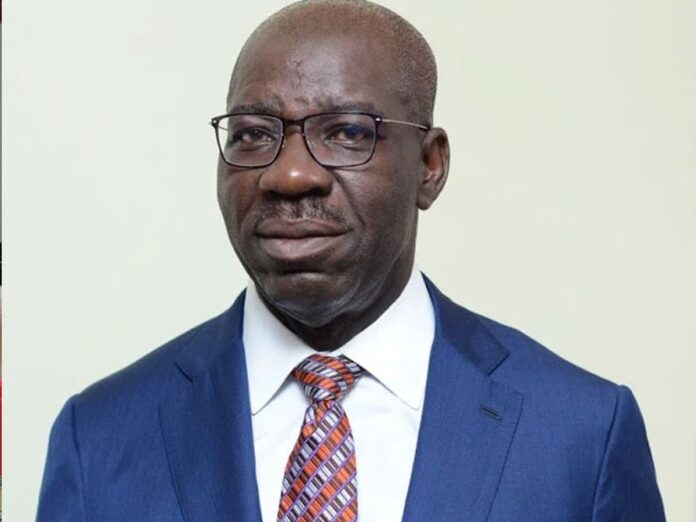
There was a mild drama on Friday evening during a debate organised by BBC News Pidgin for candidates in the September 19 Edo State governorship election as Governor Godwin Obaseki excused himself from the discussion just at the beginning.

Obaseki, who is seeking reelection on the platform of the Peoples Democratic Party, had featured briefly in the virtual debate but excused himself to attend another meeting.

The governor also asked the moderator to allow his deputy, Philip Shaibu, to continue the debate in his stead.

This development drew the ire of the All Progressives Congress candidate, Osagie Ize-Iyamu, who objected to the idea, insisting that he would not debate with Shaibu, Punch reports.

Obaseki said, “First, I wan’ thank una say una invite me come this programme, make we debate among ourselves, make we fit talk wetin we wan do for the people of Edo State.

“But make I first start by apologising. You see, as I dey now, I no dey Benin. I had to travel on emergency this evening come somewhere, and the meeting dey very important. But abi tell una, so my deputy dey on ground. E no get anything wey I dey do wey im no know.

“So, I say out of respect, make I first do this opening round, I will rush go the meeting, and hopefully my deputy go continue.”

Reacting, Ize-Iyamu said, “Abeg make I talk small for wetin Governor Obaseki talk. This debate na for governorship candidates, no be wetin den dey delegate. If he no go fit stay, he no go fit stay.

“But say he wan’ comot make im deputy go come dey follow us debate, I no get hand for that one. If he no get ready, make im no say he no wan’ debate with us.

“But if he wants to debate, he has to stay but me no go sit down with im deputy. If na deputy own, I go call my deputy make im come talk with im deputy. No be me and im deputy dey debate, na governorship debate.”

Obaseki later left Ize-Iyamu and the other candidates to continue. His deputy, Shaibu, did not also feature but the governor came back after about an hour, towards the end of the debate.

The two major candidates in the election had on Sunday shunned a governorship debate organisation by the Esan Development and Transformation Initiative which was moderated by the Senior Pastor of Trinity House, Ituah Ighodalo.

Buhari’s Daughter’s Marriage: Police Stop Man From Committing Suicide

Buhari's Daughter's Marriage: Police Stop Man From Committing Suicide

Following the prompt intervention of the Kano State Police Command, a 22-year-old man, Abba Ahmed, who earlier threatened to commit suicide if Hanan, daughter of President Muhammadu Buhari, did not marry him has changed his mind.

Briefing Punch on Friday at the command headquarters at Bompai, police spokesperson, DSP Abdullahi Haruna, said the police counselled Ahmed against the plan and he had rescinded the decision.

Haruna said, “We were able to invite Abba Ahmed to the police command. He was counselled by the Force PRO, DCP Frank Mba, as well as Kano CP, Habu Sani, and the command’s imam, SP Abdullkadir Haruna, via a virtual session, at the end of which he rescinded his earlier decision to hang himself. He regretted his comments that if he did not marry the President’s daughter, Hanan, he would hang himself.”

Haruna quoted Ahmed as saying, “I realised that my intention is not healthy. Henceforth, I will never again attempt to find myself in such a situation.”

Meanwhile, Hanan on Friday got married to Turad Sha’aban.

The ceremony, which was held inside the Presidential Villa, Abuja, was said to be “strictly private.”

The President’s wife, Aisha, took to her Instagram page, @aishambuhari, to thank God for the success of the ceremony.

Hanan is a graduate of Photography from Ravensbourne University, England while the groom, Sha’aban, is a Special Adviser to the Minister of Works and Housing, Babatunde Fashola.

He is the son of a former lawmaker, Mahmud Sani Sha’aban, who represented Zaria in the House of Representatives from 2003 to 2007.