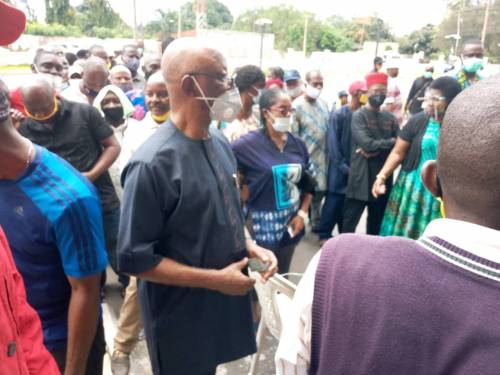
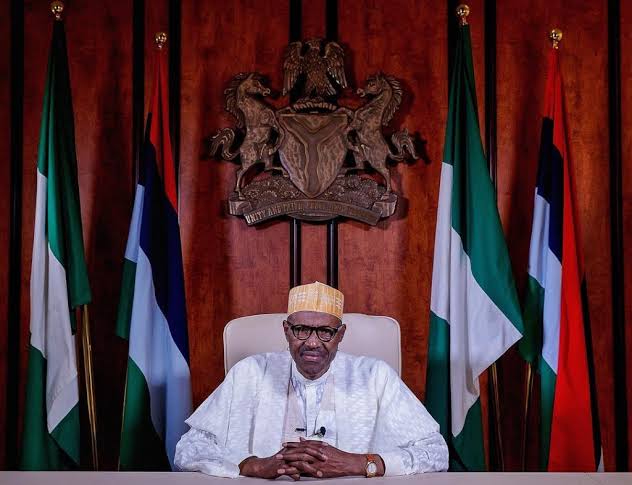
Former APC National Chairman, John Oyegun, about to cast his vote
Former National Chairman of the All Progressives Congress, Chief John Oyegun, has again lost in his polling unit to the Peoples Democratic Party in the ongoing Edo State governorship election.
Oyegun, who registered in Ward 2, Unit 2, in Oredo Local Government Area, voted at about 11:00am, it was gathered.
At the end of voting, sorting and counting, the PDP candidate and incumbent governor, Godwin Obaseki, scored 109 votes while the APC trailed behind with 40 votes.
Oyegun had in a statement during the week refused to endorse Osagie Ize-Iyamu, his party’s candidate in the governorship election.
“I stand with the people of Edo State and urge them to come out massively to exercise their democratic rights. They should vote for good governance, common decency, principled leadership, especially in the political arena and the protection of their democratic rights.
“They should by their votes make clear that it is their right to choose their governor and nobody else’s. There is no room for fence sitters. This is a special situation and primitive loyalties should and must be set aside. Remember Mr President’s admonition in an equally challenging pre-election situation in Imo State, “vote your conscience,” he said.
There was drama at the polling unit of Governor Obaseki – Oredo Ward 4, Benin City – on Saturday.
The drama started when an unidentified man at Oredo Ward 4, Benin City, attempted to disrupt the voting process in Unit 19.
The incident happened at 10.50 am.
The man had argued that since a group of persons disrupted his voting unit, he would disrupt Ward 4, Unit 19, where Governor Godwin Obaseki and his wife, Betsy are standing in the queue to vote.
The man was carried out of the place.
As of 10 am, the Edo State Governor, Godwin Obaseki, had yet to arrive at his polling unit in Emokpae Model Primary School, Oredo, Benin City.
The situation caused a crowd build-up at the polling unit, as some of the electorate who had voted decided to stay behind in other to see the governor.
A voter, who gave his name as Odion, told The PUNCH that “I have voted, but I have to see the governor when he is voting.”
Another voter, who spoke on the condition of anonymity, said she was around after voting because she was enjoying the peaceful atmosphere at the venue of the exercise.
Recent updates from the voting unit confirms Governor Godwin Obaseki has casted his vote.
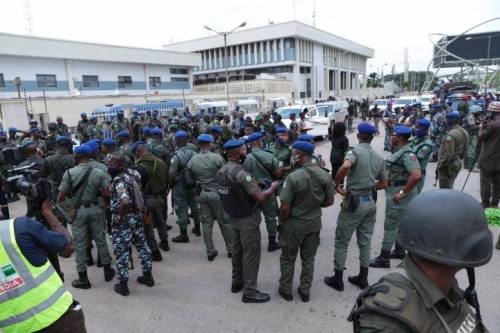
Policemen deployed from other states to Edo for Saturday’s (today) governorship election are grumbling over alleged refusal of the authorities to pay their allowances.
The Inspector-General of Police, Mohammed Adamu, had on Monday said the security agency deployed 31,000 police personnel to the state.
Some of the policemen, who spoke with SaharaReporters on Saturday, appealed to Adamu to intervene in the matter.
“I don’t even have money to go back to Lagos tomorrow. Imagine no provision for us to go back to our base.
“I heard N50,000 has been approved for those in my rank but I am yet to receive alert. Though some have received theirs,” one of them told SaharaReporters.
Another one said, “We are currently risking our lives to ensure adequate security during this election but it’s sad that we don’t have anything in our bank accounts. Just few of us have been paid.”
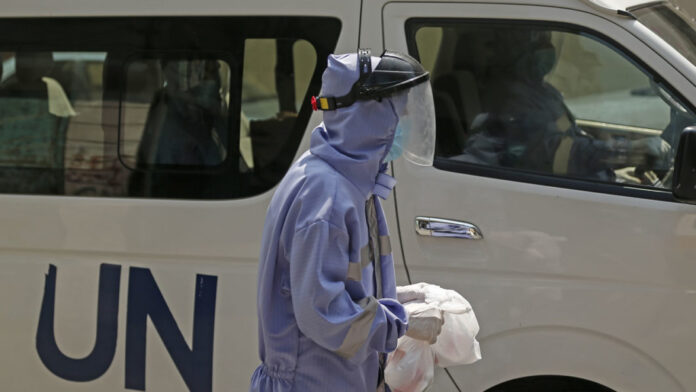
The United Nations will mark its 75th anniversary Monday, celebrating the mantra that “multilateralism is not an option but a necessity,” even as the coronavirus underscores the fragility of international cooperation.
The anniversary will kick off the global body’s annual General Assembly, when normally the leaders and representatives of nearly 200 countries gather en masse to sound off about the world’s problems and offer myriad solutions.
But this year, a part of Manhattan will not be sealed off for the “UNGA”; there will be no endless limousine convoys, and no busy beehive of diplomats, journalists and translators in the halls of the UN.
Instead, with Covid-19 still limiting global movement, just one representative from each of the 193 UN members will be allowed, and only someone already in the United States.
Everyone else will have to appear by videoconference, including some 160-170 heads of state and government planning addresses.
Appearing by video on Tuesday will be Russia’s Vladimir Putin and China’s Xi Jinping, who in the past have let their top diplomats speak for them; and US leader Donald Trump.
On Wednesday, Venezuela’s President Nicolas Maduro, who much of the world sees as illegitimate, will address the assembly by video. Missing as speakers are the leaders of Syria and North Korea.
“Diplomacy, to be effective, requires personal contacts, and I am very sorry that we are not going to have the opportunity to bring together leaders of countries,” said UN Secretary General Antonio Guterres.
Even so, he said, there would be “many virtual meetings” on the sidelines of the assembly, convening by teleconference on subjects such as climate change, biodiversity and the conflicts in Libya and Lebanon.
Missed Opportunity
The event kicks off with a joint declaration full of good intentions and a call to combat unilateralism.
But that belies the reality of what has happened since Covid-19 erupted early this year, with borders closed, cooperation limited and countries forced to go it alone.
Bertrand Badie, professor at the Paris Institute of Political Studies, said the great powers missed a chance with the coronavirus to strengthen global cooperation.
Instead, cooperation broke apart amid allegations that China and the World Health Organization moved slowly on the initial outbreak, and the US declared it would act alone and pulled out of the WHO.
The superpowers’ behavior has “caused the failure, even the collapse, of the UN Security Council,” which was set up to lead on such world-shaking challenges as a pandemic, Badie said.
The powers have clung to a “very conservative vision of security, that humanity is only threatened by rivalries between countries,” Badie told AFP, calling it “a very bad sign for the future.”
‘Moments of disappointment’
The declaration admits that, over seven and a half decades, the UN “has had its moments of disappointment.”
“Our world is not yet the world our founders envisaged 75 years ago,” it says, citing growing inequality and the persistence of poverty, hunger, armed conflicts, terrorism and climate change.
However, the declaration also notes the United Nations has helped bring about decolonization, promote freedom, set standards for development and eradicate disease.
“The United Nations has helped mitigate dozens of conflicts, saved hundreds of thousands of lives through humanitarian action and provided millions of children with the education that every child deserves,” the declaration says.
In the wake of coronavirus, it says, “we have a historic opportunity to build back better and greener.”
Paralysis
Yet the coronavirus has placed a spotlight on the paralyzing rivalry of the superpowers, especially between the United States and China, rapidly eroding Washington’s global leadership.
“Everyone has been too focused on the domestic impact of the pandemic to really look at the global picture,” said Richard Gowan of the International Crisis Group.
“I am frankly deeply pessimistic about the chances for real UN reform or innovations in global governance. I cannot see China and the US agreeing on big reforms now,” Gowan said.
Badie said the organization was immobilized by a power rivalry that dates back to the UN’s creation.
To embark on reforms, he said, it is necessary for the five permanent members of the UN Security Council — the United States, Britain, Russia, France and China — to change their Cold War mentality.
The five, though, “will always refuse, because that would lead to an overhaul of the ‘international community’ and the loss of the privileges of the nuclear oligarchy,” Badie said.
A retired United States of America army officer, Jide Ijadare, who was abducted in Ekiti State three days ago, has been freed by his abductors.
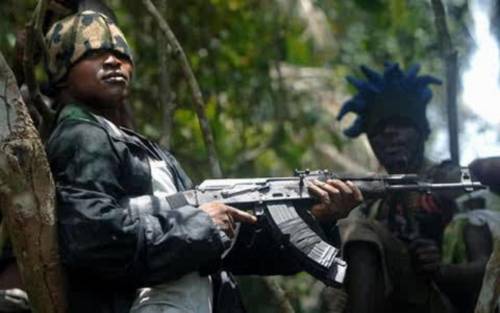
Ijadare was abducted on Tuesday when some gunmen invaded his palm oil factory along Ijan Ekiti-Ise/Ekiti Road at Ijan in the Gbonyin Council area of Ekiti State.
The gunmen reportedly killed one person before taking the retired army officer and one other person away.
A family source told journalists that Ijadare regained his freedom after paying the ransom demanded by the kidnappers.
The same source had on Wednesday revealed that the abductors called few hours the kidnap and demanded N20m ransom.
“My brother was released this afternoon around 4:15pm and he has reunited with the family,” the source said.
Police spokesperson in Ekiti, Sunday Abutu, confirmed that the victims had been freed.
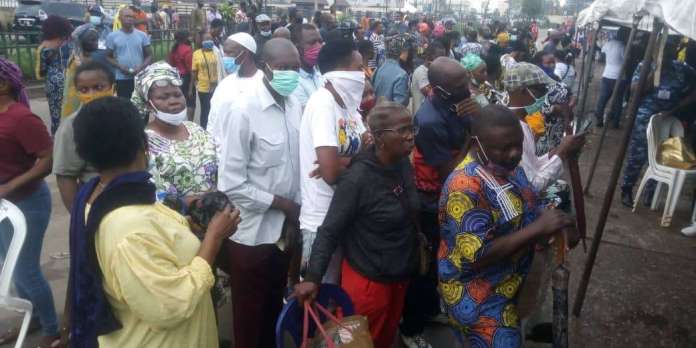
The governorship election in Edo State begins peacefully with impressive voters’ turnout in most wards across the state.
However, there was no social distancing at Oba Market polling unit, Oredo LGA as voters get ready to cast their votes.
Although the situation does not suggest the likelihood of violence, there is a massive security presence in cities, towns, and villages.
There is compliance with restriction movement across the state.
Major streets, especially in Benin, don’t witness the usual traffic as the residents move to their respective polling stations for accreditation.
Also reports from other areas of Edo, such as Uzzebba, Igueben, Auchi, Ososo, Ekpoma, Jattu, and Ughoton, among other towns and villages, say there is impressive turnout and orderly situation.
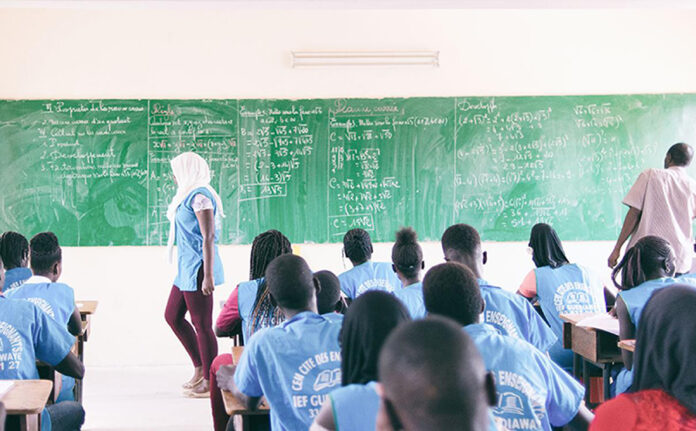
The Federal Government has released more guidelines that will prevent the spread of COVID-19 as more states fully reopen schools on Monday.
The Nigeria Centre for Disease Control, which disclosed this to The PUNCH on Thursday, stated that schools had been directed to conduct COVID-19 risk assessment every week.
The NCDC also disclosed that local governments and states were directed to conduct monthly and quarterly COVID-19 risk assessment in schools respectively.
The NCDC Director General, Dr Chikwe Ihekweazu, stated these in an electronic mail sent to one of our correspondents in response to enquiries.
According to the NCDC, the assessment will determine schools’ level of compliance with safety protocols including physical distancing, hand-washing and the use of face masks, whose violation can put students at risk of COVID-19.
Also on Thursday, the Presidential Task Force on COVID-19 said the Federal Government would seize passports of travellers who failed to carry out COVID-19 test. It added that visas of foreign travellers would be cancelled.
Schools across the country were shut in March as part of measures to check the spread of COVID-19.
But the Senior Secondary School 3 students resumed on August 17 to write the West African Senior School Examinations.
At its press conference on September 3, the PTF recommended phased reopening of schools.
Following the PTF’s recommendation, states that have announced dates for reopening of their schools include Ogun, Lagos, Osun, Ekiti, Delta and Kogi States. States, where schools are resuming on Monday, include Lagos, Ekiti , Osun and Ogun.
On Thursday, the NCDC DG told The PUNCH that part of its responsibility was to work with all relevant stakeholders to strengthen the country’s capacity for early detection and response to COVID-19 cases.
He stated, “We have also continued to educate the public on measures to reduce the risk of transmission of COVID-19.
“We know that as the economy and society re-open gradually, we may record a spike in COVID-19 cases. We have reviewed the situation in other countries that have re-opened schools as well as guidance from WHO, UNICEF and other public health authorities.
“There is lesser risk of COVID-19 cases in school settings, if schools carefully coordinate, plan and put the required safety measures in place before reopening.
“We are working closely with the Federal Ministry of Education, PTF-COVID-19, states and our partners to ensure that the required safety measures are in place to mitigate the impact of the pandemic on our schools.”
“The PTF-COVID-19 and Federal Ministry of Education have mandated schools to conduct periodic (weekly) risk assessments. This is to review the gaps that may exist in reducing the risk of COVID-19 spread in schools, and tailor interventions to address these gaps. Local governments areas and states are to conduct monthly and quarterly risk assessment respectively.”
“In addition to this, schools are to set up school health teams including teachers and learners that would facilitate implementation of the safety protocols in schools. LGAs and States have been advised to set up multi-sectoral school health committees dedicated to supporting and monitoring the implementation of safety protocols in the school.”
Speaking further on risk assessment, the NCDC spokesman Emeka Oguanuo, said it included, “the process of identifying and analysing potential gaps, threats that may cause a likelihood of COVID-19 spread.
“Risk assessments in public health are also done to determine severity or degree of an outbreak. In this case, it is done to determine if school re-opening is safe and whenever a bridge in safety is observed, it can be addressed by relevant stakeholders.”
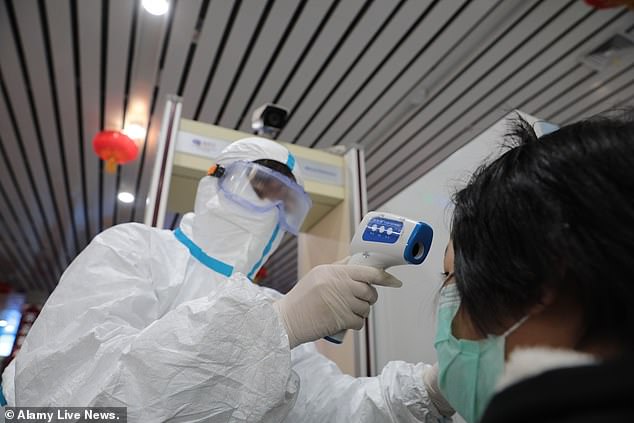
Thousands of people in northwest China have tested positive for an infectious bacterial disease after a leak from a state-owned biopharmaceutical plant making animal vaccines.
Health officials in Lanzhou, a city of 2.9million, said 3,245 people had contracted brucellosis, a disease often caused by close contact with infected animals or animal products that can bring about fevers, joint pain and headaches.
Another 1,401 people tested as an early positive for the disease after the authorities screened nearly 22,000 residents. No death has been reported.
The Chinese officials also said there was no evidence of person-to-person transmission so far.
Brucellosis, also known as Malta fever or Mediterranean fever, can cause symptoms including headaches, muscle pain, fever and fatigue.
Some signs and symptoms may persist for longer periods of time while others may never go away or reoccur, such as arthritis or swelling in certain organs, according to the US Centers for Disease Control and Prevention (CDC).
Person-to-person transmission of brucellosis is ‘extremely rare’, said the CDC.
Chinese authorities found a biopharmaceutical plant had used expired disinfectant in its production of Brucella vaccines for animals between July and August last year – meaning the bacteria was not eradicated in its factory exhaust.
Contaminated gas from the China Animal Husbandry Lanzhou Biopharmaceutical Factory in Lanzhou formed aerosols containing the bacteria.
It was then carried by wind to the Lanzhou Veterinary Research Institute, infecting nearly 200 people there as of December last year.
More than 20 students and faculty members of Lanzhou University, some of whom had been to the institute, subsequently tested positive as well, according to Xinhua news agency.
Lanzhou’s health commission said Friday that sheep, cattle and pigs were most commonly involved in the spread of the bacteria.
The factory – which apologised earlier this year – has had its brucellosis vaccine production licence revoked, Lanzhou authorities said.
Compensation for patients would start in batches from October, according to local authorities.
The Lanzhou Health Commission also designated 11 public hospitals to provide the infected patients with free and regular checkups.
While brucellosis is not unknown in China, it has declined since the 1980s after the emergence of vaccines and better disease prevention and control.
It is extremely rare in the UK, according to the NHS, but there have been a smattering of brucellosis outbreaks around the world in the past few decades.
In 2008, an outbreak in Bosnia infected about 1,000 people, prompting the culling of sheep and other infected livestock.
What is brucellosis?
Despite being mostly eradicated in the UK, brucellosis is still a problem globally, and occurs in countries such as Greece, Spain and Italy.
It is the most common bacterial infection spread from animals to humans worldwide.
Brucellosis doesn’t always cause symptoms, and the infection may persist for several months without someone knowing they have it.
Humans usually become infected with brucellosis by consuming unpasteurised milk or milk products from infected animals, or very rarely, by eating raw meat from these animals.
However they can pick it up by inhaling dust or through direct contact with infected animals or surfaces.
Person-to-person spread is very rare, although there have been cases of transmission from mother to baby through breastfeeding, and through sexual contact.
Brucellosis is rarely fatal in humans, although some cases can lead to life-threatening complications such as endocarditis and meningitis – particularly if left untreated.
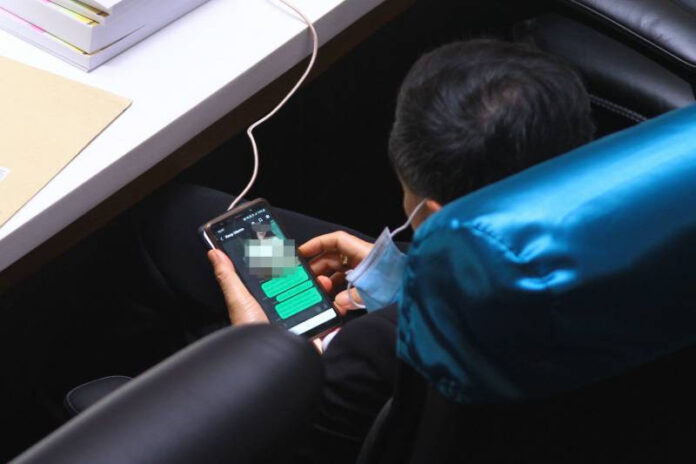
Thai Daily News photographer reportedly took a picture of an MP looking at porn on his smart phone during the reading of the fiscal 2021 budget in parliament on Wednesday, September 16.
According to their report, “the MP was getting some light relief from the stressful meeting”
Daily News said this was not the first time similar thing had happened. They claimed that another MP was once caught watching porn during a constitutional amendment meeting.
The Federal Government on Thursday asked all persons holding accounts across financial institutions, including insurance firms, to fill and submit Self-Certification Forms.
The Nigerian government made this known in a series of tweets on Thursday.
It threatened to block access to defaulters’ accounts or impose a monetary penalty.
Following massive backlash and outrage from the Nigerians, the government some minutes ago deleted the first post and clarified that it was not all Nigerians that would be affected by the Self-Certification order.
See post below:
We apologize for the misleading tweets (now deleted) that went up yesterday, regarding the completion of self-certification forms by Reportable Persons. The message contained in the @firsNigeria Notice does not apply to everybody. FIRS will issue appropriate clarification shortly pic.twitter.com/KBiPh0lCwJ