
back to top
Sunday, January 25, 2026
advertise with us
Home Blog Page 152

How Organized Labour Deceived Nigerians By Reuben Abati

How Organized Labour Deceived Nigerians By Reuben Abati
Reuben Abati

I was very skeptical when the current leadership of Organized Labour in Nigeria objected to the decision of the Federal Government to withdraw fuel subsidy and hand over the pump price of petrol to the forces of demand and supply, also known as market forces. Labour, represented by the Nigeria Labour Congress (NLC) and the Trade Union Congress (TUC), and their affiliates and privies in civil society, further threatened that they were opposed to the hike in electricity tariffs.

They issued a statement in which they railed against neo-liberal policies, bad timing, and the insensitivity of government. They made heavy weather out of the hardship that COVID-19 has imposed on the people and why any form of additional taxation that could pressurize the people would be utterly unacceptable. Deregulation of the downstream sector is not a new subject in Nigeria. Removal of fuel subsidy is an old subject. Only the dumb and the deaf would deny being aware of the persistent argument that a functioning electricity sector in Nigeria would unleash the country’s energy and potentials, through the values derivable therefrom: saving of costs, creation of jobs, a value-added SME, an improved manufacturing sector and a happier, more productive citizenry.

In 2012, when the Jonathan administration announced a full deregulation of the downstream sector and removal of fuel subsidy, Organized Labour aligned with opposition politicians and turned the argument on its head. They called out their troops and a thoroughly hypnotized political class, and workers’ community, fostered tension and instability in the system. In 2016, the party that succeeded the Peoples Democratic Party (PDP), that is the All Progressives Congress (APC) and its leaders who had lied to Nigerians that there was no fuel subsidy in the country, but unconscionable theft, and that the Jonathan government was wrong, promptly increased fuel prices. They argued that a fuel subsidy regime was not sustainable: the same argument that they opposed in 2012.

Their conspirators at the time in Organized Labour kept mute. In 2020, with COVID-19 disrupting everything in the world including relationships, with Nigeria suffering a debt and revenue crisis, the collapse of fiscal buffers, and sheer adversity, the Federal Government decided to pull the plugs. It blamed all of these factors and chose to announce a removal of fuel subsidy.  Pump price of fuel, benchmarked to the spot price of crude oil in the international market jumped through the roof. Nigerians groaned. The Federal Government argued that it was not left with any other option.  Everyone expected that Organized Labour would intervene. But Labour didn’t quite do so. Groups in civil society had to picket the Abuja Headquarters of the Nigeria Labour Congress to protest that the NLC should speak up and call the people out on the streets, because life had become harsh and hard for the average Nigerian.

After being pushed, a combined team of the NLC and TUC finally announced that they would call out Labour on strike and shut down the country. They gave the Federal Government stringent conditions: a complete reversal of the hike in fuel price and electricity tariffs. Or else, Nigeria would be shut down indefinitely beginning from September 28, 2020. I was not impressed. I questioned Labour’s sincerity of purpose. I felt they were just playing a game. The biggest tragedy that has befallen Organized Labour in Nigeria is the thinking since 1999, that the leadership of Labour can be used as a stepping stone to a bigger role in Nigeria. Labour leaders use their positions to negotiate big benefits. They mouth progressive slogans and parrot aggressive rhetoric but it is all a lie.

Under the military, there was a man called Paschal Bafyau who used the ladder of Labour leadership to gain prominence. Matthew Hassan Kukah in his book – Democracy and Civil Society In Nigeria (Ibadan: Spectrum, 1999) considers him “a sell-out”.  With the return to democracy in 1999, the new Labour hero was Adams Oshiomhole of the Textile Garments and Tailoring Union.  He was a thorn in the flesh of the Obasanjo administration. He could talk, dance and make Communist-style speeches. He captured the public imagination. He would soon make a leap from being Labour leader into partisan politics. He became Governor of Edo State for two terms. He later became Chairman of Nigeria’s ruling party. He also became a Godfather of Nigerian politics. Something tells me every Labour leader after Oshiomhole wants to be like him. They too want to ride SUVs, and enjoy unfettered access to the seat of power. They also want to be Godfathers in Nigerian politics. The danger here is that this transmogrification of Labour Leadership in Nigeria, sighted first with Paschal Bafyau and raised to another level with Oshiomhole, created a new brand of Labour activism that contradicts norm, culture and tradition in the Nigerian Left. This new generation of opportunistic Labour leaders have devalued the heroism of the likes of Labour Leader No 1, Michael Imoudu, Herbert Macaulay, Eskor Toyo, Wahab Goodluck, the Sunmonu brothers and Frank Kokori. A compromised Labour leadership is a disgrace to the Revolution. I find no better exemplification than the current Labour Movement in Nigeria led by Comrade Aliyu Wabba, and the incompetent and hypocritical response to Labour issues in the country.

In my view, the NLC and the TUC had no business calling out anybody on strike. When they reluctantly did so, they were playing politics and trying to appear concerned about workers’ welfare. This new set of Labour leaders don’t care about the people. They are partisan politicians. Civil society organizations continue to make the mistake that they are dealing with persons of like minds who want to interrogate issues and offer solutions. The truth is that the most conflicted community in Nigeria today is what we broadly describe for want of a better term as the “Nigerian Left”. They are just as worse as the conservatives and fascists; they claim to be defenders of the people’s interests whereas they are just interested in themselves. I am convinced that Nigeria’s Labour leaders knew as far back as 2012, that a subsidy regime either in the downstream or the electricity sector was unsustainable. They knew that getting Nigeria to work in an accountable manner was a useful national priority. They cannot claim ignorance of the inefficiency, leakages and wastages in the system that have, combined, cost Nigeria trillions of Naira. The Jonathan administration tried to address this in 2012. Organized Labour joined partisan politics and became an instrument. When their clients took over in 2015, and brought up the same issue, they kept quiet. When matters reached a head in 2016/2020, they were bound to be deceptive. And this is what they have done. The strike action that they promised on September 28 was never going to happen. It was unnecessary by the way. The so-called agreements that they reached to justify their hypocrisy sound ludicrous. The communique that Nigerians saw in the morning of September 28 is questionable. It may have been designed to help Labour save face, but it merely exposes a Labour leadership that should be a subject of ridicule.

Three meetings were reportedly held – September 15, 24, 27, 2020. After the second meeting, Labour announced that it would go ahead with the nationwide strike because it had reached a deadlock with government. The NLC and the TUC ended up taking Nigerians for a ride. The Communique that eventually signaled the cancellation of the strike exposes their lack of rigour. The document says the Federal Government negotiators and Labour leaders agreed on a number of issues. Let’s examine a few. On the issue of the hike in electricity tariffs, the communique says the bipartite meeting has decided to set up an ad-hoc technical committee to re-examine electricity tariff reforms. This committee will sit for two weeks effective September 28. During that period, “DISCOs have been directed to suspend the application of the cost-reflective Electricity Tariff adjustments.”  This is a totally meaningless statement and it is surprising that someone like Joe Ajaero, a leader of the National Union of Electricity Employees, who was named as a member of the proposed Technical Committee was not awake enough to point out the problem with this proposal. There are technical questions.

In the first place, the current electricity tariffs are not cost-reflective, they are service-reflective. The new template by the National Electricity Regulatory Commission (NERC) creates a service-reflective template, problematic as it is, which ensures that houses, factories and businesses which consume more electricity within an A, B, C, D, range pay more than R1 band designated consumers at the lower end who still pay N4. 00 per unit, thus creating a cross-subsidy regime. The proposed two-week suspension of electricity tariff is also in every sense ambiguous. Is the FG saying the DISCOs should not bill any house, factory or business for two weeks? Is the President now going to ask the Ministry of Finance, the BPE, the NERC and other relevant agencies to re-adjust meters and return to the old tariffs for two weeks?  Did anyone represent the Vice President who oversees Privatization, the NERC, the BPE and the DISCOs at the meetings with Organized Labour? At best, the Federal Government team merely threw the two-week strategy at the unthinking Labour leaders just to buy time. Nothing will happen.

The Federal Government says it intends to review the NERC Act and involve Labour in the electricity value chain. This is meaningless. The Federal Government, States, and Local Governments own 40% of DISCOs. Government can take part of its 40% to the Stock Exchange, but what will be the value of whatever it expropriates? It is a non-issue. The leaders of Organized Labour could not see through that trick. They were also told the National Labour Advisory Council (NLAC) will be inaugurated before the end of the year. And these greedy guys fell for it! If that Council remains moribund, what can they do?

The other big issue was the deregulation of the downstream sector. Our Labour Leaders were told that the Federal Government will now fix Nigeria’s four petroleum refineries and that in fact the Port Harcourt refinery will be 50% completed by December 2021. They were told there will be timelines for delivery and even the national leadership of NUPENG and PENGASSAN will be appointed into a Steering Committee and a Validation team. The guys embraced this old, jaded lie as if they were being addressed by King Solomon. How many times have we been told that Nigeria’s refineries will be fixed? At a time, the FG wanted to privatize these same refineries. Labour leaders opposed the initiative. Today, most of them are struggling to have their children employed in a yet uncompleted Dangote Refinery and the modular refineries by Walter Smith, NIPCO and the Edo State Government.  They want the same private sector that they disparage for their own private benefits!

Labour leaders were further told that the Federal Government will ensure the delivery of one million CNG/LPG Auto Gas conversion kits, storage skids and dispensing units by December 2021 under Nigeria’s Gas Expansion Programme. With the challenges of Corona Virus, this is not possible. To even order the equipment and the accessories, or to build the plant, not less than 18 months will be required.  Who is going to reshape the petrol stations?  Many of the old vehicles on Nigerian roads cannot also be converted. And even if so, who will bear the cost? We are told the Federal Government will provide 133 CNG/LPG transit buses. Nobody manufactures such buses in Nigeria. They will have to be imported. In other words, apart from taking care of the interest of Labour Leaders, the communique that ended the proposed strike of September 28, also very nicely, provided an opportunity for government officials to award contracts! There is also something in there about a 10% housing allocation for Nigerian workers. This is mere wishful thinking. Did anybody talk to Babatunde Fashola, SAN, the Minister of Works and Housing before making this commitment?

They didn’t need to bother, of course, because both Labour and the Federal Government negotiators knew that they were both playing a game and taking Nigerians for a ride. Organized Labour, having obviously embraced deregulation and market forces, should have raised other questions that could be helpful to Nigerians as follows:  If the Federal Government is eliminating subsidy, what does it intend to do with its savings from the downstream sector and the electricity tariffs?  Can the savings be used to fund education and healthcare under a mutually agreed framework? Instead, Labour leaders were discussing buses and houses!  They could also have asked what the FG intends to do with savings in the electricity sector. Is it possible to use the savings to strengthen Transmission infrastructure? Instead, they were discussing how Labour leaders can become members of the Regulatory Board!

The Government negotiators deserve our commendation. They have done a good job of preventing a “worthless” national embarrassment in the shape of a Labour strike in the same week that Nigeria celebrates its 60th Independence Anniversary. They have also helped to expose the incompetence and hypocrisy of the current Labour leadership in Nigeria. They have also won an ideological war over the subsidy regime. Those Labour leaders who grumble about neo-liberalism have now embraced it. Their lack of rigour, clarity and intellect provides a strong case for an urgent reform of Labour Leadership in Nigeria. Once upon a time, Labour used to be a strong voice in this country. In those days, government controlled everything: Telcom, Banking, Insurance etc, It was quite easy then to blackmail government, and use that as a platform to become a national figure. The times are changing, indeed the times have changed. Labour must reinvent itself or risk the tragedy of becoming irrelevant.
Yoruba Diaspora Group Insists On Planned October 1 Protest

Yoruba Diaspora Group Insists On Planned October 1 Protest

Yoruba One Voice, a Nigerian group in the Diaspora, has said it will go ahead with its planned protest scheduled for October 1 despite a plot by an unnamed politician based in Lagos to disrupt the peaceful exercise.

The group in a statement by its Communications Director, Zacheaus Somorin, alleged that the popular Lagos politician had already paid about 500 hoodlums N5, 000 each to carry out the plot of disrupting the demonstration meant to agitate for the creation of Oodua Republic.

The statement reads, “As a coalition, we are using this medium to advise the sponsor of this malevolent act to desist from such as any action that will derail the liberation of Yoruba nations would not be taken lightly.

“Ideologically, YOV is no longer interested in a country that is seeking loan to develop another country, Niger Republic to be specific; with a rail network. We are not interested in a country that finds it palpably impossible to provide adequate security, electricity, quality road, food security, job security, affordable housing scheme, quality education, good public health sector. Nigeria is a country that doesn’t believe in the rule of law, hence fated to have a negative image globally.

“The Nigerian State is preponderant of nepotism, with a centrally minded and clannish leader. This is evident in the Katsina State’s situation – there are 22 federal projects actively going on there including refineries.

“No one needs to be told that the Katsina refinery is to serve the interests of Chad and Niger Republic. No single major project is going on in the state of his vice, Prof Yemi Osinbajo.

“As we prepare for the October 1 rally, we appreciate the efforts of all the affiliate groups and organisations for a planned peaceful demonstration in all the six continents and 176 countries.”

While referring to Vice President Yemi Osinbajo’s admittance that Nigeria could be heading for a break up if urgent steps were not taken to mend and address the identified cracks in the country, YOV said, “We don’t want to belong to a country where ISIS and Al-Qaeda have invade like Mideast. We want Oodua Republic that we can leave in peace and be a prosperous nation soon through referendum.”

SAHARA REPORTERS

DSS DG Conducts Secret Uneven Recruitment Into Agency

DSS DG Conducts Secret Uneven Recruitment Into Agency

Yusuf Bichi, Director-General of the Department of State Services, has activated a lopsided hiring process that could overfill the security agency with personnel from the Northern part of Nigeria.

According to an online tabloid, Peoples Gazette, official documents and contributions of senior intelligence officials showed that the North had a massive share of the roughly 1,300 Nigerians currently undergoing cadet training at two different camps of the secret police in Lagos and Bauchi.

Of the total 628 cadet trainees, who had resumed at the Bauchi facility as of September 23, 535 identified themselves as trainees joining the service from either the North-East or the North-West.

Only 93 were from either the South-East, South-South, South-West or North-Central, according to recruitment filings sighted by the newspaper.

Findings also showed that at least 71 of those currently undergoing cadet training hailed from Bichi Local Government Area, Kano State, the Director-General’s home local government area.

Officials said the number was more but the newspaper could not independently confirm the higher figures as well as a slew of other disturbing allegations of bigotry against Bichi prior to this publication.

In Lagos, multiple participants including senior officials, said Bichi disregarded the federal character concept and skewed the process for Nigerians from the North.

A top official estimated 708 trainees were at the Lagos training facility as of September 26.

Officials were unsure how many people were taken as cadet trainees in total because some were still arriving three weeks into the six-month exercise.

Senior intelligence officials said even though the sectional disparity mirrors Nigeria’s reality under President Muhammadu Buhari, they are nonetheless worried that the development could potentially tip the ethnic and religious balance of national security in favour of a section of the country for decades.

“Some of us are worried less about the audacity of focusing on one part of the country to bring in new cadets than we are about its long-term implications,” a senior SSS official told the Gazette via a secure video channel last week.

“We know he might find it difficult, but the DG would leave a better legacy if he sees himself first as a Nigerian.”

In July, the Yellow House sent out a memo to all state and FCT commands, informing them that Bichi had ordered a fresh round of recruitment for the agency’s next generation of intelligence officers.

He directed that each state command should conduct a rigorous selection process and forward four successful candidates to the headquarters for possible admission into the service.

All commands were said to have complied with the directive, conducted a thorough selection of four candidates and sent the results to the headquarters.

But shortly after the candidates were cleared and sent to the headquarters before the July 15 deadline contained in the memo, Bichi seized the moment and initiated a recruitment process of his own.

On September 1, Bichi told a few officials at the Yellow House to call people from a prepared list and offer them a role at the SSS.

Those, who were called, were immediately asked to go to the Lagos or Bauchi training school, officials said.

Starting September 8, cadet candidates reported for training in Lagos and Bauchi, in some cases without the awareness of the Director of State Security in the state they applied from, documents and officials said.

Bichi kept the list of those he had been sending to the training school secret, officials said.

It was unclear how many people he intended to recruit but they kept showing up.

He also kept the process largely to himself, making it difficult for insiders to access his list or the criteria with which he was selecting cadet candidates.

Bichi’s regional recruitment agenda came three years after his predecessor implemented a similar hiring process that failed to reflect Nigeria’s diversity.

‘Watch Your Words’: ACF Replies Osinbajo Over Nigeria’s Breakup Warning

‘Watch Your Words’: ACF Replies Osinbajo Over Nigeria’s Breakup Warning
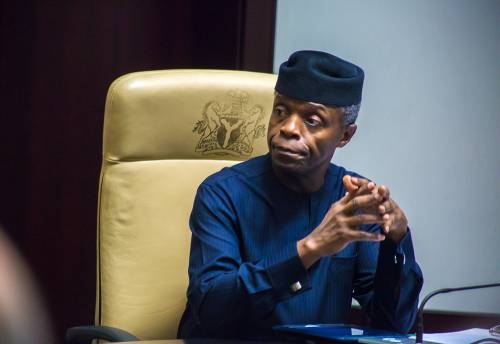
Vice President Yemi Osinbajo

A northern socio-political group, the Arewa Consultative Forum, has criticized Vice President Yemi Osinbajo over his recent comments that present cracks could lead to a break up of the country.

While the group admitted that there were unhealthy cracks in Nigeria, it, however, said the Vice-President should not make statements that would worsen tension in the country.

The ACF cautioned Osinbajo against comments capable of creating further tension in the land.

Osinbajo, who was represented by the Secretary to the Government of the Federation, Mr Boss Mustapha, at an interdenominational church service in Abuja on Sunday to mark Nigeria’s 60th independence anniversary, said, “Our walls are not yet broken, but there are obvious cracks that could lead to a break, if not properly addressed.”

At the service, the SGF read Osinbajo’s speech.

The northern body acknowledged that the cracks in the country were unhealthy, but noted that the nation would overcome such.

In an interview with Punch, the National Publicity Secretary of the ACF, Emmanuel Yawe while reacting to the Vice President’s comment, cautioned other Nigerian leaders, to “watch their words.”

The ACF’s spokesman, in an interview with The PUNCH, said, “The cracks are unhealthy, but we expect the Vice President to calm nerves and not make a pronouncement that will aggravate the situation.

“The ACF is hopeful that Nigeria will overcome its current travails as it did in the past and even overcame a fratricidal war to break up Nigeria. To do this, Nigerian leaders like Osinbanjo should watch their words.”

ICPC Uncovers N2.67 Billion Diverted School Feeding Funds

ICPC Uncovers N2.67 Billion Diverted School Feeding Funds
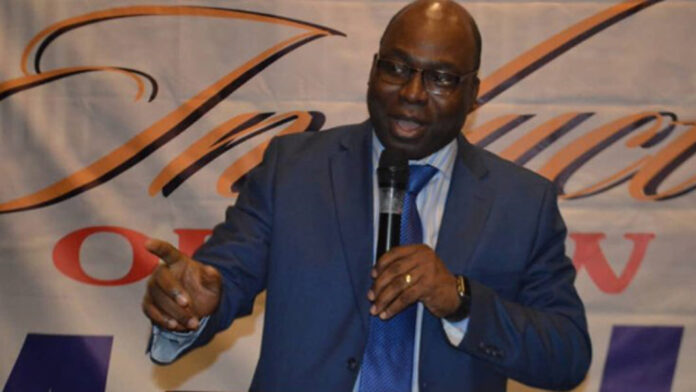
ICPC Chairman, Prof. Bolaji Owasanoye.

The Independent Corrupt Practices and other Related Offences Commission (ICPC), yesterday, said it had uncovered an N2.67 billion payment curiously made to some federal colleges for school feeding during the COVID-19 lockdowns, but yet diverted to personal accounts.

It also discovered over N2.5 billion appropriated by a deceased senior civil servant in the Ministry of Agriculture to himself and cronies as well as recovered 18 buildings, 12 business premises, and 25 plots of land.

Moreover, the organisation retrieved N16 billion from the ministry – being lodgments into individual accounts – for non-official purposes.

ICPC Chairman, Prof. Bolaji Owasanoye, made the disclosures in his keynote address at the second National Summit on Diminishing Corruption with the theme: “Together Against Corruption and Launch of the National Ethics and Integrity Policy” in Abuja.

He explained that the open treasury portal review carried out between January and August 15 this year on 268 ministries, departments, and agencies (MDAs) indicted 72 of them for N90 million malfeasance.

Owasanoye explained that while 33 MDAs said N4.1 billion was transferred to sub-TSA, the N4.2 billion paid to individuals had no satisfactory clarifications.

According to him, “we observed that transfers to sub-TSA were to prevent disbursement from being monitored.”

He added: “Nevertheless, we discovered payments to some federal colleges for school feeding in the sum of N2.67 billion during the lockdowns when the children are not in school, and some of the money ended up in personal accounts. We have commenced investigations into the matter.”

The ICPC boss also said under its 2020 constituency and executive projects’ tracking initiative, 722 schemes with a threshold of N100 million were tracked across 16 states.

He noted that a number of the projects, described as ongoing in the budget, were found to be new ventures that ought to have been discarded to enable the government to complete the existing ones.

Furthermore, Owasanoye said the commission equally found out that uncompleted projects sponsored by legislators who did not return got abandoned in addition to the use of companies loyal to sponsors and firms belonging to civil servants in executing the works, which were either abandoned or poorly executed in the long run.

The chairman said in the education sector, 78 MDAs were found wanting of injudicious deployment of funds.

Some of the discoveries included life payment of bulk sums to individuals/staff accounts, non-remittances of taxes and IGR, payments of unapproved allowances, bulk payment to microfinance banks, offsetting of pay arrears and perks of previous years from the 2020 budget besides payment of salary advance to workers, under-deduction of PAYE and payment of promotion owed due to surpluses in personnel cost, abuse and granting of cash advances above the approved threshold and irregular payment of allowances to principal officers.

LAGOS: Pay Your Tax, LIRS Tells Laycon After BBNaija Win

LAGOS: Pay Your Tax, LIRS Tells Laycon After BBNaija Win
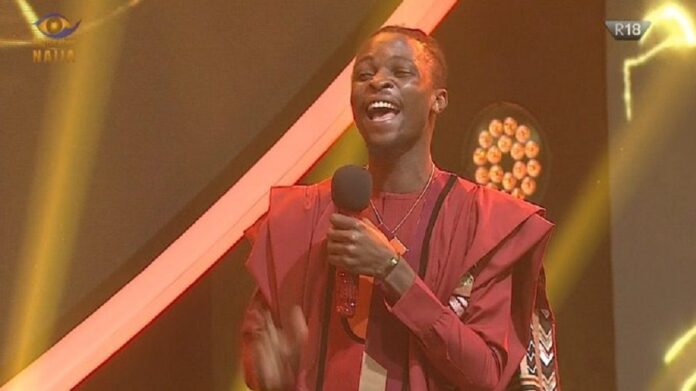
Laycon after being announced winner on Sunday

The Lagos Internal Revenue Service has urged the winner of the 2020 edition of the Big Brother Nigeria reality TV show, Olamilekan ‘Laycon’ Agbeleshe, to pay his tax.

The agency made this known in a tweet to congratulate and commend Laycon for the achievement.

“Congratulations @itsLaycon winner @BBNaija Lockdown edition. More wins!! We look forward to seeing you in Y2021 as you #payyourtax,” it tweeted.

Twenty-six-year-old Laycon emerged the winner of the 2020 edition of the Big Brother Naija reality TV show, which officially came to an end on Sunday, after 71 days of live entertainment.

Laycon got 60 per cent of the total votes cast by viewers to beat fellow housemate, Dorathy Bachor, who got about 21.65 per cent of the votes.

Both contestants were among the five finalists, including Nengi, Neo and Vee, that made it to the grand finale of the show, out of a total of 20 housemates.

For winning the show, Laycon got N30m in cash. He will also receive various gifts and incentives valued at N55m. They include an all-expense-paid trip to Dubai for two, a two-bedroom apartment, a Sport Utility Vehicle from Innoson Motors, a Scanfrost electronic makeover, one year supply of Pepsi Cola, one year supply of Munch It and Indomie noodles and VIP tickets to watch the European Champions League final.

Earlier, Governor Ifeanyi Okowa of Delta State congratulated Bachor and Neo Akpofure, both from the state, who were among the five finalists.

In a series of tweets on his handle @IAOkowa, the Governor said that the state was indeed proud of the duo whom he described as ambassadors of Delta State.

He said the 24-year-old Bachor displayed leadership traits that distinguished her as a model for young persons in Delta and beyond.

”I am not surprised that she became the last woman standing out of 10 women among 20 housemates in the competition.

“Her exemplary conduct in the Big Brother house was good and she did not bring any embarrassment to the state.

“As a state, we are very delighted that our daughter, Dorathy Bachor, emerged the Runner Up in the just-concluded BBNaija competition.

“We are glad that she and Neo related very well with the other housemates and survived all the evictions and avoided controversies in the house.

“They have portrayed the Delta character of being well behaved and worthy ambassadors of the state,’’ the governor stated.

The PUNCH

Mali’s Transitional Government Nominates New Prime Minister

Mali’s Transitional Government Nominates New Prime Minister

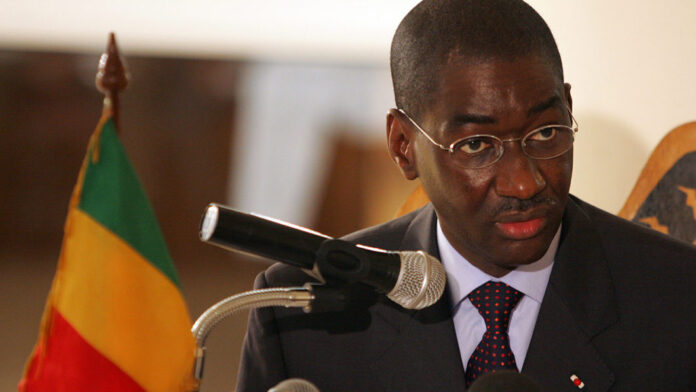
Mali’s transitional President has appointed former minister of foreign affairs, Moctar Ouane, as the West African nation’s prime minister, days after being sworn into office.

The appointment of a civilian prime minister was a major condition imposed by the West African regional economic bloc, ECOWAS, on Mali to lift sanctions that were imposed after an Aug. 18 coup. ECOWAS had closed borders to Mali and stopped financial flows to put pressure on the junta to quickly return to a civilian government.

Former Defense Minister and retired Col. Maj. Bah N’Daw was inducted Friday as the new transitional president while Col. Assimi Goita, head of the junta that staged the coup, was installed as Mali’s new vice president. The three government heads are to lead the transitional government to an election in 18 months.

The appointment of Ouane, 64, was made by official decree Sunday and signed by N’Daw. Ouane was minister of foreign affairs from 2004 to 2011 under former President Amadou Toumani Toure. He also served as Mali’s Permanent Representative to the United Nations from 1995 to 2002 and later as a diplomatic adviser to ECOWAS.

The junta, which calls itself the National Committee for the Salvation of the People, deposed President Ibrahim Boubacar Keita in August, detaining him, the prime minister, and other government officials. Keita, who became ill, was eventually released and has gone to the United Arab Emirates for treatment.

ECOWAS became involved in negotiations that have pressed for a quick return to civilian rule.

U.N. officials have called for the release of the 13 of the 18 detained officials still being held at the Kati military camp in the Malian capital of Bamako.

There has been widespread concern that the upheaval in Mali will set back efforts to contain the country’s growing Islamic insurgency. After a similar coup in 2012, Islamic extremists grabbed control of major towns in northern Mali.

Only a 2013 military intervention led by France pushed extremists out of those towns and the international community has spent seven years battling the militants.

VP Osinbajo Warns Impending Break Up Of Nigeria If Cracks Are Not Fixed

VP Osinbajo Warns Impending Break Up Of Nigeria If Cracks Are Not Fixed

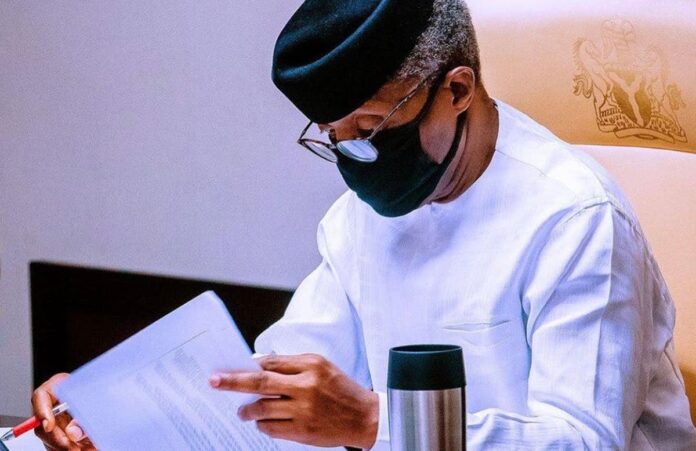
The Vice-President, Prof. Yemi Osinbajo, has said Nigeria may break up if efforts are not made to address the cracks.

He said efforts to mend the crack may be opposed, but such opposition would be defeated with focus and consistent prayers.

Osinbajo gave the warning on Sunday in Abuja at an interdenominational church service to commemorate Nigeria’s 60th Independence anniversary.

The Vice-President was represented by the Secretary to the Government of the Federation, Boss Mustapha, at the National Ecumenical Centre, where the anniversary service held.

In attendance were representatives of the Senate President, Ahmad Lawan; Speaker of the House of Representatives, Femi Gbajabiamila; Head of Service of the Federation, Folashade Yemi-Esan; permanent secretaries, military officials, members of the diplomatic community and other senior government officials.

Referencing the biblical story of how Nehemiah championed the rebuilding of the broken walls of Jerusalem, Osinbajo said, “The story should be a challenge to every Christian in Nigeria. It’s only that kind of Nehemiah’s love that will make us, as Nigerians, to rebuild the cracks we have in our walls today.

“For us in Nigeria, Nehemiah should be taken as a metaphor for those Nigerians who either reside in Nigeria or outside, to cry to God to use the abandoned opportunities in Nigeria to address our challenges of nation building.

“Fortunately for us, our walls are not yet broken but there are obvious cracks that could lead to a break if not properly addressed.

“Nehemiah started with fervent prayers, seeking the face of God and pleaded with his king to allow him return to Jerusalem to rebuild the broken walls because wall signifies peace, security, contentment and prosperity. It signifies the essence of the state of the nation.

“There’s an urgent need for a Nehemiah in our country, Nigeria, today. And like Nehemiah faced opposition in his efforts to rebuild the walls, any Nigerian that desires to rebuild Nigeria must also be ready to face stiffer opposition which will come in torrents. It can only be diffused by consistent focus and prayers.”

The Vice-President, however, expressed optimism that the 60th Independence anniversary could herald a rebirth Nigeria, saying “no group is more prepared for this task than our religious bodies.”

The President of the Christian Association of Nigeria, Dr Samson Ayokunle, in his sermon titled, ‘The crucial need to attain greatness at 60’, stressed the need for justice, which, he said, would bring peace, tolerance and love.

“For us all to be on the same page, have sense of belonging and be happy, the doctrine of equality, that is equal access to employment, governance and education, must be available to all. The principle of inclusivity must be adopted. Nobody or region must be excluded from the scheme of things in Nigeria.”


PUNCH

Long-Concealed Records Show Trump’s Chronic Losses And Almost Two Decades Of Tax Avoidance

Long-Concealed Records Show Trump's Chronic Losses And Almost Two Decades Of Tax Avoidance

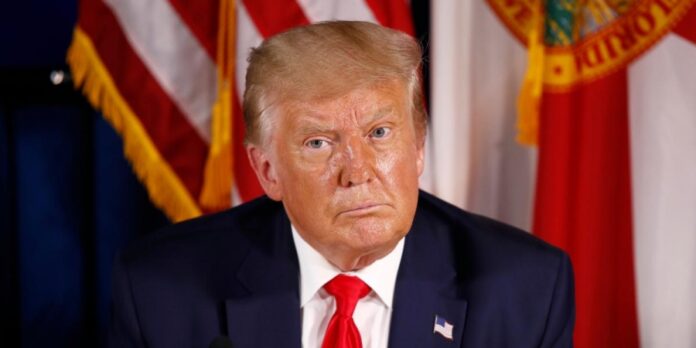
Donald Trump paid just $750 (£587) in federal income tax both in 2016, the year he ran for the US presidency, and in his first year in the White House, the New York Times says.

The newspaper – which says it obtained tax records for Mr Trump and his companies over two decades – also says that he paid no income taxes at all in 10 of the previous 15 years.

The records reveal “chronic losses and years of tax avoidance”, it says.

Mr Trump called the report “fake news”.

“Actually I paid tax. And you’ll see that as soon as my tax returns – it’s under audit, they’ve been under audit for a long time,” he told reporters after the story was published on Sunday.

“The IRS [Internal Revenue Service] does not treat me well… they treat me very badly,” he said.

Mr Trump has faced legal challenges for refusing to share documents concerning his fortune and business. He is the first president since the 1970s not to make his tax returns public, though this is not required by law.

The Times said information in its report was “provided by sources with legal access to it”.

The report came just days before Mr Trump’s first presidential debate with Democratic rival Joe Biden and weeks before the 3 November election.

What are the key claims?

The Times said it reviewed tax returns relating to President Trump and the companies owned by the Trump Organization going back to the 1990s, as well as his personal returns for 2016 and 2017.

It said the president paid just $750 in income taxes in both 2016 and 2017, while he paid no income taxes at all in 10 of the previous 15 years, “largely because he reported losing much more money than he made”.

Before becoming president, Mr Trump was known as a celebrity businessman and property mogul.

But the newspaper says his reports to the IRS “portray a businessman who takes in hundreds of millions of dollars a year yet racks up chronic losses that he aggressively employs to avoid paying taxes”.

In a public filing, President Trump said he made at least $434.9m in 2018. The newspaper disputes this, alleging that his tax returns show the president had instead gone into the red, with $47.4m in losses.

The Trump Organization joined the president in denying the allegations in the report.

The company’s chief legal officer, Alan Garten, told the Times that “most, if not all, of the facts appear to be inaccurate”.

“Over the past decade, President Trump has paid tens of millions of dollars in personal taxes to the federal government, including paying millions in personal taxes since announcing his candidacy in 2015,” he said.

What else does the report say?

The newspaper also claims that “most” of Mr Trump’s biggest businesses – such as his golf courses and hotels – “report losing millions, if not tens of millions, of dollars year after year”.

“That equation is a key element of the alchemy of Mr Trump’s finances: using the proceeds of his celebrity to purchase and prop up risky businesses, then wielding their losses to avoid taxes,” it says.

It adds that the president is personally responsible for more than $300m in loans, which will come due in the next four years.

The newspaper also alleges that some of President Trump’s businesses have received money from “lobbyists, foreign officials and others seeking face time, access or favour” from the president.

The Times says it used tax records to find out how much income the president makes from his companies overseas, alleging that he made $73m in revenue from abroad in his first two years at the White House.

Much of that came from his golf courses in Ireland and Scotland, but the Times says the Trump Organization also received money “from licensing deals in countries with authoritarian-leaning leaders or thorny geopolitics”.

The Times alleges that the licensing deals netted $3m from the Philippines, $2.3m from India and $1m from Turkey.

The newspaper claims that President Trump made $427.4m in 2018 in revenues from The Apprentice US series, as well as from branding deals where organisations paid to use his name. He also made $176.5m by investing in two office buildings that year, it is alleged.

However, the Times alleges that the president paid almost no taxes on these revenues, because he reported that his businesses made significant losses.

It also claims that President Trump has been making use of a tax code that enables business owners to “carry forward leftover losses to reduce taxes in future years”.

For example, the newspaper says that in 2018, President Trump’s largest golf resort, Trump National Doral, near Miami, made $162.3m in losses. Similarly, his two golf courses in Scotland and one in Ireland, reported a combined $63.6m in losses, it is alleged.

Tax lawyer and policy analyst Steve Rosenthal, who has previously worked with the Times looking into Mr Trump’s finances, said the story “goes to the heart of Trump’s image as a successful businessman”.

“You cannot generate the level of losses Trump has generated without failing spectacularly. How he continues to generate losses and continues to operate suggests he is continuing to borrow money to keep operations afloat,” he told the BBC World Service’s Newsday programme.

Mr Rosenthal said Americans should be concerned about the New York Times’ report.

“Not only should the public be concerned about the false image Trump has perpetuated about being a successful businessman, but the public ought to be concerned about to whom Trump owes money and how dire are Trump’s financial circumstances… and whether Trump can continue to operate the country in our interest or whether he looks out for himself more and more.”

What has the reaction been?

Mr Trump’s political opponents condemned his reported tax arrangements.

House Speaker Nancy Pelosi, the most powerful Democrat in Washington, said the report showed Mr Trump had taken “extraordinary measures” to “game the tax code and avoid paying his fair share of taxes”.

Taking to Twitter, Senate minority leader Chuck Schumer asked Americans to raise their hands if they had paid more in federal income tax than Mr Trump.

Democratic presidential candidate Joe Biden has not commented so far, but his campaign team highlighted on Twitter that teachers, firefighters and nurses all paid much more than $750 in tax.

Trauma Of Living In Exile In The US Led Me To Christ – Tinubu

Trauma Of Living In Exile In The US Led Me To Christ - Tinubu

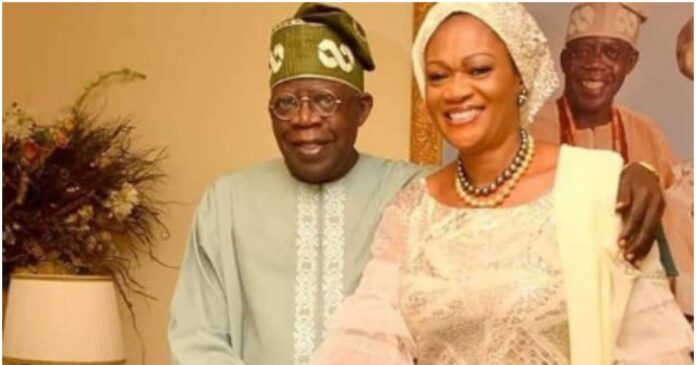
Oluremi Tinubu, senator representing Lagos central, says she became a born-again Christian while she was in exile with her family in the United States.

In an interview with Television Continental, Tinubu, who celebrated her 60th birthday on September 21, said the trauma of being alone in the US, with little kids and without her husband, led her to Christ.

She said when she became the first lady of Lagos at a young age, she knew she had to seek God’s guidance to handle the responsibilities that came with the position.

“Like I said, if you get into a position you never envisage in your life time that you will ever occupy, you believe it is a privilege and God must have made you to become that. So you have to go back to God and ask ‘how do I do this,” she said.

“Thank God before I became the first lady, we were in self exile for almost five years and when you have problem, the only person you run to is God. So while I was in the US, I went to church, that was when I became born again.

“I went into exile as an Anglican, came out as a Pentecostal. I remember I was looking for God from one church to another, it was very difficult. When I came back, l had amnesia, I lost my memory, it was traumatic for me and that’s why I don’t like attending social gatherings because people walk up to me and I don’t recognise them anymore.

“It was traumatic for me because I was around 34, first time of being separated from your husband, and then you are stuck with two children with a lot of responsibilities.

“My husband couldn’t come see us until 18 months after. They locked them up for a while during the Abacha period and to see us, they have to go through neighbouring borders and the only passport he had was a diplomatic passport that couldn’t get him to UK because there were sanctions on diplomats because of June 12.

“He had to get to a neighbouring country to get their passport to come see us. Through that passport, he came to see us once every six months. But for me to raise the children to go to school, they were very young, it was traumatic for me. So to come back and become a first lady, it was something else.”

Tinubu, who is an ordained minister of the Redeemed Christian Church of God, said she has never experienced any conflict with her husband as regards their different faith.

“When I met my husband, I didn’t know it was a big deal. We’re from the Anglican Church. Then, a lot of Christians married Muslims. It was my sister that introduced us,” she said.

“One of the things that was profound for me, when we both went to see my dad, my dad asked him ‘are you a Muslim?, that was the first time I heard that. You’re a Muslim, I hope you won’t prevent my daughter from going to church and he promised not to.

“The point is he is quite respectful of my faith and if someone respects you it is quite right you show the same respect. He respects my faith, I respect his so there is no conflict.

“He doesn’t stop me from praying even if some pastors come around. He also has a lot of pastor friends that I met through him.

“My husband is very liberal when it comes to faith,  being married to a Muslim I never had any problem. But when it is time for me to put on hijab during his events, I’ll do that but that doesn’t change my faith.

“He didn’t impose his faith on our children, I raise my children as Christians despite they bear Muslim names.”


The Cable