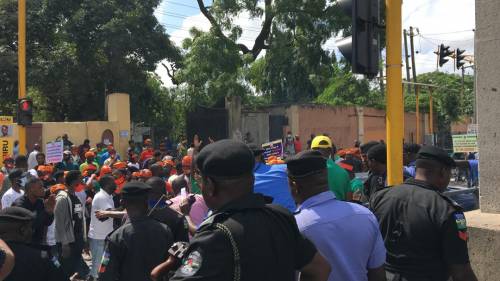
There are fears over the safety of more than 21 protesters arrested in the Maryland area of Lagos on Thursday as officers at the ‘Area H’ Police Station, Ogudu, have denied having them in custody.
The denial of the policemen comes shortly after Area Commander of the zone, Tunde Adeniran, confirmed to one of the protest leaders that the arrest was carried out by officers from the Ogudu Police Station.
As a result of this situation, protest leaders visited the state police command in Ikeja where the present location of those arrested has still not been disclosed by the law enforcement agency.
The protesters under the aegis of #RevolutionNow staged the demonstration to coincide with Nigeria’s 60th independence anniversary in Lagos and other cities across Nigeria and beyond to demand for good governance.
The apex northern group, the Arewa Consultative Forum, has dismissed the call for restructuring, saying it was not well defined by its proponents.
The group said the North could not be intimidated.
The ACF also said the North preferred a referendum to determine Nigeria’s continued existence, adding that various parts of the country could go their different ways if its existence were no more desirable.
In an interview with Punch, the ACF secretary-general, Aliyu, said although the group was not afraid of restructuring, its proponents had not adequately defined it.
Aliyu stated, “The North is not afraid of restructuring. What we want is to define what is it that we want. If we want to be in Nigeria and if we don’t want to be in Nigeria, let’s sit down and agree.”
According to him, the North is looking at all options and is leaving all options open.
He stated, “We can restructure. We can become a confederation. We can devolve powers. We can have state police and all that we want. But I can tell you that the thinking of the North now is that we should have a referendum if we want Nigeria or not. If we want Nigeria, then, we must sit down and see how Nigeria will work.
“If we need the country, let’s sit down and decide that we need the country first. Then we can now sit down and decide on how our country can work for all of us. If we decide that we don’t want the country as it is, then, I mean, countries have gone apart, Czechoslovakia and quite several other countries, including Sudan, had gone apart. We don’t want to go to war.”
“The North is not going to be intimidated again to accept anything. We have to sit down and resolve whether we want this federation or this country as it is.”
INDEPENDENCE DAY ADDRESS BY HIS EXCELLENCY, MUHAMMADU BUHARI, PRESIDENT OF THE FEDERAL REPUBLIC OF NIGERIAON THE OCCASION OF NIGERIA’S SIXTIETH INDEPENDENCE ANNIVERSARY, THURSDAY
1ST OCTOBER 2020
Fellow Nigerians
I speak to you today as your President and fellow citizen on this epoch occasion of our country’s 60th independence Anniversary. As President, I wish to renew my appreciation to Nigerians for entrusting me with your hopes and aspirations for a better and greater Nigeria.
2. Today, it is my unique privilege to re-commit myself to the service of this great country of great people with profound diversities and opportunities. We are bound by destiny to be the largest and greatest black nation on earth.
3. At this stage in our nationhood it is important that we reflect how we got here to enable us work TOGETHER to get to where we aspire to be as a strong indivisible nation, united in hope and equal in opportunity.
4. On October 1st 1960 when Prime Minister Alhaji Abubakar Tafawa Balewa received the constitutional instruments symbolizing Nigeria’s independence, he expressed his wish that having acquired our rightful status as an independent sovereign nation, history would record that the building of our nation proceeded at the wisest pace.
5. This optimism was anchored on the peaceful planning, full and open consultation and harmonious cooperation with the different groups which culminated in Nigeria emerging as a country without bitterness and bloodshed.
6. Our founding fathers understood the imperative of structuring a National identity using the power of the state and worked towards unification of Nigerians in a politically stable and viable entity.
7. That philosophy guided the foundation that was laid for our young nation of 45 million people with an urban population of approximately 7million occupying an area of 910,768 square kilometers. These demographics led to development challenges for which major efforts were made to overcome.
8. Today, we grapple with multiple challenges with a population exceeding 200million occupying the same land mass but 52% residing in urban areas.
9. Sixty years of nationhood provides an opportunity to ask ourselves questions on the extent to which we have sustained the aspirations of our founding fathers. Where did we do the right things? Are we on course? If not where did we stray and how can we remedy and retrace our steps?
10. Upon attaining independence, Nigeria’s growth trajectory was anchored on policies and programmes that positively impacted on all sectors of the economy. However, this journey was cut short by the 30-months of civil war.
11. We came out of the civil war with a focus on reconstruction, rehabilitation and reconciliation that enabled the country to put in place world-class development structures and a strengthened public service that well served the government. This positive trajectory continued with a return to democratic government which was truncated by another round of military rule.
12. For a cumulative 29 of our 60 years existence as a nation, we have been under military rule.
13. My summary of our journey so far as a nation is necessary to appropriately chart where we need to go and how to get there TOGETHER.
14. Today, I am aware that our economy along with every single economy in the world is in crisis. We still face security challenges in parts of the country, while our society suffers from a high loss of moral rectitude which is driven by unbridled craving for political control.
15. An underlying cause of most of the problems we have faced as a nation is our consistent harping on artificially contrived fault-lines that we have harboured and allowed unnecessarily to fester.
16. In addition, institutions such as civil service, police, the judiciary, the military all suffered from a general decline.
17. We need to begin a sincere process of national healing and this anniversary presents a genuine opportunity to eliminate old and outworn perceptions that are always put to test in the lie they always are.
18. The stereotype of thinking of ourselves as coming from one part of the country before seeing ourselves as Nigerians is a key starting point to project us on the road to our deserved nation’s evolution and integration.
19. To start this healing process, we are already blessed with the most important asset any nation requires for such – OUR PEOPLE – and this has manifested globally in the exploits of Nigerians in many fields.
20. It has been demonstrated time and time again that Nigerians in the diaspora frequently excel in science, technology, medicine, sports, arts and many other fields.
21. Similarly, the creativity, ingenuity and resourcefulness of the Nigerian at home have resulted in globally recognized endeavours.
22. I am convinced that if we pursue our aspirations TOGETHER we would be able to achieve whatever we desire. That informed our adopting the theme TOGETHER to mark this epochal event.
23. Together we can change our condition for the better and more importantly, together we can do much more for ourselves and for our country.
ADVERTISEMENT
24. I chose the path of self-reflection because this is what I do on a daily basis and I must confess that at most times, I always felt the need for a collective reflection as I know that the foundation for a solid future which this administration is laying can only be sustainable if there is a collective commitment by Nigerians.
25. Nigeria is not a country for Mr. President, any ruling or opposition party but a country for all of us and we must play our part, irrespective of challenges we face, to make this country what we desire.
26. To achieve this, we must focus our minds, TOGETHER as a people, on ways of resolving the identified critical challenges that underlie our present state. These include:
a. Evolving and sustaining a democratic culture that leaves power in the hands of the people;
b. Supporting the enthronement of the rule of law, demanding accountability of elected representatives and contributing to good governance;
c. Increasing our commitment to peaceful co-existence in a peaceful, secure and united Nigeria;
d. Harnessing and Optimizing our tremendous human and natural resources to attain our goal of being in the top twenty economies of the world and in the process;
e. Lifting 100 million Nigerians out of poverty in 10 years;
f. Strengthening institutions to make them stronger in protecting National Interests; and
g. Imbibing tolerance in diversity.
27. I am a firm believer in transparent, free, fair and credible elections as has been demonstrated during my period as a democratically elected President.
28. The recent build-up and eventual outcome of the Edo State elections should encourage Nigerians that it is my commitment to bequeath to this country processes and procedures that would guarantee that the people’s votes count.
29. The problems with our electoral process are mainly human induced as desperate desire for power leads to desperate attempts to gain power and office.
30. Democracy, the world over and as I am pursuing in Nigeria, recognizes the power of the people. However, if some constituencies choose to bargain off their power, they should be prepared for denial of their rights.
31. This call is made more urgent if we realise that even after a transparent, free, fair and credible election, desperation leads to compromising the judiciary to upturn legitimate decisions of the people.
32. It is necessary to, therefore support the enthronement of the rule of law by avoiding actions which compromise the judiciary.
33. Fellow Nigerians, our history has shown that we are a people that have the capacity to live peacefully with one another.
34. As a government, we remain committed to our constitutional oath of securing the lives and properties of the citizenry. I, however, call on the citizenry to also support government by providing the necessary community level intelligence in addressing these challenges.
35. In moving forward together, it is important to strengthen our economy to provide sustainable means of livelihood for as many Nigerians as possible so as to eradicate absolute poverty from our midst.
36. I want to re-emphasize my dedication and commitment, a dedication and commitment that propelled my public service career and informed my quest to continually seek for an opportunity to improve the lives of Nigerians, set the country on the path of prosperity and lead the country to a better future.
37. This administration has been focused on rebuilding and laying the foundations for a sustainable Nigeria. Of course, we have met and are still meeting the challenges inherent in any rebuilding initiative – more so that of a nation like Nigeria that has undergone avoidable levels of deprivation – but can be surmounted if we all work together.
38. I wish to re-iterate that our people and our spirit of excellence remains our most important asset.
39. In this wise, the need to return to our age-old ethical and high moral values would be necessary and this informed my launching of the National Ethics and Integrity Policy on Monday 28th September, 2020.
40. The policy would not implement itself and the first contact of the visibility of its implementation is the Public Service whose on-going reforms would be expected to be sustainable and give a radical re-direction in providing services to all Nigerians.
41. Fellow Nigerians, in addition to public health challenges of working to contain the spread of the Coronavirus, we have suffered a significant drop in our foreign exchange earnings and internal revenues due to 40 per cent drop in oil prices and steep drop in economic activities, leading to a 60 per cent drop in government revenue.
42. Our government is grappling with the dual challenge of saving lives and livelihoods in face of drastically reduced resources.
43. In this regard, sustaining the level of petroleum prices is no longer possible. The government, since coming into office has recognized the economic argument for adjusting the price of petroleum. But the social argument about the knock-on effect of any adjustment weighed heavily with the government.
44. Accordingly, in the last three years, we have introduced unprecedented measures in support of the economy and to the weakest members of our society in the shape of:
a. Tradermoni
b. Farmermoni
c. School Feeding Programme
d. Job creation efforts
e. Agricultural intervention programmes
45. No government in the past did what we are doing with such scarce resources. We have managed to keep things going in spite of the disproportionate spending on security. Those in the previous Governments from 1999 – 2015 who presided over the near destruction of the country have now the impudence to attempt to criticize our efforts.
46. In the circumstances, a responsible government must face realities and take tough decisions.
47. Petroleum prices in Nigeria are to be adjusted. We sell now at N161 per litre. A comparison with our neighbours will illustrate the point;
a. Chad which is an oil producing country charges N362 per litre
b. Niger, also an oil producing country sells 1 litre at N346.
c. In Ghana, another oil producing country, petroleum pump price is N326 per litre.
48. Further afield, Egypt charges N211 per litre. Saudi Arabia charges N168 per litre. It makes no sense for oil to be cheaper in Nigeria than in Saudi Arabia.
49. Fellow Nigerians, to achieve the great country we desire, we need to solidify our strength, increase our commitment and encourage ourselves to do that which is right and proper even when no one is watching.
50. Fellow Nigerians, let us collectively resolve to continue our journey beyond the sixty years on the clear understanding that as a nation we are greater together than being smaller units of nationalities. By the special grace of God we shall come through any transient challenges.
51. It is my sincere hope that by the end of this anniversary on September 30th 2021, we will all be proud of taking this individual and collective self-assessment for the progress of our great Nation.
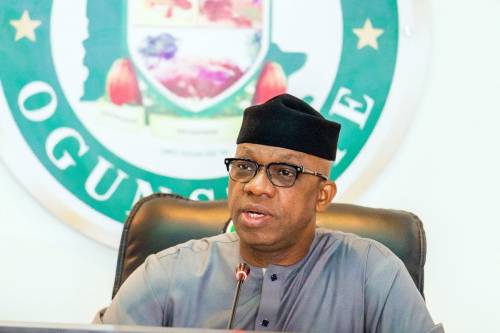
The Ogun State Government has imposed a curfew to commence from 10pm on Wednesday while also banning all public processions and protests in the state.
Kunle Somorin, Chief Press Secretary to Governor Dapo Abiodun, made the announcement in a statement on Wednesday night.
It reads, “There will be a curfew in Ogun State, effective tonight (Wednesday) from 10:00 pm to tomorrow (Thursday) morning at 6:00am.
“This curfew will again be effective tomorrow (Thursday) at the same time, 10:00 pm-06:00 am.
“Restriction of operations of commercial motorcycle riders, popularly called Okada, from all major roads in the state from 10:00pm tonight (Wednesday) all through to 6.00 am on Friday.
“Operations of all commercial buses are also suspended from 10.00pm tonight till Friday morning;
“Taxicabs are permitted to operate within the hours outside the daily curfew period. However, the number of passengers remains limited to a maximum of three only.
“All forms of gathering in the state, except the State announced Independence Day Anniversary programme, are restricted to a maximum of 20 persons from 10.00 pm tonight till 6.00 am on Friday.
“No procession whatsoever is allowed.
“Owners and operators of hotels, suites guest houses, motels, and such establishments providing accommodation should note that the restriction on operations has not been lifted;
“All residents are to monitor and report any suspicious movements and activities in their neighbourhood to the security agencies.”
South Africa will reopen its borders to all African countries from Thursday while barring tourists from around 50 nations with high coronavirus infection rates, the government said on Wednesday.
The continent’s most industrialized economy shuttered its borders at the start of a strict nationwide lockdown on March 27 to limit the spread of the virus.
Restrictions on movement and business have been gradually eased since June, but borders stayed sealed to avoid importing the virus from abroad.
Foreign Minister Naledi Pandor said the country would “gradually” open borders, but that restriction were in place for around 50 countries categorized as high risk including Britain, the US, India, Russia, and France.
“Only business travellers with scarce and critical skills, diplomats, investors, and professional sportspeople coming for events from the high-risk countries will be permitted into the country,” she said.
Meanwhile, “travellers from all African countries are allowed,” Pandor added.
The country will reopen some land borders and its three main airports in Cape Town, Durban, and Johannesburg.
All travellers will be required to present a negative coronavirus test taken less than 72 hours prior to departure.
They will be screened upon arrival and asked to install a coronavirus tracing app on their mobile phone.
The travel restrictions will be reviewed every two weeks.
South Africa has been particularly hard-hit by the coronavirus pandemic, with 672,572 infections and 16,667 deaths recorded to date — around half the total number of cases detected on the continent.
The countries with restrictions have a greater number of infections and deaths compared with South Africa, Pandor said.
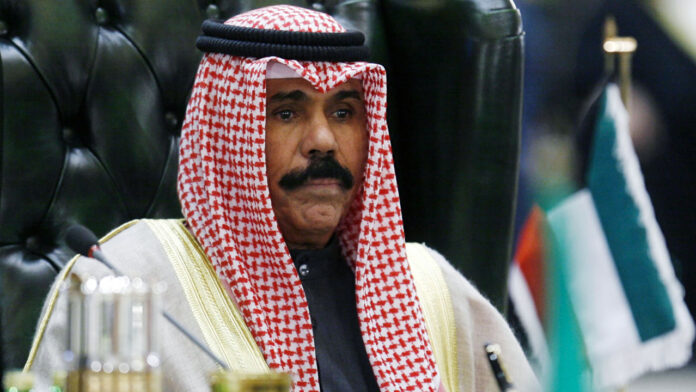
Kuwait on Wednesday swore in its new emir, Sheikh Nawaf al-Ahmad Al-Sabah, and prepared to receive the body of his half-brother, the late ruler Sheikh Sabah who died in the US at the age of 91.
Sheikh Nawaf was visibly emotional as he addressed the National Assembly a day after the death of the emir, an acclaimed diplomat and mediator who ruled for 14 years.
“The precious confidence that the people of Kuwait have entrusted in us will be guarded with our lives,” the 83-year-old said after taking the oath of office.
He pledged to “serve the nation” in the address before lawmakers, who sat socially distanced and in masks, in line with coronavirus precautions.
The remains of Sheikh Sabah al-Ahmad Al-Sabah are expected to arrive in Kuwait City later Wednesday, on a flight from Minnesota where he had been undergoing treatment in hospital since July.
According to the royal court, the funeral will be “restricted to the emir’s relatives” — a move likely designed to avoid large crowds amid the coronavirus pandemic. The country has already begun a 40-day period of national mourning.
Sheikh Sabah earned a reputation as a shrewd, unshakeable leader who helped steer his country through the 1990 Iraqi invasion, crashes in global oil markets and upheavals in parliament and on the streets.
World leaders and Kuwaitis alike have hailed the legacy of the late emir, architect of the nation’s modern foreign policy and mediator in some of the worst crises to grip the Gulf.
“This man was the safety valve of the Arab world, not just for Kuwait,” Bandar al-Dahani, a Kuwaiti citizen, told AFP.
“God willing, that goodness will be in Crown Prince Sheikh Nawaf and he will follow the emir’s path.”
Generational transition looms
Sheikh Nawaf, who has held high office for decades, takes over with Kuwait facing the repercussions of the coronavirus crisis, which triggered a sharp decline in oil prices and severe economic consequences for Gulf states.
The elder statesman, who was named heir apparent in 2006, served as defence minister when Iraqi troops rolled into the oil-rich emirate in 1990, and also as interior minister in the face of challenges from Islamist militants.
The new leader is popular within the ruling Al-Sabah family and is reported to have been a consensus choice for ruler. He also enjoys a reputation for modesty and has largely maintained a low profile.
Major policy changes are not expected during his reign, even after the Gulf underwent a seismic shift with Kuwait’s neighbours, the UAE and Bahrain, opting to establish relations with Israel.
Normalisation with the Jewish state is highly unpopular among the Kuwaiti public, which largely supports the Arab world’s historic position of demanding a resolution of the Palestinian cause before giving diplomatic concessions to Israel.
Despite expectations for a smooth succession, there could be more spirited debate over who the new crown prince should be.
Kuwait’s constitution stipulates that the ruler should be a descendant of the nation’s founder, Mubarak al-Sabah, but the throne has alternated between the descendants of his sons, Salem and Jaber, for four decades.
Contestants for the newly vacated role of crown prince include Sheikh Sabah’s son and former deputy prime minister Nasser Sabah al-Ahmed al-Sabah, a Kuwaiti political heavyweight.
“Sheikh Nawaf al-Ahmed should be viewed more as a caretaker than as a watershed new leader,” said Cinzia Bianco, a research fellow at the European Council on Foreign Relations.
“Behind the scenes, however, younger princes would likely continue to compete to succeed him.”
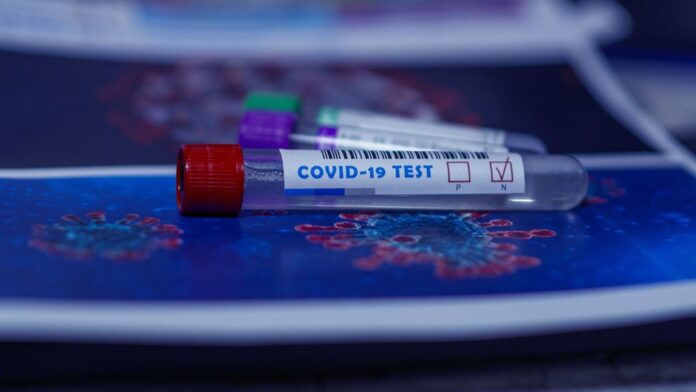
In order to improve its testing capacity for COVID-19, the Nigerian government has developed a molecular test kit named the SARS-COV-2 Isothermal Molecular Assay (SIMA).
The minister of state for health, Olorunnimbe Mamora, made this known at the bi-weekly Presidential Task Force (PTF) on COVID-19 briefing on Tuesday.
Mr Mamora said the test kit developed by the Nigeria Institute of Medical Research (NIMR) can produce results in less than 40 minutes.
This is faster as compared to the Reverse Transcription- Polymerase Chain Reaction (RT-PCR) which is currently the main source of testing in the country. This method of testing takes several hours to produce results.
“The Nigeria Institute of Medical Research has developed a molecular test for COVID-19 that can give results in less than 40 minutes.
“It is the SARS-COV-2 Isothermal Molecular Assay (SIMA) which can be performed by low skilled personnel with minimum training,” Mr Mamora said.
He also said the kit is ten times cheaper than PCR and can be deployed for point of care detection and surveillance.
Nigeria is still struggling to ramp up COVID-19 testing mainly due to lack of adequate equipment and reagents needed to carry out the PCR test.
Tests to diagnose viral infections are key to controlling the pandemic, but Nigeria, like many other African countries, could not make any locally and was importing the kits.
On April 28, the Nigerian government announced its target of testing at least two million people within the next three months.
The target elapsed with Nigeria failing to cover at least 30 per cent of the two million.
“The main challenge Nigeria has had with testing has been its inability to test as many people as possible. Inability to secure test kits in a world where they are still in high demand means that cheaper, alternative, mass-produced options are being sought all over the world,” Ikemesit Effiong, a forensic expert, told PREMIUM TIMES.
Low testing
As of Tuesday evening, 509,555 of Nigeria’s 200 million have already been tested for COVID-19, a potentially dangerous pneumonia-like disease. This resulted in the discovery of 58,460 infections thus far.
But there has also been a significant reduction in the number of daily infections across Nigeria’s 36 states and the Federal Capital Territory (FCT).
For about a month, Nigeria has been recording daily figures below 300, an indication that the country may have gone past its worst phase of the virus.
Health authorities, however, warn against a new wave of the virus if citizens continue to violate COVID-19 rules.
Bright Echefu, the chief executive officer of Telecomm Satellite TV (TStv), says his organisation will be the first to implement the pay-per-view model in Nigeria.
Addressing journalists in Abuja on Tuesday, Echefu said TStv has over 100 channels that will be made available for as low as N2 per day and as high as N5 for a channel.
“We are going to be the first to implement pay-per-view. What TSTV has done is, allow you to create your own bouquet and you have channels that are as low as N2 per day,” he said.
“If you have a N50 voucher, you are actually watching TV and saving your money.”
Echefu said no other organisation has as much high definition (HD) channels as they do.
“Nobody has as much HD channels as we do. We are rolling out with about 108 channels. We are going to be the first in sub-Saharan Africa to implement H.265,” the CEO said.
“TStv has invested a lot in acquiring rights. Most channels are as low as N5 per day. As a gift to Nigerians, we are releasing one of our sports channels free for a year.”
He said La Liga would be free but viewers would have to pay to view other football leagues, adding that about 18 states would be activated once they roll out their services on October 1.
The company had initially launched on November 1, 2017. However, it encountered challenges and could not provide services to customers.
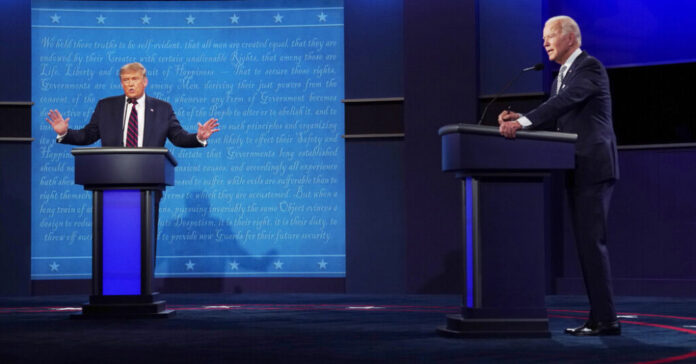
At the end of a rancorous and chaotic debate — in which President Donald Trump tried to bulldoze challenger Joe Biden with insults, slashing interruptions and callous attacks on Biden’s family — the President questioned the legitimacy of the November election, refused to say whether he would concede should he lose and declined to forcefully condemn White supremacists.
As Trump was wrapping up a nearly unwatchable 90 minutes in which his interruptions often made it impossible for viewers to follow what the two men were talking about, moderator Chris Wallace asked Trump whether he would urge his supporters to “stay calm and” avoid any civil unrest, and would pledge not to “declare victory until the election has been independently certified.”
“I’m urging supporters to go into the polls and watch very carefully,” Trump said, on a night where he continued his unfounded attacks on voting by mail. “If it’s a fair election, I am 100% on board. But if I see tens of thousands of ballots being manipulated, I can’t go along with that.”
Biden, by contrast, pointed out that Trump’s own FBI director, Christopher Wray, has said there’s no evidence of widespread voter fraud. Biden agreed he would not declare victory until the election was certified.
“This is all about trying to dissuade people from voting, because he is trying to scare people into thinking that it’s not going to be legitimate. Show up and vote. You will determine the outcome of the election. Vote, vote, vote,” Biden said. “If you’re able to vote early in your state, vote early. If you are able to vote in person, vote in person. Vote whatever way is the best way for you. … He cannot stop you from being able to determine the outcome of this election.”
“He can’t stay in power,” Biden added. “It won’t happen.”
Trump drags debate into total chaos
Trump’s vows to challenge the election results came at the end of a first presidential debate that devolved into chaos and an unrelenting volley of personal attacks from the first exchange.
Trump derailed the night by repeatedly talking over Biden, who responded with jabs at the President — calling him a clown more than once and “the worst president that America has ever had.”
Trump’s technique of attacking Biden and interrupting him on nearly every subject led the former vice president to lose his train of thought on several key points early in the debate, but he seemed to acclimate as the night went on — occasionally shaking his head in disgust.
Early on during a discussion about the explosive new reports from The New York Times that Trump paid little or no federal income taxes during much of the past two decades, Biden tried to pivot into an argument about fairness, noting that the average schoolteacher paid more in taxes than Trump. But the President soon overtook Biden’s time and steered the conversation onto safer ground about tax policy.
During a sharp exchange over health care — which grew out of a question about Trump’s Supreme Court pick, Judge Amy Coney Barrett, and the lawsuit challenging the Affordable Care Act — Biden grew exasperated. “Donald, would you just be quiet for a minut?,” he said.
He later broke into another one of Trump’s retorts with a plea: “Will you shut up, man?” Throughout the night, Biden continued to call out the President for attempting to bulldoze the debate, making it clear from the beginning that he wouldn’t try to fact-check Trump’s volley of untruths.
When Biden was promised “two minutes uninterrupted” by moderator Chris Wallace, who asked why voters should elect him over Trump, the former vice president said Trump has made the country “sicker, poorer, more divided and more violent.”
“When I was vice president, we inherited a recession. I was asked to fix it. I did. We left him a booming economy and he caused the recession,” Biden said. “With regard to being weaker — the fact is that I have gone head to head with (Russian President Vladimir Putin) and made it clear to him we’re not going to take any of his stuff.”
“He’s Putin’s puppy,” Biden said of Trump. “He refuses to say anything to Putin about the bounty on the heads of American soldiers –.” Trump at that moment began to interrupt him with an attack on his son, Hunter.
Wallace jumped into the fray with a rebuke about the rules: “Mr. President. Your campaign agreed that both sides would get two-minute answers. Uninterrupted. Well, your side agreed to it. Why don’t you observe what your campaign agreed to as a ground rule.”
“He never keeps his word,” Biden quipped.
The debate was divided into six topics, but many Americans tuning in would have had a hard time finding any clarity about either man’s positions, as Trump — playing the role of relentless agitator — delivered a bullying performance that led Wallace to raise his voice at more than one point to try to regain control.
Trump refuses to condemn White supremacists
When Wallace broached the question of race relations in America and asked the President to condemn White supremacists who have incited violence at demonstrations against police violence across the country, Trump gave an appalling answer, even for him, by refusing to do so. Wallace asked him whether he was prepared to tell them to stand down during the protests.
“Sure, I’m willing to do that,” Trump replied, “but I would say almost everything I see is from the left wing, not from the right wing. I’m willing to do anything. I want to see peace.”
Biden waded into the discussion. “Say it. Do it. Say it,” the former vice president said.
“Give me a name. …. Who would you like me to condemn?” Trump said to Wallace, who named the group known as “Proud Boys” as an example.
“Proud Boys — stand back and stand by,” Trump answered. “But I’ll tell you what, somebody has got to do something about Antifa and the left, because this is not a right-wing problem. This is a left-wing problem.”
Biden accused the President of inflaming racial tensions in this country, accusing the Trump of using “everything as a dog whistle to try to generate racist hatred, racist division.”
He also charged that the President has “done virtually nothing” for Black Americans, adding that that group has suffered disproportionately from the coronavirus.
That led Trump to tout his work on criminal justice and attack to the former vice president for taking a leading role in the passage of the 1994 crime bill, which led to the incarceration of many Black men in America.
“I’m letting people out of jail now,” Trump said. “You have treated the Black community about as bad as anybody in this country.”
Trump confirms, rather than changes, his narrative
Trump entered the debate looking to change the race as he trailed Biden, but instead played up to his most base instincts with a performance that seemed likely to alienate the independent voters repelled by his style, as well as many of the female voters who have abandoned him since 2016.
The President entered this first of three presidential debates in a far more vulnerable position than in his 2016 match-ups with Hillary Clinton. Many voters have already made up their minds about Trump, giving him poor marks for his handling of both the pandemic and the tension over race relations and police violence this year.
The President’s slashing and combative style has been one of his biggest problems with female voters, and Biden has been leading him among women by some 30 points in recent polls, but Trump did nothing to rein in the conduct that has alienated so many of them. A CNN poll of debate watchers showed 60% thought Biden won, compared with just 28% for Trump.
He repeatedly insulted Biden’s intelligence throughout the debate, cutting him off at one point when he used the word “smart.”
“Don’t ever use the word smart with me,” Trump said. “There’s nothing smart about you, Joe.”
Biden, who has a 47-year career in politics, struggled to make his own points at the beginning between Trump’s interruptions, but he regained his footing through several exchanges on health care and the coronavirus pandemic, which has claimed some 200,000 lives. Biden spoke directly to families who now have an “empty seat at the kitchen table,” and noted that about 40,000 Americans are still contracting the virus each day.
“The President has no plan. He hasn’t laid out anything,” Biden said.
Trump disputed Biden’s comparisons of the spread of the virus in the US, arguing, for example, that other countries were underreporting their numbers, and he promised that a vaccine and life-saving treatments were right around the corner.
“It’s China’s fault. It never should have happened,” Trump said.
“We’ve done a great job,” he added, accusing the press of distorting his record on the virus.
At one point he turned to Biden: “You would have lost far more people,” he said.
Biden told Trump to get out of his “bunker,” and “get out of the sand trap and your golf course” to bring Democrats and Republicans together to do what needs to be done to save lives.
Trump tried to deflect the criticisms that he rarely wears a mask and has drawn thousands of people to his rallies with no social distancing, by claiming that Biden could never draw the crowds that he does. He repeatedly accused Biden of wanting to keep the US shut down at the cost of businesses all over the country.
“This guy will close down the whole country and destroy this whole country,” Trump said as Biden laughed off the false claim that the President often makes at his campaign rallies.
Trump on the defensive over taxes
During an exchange over the new revelations about Trump’s tax returns in The Times — which showed the President paid no federal income taxes in 10 of the last 15 years — Biden noted that Trump paid less in taxes than most schoolteachers, but he fumbled a chance to drill the President on his tax liabilities and questionable business record, given that Trump evaded taxes largely by writing off his losses.
“You’re the worst president America has ever had,” Biden said.
Trump disputed the report by claiming that he has paid millions in taxes, but he also defended his approach of paying as little as possible in taxes as an aspect of his sharp business acumen.
“I don’t want to pay tax,” Trump said, arguing that he has done what every other private business person has done by using the law to his advantage.
President goes after Hunter Biden
Reprising lines that he used throughout his impeachment, Trump tried several times to rattle Biden by accusing his son Hunter of corruption because he worked for overseas companies while his father was vice president. The President specifically raised the younger Biden’s work for the Ukrainian energy company Burisma.
While Biden has been unnerved by questions about his son on the campaign trail, he was collected Tuesday night and tried to speak directly to Americans as he rebutted Trump’s claims.
“This is not about my family or his family, this is about your family — the American people,” Biden said. “He doesn’t want to talk about what you need.”
Later Biden called out the President for reported comments that he made describing deceased members of the military as “suckers” and “losers,” noting that he took personal offense because his son Beau Biden, who died of brain cancer in 2015, spent a year in Iraq and was awarded the Bronze Star.
“He was not a loser. He was a patriot. And the people left behind there were heroes,” Biden said pointing his finger at the President, before Trump cut him off — pretending that he thought Biden was talking about Hunter Biden.
The interjection was clearly an attempt by Trump to score a point by noting that Hunter Biden was discharged from the Navy Reserve in 2014 after he failed a drug test, testing positive for cocaine.
“My son, like a lot of people, like a lot of people you know at home,” Biden said speaking directly to the camera, “had a drug problem. He’s overtaken it. He fixed it. He’s worked on it and I’m proud of him.”
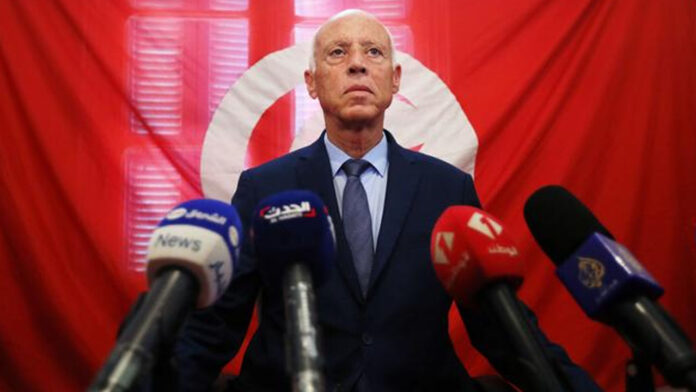
Tunisia’s President Kais Saied has said he backs capital punishment after public outrage over a woman’s murder sparked calls for executions to restart following a three-decade-long pause.
“Anyone who kills a person for no reason deserves the death penalty,” Saied told the nation’s security council late Monday, according to a video posted by the presidency.
Tunisia carried out its last hanging in 1991, according to Amnesty International, but death by hanging remains on the statute books of the North African nation.
Convicts have regularly been handed death sentences in recent years — mainly in trials related to national security — but a moratorium on carrying out the punishment has been in place.
“Each society has its choices, we have our principles, and the text is there,” Saied added.
A recent murder revived the debate on the death penalty.
The body of a 29-year-old woman, who had vanished after leaving work, was discovered last week near a highway that runs from the capital Tunis to the suburb of Marsa.
A man was swiftly arrested and confessed to killing her and stealing her phone, according to the interior ministry.
The justice ministry said that the suspect had previously been accused in an earlier murder case that was dismissed, without giving further details.
“If it is proven that he has killed one or more people, I don’t think the solution is not to apply the death penalty,” Saied added.