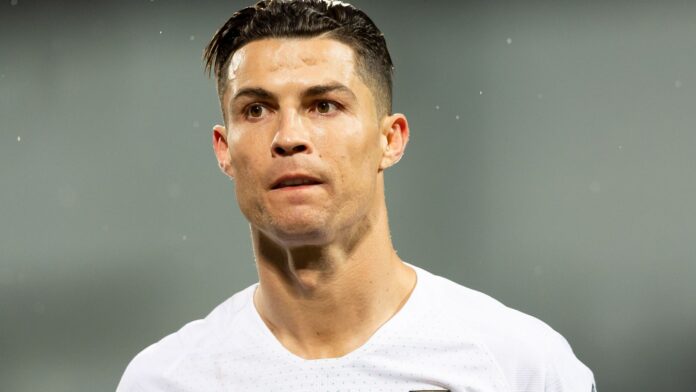
Cristiano Ronaldo has tested positive for coronavirus and will miss Portugal’s Nations League game against Sweden on Wednesday.
The Juventus forward is “doing well, without symptoms, and in isolation”, according to a statement from the Portuguese Football Federation (PFF).
The remaining squad all returned negative results after being tested on Tuesday and are available for the Group A3 match in Lisbon.
The PFF confirmed in a statement: “Following the positive case, the remaining players underwent new tests this Tuesday morning, all with a negative result, and are available to Fernando Santos for training this afternoon, in Cidade do Futebol.
“The game (against Sweden), counting for the qualification phase of the Nations League, is scheduled for Wednesday, at 19:45, in Alvalade.”
Ronaldo has played in both of Portugal’s matches so far during the international break, starting in a friendly against Spain in Lisbon and then playing the full game in their 0-0 draw with France on Sunday.
The stalemate in Paris means Portugal and France are level on seven points, with Ronaldo’s side topping the group on goal difference.
Wednesday’s opponents Sweden are bottom of the group, having failed to pick up a single point from their first three matches.
In the reverse fixture in September, Ronaldo became the first European player to reach 100 international goals after scoring twice in Portugal’s 2-0 win.
Ronaldo has set his sights on Iranian Ali Daei’s record for a male international of 109 goals.
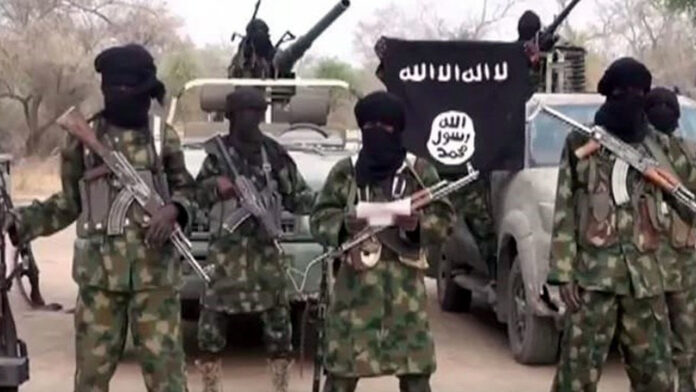
Fighters from the Boko Haram jihadist group killed 14 farmers in restive northeast Nigeria, members of a government-backed militia have said.
The sources told AFP that insurgents on Monday seized 15 farmers working on their irrigation fields in Ngwom village, 14 kilometres (nine miles) north of the region’s main city Maiduguri, and cut their throats.
“They slaughtered the farmers, killing 14 while one survived with a deep slash. They left him for dead,” Babakura Kilo, a leader of the anti-jihadist group, said.
The insurgents captured the farmers as they tended to their crops during the early afternoon, giving them no room to escape, said another member Ibrahim Liman who gave the same death toll.
The survivor was taken to a hospital in a “life-threatening condition,” Liman said.
Boko Haram and rival group Islamic State West Africa Province (ISWAP) have increasingly targeted loggers, herders and fishermen in their violent campaign, accusing them of spying and passing information to the military and the local militia fighting them.
At least 36,000 people have been killed in the jihadist conflict which displaced around two million from their homes since 2009.
The violence spread into neighbouring Niger, Chad and Cameroon, prompting a regional military coalition to fight the militants.
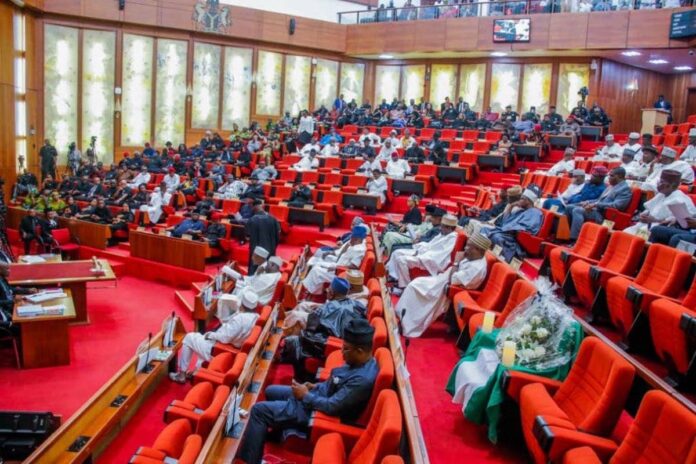
The Senate on Tuesday approved and confirmed the appointments of eight Supreme Court justices.
The President, Major General Muhammadu Buhari (retd.) had through a letter read by the President of the Senate, Ahmad Lawan, penultimate week, asked the Senate to approve the appointment of the eight justices.
Buhari had said the appointments were based on the recommendations of the National Judicial Council.
Buhari had also said his action was “in pursuant to Section 231 (2) of the 1999 Constitution as amended and upon the advice of the National Judicial Council according to their ranking and seniority in the Court of Appeal.”
The nominees are, Lawal Garba, (North West), Helen Ogunwumiju (South West), Abdu Aboki (North West), and M M Saulawa (North West).
Others are, Adamu Jauro (North East), Samuel Oseji (South South), Tijani Abubakar (North East), and Emmanuel Agim (South South).
The Chairman of the Senate Committee on Judiciary, Human Rights and Legal Matters, Senator Opeyemi Bamidele, presented the report of his panel’s screening exercise for senators’ consideration on Tuesday.
He said his committee found that all the judges are eminently qualified for the exalted positions and that there was no petition against any of them.
The Senate subsequently confirmed their appointment at plenary.
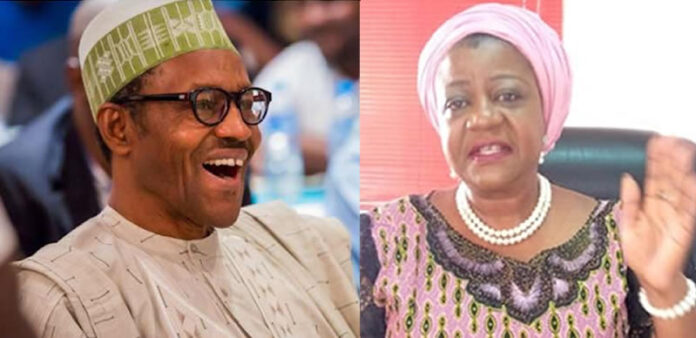
The President, Major General Muhammadu Buhari (retd.), has asked the Senate to confirm the appointment of one of his media aides, Lauretta Onochie, as a National Commissioner of the Independent National Electoral Commission representing Delta State.
Others are Prof. Mohammed Sani Katsina), Prof. Kunle Ajayi (Ekiti), and Seidu Ahmed (Jigawa).
The letter was read by the President of the Senate, Ahmad Lawan, on the floor of the Senate on Tuesday.
Onochie is the Special Assistant to the President on Social Media.
Senate President @DrAhmadLawan reads a Letter From Mr. President C-in-C on the Confirmation of the following nominees for Appointment as Commissioners of Independent National Electoral Commission (@inecnigeria)
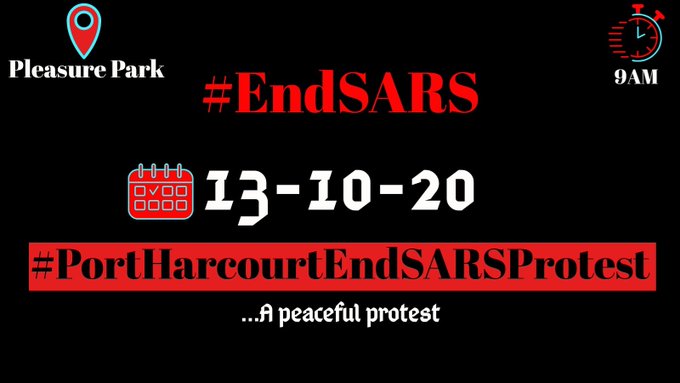
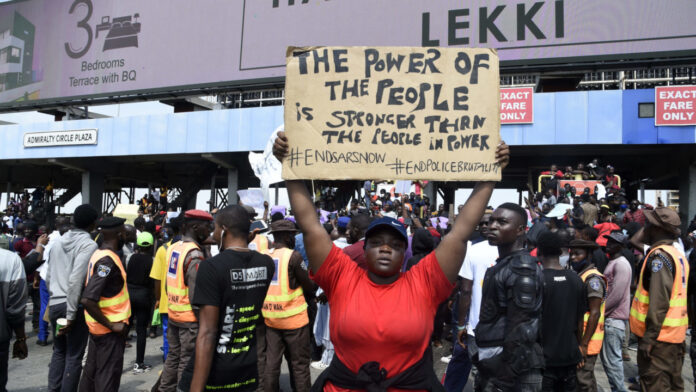
Youths on Tuesday continued their protest against police brutality and extortion in Port Harcourt, Rivers State.
This is despite the ban on protests throughout the state by the state’s Governor, Nyesom Wike, on Monday.
But the protesters lamented that youths cannot continue to be killed without them protesting.
Our correspondent learnt that they converged opposite Pleasure Park Port Harcourt around 08.45am to resume the protest.
While some of the protesters were seen with placards, others chanted “EndSARS”, “We are tired of dying”, and “Protest is our right” among others.
“We are protesting against people that are killing us and you are asking to stay at home, how come? We are harassed and treated like criminals every day,” one of the protesters said.
A policeman at the scene of the protest appealed to the youths to be peaceful.
Earlier, Wike in a statement by Rivers Commissioner for Information, Paulinus Nsirim, said.”
“All proposed protests under #EndSars Campaign are hereby prohibited.
“Government took this decision because the Inspector General of Police, Mohammed Adamu, had already scrapped the Special Anti-Robbery Squad.
“Therefore, there is no need for any form of protest against a Unit of the Police Force that no longer exists.”
The increase in the pump price of fuel, in 2020, a fall-out of the deregulation of the downstream sector, did not compel the youths of Nigeria to troop out onto the streets. The additional hike in electricity tariffs was not enough to ignite their anger either.
The government of the day explained to the people that the additional burden of higher prices was part of the sacrifice they had to make as citizens. The impact of COVID-19 was hobbling the country: loss of revenue, inflation, a weak national currency, foreign exchange crisis. The people showed understanding. The strongest point about the average Nigerian is that he or she is resilient, long-suffering, yet ever ready to give up a little comfort for the country’s sake. Nigerian leaders do not show as much readiness or patriotism in the same manner. Nonetheless, Nigerians continue to endure, but the lesson of the #EndSARS crisis that has now engulfed the country is that it is not good to take the people’s patience for granted.
Last week, it took an encounter between a young man and the notorious Federal Special Anti-Robbery Squad (FSARS) in Ughelli, Delta State, for the people to cry out and show their outrage over unending cases of police brutality. A young man by name Ochuko, was first said to have been killed by the men of the FSARS. It was later established that he did not die. He was brutalized. His vehicle was seized by the police. He ended up in hospital. The Minister of State for Labour and Employment, Festus Keyamo, SAN who was born in Ughelli intervened and tried to explain. He said the victim was alive and that in fact, the outfit involved in the encounter was not SARS, but Operation Delta Safe. These were policemen all the same. The youths of Ughelli therefore turned their anger on the police. Whether it was Operation Delta Safe or SARS did not matter, the truth is that the Federal Special Anti-Robbery Squad established in 1992 has over the years become synonymous with impunity and brutality.
CSP Simeon Danladi Midenda (assisted by DSP Taiwo Lakanu) who helped to set up the unit as a default strategy at the time, is on record as having said that the unit, one of 14 in the Nigeria Police Crime and Intelligence Division, has “deviated from the original concept.” The exact nature of that deviation is that over the years, Nigerians concluded that FSARS had transformed from being a crime-fighting unit of the Nigeria Police into a criminal unit, granted automatic immunity by official status and the guns that they wield. Rather than fight armed robbery, SARS officials spent more time terrorizing Nigerians. The many stories that have been written about this unit of the Nigeria Police convey a picture of how Nigeria itself has deteriorated and how institutions of state can be easily used to condone and promote impunity. In 1971, Nigerian policemen killed Kunle Adepeju, a promising Nigerian student at the University of Ibadan, who was not even involved in a protest about the inefficiency and incompetence of a University catering manager.
In April 1978, the police killed Nigerian students for daring to query the then Olusegun Obasanjo military regime. The government had increased the cost of meal on campuses by 50k per day. The students revolted. The Nigeria Police, this same one, joined by soldiers who were called out to quell the protests, littered every campus from Zaria to Lagos with corpses. In 1981, they killed Dele Udoh, a 24-year old, award winning athlete. He was gunned down for having the temerity to argue with a policeman. With the emergence of a unit of the Nigeria Police Force called Nigerian Mobile Police (MOPOL) Nigerians were finally confronted with the spectre of police brutality in full force. It was a para-military police unit. It would eventually distinguish itself internationally and bring laurels to Nigeria in UN, AU, ECOWAS international peace-keeping operations. But locally, the MOPOL, as it was called, was known for its human rights abuses. Under Inspector-General of Police, Sunday Adewusi (1981- 1983), the MOPOL became so notorious, so evil, that it was called the “Kill and Go Police”.
After dismissing the civilian Shehu Shagari administration in 1983, the military rulers that came after had to whittle down the influence of the MOPOL. It had become a threat not just to society but also the military. MOPOL may have been bad but SARS is worse. Nigeria’s Special Anti-Robbery Squad inherited the “Kill and Go” label and turned it into a shameless brand. Nobody is spared. You only need to drive a good car, wear dreadlocks, look like you had just returned from an overseas trip, speak with a foreign accent, or look like the son or daughter or wife of a rich man, or make the mistake of being seen with an expensive phone or tablet, and you automatically become a target. Walking too confidently on the streets of Nigeria is now regarded as a crime by SARS policemen and yet, the Nigerian Constitution guarantees the freedom of movement. SARS officials pry into people’s bags, enter their houses and look into soup pots and refrigerators, and ask for a share of family assets or else, they will “kill and go” and as they often say, “nothing will happen.” And indeed, often, and always, nothing happens, and if anything happens at all, such policemen are protected by the police and subsequently rewarded with promotion and better postings. They are not answerable to anybody in the state to which they are deployed. They operate as a Federal Force! This is exactly the problem. A Police system that is supposed to protect the safety of lives and property but which operates like an enemy of the people, and the state lacks the will to do what is right, is a threat to everyone.
It has been argued that we should never have expected, and should not expect much from the Modern Nigeria Police. It was established by the colonial authorities as a force of domination, division, suppression, and control, and so the argument goes, we should expect the Modern Nigeria Police Force to remain true to its antecedents. The weakness of that argument is that it props up colonial determinism. It has been 60 years after independence. We can’t keep blaming the past. My take, in fact is that the colonial police master is much better than the post-colonial police masters we now have. Present day internal colonialists are far less human than the British colonialists. There are many Nigerians who will readily argue that colonialism had its good sides, highlighted ironically by the wickedness of a generation that inherited independence and subverted it.
Too many panels and committees have been set up to reform the Nigeria Police: why has that not worked? For more than 40 years, civil society groups in Nigeria and the International Community have been drawing attention to human rights abuses by the Nigeria Police: why has nobody listened? Every Inspector General of Police since the 1990s has talked about Police Reform, Police decentralization, Police restructuring, but that has also not worked. The current #EndSARS protest is a response to years of inaction and the deafness of the Nigerian state. The argument is not about a colonial heritage. It is about the failure of leadership. This is worsened by the fact that the protesters do not trust the Nigerian government anymore. There is nothing new about police brutality and the violation of human rights by the Nigerian State, but the people have seen that it may never end. For the past four years, there have been similar protests and demands. This is not the first time Government will restructure the notorious SARS or direct that checkpoints should be disbanded. In 2017, 2018, 2019, the police hierarchy gave the same directives. The police simply went about their duties and punished the people even more. It is tragic to have a Police system that the people do not trust.
After the aforementioned Ughelli incident, the Inspector General of Police – Mohammed Adamu announced that SARS officials had been ordered off the streets, checkpoints banned and that every SARS official must wear a uniform. The public laughed. They dismissed the directive as “an audio directive.” AUDIO used in that context in Nigeria’s street talk means mere sound, nothing of substance, it can be heard but there is nothing to it because it is deceptive and dishonest. The people have been proven right. When a people begin to call those who are supposed to protect them liars and hypocrites, something has gone crazy in that society, and a bomb is ticking. Indeed, within 24 hours after the IGP’s mollifying directives, SARS officials were seen again on the streets, acting like emperors as usual. The people then resolved that “Enough is Enough”. In Ughelli, Lagos, Osogbo, Abuja, and elsewhere, they confronted the SARS officials. The Police fought back. Nigeria now looks like a scene out of William Shakespeare’s Coriolanus. “Na on top that matter we dey since oh” as the people say.
The people standing up to the Nigeria Police are to be exact, the youths of Nigeria. The #EndSARS campaign is an expression of youth power. What we have seen is a whole generation speaking up. Their protest goes beyond police brutality. It is an outflow of pent up anger about how Nigeria has been mismanaged over the years. It is a protest about the failure of the state, the reign of impunity and the abuse of uniform, not just by the police, but Customs, Immigration, Civil Defence, Road Safety officials, and anyone who wears an official uniform and thinks he or she has been empowered to humiliate and oppress less privileged Nigerians. But the Phoenix has risen. Before now, many young Nigerians kept calling on the older generation of activists to speak up for them about contemporary issues. The majority actually thought the duty of liberating Nigeria should be carried out by the same set of old actors. This time, new heroes and heroines have shown up from the most unlikely quarters. Their protest goes beyond police brutality. It demonstrates the power of technology and the nature of a modern revolution and its potency. The Arab Spring was triggered off in December 2010, by an act of self-immolation by a Tunisian youth in protest over police corruption and brutality. In Nigeria, a Revolutionary Spring has been afoot for days. Well, almost.
Nigerian youths took over not just the streets of Nigeria, they possessed the international social media space. They ignited the fire of patriotism at home and in Diaspora. There have been protests by Nigerians across the world- in Paris, London, Johannesburg, Monrovia, Dublin and elsewhere. On Twitter, a dedicated team called out international celebrities and governments to help defend the rights of Nigerians to live in peace in their country. Within 24 hours, the #EndSARS campaign became the Number one trending topic on social media worldwide. Governments and embassies joined the protest, calling on the Nigerian government to address the grievances of its angry citizens. I saw Drake, Cardi B, John Boyega, Trey Songz, Chance the Rapper, Estelle, global cultural figures asking questions about Nigeria. It was in the government’s interest to respond. The IGP has now announced a complete disbandment of the Special Anti-Robbery Squad, but two days later, nobody trusted him. Nigerian youths shouted “AU-DI-O”. They have remained on the streets. They have asked that the President of Nigeria Muhammadu Buhari must address the nation. He has now done so. It was in his interest to do so. Every step that has been taken by the Nigerian government in the last three days is not because the government listens, but a response to a desperate situation. #EndSARS was beginning to graduate to an #EndNigeria campaign. Even the Vice President and one of his daughters joined the campaign. One of the President’s daughters, Zahra Buhari also tweeted on the side of the people. The children of both billionaires and the poor are united. One of them, DJ Cuppy, has said she had to defy other people’s counsel but as a young Nigerian she felt obliged to speak up.
The #EndSARS campaign has produced new heroes. We have seen an expression of youth anger and patriotism that we never expected was possible. Omoyele Sowore, the activist who ignited the fire that now burns, must be pleased. The other hero is Aisha Yesufu, the foster daughter of the North, who has emerged as a symbol of the protest. There is Rinu, the young lady who acted as spokesperson at the Lagos State House of Assembly. And Segun Awosanya, the #EndSARS architect and spirit. Deji Adeyanju. Dipo Awojide. Reno Omokri. There are others: those who lived, those who died, the living ancestors, and members of Corporate Nigeria who stood up to be counted. The Nollywood and Creative Industry team gave verve to the protest: Falz the Bad Guy, Wizkid, Davido, Tiwa Savage, Paul Okoye, Rema, Don Jazzy, Mike Edwards, Genevieve Nnaji, Toke Makinwa, too many to mention… and the BBNaija queen – Tacha showing that far beyond beauty and brains, conscience matters… Notably, there is no single hero. The youths of Nigeria led themselves. They blocked politicians from hijacking the protest, and therein lies the strength of this unfolding Nigerian story. We have not yet seen the end of it. It is a much bigger story: the story of how a strategic police unit that used to be known as the “Scorpions” ended up as a group of “Monkeys”, looking for “Bananas”, so badly they became involved in land matters, snatched ATM cards, and became “AsSARSins.”
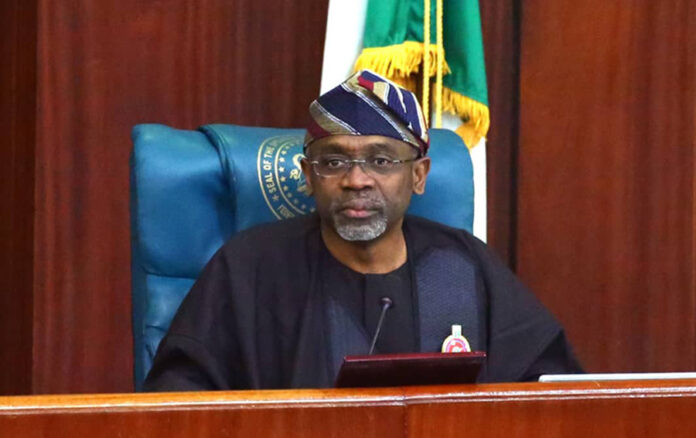
Speaker of the House of Representatives, Rt Hon Femi Gbajabiamila
The Speaker of the House of Representatives, Rt Hon Femi Gbajabiamila, has commended President Muhammadu Buhari for listening to the call by Nigerians to disband the Special Anti-Robbery Squad (SARS).
He also said that the House would go ahead with Police Reforms bill before it. Gbajabiamila, in a statement by his spokesman, Lanre Lasisi, said that the dissolution of SARS was a necessary response by the government to the outcry arising from its multiple documented excesses.
He commended Nigerians, particularly the youth home and abroad, who saw a wrong and sought to make it right, who saw injustice and acted to put an end to it.
According to him, the dissolution of SARS and the broader, ongoing reforms of the police that will follow, are a testament to the passion and resilience of a generation of Nigerians.
He said the generation was determined not to accept or tolerate injustice in whatever form.
The Speaker called on the Inspector-General of Police (IGP) Mohammed Adamu to take practical steps to support and enforce the policy pronouncement.
“These steps are necessary to assure the Nigerian people that the dissolution of the SARS is sincere and well-intentioned, and not merely meant to quell the ongoing protests across the country.
“The Nigeria Police Force (NPF) must also act to identify and punish those operatives of SARS involved in the most severe cases of abuse of rights, brutality and murder.”
Gbajabiamila noted with displeasure the police’s manhandling of some protesters who came out in numbers to protest peacefully.
The Speaker assured Nigerians that the dissolution of SARS would not preclude the ongoing efforts by the House to effect reforms of the police through legislation.
He said there was a pressing need to have an independent system for monitoring police actions and holding police officers to proper account for failures to follow the law and the police code.
“The House will continue its work to legislate lasting solutions to the problems of policing in Nigeria.
Gbajabiamila said the House would meet with the leadership of Nigerian Bar Association (NBA), the Nigerian Human Rights Commission (NHRC) and select Civil Society Organisations (CSOs) for joint efforts at developing a legislative proposal.
“Whatever legislation emerges from this collaboration will be presented to the House within a 30-day timeline at the special session of the House on Wednesday,” he said.
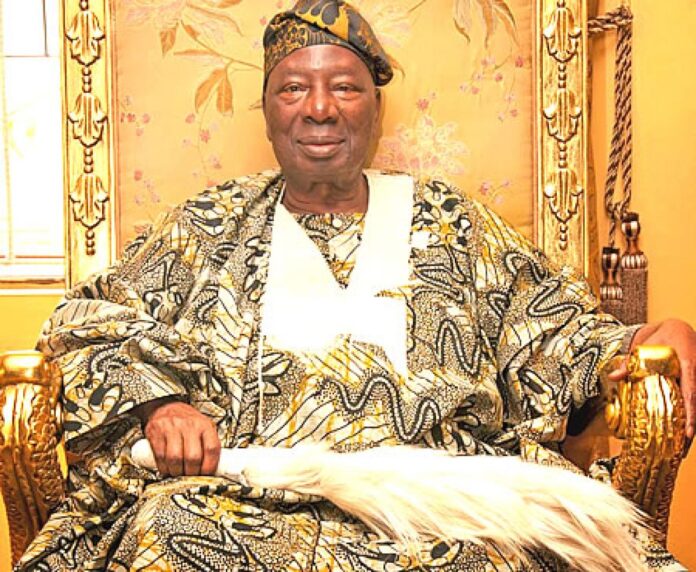
Soun of Ogbomosoland, Oba Oladunni Ajagungbade III
The Soun of Ogbomosoland, Oba Oladunni Ajagungbade III, has denied reports that protesters were killed when they attacked his palace on Sunday.
Instead, Ajagundade in a statement by his Principal Secretary to Soun of Ogbomosoland, Mr. Toyin Ajamu, said the palace was attacked by “hoodlums” who damaged properties.
He also complained that a chief was injured during the attack.
The statement, dated October 12, was titled ‘Unprovoked attack on Ogbomoso Palace: No death recorded’.
Part of the statement read, “The attack was perpetrated by hoodlums and miscreants, disguised as protesters against the Special Anti-Robbery Squad leading to the wanton destruction of properties and vehicles at the palace. A chief among other palace officials, also sustained injuries.
“Contrary to fake news being disseminated on social media, we state categorically that despite the needless provocations and ill-treatment meted out to the Royal household during the violent attack on the Palace, the Paramount ruler and his household did not retaliate.
“Kabiyesi, who was with his chiefs and subjects including Minister of Youth and Sports Development (an indigene of Ogbomoso), when the hoodlums invaded the palace, advised the palace staff to refrain from attacking the hoodlums.
“Hence, none of the miscreants and thugs was attacked by the palace household but rather a chief, who was pelted with stones by the hoodlums sustained serious injuries.
“The dead bodies being circulated on social media were brought into the palace by the hoodlums to cause confusion and justify the attack on the palace.”
The monarch, subsequently, implored appropriate authorities to investigate the incident in a bid to bring the perpetrators of the attack to book and avert a recurrence.
“We equally call for the full investigation into circumstances that led to the death of Jimoh Isiaka, an Ogbomoso indigene alongside others injured during the peaceful protest on Saturday, October 10, 2020,” it added.
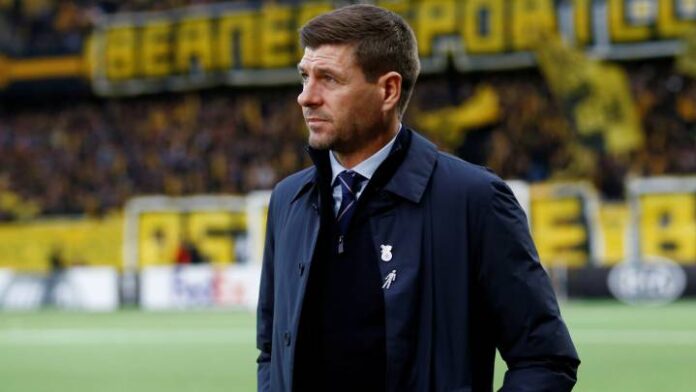
Rangers manager, Steven Gerrard, will face no action over post-match comments he made about a referee after a disciplinary charge was ruled not proven on Monday.
The former Liverpool and England midfielder received a notice of complaint for comments made following Dundee United defender Ryan Edwards’ challenge on Rangers striker Alfredo Morelos during a Premiership match at Ibrox last month.
The Colombian forward suffered a nasty gash and left the field on a stretcher after being caught on the follow through by the United man.
Match referee Kevin Clancy, however, took no action against Edwards and Gerrard said soon after the match: “I’d be very interested to see what the decision would have been from the officials had the shoe been on the other foot and it was Alfredo who had made that tackle.”
Gerrard was accused of breaking rule 72 covering comments that “indicate bias or incompetence” by a match official but a disciplinary hearing on Monday found it “not proved”.
Rangers responded with a statement on their official Twitter account that said “they were “unsurprised at the outcome of today’s hearing but remain bemused that the charge was brought against our manager Steven Gerrard in the first place”.
This decision means Gerrard has avoided a touchline ban and can be in he dugout for Saturday’s Old Firm match away to arch-rivals and reigning Scottish champions Celtic on Saturday.
Rivers State Governor, Nyesom Wike, on Monday announced the prohibition of all forms of protest in the state.
Rivers commissioner for information, Paulinus Nsirim, said the ban include the protest agains police brutality already holding in different parts of Nigeria.
“The Rivers State Government hereby wish to inform the general public that all forms of protests have been banned throughout the State,” Nsirim said in a statement.
“Therefore, all proposed protests under #EndSars Campaign are hereby prohibited.”
Nsirim said the government took the decision following the dissolution of the notorious Special Anti-Robbery Squad (SARS) by the inspector-general of police Mohammed Adamu.
“There is no need for any form of protest against a Unit of the Police Force that no longer exists,” he said.
The ban on protests by the governor runs contrary to the provision of Section 40 of the Nigerian Constitution, which guarantees to freedom of association.
Amnesty International in Nigeria said Wike must “be held accountable for any violation of protesters.”
In 2017, Wike blamed operatives of SARS for “most” of the robberies and kidnappings in the state.
He also said then that the unit was used by politicians to destabilize the state.
“Most of the kidnappings and armed robberies taking place in this state are done by men of SARS,” Wike said in September 2017.
“They use exhibit vehicles to operate. As the Chief Security Officer of the state, you complain, but they choose to play politics with crime.
“They fight crime in some states but they refuse to fight crime in Rivers State. We are done with the elections, but they are using SARS to create insecurity in the state. As I speak with you, they will deny.”