
back to top
Friday, January 16, 2026
advertise with us
Home Blog Page 115

NDDC Under Fire As Acting MD Buys Cars, Buses For Auditors

NDDC Under Fire As Acting MD Buys Cars, Buses For Auditors

The Acting Managing Director of the Niger Delta Developing Commission, Kemebradikumo Pondei, has again come under fire for purchasing 10 cars and five buses for auditors investigating the financial accounts of the company.

The vehicles were given to all the firms auditing the accounts of the commission.

It was gathered that Pondei labelled the gifts as additional working tools to facilitate and support the work of the firms.

“The forensic audit was set up by President Muhammadu Buhari to look into the activities of NDDC from inception 20 years ago to August 2019.

“So, it is on that note that lead forensic consultants were appointed and 16 field forensic auditors procured to handle the process.

“So, we are here to hand over more tools to the auditors to assist them in the ongoing forensic audit of the commission.

“The audit will unravel a lot of things in the commission and it is not a witch-hunting process but just to know the state of things in NDDC,” Mr Pondei said.

The gifts have generated outrage with many positing that it will influence the outcome of the audit.

The Niger Delta Rights Advocates noted that while the audit was yet to begin after months of presidential order, it is appalled that NDDC MD will give cars to the auditing firms.

The group also said it was disturbing, adding that the auditing firms have been paid for their services.

The group said, “Our attention has been drawn to the handover of 16 operational vehicles to the lead forensic auditor appointed by the NDDC and 15 other sub-auditors.

“We deem this as disturbing given the fact that the forensic audit remains a defining moment in the history of the Niger Delta, and is capable of causing a positive turn around in the operational capability and delivery capacity of the interventionist agency.

“The NDRA is sad to note that more than 12 months after Mr President ordered the forensic audit of the NDDC, the whole process has become increasingly opaque, suspicious and doubtful.

“We are appalled that the NDDC would embark on purchasing operational vehicles for auditors who should be working independent of the apron strings of the management.

“This calls to question the sincerity of purpose and the integrity of the entire process. If vehicles could be purchased, it means that offices could also be hired for the auditors in the name of providing a conducive working environment.

“Since perception counts in the discharge of public service, we query the purpose for the purchase of these vehicles and consider it inappropriate and therefore, falls short of internationally acceptable benchmark for doing a thorough forensic audit of the operations of an Agency so blatantly blighted with the scourge of corruption.”

Recall that in July 2020, Pondei fainted during questioning by the House of Representatives Committee on Nigeria Delta Development Commission.

He fainted while he was being asked about the spending of the commission since he took over as Acting MD.
Sanwo-Olu Unveils Nigeria´s First Locally Assembled Electric Car

Sanwo-Olu Unveils Nigeria´s First Locally Assembled Electric Car
Lagos State Governor, Babajide Sanwo-Olu

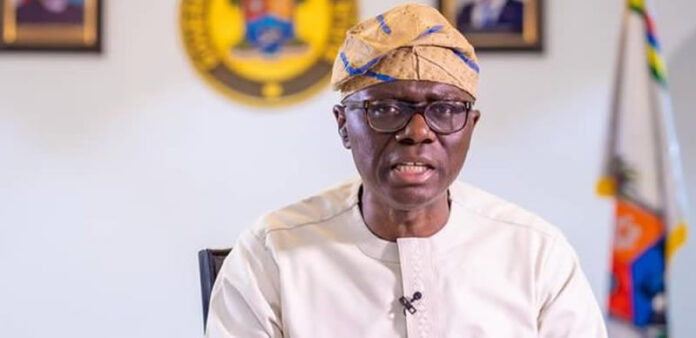
Lagos State Governor, Babajide Sanwo-Olu, on Friday unveiled Nigeria’s first locally-assembled full electric car, aimed at reducing pressure on use of petroleum.

The Hyundai Kona car, manufactured by Stallion Group is 100 percent electric and comes with zero emission, 482km driving range, and can be charged both at home and workplace.

Sanwo-Olu said at the unveiling in Lagos that the electric car was technology on display.

“The future that we see is the future of technology and this is the technology that we are talking about.”

“This is 21st Century technology that has been brought into our country.

“With an innovation of Hyundai Kona, we do not need to put the pressure on what is the pump price of oil again, what is the pump price of petroleum again.

“All the issues and fights that we are having about prices of petroleum going up and the rest of it will be a thing of the past.

“This is a way to go, and it is the future that we are seeing now.

“This is the first electric car that we are seeing and we as the government need to partner with them,” he said.

Sanwo-Olu said there was the need to create an enabling environment for the company to do well, so that it could employ a lot more youths.

The governor said that with the unveiling of the Hyundai Kona electric car, youths would be employed and empowered for greater opportunities.

According to him, the state government will partner with Ibile Oil and Gas and other private organisations to create different charging points in the city, so that people will have where to charge the cars.

“For us, we see a renowned hope, for us we see a tomorrow coming today, for us we see and believe in the Stallion dream,” the governor said.

Sanwo-Olu commended Stallion Group for believing in the Lagos and Nigeria dream, and revamping the moribund asset located along Lagos-Badagry Expressway.

In his address, the Managing Director the Stallion Group, Rohtagi Manish, said that the innovation was a step towards an eco-friendly green Lagos.

Manish said that the material used to assemble Nigeria’s First 100 per cent electric zero emission car was mostly sourced from local resources.

The vehicle, when fully charged for 9hrs 35mins, can go a distance of 482km (equivalent of Lagos to Warri), before it requires charging again.

INEC speaks on postal voting in Nigeria ahead of 2023

INEC speaks on postal voting in Nigeria ahead of 2023

The Independent National Electoral Commissioner (INEC) has weighed in on the debate about Nigeria’s capability to introduce postal voting ahead of the 2023 elections.

In an interview with TheCable, Festus Okoye, a national commissioner, said although the commission is committed to deepening the use of technology in the electoral process, postal voting would require a “functional and robust postal system”.

But an official of the Nigerian Postal Service (NIPOST), who declined to be named because she was not authorised to speak, said the service does not have the infrastructure to support postal vote in the next general election.

Okoye, who is the chairman of INEC information and voter education committee, said the system would require amending the relevant electoral laws.

What is postal voting? Ballot papers are mailed to voters who vote and return by post for onward transmission to the election centres. In the United States where almost half of the voters – 65 million people – voted by mail in the just concluded presidential election, the ballot papers, upon arrival at the processing centres, are photographed, converted to text and sorted.

With just about 20 months left before the next general election in Nigeria, some have argued that postal voting would help in addressing some loopholes in the electoral process especially with regards to violence at the polling units.

Okoye, however, told TheCable that Nigeria’s postal system is “not in the best shape” for electorate to vote by mail, and if that is addressed, another challenge would be amending the electoral act.

He said although the electoral act empowers INEC to determine electoral procedures, the commission is also restrained by parts of the law that prescribe specific routine for the conduct of elections.

For instance, sections 49(1) and 52(3), respectively, require voters to be present at the polling unit and that votes must be cast through open secret ballots with the use of ballot boxes.

Okoye said: “The commission has made elaborate recommendations to the national assembly to amend sections 48, 49,50, 53, 54 and other ancillary provisions to introduce electronic voting machines and other technological solutions in the electoral process.

“The commission will also embark on comprehensive and far reaching update of the existing voters register and the continuous registration of voters. The commission and the Nigerian people are attuned to the deepening of technology in the electoral process.

“We want to introduce electronic voting machines and gradually migrate to Internet voting and the use of other electronic platforms and solutions. Mail-in ballots and postal voting depend on a functional and robust postal system.

“Our postal system is not in the best shape and did not fundamentally upgrade in line with technological changes in the world. Even in advanced democracies, the postal system still struggles to cope with the volume of mail in ballots and postal voting.”

He said the chances of adopting mail-in ballots and postal voting in Nigeria is “rather remote” and will involve “a change in the electoral legal framework”.

‘NIPOST NOT READY FOR POSTAL VOTING’

TheCable was unable to reach Franklyn Alao, NIPOST’s general manager for corporate communications, but an official of the service told TheCable the agency is not ready to be deployed for postal voting.

The official said this is is because of the lack of adequate investment in its operations coupled with security challenges.

She also spoke of the sophistication of the US Postal Service (USPS) which TheCable found out has 31,300 post offices compared to NIPOST’s 955.

She said: “The government has not invested in NIPOST for them to have the capacity to handle that. They have to look at the welfare of our staff. If the staff are not adequately taken care of, they can compromise.

“The US postal service is one of the highest paid organisations in the US. But at NIPOST, we are just collecting the normal civil service salary.

“During our own elections, you know there used to be violence and we are not adequattely protected for that; they can burn down our offices and hijack our mail vehicles along the road. We don’t have the security to handle that for now.”

Another senior member of NIPOST staff told TheCable that voting by mail will be beneficial to many Nigerians and will also lead to a spike in number of votes in elections.

“Mails can be sent to people; they will just do their voting and send it back (and) it will be less stressful,” said the official who also asked not to be named.

“They won’t have to leave the comfort of their home to go and queue up in the sun coupled with the violence in the polling stations.”

The Cable

BREAKING NEWS: Super Eagles Lose Early Lead, Surrender To Sierra Leone In 8 Goals Thriller

BREAKING NEWS: Super Eagles Lose Early Lead, Surrender To Sierra Leone In 8 Goals Thriller

Nigeria’s Super Eagles surrendered a 4-0 lead to Sierra Leone to end the game at 4-4 in an AFCON qualifier on Friday.

The Super Eagles in the first 30 minutes of the match scored four goals, conceeding just one to Sierra Leone before the end of the first half. The second half however saw Sierra Leone closing the gap and ending the match in a draw.

Access Bank Pleads As Nigerians Call For Boycott Following The Freezing Of #EndSARS Protesters’ Accounts

The Petroleum Products Marketing Company, a subsidiary of the Nigerian National Petroleum Corporation, has increased the ex-depot price of Premium Motor Spirit, also known as petrol, to N155.17 per litre from N147.67 per litre.

The PPMC disclosed this in an internal memo with reference number PPMC/C/MK/003, dated November 11, 2020, and signed by Tijjani Ali.

The memo, a copy of which was seen by our correspondent, said the new ex-depot price would take effect from Friday.

The ex-depot price is the price at which the product is sold by the PPMC to marketers at the depots.

In its PMS price proposal for November, the PPMC put the landing cost of petrol at N128.89 per litre, up from N119.77 per litre in September/October.

It said the estimated minimum pump price of the product would increase to N161.36 per litre from N153.86 per litre.

The National Operation Controller, Independent Petroleum Marketers Association of Nigeria, Mr Mike Osatuyi, in a telephone interview with our correspondent, said the over N7 increase in ex-depot price would translate into an increase in pump prices.

He said, “The implication of the increase in the ex-depot price is that there is going to be an increase in the pump price. We are expecting the pump price to range from N168 to N170 per litre.

“Crude oil price is going up,” he said, noting that the Federal Government has fully deregulated petrol prices.

Following the deregulation of petrol prices in September, marketers across the country adjusted their pump prices to between N158 and N162 per litre to reflect the increase in global oil prices.

Petrol price band had also risen from N121.50–N123.50 per litre in June to N140.80-N143.80 in July and N148-N150 in August.

The Minister of State for Petroleum Resources, Timipre Sylva, said in September that the government had stepped back in fixing the price of petrol, adding that market forces and crude oil price would continue to determine the cost of the product.

BREAKING NEWS: INEC Fixes Date For All Pending Bye-Elections

BREAKING NEWS: INEC Fixes Date For All Pending Bye-Elections

The Independent National Electoral Commission (INEC) has fixed December 5, 2020 for pending bye-elections across the country.

The announcement was made via its official Twitter account. See post below:

Petrol price goes up again from today

Petrol price goes up again from today

Nigerians will pay between N168 and N170 for a litre of petrol from today as the new depot price for the product goes into effect.

The Petroleum Products Marketing Company (PPMC), a subsidiary of the NNPC, in a memo on 11 November set the ex-depot price of petrol to N155.17 per litre from N147.67 per litre.

The new price becomes effective today, according to the memo signed by Tijjani Ali.

An official of the Independent Petroleum Marketers Association of Nigeria, Mr Mike Osatuyi, said the over N7 increase in ex-depot price would translate into an increase in pump prices.

“The implication of the increase in the ex-depot price is that there is going to be an increase in the pump price. We are expecting the pump price to range from N168 to N170 per litre”.

Osatuyi spoke with The Punch.

The ex-depot price is the price at which the product is sold by the PPMC to marketers at the depots.

Government Declares “Adire” As Official Fabric For School Uniforms

Government Declares "Adire" As Official Fabric For School Uniforms

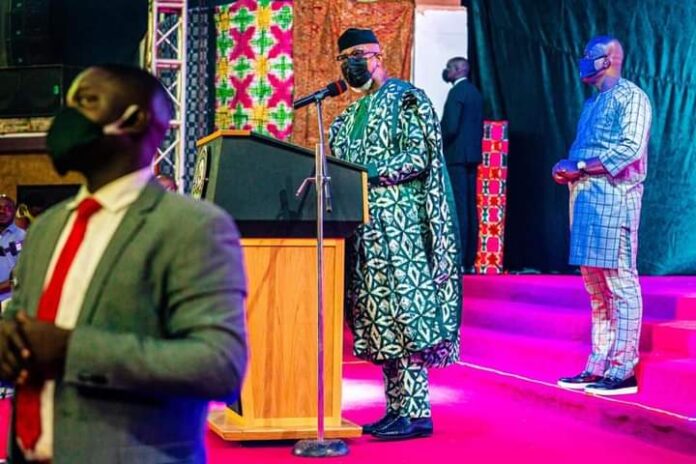
Ogun State Governor, Dapo Abiodun, on Thursday, declared that adire fabric would become official school uniform in all public schools in the state starting from next term.

The governor also called on the Federal Government to adopt adire as attire for national events.

Abiodun made the call at the official launch of Ogun Adire Digital Market Place at the June 12 Cultural centre, Kuto, Abeokuta.

According to the governor, the gesture is to further promote the rich culture of the nation to the outside world.

He also advocated the making of ceremonial dress from Adire for the nation’s athletes taking part in International Sporting activities.

He said, “For us in Ogun State and starting from next term, plans are on to make adire an integral part of school uniform fabric for our public primary and secondary schools.

“Plans have reached an advanced stage to make Adire an important aspect of everyday life, as all top government functionaries in the State now wear Adire on Fridays, just as plans are underway to make the Adire part of School uniform.

“It would empower more people and further stimulate the Adire economy.

“I want to call on all stakeholders in the information, culture, and tourism sectors to partner with us in promoting this national heritage.

“I want to particularly call on our Honourable Minister of Information and Culture to help promote the Adire at the National level. For example, members of the Federal Executive Council and other top government functionaries can adopt the Adire for National events.

“Our Foreign Missions could also adopt the Adire fabric as a cultural symbol that will further project our rich culture to the outside world. The same thing could also be done by our Federal Ministry of Youth and Sports by making the ceremonial dress of our athletes from local fabrics such as our Adire.

“This will go a long way in promoting the local content and give expression to President Muhammadu Buhari’s Administration’s “produce what we use” and “grow what we eat” policies.”

Presidential Task Force Says #EndSARS Protest Hindered The Distribution Of COVID-19 Palliatives

Presidential Task Force Says #EndSARS Protest Hindered The Distribution Of COVID-19 Palliatives

Sani Aliyu, coordinator of the presidential task force (PTF) on COVID-19, says the #EndSARS protests affected the distribution of palliatives.

Speaking at the PTF briefing in Abuja on Thursday, Aliyu said the violence that trailed the protests delayed distribution of relief materials donated by the private sector coalition against COVID-19 (CACOVID)

Nationwide protests against police brutality under the #EndSARS movement had lasted for about two weeks in October 2020.

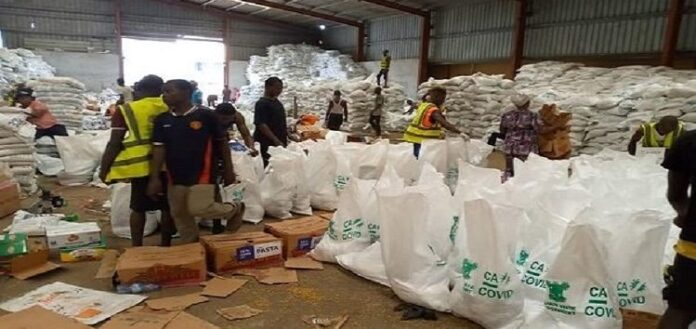
However, the protests — which began as peaceful demonstrations — degenerated into a crisis as hoodlums attacked government and private properties, while residents invaded warehouses and carted away COVID-19 palliatives.

Aliyu, who commended CACOVID for its efforts, lamented the looting of warehouses which he said affected distribution of the materials.

“I also wanted to briefly talk about the recent violence and looting that followed the #EndSARS demonstrations. We know this has affected CACOVID and their ability to deliver palliatives,” he said.

“Nevertheless, we would like to acknowledge and commend CACOVID for their efforts in donating palliatives to the public.

“Through their generosity and altruism, they have resourced significant amount of money in order to contribute to the palliative response in the country.”

Aliyu, in his speech, said CACOVID has kept careful and transparent records of the distribution process.

“We can confirm that the donation initiative is currently 95 percent complete, even though we have seen a lot of looting of some of the warehouses under the state governments,” he said.

“State governments that have received the donations are responsible for the distribution of these palliatives to their local government areas.”

Aliyu, thereafter, pleaded with beneficiaries of the palliatives to cooperate with the state and local governments.

“We welcome the plan by CACOVID to provide detailed information on the resources that they have put in, not only for the palliative exercise but also for the donations they have made to government and other parts of the COVID response,” he added.

FACT CHECK: Did FG earmark N380bn for prosecution of Boko Haram suspects?

FACT CHECK: Did FG earmark N380bn for prosecution of Boko Haram suspects?

On Thursday, news that the federal government had earmarked N380 billion for the prosecution of Boko Haram suspects went viral on social media. The information, which was shared via a photo taken from a television programme that featured the budget defence session of the national assembly, had the message: “N380 billion projection for prosecution of Boko Haram suspects”.

As the photo was shared across social media platforms, a similar caption was used by different individuals.

The tweets, one of which got over 2,500 likes and nearly 2,000 retweets, compared the said amount to a proposed allocation made to the Academic Staff Union of Universities (ASUU) for revitalisation of universities across the country.

“N380 billion earmarked in the 2021 Budget for the prosecution of Boko Haram suspects. We gave ASUU N20billion to revitalize 90 public universities in Nigeria. Psychological test on our ruling elites is key,” one of the tweets read.

2021 BUDGET OF ECONOMIC RECOVERY AND RESILIENCE

On October 8, President Muhammadu Buhari presented the 2021 budget proposal to a joint session of the national assembly. This was done after the federal executive council (FEC) approved N13.09 trillion for the 2021 fiscal year.

The 2021 budget termed: “Budget of Economic Recovery and Resilience” is expected to accelerate the pace of Nigeria’s economic recovery, promote economic diversification, enhance competitiveness and ensure social inclusion.

In the proposed budget, total federally distributable revenue is estimated at N8.433 trillion, total revenue available to fund the 2021 federal budget is estimated at N7.886 trillion. This includes grants and aid of N354.85 billion as well as the revenues of 60 government-owned enterprises.

The 2021 Budget deficit (inclusive of Government Owned Enterprises and project-tied loans), is projected at N5.20 trillion. The deficit will be financed mainly by new borrowings totaling N4.28 trillion, N205.15 billion from privatisation proceeds and N709.69 billion in drawdowns on multilateral and bilateral loans secured for specific projects and programmes.

DID FG EARMARK N380 BILLION FOR PROSECUTION OF BOKO HARAM SUSPECTS?

Checks by TheCable showed that there is no evidence to support the news of N380 billion earmarked for prosecution of Boko Haram suspects. Documents from the budget office provided a breakdown of projects under various ministries for the 2021 fiscal year.

Of the N20.2 billion earmarked for the federal ministry of justice, a total allocation of N8.2 billion was proposed for activities under the ministry’s headquarters with a project which has code ERGP17155226 named “prosecution of prison inmates and decongestion of correction centres nationwide”.

For the project, N380 million was earmarked. Other projects in the section include “prosecution of maritime/offshore offences” with N275 million earmarked; “justice sector reform, decentralization of correctional services centre” with a proposed N375 million fund; among others.

BUDGET DEFENCE AND SENATE SITTINGS

Although the project on “prosecution of prison inmates and decongestion of correction centres nationwide” did not focus on Boko Haram, findings from the senate budget defence committee showed that the project is meant for prosecution of Boko Haram suspects.

Speaking before the senate committee on judiciary, legal and human rights matters, on Monday, Dayo Apata, the solicitor-general of the federation, said more lawyers will be needed for the prosecution of 3,000 inmates.

Apata, who was accompanied by Abubakar Malami, minister of justice and attorney-general of the federation, said the ministry of justice has proposed N2 billion to cover its legal services for the 2021 fiscal year.

Ajibola Basiru, the senate spokesperson and member of the panel, had earlier quizzed the proposed allocation over overlapping details.

Reacting to the development while addressing journalists, Opeyemi Bamidele, chairperson of the senate panel, had said more explanation is needed on the proposal.

“There is a need for further explanation and documentation on the figure we have before us,” he said.

“The Boko Haram thing is a war of some sort being prosecuted by Nigeria. It is not just the ministry of justice, all of our armed forces, they are doing a lot of extra budgetary spending because when you are prosecuting a war you deal with situations as they arise.”

CONCLUSION: The claim that federal government earmarked N380 billion for the prosecution of Boko Haram suspects is FALSE. The project on “prosecution of prison inmates and decongestion of correction centres nationwide” has a budget proposal of N380 million.

The Cable