The Federal Government on Thursday announced the completion of the first phase rehabilitation of the Third Mainland Bridge and a planned 18 hours total closure of the bridge.
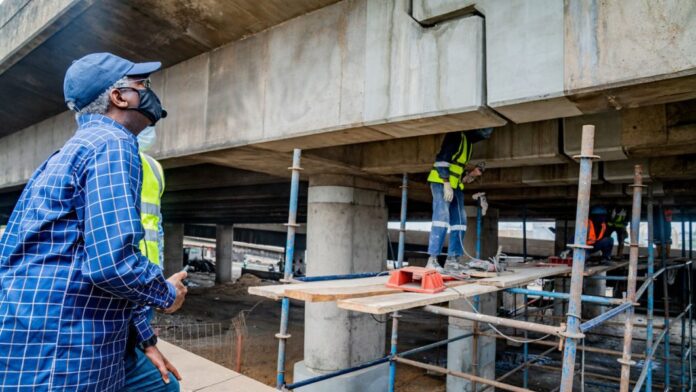
The Federal Controller of Works in Lagos, Mr Olukayode Popoola during an inspection of the bridge said that the fixing of six expansion joints on the Oworonshoki bound carriageway had been completed.
He commended road users for their patience.
Popoola said that debris would be cleared from the section and construction would move to the Island-bound carriageway, warranting a total closure of the bridge for 18 hours.
He said that the 18 hours closure would begin from midnight on Saturday through Sunday to move construction materials to the new portion and return to the partial closure before Monday morning.
He said by midnight of Sunday, the total closure would be removed and the partial closure would return, which gives priority for huge traffic in and out of the Island.
“The diversions will still be at the same previous points.
” Work is to commence on the Island-bound lane of the bridge with the partial closure of Adekunle to Adeniji Adele Phase B.
“The repair work is to commence between 22nd of November, 2020 and 22nd of February, 2021 for a duration of three months.
“Consequently, Adekunle to Adeniji-Adele part of the bridge on the Island-bound lane measuring 3.5 Kilometres will be partially closed throughout the period of repair works and there will be a diversion of traffic,” he said.
He listed the traffic diversion timings and routes which had not changed from the existing schedule given by the traffic regulatory agencies when the construction started in July.
Popoola explained that rehabilitation works on the first section dragged for an additional one month beyond October due to the slowdown caused by the EndSARS protests and increased rainfall.
“On behalf of the Honorable Minister of Works and Housing, Mr Babatunde Raji Fashola (SAN), I thank Lagosians and the motoring public for their cooperation during the last four months that the rehabilitation work has started,” he said.
Mr Paulo Prono, the Executive Director, Borini Prono, contractors on the project, promised that the firm would do its best to complete rehabilitation of the second phase of the Third Mainland Bridge ahead of schedule.
Prono said that the steel for the construction was ready and three expansion joints were also ready.
He said they were on the ground for immediate commencement of installation on the Island-bound carriageway.
“We are used to the job and we would do better,” he said.
The FRSC Lagos Sector Commander, represented by Mr Zango Matthew, Deputy Corps Commander Operations, Lagos, appealed for understanding of road users, promising adequate traffic regulations.
“Our men would always be on the ground 24/7 to ensure the free flow of traffic,” he said.
NAN reports that the Third Mainland Bridge is going through repair.
It was partially shut on July 24 for the repair.
The repair was expected to last for six months.
It was divided into two phases of three months on each carriageway, starting with the Oworonsoki-bound carriageway.
The 11.8km bridge is the longest of the three bridges connecting Lagos Island to the mainland.
The bridge starts from Oworonshoki, which is linked to the Apapa-Oshodi Expressway and the Lagos-Ibadan Expressway and ends at the Adeniji Adele Interchange on Lagos Island.
Constructed in 1990, the bridge was adjudged as the longest in Africa until 1996 when the Oct. 6 Bridge in Cairo was completed.
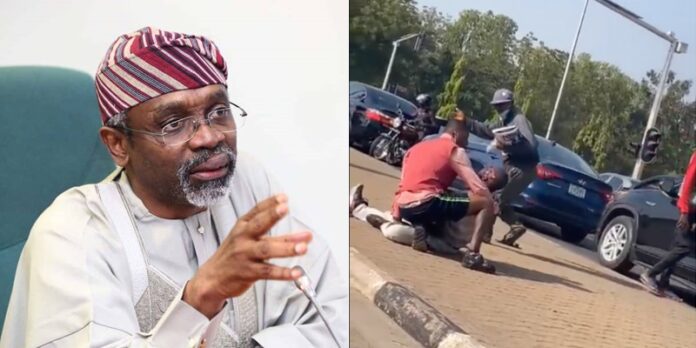
A security aide to the Speaker of the House of Representatives, Femi Gbajabiamila, has allegedly shot a newspapers vendor in the head.
The incident, which occurred at the Federal Secretariat, Abuja, around 3pm on Thursday, caused panic in the area.
The victim identified as Ifeanyi Okereke was subsequently rushed to the National Hospital by his brother and some police officers, where he reportedly died.
Punch correspondent learnt that the shooting incident happened when Okereke and other street vendors selling on the Shehu Shagari Way, Three Arms Zone, flocked around the convoy of the speaker who was said to be in the habit of giving out money anytime he passed them.
The Chairman of the Newspapers Vendors Association in FCT, Etim Eteng, told reporters that Okereke died at the National Hospital shortly after the incident, adding that his wife gave birth to a baby on Thursday morning.
“The speaker called to give vendors money and the security aide just shot him (Okereke) in the head. He was rushed to the National Hospital where he died some hours later,” he said on the telephone.
A vendor, Abdullahi Seidu, said the unidentified trigger-happy security aide could not explain why he shot the deceased when confronted by Gbajabiamila.
Seidu said, “The vendors and other hawkers usually run after VIPs and lawmakers whenever they see them. In fact, they can identify the big men by their vehicles. So, the vendors flocked around the speaker’s convoy and he gave them some money but a gunshot just went off.
“The bullet hit Ifeanyi in the head and he fell down. The officer who fired the gun said he wanted to fire in the air.”
The National Hospital spokesman, Dr Tayo Haastrup, confirmed that Okereke died of gunshot injuries.
“He died of gunshot injuries and would be moved from the Trauma Centre to the mortuary shortly,” he said.
The speaker could not be reached for comments on the incident.
Repeated calls made to his Special Adviser on Media and Publicity, Lanre Lasisi, rang out.
He had yet to reply an SMS seeking his principal’s reaction as of press time on Thursday.
The Federal Capital Territory police spokesperson, ASP Mariam Yusuf, could not confirm whether the incident was reported to the police.
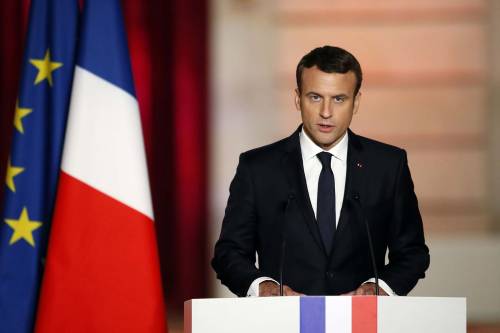
Emmanuel Macron, President of France, has asked Muslim leaders in the country to accept the “charter of Republican values” as part of efforts to stop radical Islam.
France has in recent times recorded beheadings and stabbings by Muslim immigrants, who disagree with the freedom of expression, which allows French citizens draw cartoons of Prophet Muhammad.
The French Council of the Muslim Faith in response to Macron’s request has agreed to create a council which will issue Imams with official accreditation that can be withdrawn at any time.
The charter states that Islam is a religion and not a political movement, while also prohibiting “foreign interference” in Muslim groups in France.
As part of his efforts to keep France free from radical Islam, Macron announced restrictions on home-schooling and harsher punishments for those, who intimidate public officials on religious grounds, giving children an identification number under the law that would be used to ensure they were attending school.
Parents, who break the law could face up to six months in jail as well as large fines and a ban on sharing the personal information of a person in a way that allows them to be located by people, who want to harm them.
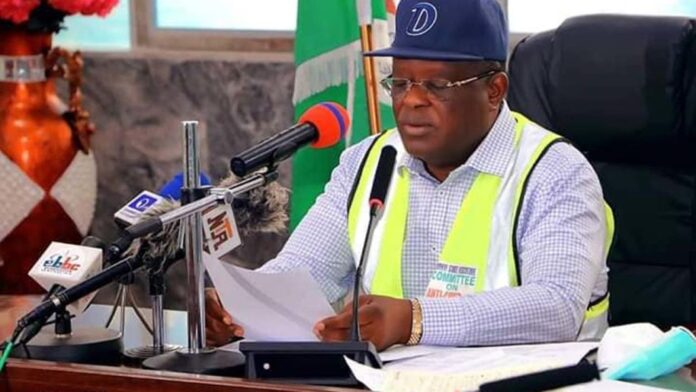
The Peoples Democratic Party (PDP) said that the strength of the party in Ebonyi and southeast was intact in spite of Governor Dave Umahi’s defection to the ruling party.
National Chairman, Mr Uche Secondus said this in his remark at the 90th National Executive Committee (NEC) meeting of the PDP held at its national headquarters, wadata plaza, on Thursday in Abuja.
Secondus said that the PDP refused to be blackmailed on reasons given by Umahi for his defection to the All Progressives Congress (APC).
“You must have read the eventual defection of Umahi to the ruling APC on Tuesday and his provocative reason for an allegation of injustice against South East by the party.
“We have refused to join issues with him in any way but we cannot bow to any blackmail.
“What I can report to NEC is that the strength of our party in Ebonyi state and southeast is intact and the NWC has taken necessary steps to protect and guard it.
“The real season that informed this decision will soon be exposed,” the national chairman said.
Secondus, who briefed the NEC on PDP performance in Edo and Ondo governorship elections, said that the party was liaising with its members in the National Assembly to ensure that a fraud-free law was put in place ahead of 2023.
“Within our family also, we are putting all hands on deck to ensure we enter the next election stronger as one united and harmonious family.
“To achieve this, I solicit the full and undiluted cooperation of NEC.
Secondus added that the NWC was continuing in its extensive consultations with critical stakeholders to ensure that no stone was left unturned for PDP to return to the presidency in 2023.
On EndSARS protest, Secondus advised the Federal Government to address the fundamental issues raised by the youths rather than adopting strategies to intimidate perceived leaders of the peaceful protest.
He said that peaceful protest was a right in every democracy and guaranteed by the country’s constitution.
The chairman who decried the manner in which the Federal Government was handling the affairs of the youth, said that PDP must work hard to ensure that Nigerian youths were once again, given a voice in the country.
“Our party will, as a matter of policy, restore the hope of our youths.
“We hereby invite the Nigeria youths to avail themselves of the ample opportunity in our party to participate in the political process ahead of the 2023 election,” he said.
The Chairman, PDP Governors Forum and Governor of Sokoto State, Aminu Tambulwa, said that the presence of 15 PDP governors at the meeting was a testimony that they were working together for the unity and stability of the party.
Tambulwal said that the PDP governors were committed to good governance and providing leadership in their respective states.
“We will continue to make our party proud, continue to make our electorate proud and we are repositioning our party for the future with the last drop of our blood.”
The Senate Minority Leader, Sen. Enyinnaya Abaribe, said that the PDP members in the National Assembly would ensure that any legislation to gag social media was not passed into law.
Abaribe said that the PDP lawmakers would also work for the amendment of the Electoral Act to ensure that electorate votes always counted.
“We also want to use this opportunity to appeal to the national party that as we work towards the 2023 elections, party discipline will be most important to us.
“Our members need to always be sure that they can depend on the national party for protection in and wherever they are,” Abaribe said.
The leaders of the party at the NEC meeting during secondus remarks displayed placards with different inscriptions such as #Stop borrowing, #Stop mortgaging our future, and #Account for borrowed Funds.
Others were #Stop the Persecution of #Endsars Youth Protesters, #Respect Nigeria Youths; #Give Nigeria Youths a Voice and #No to censoring of Social media.
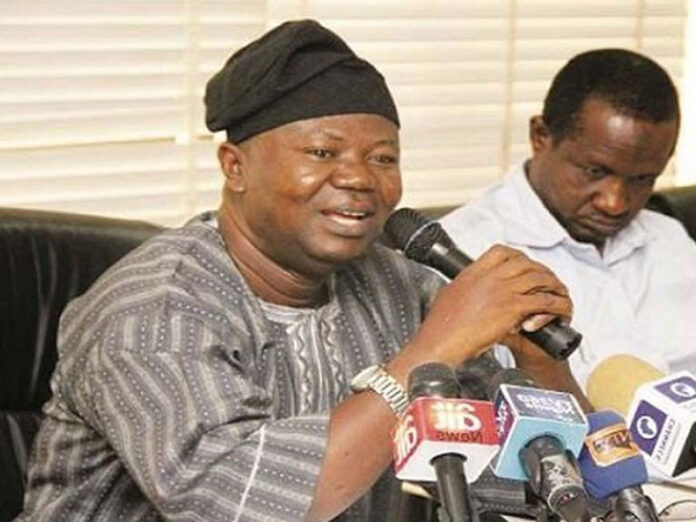
BENIN Zone of the Academic Staff Union of Universities (ASUU), yesterday, said the Federal Government was using hunger to compel its members to enroll in the Integrated Payroll and Personnel Information System (IPPIS).
It expressed doubt over Minister of Labour and Employment, Dr. Chris Ngige’s capacity and commitment to resolve the issues that led to the ongoing strike in the country’s tertiary institutions, due to Ngige’s approach in the handling the strike, which it said, might not end any time soon.
In a statement issued in Benin City by the Union’s Zonal Coordinator, Prof. Fred Esumeh, the union said that since the deployment of the University Transparency and Accountability Solution (UTAS), Ngige has been talking like a spoiler and anti-ASUU agent rather than a conciliator.
Esumeh said by the provisions of the law Ngige, was be playing conciliatory role during industrial unrest, calm tensed situation and bring about a peaceful resolution, but he has chosen to be the mouthpiece of other unions that were not part of the 2019 MoA.
He accused the government of introducing the IPPIS to divert public attention from the lack of sincerity and will to implement agreement reached with ASUU, insisting on the union’s rejection of IPPIS, given its violation of the University Autonomy Act and its inadequacies to carter for the peculiarities in the university system.
He maintained that on account of IPPIS and UTAS imbroglio, government had withheld salaries of ASUU members for months, even when the union met with timelines agreed with government to develop UTAS amid challenges of the COVID-19 pandemic.
ASUU also alleged that the Federal Government represented by the Minister of Finance, Zainab Ahmed, Ngige and the Accountant General of the Federation (AGF) of deploying hunger to coerce its members to enroll on the IPPIS platform.
It added that this move of government smacks of impunity and it is undemocratic in a democratic setting and reminded Ngige that democracy, which Nigerians and himself were now enjoying thrived on the rule of law, insisting that adherence to the law was sacrosanct.
The union, therefore, urged Ngige to calm frayed nerves of its members and facilitate the payment of their salaries instead of playing to the gallery and violating the laws of the land, especially as they affect university education.
Shareholders, economists and securities expert have reacted angrily to Federal Government’s plan to plough N200 billion unclaimed dividends into its coffers, just as the House of Representatives express the concern that many shareholders have abandoned their dividends.
The Federal Government has, in a section of the 2020 Finance Act proposed the establishment of a Trust Fund where unclaimed dividends would be ploughed.
But investors, yesterday, urged President Muhammadu Buhari to withhold assent to the bill until the contentious section was expunged.
The new provision conflicts with the previous one in Companies and Allied Matters Act (CAMA) that guarantees a 12-year statute of limitation on unclaimed dividends, after which the fund would be ploughed back into the company that declared it.
At a 2020 Finance Bill webinar organised by KPMG in collaboration with the ministry of finance, budget and national planning last week, the Finance Minister, Zainab Ahmed, had said the funds would be owed as perpetual debt to shareholders.
But investors and experts insisted that unclaimed dividends should be reinvested in companies as retained earnings to grow their businesses and generate employment.
They argued that if a trust fund must be created, it should be under the supervision of a leading private sector group, rather than being put in the coffers of the Federal Government.
Their opposition was based on the claim that most assets managed by government officials in the past were misappropriated.
They also contended that the takeover of unclaimed dividends by government was not necessary since market regulators, through various initiatives, were taking steps to ensure that unclaimed dividends were reduced to the barest minimum.
Investors suggested that instead of creating a trust fund for unclaimed dividends, government should simplify letters of administration for deceased family, for instance, and make the process of claims less cumbersome for investors.
PUBLICITY Secretary of the Independent Shareholders Association, Moses Igbrude, said creating a trust fund is disincentive to investment, insisting that previous trust funds were marred by corruption.
“Government has forgotten that it has taken over 30 per cent tax from companies that generate the dividends on profit before tax and 10 per cent from the individual investors through withholding tax.
“What moral right do you have to take the fund that does not belong to you? In Section 39(f) of the finance bill it stated that all unclaimed dividends that have remained unclaimed for a period of not less than 12 years shall lapse into government revenue and shall be transferred from the unclaimed dividends trust fund to the federal account as federal revenue.”
He said it was not only unacceptable but a disincentive to investment and appealed to the National Assembly to reject and expunge the section of the bill because, from all indications, the trust fund was designed to rob shareholders of their hard earned money.”
Government, he said, should reconsider its stance to avoid eroding investor confidence in the market, especially now that shareholders have not recovered from losses occasioned by global financial crisis.
AN economist, Prof. Pat Utomi, said it was unfair for the trust fund to be managed by government agencies. He suggested that it should be handed over to a minority group for the welfare of the people.
“We can have a public trust fund in which we have a nominated minority group or leading private sector organisation that can deploy the fund to sponsor activities like arts and create employment for the people like the American Chamber of Commerce did.
“These groups are not governmental agencies; they advance public welfare with the use of private sector funds instead of having another government agency and setting up one government trust fund.”
Professor of Economics, Olabisi Onabanjo University, Ago-Iwoye, Ogun State, Prof. Sheriffdeen Tella, said government should have no business in creating a trust fund with such dividends, since the companies that declared them still exist.
He said: “The unclaimed dividend should go back to the companies who will regard it as retained earnings, plough it back into their businesses to grow their output and income and in the process generate employment.
“Those shareholders, if they still exist, are also likely to benefit in future profits. The companies actually need such money in this period of hardship.”
He advised government that its role should be to make sure the companies plough back the money into their respective businesses through guidance, monitoring and reporting by the capital market apex institution and shareholders association.
Similarly, the Managing Director of GTI Securities, Amos Aledare, said the dividends should return to the companies to increase their output.
He described as inappropriate for a trust fund to be created by government, saying it would not be effectively managed.
He also contended that setting up a trust fund would create another opportunity for wasteful spending, adding that the unclaimed dividends should go back to the companies.
“It also aligns with the intention of the original investors to put their money with the companies who will use it to enhance profitability. When the money goes to these companies, it will grow their reserves for the benefit of its shareholders.
“It will be like a new recapitalisation for some of these companies, because it will strengthen their balance sheets,” he said.
HOUSE of Representatives, yesterday, said the huge unclaimed dividend is not a good picture of the state of the capital market and should be a source of concern to capital market watchers.
It recounted that, in 1999, the value of unclaimed dividends was put at N2.09 billion; N100 billion in 2017; N120 billion in 2018, but at the close of 2019, it had risen to N158.44 billion.
Chairman, House Committee on Capital Markets and Institutions, Babangida Ibrahim (APC, Katsina) stated this during an investigative public hearing on ‘The Need to Investigate the Rising Value of Unclaimed Dividends, Unremitted Witholding Tax on Dividends and their Attendant Effects on Nation’s Economy,” held at the National Assembly Complex, Abuja.
Ibrahim described accumulated unclaimed dividends as a major challenge to the development of the Nigerian Capital market, stating that, despite efforts of capital market regulators, the issue of huge unclaimed dividends remained a lingering problem, adding that unclaimed dividend adversely affect the economic development of Nigeria, including investor’s confidence, decrease in the availability of long-term capital for economic development and the likely volatility in the regulation of the capital market.
He said: “We are aware of measures that have been taken by capital market regulators in the past to address the problem but we can all see that the problem remains and the situation is worsening by the day.
“Some of the measures include e-dividend, dematerialisation of share certificates, publication of names of owners of unclaimed dividends, etc. All these measures are very commendable, especially the fact that they are primarily aimed at ensuring that shareholders get the benefits of their investment.”
Director General of SEC, Lamido Yuguda, had said that about N29 billion of unclaimed dividends had been claimed by investors through the introduction of regularisation of multiple accounts.
SEC introduced the regularisation of multiple accounts in 2015 where it requested all shareholders with multiple accounts to harmonise them by filing e-dividend mandate forms and submitting same to their banks or stock brokers for onward transmission to their respective registrars
The SEC boss disclosed that the Commission was working on an initiative to ensure consolidation of multiple accounts, which involves verification, and isolation of the account beneficiaries with a deadline of first quarter of 2021.
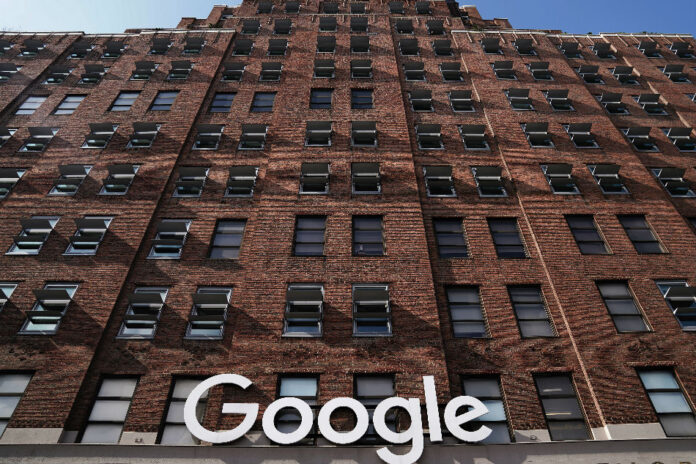
Internet giant, Google, said Wednesday it would be partnering with commercial banks and credit unions starting next year to allow users to manage mobile-based accounts through the Google Pay platform, in the latest move by tech giants into consumer finance.
“People do almost everything on their phones today, but for many, the way they save, pay and engage with their bank has remained unchanged,” said Caesar Sengupta, vice president of Google Payments.
“That’s why we’re working with trusted financial institutions to create Plex, a new mobile-first bank account integrated into Google Pay.”
The Plex Accounts for US consumers will be offered with no monthly fees, overdraft charges or minimum balance requirements, according to Google, which said 11 banks and credit unions were participating.
Google at the same time said it was updating its Google Pay app to help users better organize payments to people and businesses.
“Instead of showing a stack of cards or a long list of transactions, the new Google Pay app focuses on the friends and businesses you transact with most frequently,” Sengupta said.
The initiative comes with tech giants moving deeper into personal finance with person-to-person payments and co-branded credit cards.
Apple recently launched its own branded credit card with Goldman Sachs which integrates into its Apple Pay application. Amazon, which has its own branded credit card, has discussed offering its own checking accounts but has not followed through with the plan.
A senior security staff in the Nigerian Embassy in Germany has been suspended for allegedly soliciting for sex from a woman before renewing her passport in a viral video.
“The Embassy of Nigeria in Germany announced today that it has suspended with immediate effect a local staff (security unit),” the embassy tweeted on Tuesday.
While the embassy did not give his name for “legal reasons,” the embassy noted the official had been “in connection with allegations of sexual abuse and other serious criminal activity.”
The suspension came after a footage of the official identified simply as “Mr Martin” was caught with his pants down in a hotel room after he had allegedly asked the unnamed lady to have sex with him before he could release the passport.
“Let me explain, please. Please, it is not like that,” a shocked Mr Martin said on camera.
When asked to explain, he kept saying “please, please, please.”
The voice behind the camera accused Mr Martin of several unwanton sexual encounters he had in the past in exchange for delivering his official duty.
“Your cup is full, Martin. Your time is up,” the voice said.
The embassy said “investigation is taking place with all the urgency and diligence that this very serious situation demands.”
“When due process is complete, any guilty party can expect to face the full weight of the law. Our heartfelt sympathies are with any innocent victims of abuse,” it said.
Billionaire businessman Femi Otedola has jokingly asked his daughter Temi Otedola and her superstar boyfriend, Oluwatosin Ajibade also known as Mr Eazi when they will be getting married.
The father of four popped the question in the comment section of Temi’s post about her new podcast on Instagram.
Temi on Tuesday announced that she will be launching a podcast with Mr Eazi soon.
He also referred to her with the name ‘Moremi’, the role she played in ‘Citation‘, Kunle Afolayan recently released movie.
Otedola said “Moremiii, when una go marry.”
Temi, 24, has been in a romantic relationship with Mr Eazi since 2017.
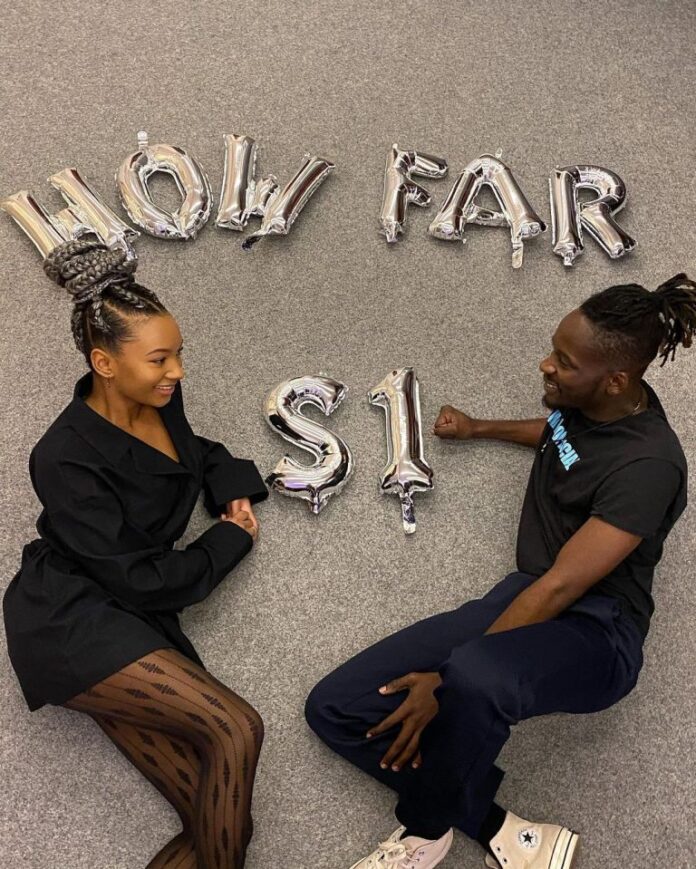
The podcast is called “How Far” and will launch this Friday, November 20th.
Temi made the announcement on her official page saying,
We started a podcast!!! Me and the Don @mreazi new podcast – HOW FAR – launches this Friday. You’ll be able to listen to our weekly conversations via Apple Podcasts, Spotify, Youtube and anywhere you listen to podcasts. It’s about to be a madness….
Sometime after midnight on October 21, Elisha Sunday Ibanga answered a phone call from his older brother’s number.
The person on the other end of the line — a stranger — broke the news that Ibanga’s brother, Victor, had been shot dead at the Lekki toll gate, in Lagos, Nigeria, where he had been peacefully protesting against police brutality earlier that night.
“The person told me that the police took his body away,” Ibanga, 24, told CNN.
An eyewitness to Victor Sunday Ibanga’s death told CNN the 27-year-old entrepreneur was shot in the head during the protest.
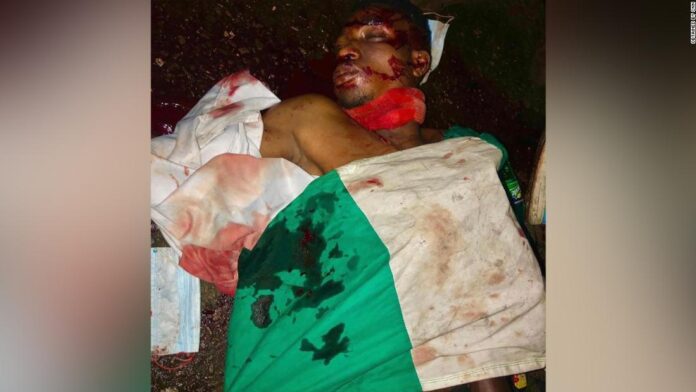
CNN has obtained and geolocated a photograph of Victor’s body lying in a pool of blood and wrapped in the white and green of the Nigerian standard — one of the same flags gripped by fellow protesters earlier in the evening as they sang the country’s national anthem. Ibanga confirmed the photograph is of his brother.
The Ibangas are one of several families yet to locate the bodies of their missing loved ones — protestors at the toll gate — who dozens of eyewitnesses say were shot at, first by members of the Nigerian army and then hours later by police. Eyewitnesses told CNN they saw the army remove a number of bodies from the scene.
What happened on October 20, and into the early hours of October 21, at the eight-lane Lekki toll gate — a key piece of Lagos’ road network — has stunned the country.
The protesters who were present have told CNN it was a “massacre” with multiple people killed and dozens wounded. But local authorities have downplayed that account.
Lagos State Governor Babajide Sanwo-Olu, admitted to CNN that footage showed uniformed soldiers firing on peaceful protesters but claimed only two demonstrators were killed. But, he then said there was “not a scratch of blood” at the toll gate when he visited. The governor said no families had approached authorities saying they were missing relatives.
In the immediate aftermath of the shooting, the army denied any involvement, describing reports of the incident as “fake news,” before backtracking and saying that soldiers were present but fired their weapons in the air and used blanks, not live rounds.
CNN’s calls to the Nigerian army have not been returned. But on November 14, during a judicial inquiry into the shooting, army representative Brigadier Ahmed Taiwo said, “There’s no way officers and men will kill their brothers and sisters. I repeat no way. We have those who constantly seek to drive a wedge between us and between the citizens of Nigeria…”
The army also said at the hearing that it was the governor who called soldiers to the scene because the police were overrun. The governor has denied this, saying he does not have the authority to call in the army. The army has continued to restate that they did not fire live rounds.
But an investigation by CNN into the disputed events has cast doubt on authorities’ shifting and changing statements.
Evidence of bullet casings from the scene match those used by the Nigerian army when shooting live rounds, according to current and former Nigerian military officials. Verified video footage — using timestamps and data from the video files — shows soldiers who appear to be shooting in the direction of protesters. And accounts from eyewitnesses establish that after the army withdrew, a second round of shooting happened later in the evening.
Since Elisha Sunday Ibanga learned of his brother’s death, he has been visiting hospitals in a desperate search for his remains.
“My mother, my sisters, all my family are in prayer, just to see if we can find out and know where my brother’s dead body is,” he said.
The bodies of other protesters are nowhere to be found.
Peace Okon, 24, hasn’t seen her younger brother Wisdom, 18, since he went to the protest the night of the shooting.
“He just came back from work on that Tuesday, ate his food and went there,” Okon told CNN.
She started worrying when he didn’t arrive home that night. By the next morning, Okon was out searching for him. “I’ve gone to hospitals, I’ve gone to police stations, I’ve gone to everywhere. I can’t find him,” she said.
Her brother had only moved to Lagos a few weeks before the protest — Okon had helped him find a job as a cleaner at a bank. She says he didn’t know anyone at the protest and had never been to one before.
Okon said she wants the Nigerian authorities to tell her if her brother is alive and detained or dead.
The shootings at Lekki toll gate followed weeks of “#EndSARS” protests against police brutality that had burst onto the streets of cities across Nigeria.
For almost a fortnight, thousands of young Nigerians mostly under 30 — a demographic that makes up 40% of the country’s population — protested, with calls for an end to the Special Anti-Robbery Squad, a police unit widely and repeatedly accused of kidnapping, harassment and extortion.
Police had agreed to disband the controversial unit but protests continued. It would be the fourth time it was being disbanded.
There were peaceful marches, candlelight vigils, multi-faith prayer sessions and DJ performances that attracted backing and solidarity from celebrities, the Nigerian diaspora and supporters around the world. The movement quickly widened beyond police brutality to other grievances — capturing the frustrations of a young population demanding an end to bad governance in the oil-rich country.
Lekki, a relatively affluent suburb of Lagos, and the toll gate became a focal point of the movement.
However, about 10 days into the protests, the demonstrations were hijacked by “thugs and sponsored hoodlums” who attacked protesters, causing deaths and injuries, according to Amnesty International Nigeria.
In response, on October 20, hours before the shooting, Governor Sanwo-Olu imposed a strict curfew starting at 4 p.m. following looting and vandalism in other parts of the state.
It was later moved to 9 p.m. to allow commuters to get home. The timeline for when the curfew was imposed has become a point of contention between the Governor and the military. The army said their soldiers were unaware of the change to the later time, according to the army spokesperson’s testimony to the eight-person judicial panel on November 14.
For 24 hours, only essential service providers were to be allowed on the streets of the 20-million strong city.
Testimony from dozens of eyewitnesses and family members interviewed by CNN and a forensic examination of hours of video and dozens of photographs captured before, during and after the two shooting incidents show how a fledgling protest movement was all but extinguished by the very thing Nigerians were demonstrating against.
Less than three hours after the original curfew time came into effect, army trucks left the Bonny Camp barracks on Victoria Island and headed towards the toll gate plaza and the protesters, according to videos reviewed by CNN.
Two eyewitnesses told CNN they saw soldiers arriving in a Toyota Hilux pickup truck with “OP Awatse” written on it — the name of a joint military task force that operates in Lagos State.
Videos examined by CNN show the army trucks approaching the protesters from both sides of the toll gate — barricading them in.
DJ Switch, a local musician whose real name is Obianuju Catherine Udeh, was streaming live on Instagram when it all happened and the shooting began.
The shooting started almost immediately, with no warning given. Panic ensued as protesters attempted to flee.
“Please explain to me how, in which part of the world, do you go to a protest with live bullets.”
“There was a guy that was running, and he just… he fell, and we looked at him. He was shot in the back,” DJ Switch, 29, told CNN, as she tried to talk during an interview while crying.
“Please explain to me how, in which part of the world, do you go to a protest with live bullets,” she said.
From multiple videos, CNN has pieced together a timeline that shows that shooting by the army lasted from 6:43 p.m. until at least 8:24 p.m., according to video evidence.
The videos capturing some of those 101 minutes tell a story of terror and chaos. They show graphic injuries and people bleeding on the ground.
One eyewitness, Sarah, whose last name we’re not publishing for her safety, told CNN that the soldiers shot in the air but also directly at protesters.
“They pointed their guns at us and they started shooting,” she said. “They were shooting in the air, they were shooting at us, they were shooting everywhere.”
Some chanted: “We are peaceful protesters” and “End Sars, we no go gree [pidgin for we will not agree, or give in].”
“They’re shooting, they’re shooting,” another person screams in one of the videos. Cries of “Na lie, na lie [exclamations of disbelief in pidgin]” can also be heard.
In several of the videos, reviewed and verified by CNN, some of the protesters can be seen carrying bodies, the flashlights on their phones the only thing illuminating the darkness as the sound of ambulance sirens wail in the background. It is not known whether these were dead or injured protesters.
In another, there are several injured people, some on the ground bleeding while defiant protesters continued to wave Nigerian flags.
Injured people whom CNN has confirmed were present at the toll gate started arriving in local hospitals — carried by civilians — from 7:19 p.m. while the shooting was still ongoing, according to videos analyzed by CNN.
CNN has also seen and verified footage from one man who used his car as a makeshift ambulance and transported people to hospital.
Separately, Dr. Ayo Aranmolate, executive medical director at Grandville medical center, told CNN he and his colleagues received around 15 injured people that night with various gunshot wounds and cuts. None of the people they treated died, he added.
“We referred some for treatment to other hospitals,” Dr. Aranmolate said. “One of the victims had to have his leg amputated.”
The army has denied that anyone was taken to hospital with gunshot wounds, and that they only shot into the air.
Speaking in front of the judicial panel, the army spokesman Brigadier Ahmed Taiwo continued to deny that anyone was shot.
Multiple eyewitnesses told CNN that ambulances were prevented from reaching the scene by the authorities.
A video filmed at 8:49 p.m., according to metadata, shows ambulance workers in a van at the scene saying they are unable to get through.
When contacted by CNN to share the findings of this investigation, a Lagos State government spokesman declined to comment. “Talking about that subject now will be sub-judicial since the matter is already before a panel of inquiry. Until the panel concludes its investigation, the subject will not be open to any discussion or comment by any State official,” the spokesperson said.
DJ Switch said she wanted people to see what was happening which is why she started broadcasting.
“I didn’t want anybody to come on and twist the story. I wanted people to see. So, I just went live.”
At one point during the broadcast, there were attempts to resuscitate a man in red clothing who had passed out.
Later, DJ Switch can be seen helping to extract a bullet lodged in another man’s thigh as he screams in agony. Someone in the crowd says, “you will live, you will not die.”
As the live broadcast ends, people are still trying to apply CPR on the man in red, while DJ Switch can be heard saying, “this guy is dying.”
DJ Switch told CNN that protesters lifted bodies with bullet wounds and put them at the soldiers’ feet.
“I said, why are you killing us? Why are you doing this,” she said. “He expressly told me: ‘I am acting on orders from above.'”
CNN has examined bullet casings found at the scene and confirmed with current and former Nigerian military sources that the bullet casings match those used by the army. Two ballistics experts have also confirmed with CNN that the shape of the bullet casings indicate they used live rounds, which contradicts the army’s claim they fired blanks.
And working with the Balkan Investigative Reporting Network, CNN has established that several of the bullets from the Lekki toll gate originated from Serbia.
Export documents CNN has seen show that Nigeria purchased weaponry from Serbia almost every year between 2005 and 2016.
After the army withdrew from the scene, members of the police, including the SARS police unit — disbanded by authorities on 11 October — moved in, according to multiple eyewitnesses CNN spoke with.
In a video obtained by CNN and geolocated to Lekki toll gate at 2:36 a.m., one eyewitness, Legend, whose second name we’re not publishing for his safety, can be seen with the Nigerian flag around his head saying, “…my hand is broken, my leg is broken, and police are still shooting at us.”
“I couldn’t count how many dead because I was running for my life.”
Legend, who survived, told CNN his father was a police officer and that he recognized the SARS uniform. About 200 protesters remained at the toll gate when witnesses say police and SARS arrived, he added.
“I couldn’t count how many dead because I was running for my life,” Legend said. “If I stood my ground five more seconds, I would be dead.”
While CNN has not been able to independently verify that SARS members were present, multiple eyewitnesses said they saw police officers, accompanied by officers from the unit, at the scene after the army left.
A Lagos State police spokesman declined to comment because of the ongoing panel investigation. But police have denied any use of force against protesters on Twitter, saying, “….our police officers never resorted to use of unlawful force or shooting at the protesters.”
The widespread looting and damage that occurred across Lagos in the aftermath of the Lekki toll gate shooting has led to the authorities clamping down on people who took part in the protests.
Many feel they are being scapegoated for taking part in peaceful protests — wrongly blamed for the looting — and fear has descended on the movement since the shooting.
Moe Odele, a prominent lawyer who was giving legal advice to demonstrators arrested during the protests, says she was recently prevented from leaving the country after her passport was seized. Odele told CNN that her passport has since been returned.
The country’s central bank has obtained a 90-day court order freezing the accounts of those who took part in the demonstrations, according to media reports, while a journalist who covered the protests was arrested and detained for five days before being freed on bail.
Several eyewitnesses have fled the country, while others are living in safe houses. Some told CNN they were offered money to recant their initial testimonies.
CNN has seen some of the messages received, though it is unclear who is sending them.
“We’re hiding because our lives are in danger,” an eyewitness named Sarah told CNN. “We can’t go out, our jobs are on hold right now, and it’s really sad because we did nothing wrong.”