
back to top
Friday, January 16, 2026
advertise with us
Home Blog Page 107

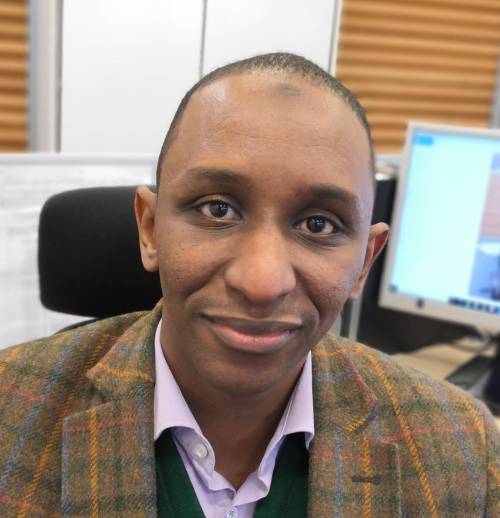
Meet Onyema Ogbuagu, UNICAL graduate leading COVID-19 vaccine research in US

Meet Onyema Ogbuagu, UNICAL graduate leading COVID-19 vaccine research in US

The COVID-19 pandemic caught the world off guard. New norms have emerged and people no longer go about their activity as they used to. Sadly, COVID-19 has led to over 1.3 million deaths globally with the United States being the worst hit with more than 260,000 fatalities.

Pfizer and BioNTech had announced that the first vaccine they developed against COVID-19 could prevent more than 90 percent of people from getting infected.

The vaccine has been tested on 43,500 people in six countries and no safety concerns have been raised. Pfizer was quoted as saying it would be able to supply 50 million doses by the end of 2020, and around 1.3 billion by the end of 2021.

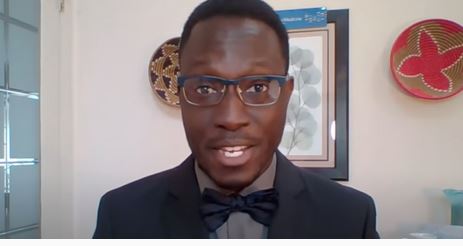
But one of those leading the research at Pfizer for a COVID-19 vaccine in the US is Onyema Ogbuagu, a Nigerian-born researcher and medical doctor.

Ogbuagu is an associate professor of medicine in the clinician-educator track and director of the HIV clinical trials programme of the Yale AIDS programme at the Yale School of Medicine.

A SCHOLAR BORN OF TWO PROFESSORS

Ogbuagu is one of the twin sons of Chibuzo Ogbuagu, a former vice-chancellor of Abia State University, and Stella Ogbuagu, a professor of sociology who was best graduating student of the 1974 class at the University of Nigeria, Nsukka (UNN). His twin brother is an engineer.

Both men were born in New Haven in Connecticut, which serves as home to the Ivy league Yale University in the US. The family returned to Nigeria where Ogbuagu studied medicine before going back to the US.

FROM CROSS RIVER TO EBONYI AND THE WORLD

Ogbuagu studied medicine at the University of Calabar, Cross River state, in 2003. After graduation, he interned at the Ebonyi State University Teaching Hospital, Abakaliki, Nigeria.

He then proceeded to intern at Mount Sinai School of Medicine (Elmhurst), New York. He rose to become chief resident at the same school after which he became a fellow of infectious diseases, Yale University School of Medicine, New Haven, Connecticut.

The Nigerian-born professor has led several researches in the US and Africa. He has over six years experience working as a faculty of the human resources for health programme in Rwanda where he mentors medical residents and junior faculty in quality improvement and clinical research projects that are locally relevant and addressing important infectious diseases-related problems (particularly HIV/AIDS and antimicrobial resistance).

He became the programme director of the World Bank and HRSA-funded efforts supporting the Liberia College of Physicians and Surgeons (LCPS)–run internal medicine residency training programme, where he oversaw the selection and deployment of faculty to Liberia.

For five years, he has worked as director of the Yale HIV clinical trials programme, and a principal investigator on numerous pharmacokinetic, phase 2 and 3 safety and efficacy trials of novel antiviral compounds.

MAN OF HONOURS AND AWARDS

In 2015, Ogbuagu became a fellow, American College of Physicians. In 2017, he was a nominee for Charles W. Bohmfalk Award in Clinical Science, Yale University School of Medicine. In the same year, he won the Steve Huot Faculty Award for Dedication and Excellence, Yale University School of Medicine Internal Medicine Primary Care programme.

In 2019, Ogbuagu was awarded the Gerald H. Friedland award for outstanding international research. In 2020, he emerged as a nominee for Charles W. Bohmfalk Award in Clinical Science, Yale University School of Medicine

COVID-19 LEAD RESEARCHER AND MEDICAL SCHOLAR

Ogbuagu is one of the doctors leading the Pfizer trial. He is Yale principal investigator on multiple investigational therapeutic and preventative clinical trials for COVID-19, including remdesivir (now FDA approved), leronlimab and remdesivir and tocilizumab combination therapy as well as the Pfizer/BioNTech vaccine trial.

Speaking on the 90 percent efficacy of the Pfizer vaccine, Ogbuagu said the drug will help people achieve immunity, and that it will be “the beginning of the end of the pandemic”.

In an interview with ABC News, he said efforts are being made to assure the public of the vaccine’s safety as due process is being follow despite the speed in rolling out the vaccines.

“The vaccine would help us achieve immunity. This could be the beginning of the end of the pandemic. Preparations are made both on the government end and the distribution network, including Pfizer who is working to have the vaccine stored at low temperature,” he said.

“While we have been celebrating a lot about having an effective vaccine and frankly we have run out of emojis. A lot of work really needs to be done to reassure the community and I hope I am doing that also which is why I am on the programme.

“So we are telling the public that even though the vaccines have proceeded at an unprecedented phase, it is being done carefully, thoughtfully and with the right amount of oversight so that vaccines receive emergency use authorisation by the FDA and it passes through all the safety check to show that the efficacy numbers are real and that should really assure the public.”

Watch Ogbuagu’s interview with ABC News below:

Opinion: El-Rufai, Zazzau Emirate, And Injustice By Dr Nasir Aminu

Opinion: El-Rufai, Zazzau Emirate, And Injustice By Dr Nasir Aminu
Dr Nasir Aminu

Every human alive should be grateful to live in this twenty-first century—a century that has freed humans from slavery, tyranny, and all other forms of medieval imperfections. We should also be grateful to our democratic system and the existing arms of government for creating limited powers to individuals.

The subjective attempt by Governor El-rufai to use his, final thirty months, of executive power to change the customs of the Kaduna State traditional institutions is worrying. Thus, it is imperative to seek the help of both the Judiciary and the legislative arm of government to intervene. The consequences of any change in the traditional institution will not be disclosed until after his government has departed.

At the coronation ceremony of the Emir of Zazzau, the Governor reiterated that he is proposing a change to the laws of the State’s traditional institutions. He had highlighted thisearlier at the State Assembly when he presented the 2021 budget too. I have not read the proposal, but from what the Governor is saying, he has mentioned the need rotate within the dynasties, and wishes to correct injustices.

Historically, Zazzau emirate does not follow a rotational system. The selection process has always been for all contenders from the ruling dynasties to be declared after the demise of an Emir. The kingmakers then make their selection and ask for the Sultan’s blessings. When the colonial government took power, in 1897, they also sought the acceptance of the Sultan after the selection of the kingmakers when Kwasau was removed.

Like a perfect competitive market, the Zazzau emirate has always had strong competitive contenders, which makes it difficult for one dynasty to dominate. That is why Emir Aminu (1959-1975) rose and contested for the throne as the only candidate from the Katsinawa dynasty, and was voted unanimously by the kingmakers.

In 1846, Emir Mamman Sani was selected by the kingmakers, to succeed his brother, Emir Hamada, with the blessing of Sokoto. In 1897, Emir Kwasau was selected to succeed his father, Emir Yero. The appointment of Kwasau was against the wishes of the Sultan, but the kingmakers had stood their grounds to select the competent person for the throne. That is why the Katsinawa dynasty has spent 73 years without the throne without crying for injustice.

In Northern Nigeria, several emirates have stopped rotating,and there was no proposal to change the laws. For example, the Kano emirate has stopped rotating their dynasties, leaving the dynasty of Abbas alone to rule. The dynasty of Suleimanu, the first flagbearers of Danfodio, can only rise to the position of kingmakers. In 2014, El-rufai proudly celebrated the installation of his friend, the debunked Emir of Kano Sanusi, who is from the house of Abbas. Likewise in Katsina, the ruling dynasty left to rule, the house of Ummarun Dallaje, was not the initial flagbearers of Danfodio.

Historians will tell you flagbearers assume the scholars instead of Emirs, which is similar to Danfodio who did not take the position of Sultan. For this, some dynasties of the flagbearers lost the stool of the Emir to other dynasties. Mallam Musa of the Mallawa dynasty also remained a scholar until his death. However, two of his children assumed the position of Emir of Zazzau.

Of course, there are emirates, like the Lafia emirate, where the customary law of rotation has been maintained. There are also emirates where the rotational custom within dynasties is recently altered, like the Bida emirate. However, there was no cry of injustice or call to correct the tradition system.

In his coronation speech, El-Rufai claimed to be Godsent tocorrect the injustice done to the Mallawa dynasty because the colonial Governor unjustly removed Emir Alu Dan-Sidi.Records show he was deposed for slavery and corruption (see Smith, 1950). Ethically, the practice of such injustice can be classified as corruption. Doing so means all the Emirs after 1920 will be regarded as an illegitimate appointment by the past Governors. Thus, Ambassador Bamalli should be the first legitimate Emir in 100 years.

Since he is Godsent to correct injustice, then he should consider Sullubawa dynasty who have spent 160 years away from it. The Bare-bari dynasty has also spent 61 years without it, but they have not cried for injustice. For me, the 100 years of Mallawa dynasty is the Will of God, not injustice as suggested in the Governor’s speech. It is also the Will of God that late Emir Shehu (1975-2020) spent 45 years on the throne which contributed to those aggrieved 100 years. The Will of God cannot be an injustice and vice-versa.

Finally, trying to correct a misunderstood injustice will only lead to committing further injustices. The existing customary practices of Kaduna State’s traditional institutions should not be alienated from the rest of the institutions in Northern Nigeria and West Africa. The objective thing to do for the traditional institutions is to leave them as they are, as the colonial government and military administrators chose to do.

SAHARA REPORTERS

Labour To Federal Government: Reverse Petrol Price To N160

Labour To Federal Government: Reverse Petrol Price To N160

Labour unions are demanding a reversal of recent hike in the petrol price, saying they did not endorse deregulation that is anchored on price hike.

The General Secretary of Nigeria Labour Congress (NLC), Emma Ugboajah, told The Guardian at the banquet hall, Aso Villa, that labour movement agreed that local refineries should be rehabilitated to boost local refining.

Ugboaja said almost eight weeks after the negotiations, the Federal Government has not shown any commitment to all the items that were agreed upon.

He stressed that out of 161 buses that are powered gas, none of them has been supplied to the movement.

“We never supported deregulation that is anchored on price increment. Our minimum request is that the Federal Government must reverse back to N160,” Ugboajah said. “We agreed that the refineries should be out to work. We have not seen any work in that regard. Also, we have seen the NNPC maintaining a stranglehold on importation.”

On his part, the President of Trade Union Congress (TUC), Quadri Olaleye, said things are going out hand if urgent steps are not taken.

His words: “We cannot pretend that things are not going right. It seems government wants to create crisis when none exists. We have been coming here to ensure the hardship on the people is reduced.

I want to say we are not happy. Government is showing high level of insincerity with us. I receive a lot of text messages from Nigerians abusing us. we find it difficult to move freely. I believe that government is sponsoring some people to attack us. Some of people stayed away from this meeting because they are afraid of backash.

“Academic staffers have been on strike. We set up a committee for more than two months and nothing has happened. A month to the end of the year, nothing has been done. If today’s meeting does not solve the problem, we will mobilise outselve and stage a walk out of the meeting. I hope today’s meeting will be productive. ”

The Minister of Labour and Employment, Dr Chris Ngige, said the meeting was supposed to have been held in October but for #EndSars protests that rocked the nation last month.

Ngige said the Federal Government is ready to begin rolling out the palliatives as from today, Monday.

The Secretary to the Government of the Federation (SGF), Boss Mustapha said government is already working on some of the agreed area such as reduction of tariff on the importation of cars from 35% to 10% and other steps that the Federal Government has taken.

Premier League: Calvert-Lewin Scores Twice As Everton Beat Fulham

Premier League: Calvert-Lewin Scores Twice As Everton Beat Fulham

Calvert-Lewin scored after just 42 seconds as Everton ended their losing run with a 3-2 win against Fulham, while injury-ravaged Liverpool prepared for their crucial clash with Leicester on Sunday.

Calvert-Lewin maintained his fine form to put Carlo Ancelotti’s side ahead inside a minute at Craven Cottage.

Bobby Decordova-Reid equalised for Fulham, but England striker Calvert-Lewin netted again and Abdoulaye Doucoure got Everton’s third before half-time.

Ruben Loftus-Cheek reduced the deficit in the second half, but Everton held on to win for the first time in five league games.

After a three-game losing streak dented their bid to finish in the top four, Everton are up to sixth place.

Everton were boosted by the return of Richarlison following a three-match ban, with Ancelotti’s team unbeaten this season when the Brazilian forward, Calvert-Lewin and James Rodriguez all start together.

Suitably energised by their restoration of their attacking trio, Everton made the perfect start.

Decordova-Reid gave the ball away and Richarlison advanced into the Fulham area before whipping over a low cross.

Tosin Adarabioyo made a hash of his attempted clearance and Calvert-Lewin bundled in for 12th goal of the season.

Fulham equalised in the 15th minute when Tom Cairney’s pass picked out Decordova-Reid and he eased clear of Yerry Mina to drive a cool finish past Jordan Pickford.

But Everton hit back as Calvert-Lewin netted again in the 29th minute.

Alex Iwobi’s incisive run opened up the Fulham defence and James found Lucas Digne, whose cross found Calvert-Lewin for a clinical close-range finish.

Fulham’s abject defending was all the incentive Everton needed to keep pushing forward and they scored again in the 35th minute

Digne had time and space to cross from the left and his delivery was met by Doucoure, who was under no pressure as he headed past Areola.

Fulham squandered a chance to get back in the match after 68 minutes when Ben Godfrey gave away a penalty with a trip on Ruben Loftus-Cheek.

Ademola Lookman had missed embarrassingly from the spot against West Ham in Fulham’s previous game, so Ivan Cavaleiro stepped up, but the winger slipped as he took his kick and the ball flew high over the bar.

Loftus-Cheek lifted Fulham’s sinking morale in the 70th minute when he met Lookman’s pass with a shot that deflected in off Mina.

Fulham remain one place above the relegation zone after their third defeat in four games.

Huge Opportunity
The game of the day is at Anfield, where Leicester would replace Tottenham on top of the table if they can beat champions Liverpool, who will climb to second with a victory.

Already rocked by the long-term injury to Virgil van Dijk, Liverpool’s defensive resources were further depleted during the international break with Joe Gomez ruled out for the remainder of the season.

Trent Alexander-Arnold is out for a further two weeks, while Jordan Henderson is an injury doubt after picking up a muscle strain on international duty.

Top scorer Mohamed Salah will also be missing after testing positive for coronavirus while in Egypt.

There is a huge opportunity for former Liverpool boss Brendan Rodgers to become the first man to lead a visiting side to a league win at Anfield since April 2017 with no such injury concerns for the third placed Foxes.

Jamie Vardy’s retirement from England duty means Leicester’s top scorer has had two weeks off, while Rodgers could have full-backs Ricardo Pereira and Timothy Castagne back from injury.

In Sunday’s other games, Sheffield United face West Ham and Leeds host Arsenal.

AFP

Kidnapped University Students Released After Paying N9m Ransom

Kidnapped University Students Released After Paying N9m Ransom

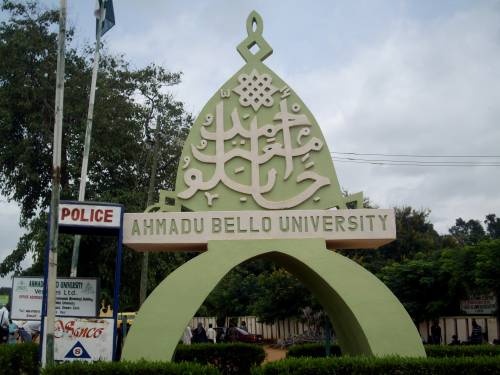
Gunmen suspected to be bandits have released nine students of Ahmadu Bello University, Zaria, kidnapped last Sunday after N1m was paid as ransom for each of them.

The students were travelling to Lagos for a programme at the Nigerian French Language Village in Badagry when they were kidnapped along the Abuja-Kaduna Highway.

One of the students, Dickson Oko, who escaped with a gunshot wound, said the kidnappers had contacted families of the students demanding N30m ransom on each student.

The kidnappers, however, reduced their demand to N1m for each student.

“Yes, my daughter had been released, yesterday, they told me to bring N5m but after series of bargaining, they said I should pay N1m which I did.

“They also demanded for some drinks and cartons of milk from each parents. They then described a place for us in Dutse, Jigawa State, that was where we dropped the money,” a parent of one of the students told reporters.

Again, Boko Haram Terrorists Attack Governor Zulum’s Convoy

Again, Boko Haram Terrorists Attack Governor Zulum’s Convoy

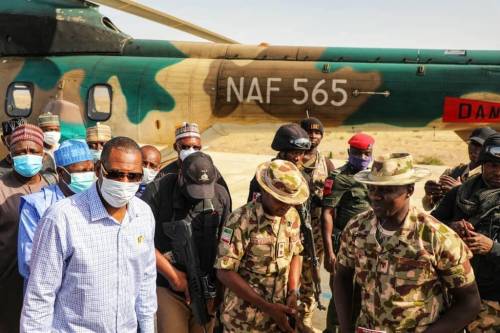
Boko Haram terrorists on Saturday again ambushed an advance team of Borno State governor, Babagana Zulum, at Ja’alta along Gajiram to Monguno Road, killing seven soldiers and members of Civilian-JTF.

The insurgents attacked the convoy on their way to Baga in Kukawa Local Government Area as a security detail to Zulum, who is is spending two days with other government officials in the town to distribute food items to newly resettled displaced persons.

Sources said the governor had earlier flown by helicopter to the town with some top government officials.

“We were attacked by the gunmen who came with about six trucks and seven motorcycles. We engaged them but they have already destabilised.

“We had no option than to abort the trip and returned back to Maiduguri with corpses of the deceased. About seven people died immediately but two of my colleagues (soldiers) died from gunshot injuries when we got back to Maiduguri,” a soldier attached to the Governor told SaharaReporters.

In all, nine security men in the advance team were killed in a fierce battle with the terrorists.

This is the third attack on the governor in Baga in three months.

Zulum’s convoy was attacked twice along the Baga Highway in September.

A splinter of Boko Haram sect, the Islamic State of West Africa Province, is believed to have a stronghold in the area.

The decade-long insurgency has killed over 50,000 people and forced over two million from their homes.

Most of the displaced are housed in squalid camps where they are fed by international charities.

Sahara Reporters

Mourinho: Tottenham Beat Manchester City On Strategy

Mourinho: Tottenham Beat Manchester City On Strategy

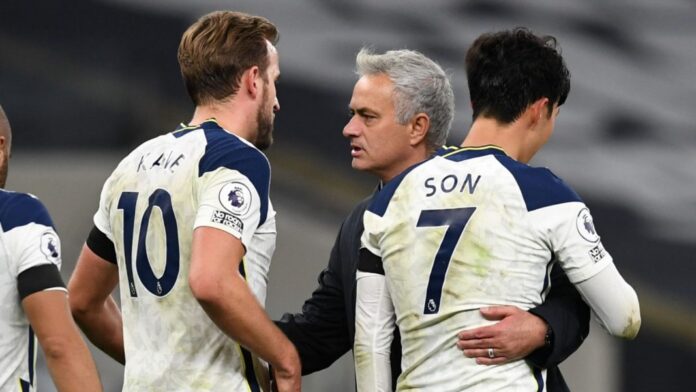
Jose Mourinho said his “amazing” Tottenham beat Manchester City on strategy as a vintage show from the Portuguese boss, sending his side top of the Premier League.

Spurs were stubborn and clinical, defeating City 2-0 thanks to goal from Heung-Min Son and Giovani Lo Celso in either half, with Mourinho’s side registering just four shots on goal to City’s 22.

The result means Spurs finish a day top of the Premier League table for the first time since August 2014, and Mourinho put the victory down to a superior strategy over his old enemy Pep Guardiola.

He told Sky Sports, “For me, I prefer the players to speak because they are the ones, they were fantastic, they gave everything. They follow a strategy and football sometimes, more than ever, strategy plays an important part. They were amazing.

“It was very important to respect [City] and not to forget the team they are. If we follow people speaking about them as being not as good as before, if we follow the fake table because they have one match in hand, we would probably be playing in a different way. City is a fantastic team that lost against a team that strategically was very good but City is still City.

“Of course, you have to score and we didn’t have many chances. You need a top goalkeeper to make crucial saves in crucial moments, but we knew they would have more of the ball but we would be very comfortable playing that way because we knew the way to do it.”

Skysports

G-20 May Back ‘Equitable’ Access To Coronavirus Vaccine

G-20 May Back ‘Equitable’ Access To Coronavirus Vaccine

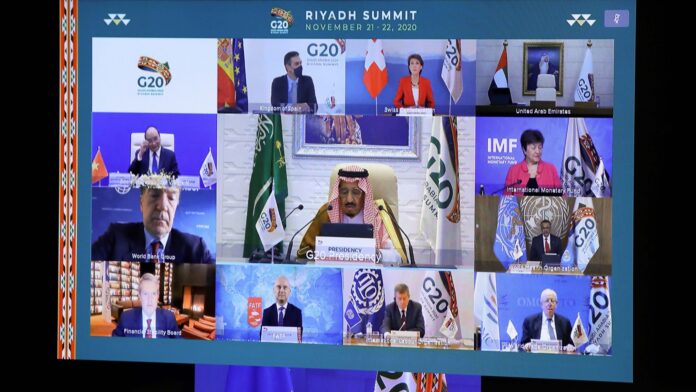
G-20 leaders will pledge to “spare no effort” in ensuring the equitable distribution of coronavirus vaccines worldwide and reaffirm support for debt-laden poor countries, according to a draft communique seen by AFP Sunday.

The leaders also struck a unified tone on supporting “multilateral” trade as well as the global fight against climate change, but the closing document lacks firm details on many of the issues dominating the virtual summit hosted by Riyadh.

The two-day gathering that began Saturday comes as international efforts intensify for a large-scale rollout of coronavirus vaccines after a breakthrough in trials, and as EU and other leaders call for G20 nations to plug a $4.5-billion funding shortfall.

“We have mobilised resources to address the immediate financing needs in global health to support the research, development, manufacturing and distribution of safe and effective Covid-19 diagnostics, therapeutics and vaccines,” the draft document said.

“We will spare no effort to ensure their affordable and equitable access for all people, consistent with members’ commitments to incentivise innovation.”

The communique offered no details on how the effort will be funded.

There could be changes in the final version of the document, which will be released later Sunday by the Saudi hosts.

In a comment echoed by other world leaders, French President Emmanuel Macron said Saturday the coronavirus crisis was “a test for the G20”, stressing there “will be no effective response to the pandemic unless it is a global response”.

G20 nations have contributed more than $21 billion to combat the pandemic, which has infected 56 million people globally and left 1.3 million dead, and injected $11 trillion to “safeguard” the virus-battered world economy, summit organisers said.

But the group’s leaders face mounting pressure to help stave off possible credit defaults across developing nations.

G20 nations have extended a debt service suspension initiative (DSSI) for developing countries until June next year, but UN Secretary-General Antonio Guterres has pushed for a commitment to extend it until the end of 2021.

The draft communique, however, did not offer a firm commitment.

G20 finance ministers will examine the recommendation when the IMF and World Bank meet next spring “if the economic and financial situation requires” an extension by another six months, it said.

Closing Ranks On Climate

On trade, the club of the world’s richest nations also emphasised that supporting a multilateral system “is now as important as ever”.

“We strive to realise the goal of a free, fair, inclusive, non-discriminatory, transparent, predictable, and stable trade and investment environment, and to keep our markets open,” the communique said.

Ahead of the summit, European Commission President Ursula von der Leyen said she hoped the US will adopt a more multilateralist stance under the incoming administration of Joe Biden.

US President Donald Trump’s robust “America first” trade policy has rankled world leaders.

Von der Leyen also added that she expected consensus and a “new momentum from the new US administration” on climate change, and a reversal of Trump’s withdrawal from the Paris climate accord.

Differences within the G20 group surfaced at last year’s summit in the Japanese city of Osaka as the United States demanded the insertion of a separate paragraph on issues such as environmental protection.

But under the Saudi chairmanship, G20 leaders projected a unified stance, with the draft communique reiterating support for tackling “pressing” environmental challenges.

Inside Illicit Trade In West Africa’s Oldest Artworks – Part 1

Inside Illicit Trade In West Africa’s Oldest Artworks – Part 1

Outside it has become night. In front of the windows of one of Abuja’s grandest hotels, the pool shines turquoise blue. Finally, the phone rings. It is the hotel’s front desk, announcing a guest.

The man, who comes into the room, hours late for the scheduled appointment, is named Umaru Potiskum. He is an art dealer in his late 50s. He’s wearing a dark blue dashiki and is full of self-confidence, but is also a suspicious. He knows us as art fundis, and possible buyers, but one of us has also introduced himself as journalist. His is, after all, an underground, illegal business.

“Here I have met many customers,” he says; buyers from Belgium, France, Spain, England and Germany. He shows us what he’s selling, carefully unwrapping two delicate terracotta statues from a piece of cloth.

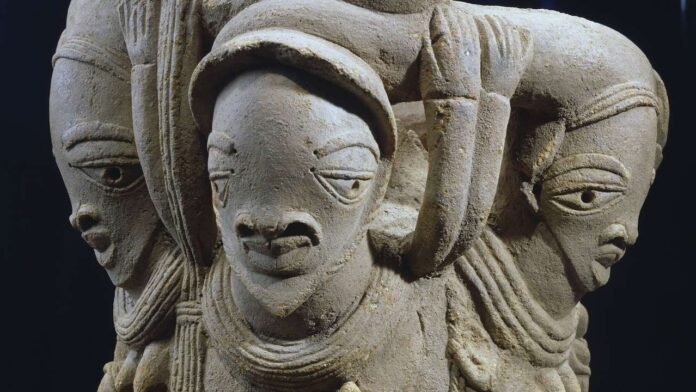
The eyes gazing out from the ancient clay are triangular, typical of Nok figurines. Over the decades, thousands of these figurines have been taken out of Nigeria. Many are on display in some of the world’s most prestigious art galleries, including at the Louvre in Paris and Yale University. Many more are no longer displayed, however, because their provenance is questionable.

Anyone who wants to understand what drives this multi-million-dollar global trade must go searching: in Abuja and Paris, in Frankfurt and New Haven. But the first stop is the Nok Valley.

A Cradle Of Civilisation
One hundred and fifty kilometres northeast of Abuja, a reddish-brown bush track winds through the lush green of the Nok Valley, towards a village. Mango and palm trees and millet fields surround about three-dozen houses and mud huts. Children are running after a hoop, while women chat under the shade of a tree.

It was here, in 1928, that a foreign miner supposedly discovered the first antique terracotta figure: a monkey head, 10 centimetres high. As archaeologists dug further, they discovered more remnants of an ancient culture, which as per convention, they named after the surrounding area. Nok.

From around 1500 BC – at the same time that ancient Greece was flourishing, the Mayan civilisation was developing and Egyptian pharaohs were ruthlessly expanding their empire – a highly-developed society was spreading across the valley, encompassing an area the size of Portugal. It is the earliest known civilization in West Africa, according to Archaeology magazine.

Between the years of 900 and 300 BC, the Nok produced a staggering number of striking clay figurines, including elaborately stylized people, animals and fantasy creatures, adorned with ornaments, jewelry and symbols. Many appeared to have been buried in shards. Even today these figurines are a riddle: why were they made? What did they mean? Why did so many appear to have been deliberately broken and then buried?

Thousands of figurines have been dug up. But today, it is getting harder and harder to find any more – making them all the more valuable.

The Thirsty Dealer
At the Abuja hotel, Potiskum takes another drink and starts talking numbers. His two figurines – a man’s head and a larger statue of a woman – are more than 2000 years old, he claims, and any laboratory analysis will prove it. He charges 2,000 euros ($2,350) for the man’s head, and claims that it can be sold to buyers overseas for ten times that amount. The female figurine goes for considerably more.

These sums would seem astronomical to residents in the Nok Valley, some of whom help to find and dig up the terracottas. They are paid five euros per day, at most; many earn just one euro per day.

But that’s how it works, explains Nigeria’s minister for information and culture, Alhaji Lai Mohammed. Nigerian middlemen buy the Nok terracottas at source for a pittance, and then sell them on for a fortune. “We have not yet done enough to stop our own people and to convince them to protect their own cultural heritage,” he says.

But given the lack of alternative employment opportunities, the state has found it nearly impossible to control – much to the minister’s frustration. “These works define our history. They define who we are. Those who sell our cultural heritage abroad are harming Nigeria,” he says. He is also critical of the international art market, which seems unable to stop the illicit trade in Nok terracottas once they have left Nigeria.

The minister says that the National Commission for Museums and Monuments (NCMM), which is under him, cooperates with the Artefacts Rescuers Association of Nigeria, an organisation of art dealers that purports to protect Nigerian cultural heritage. However, unfortunately the NCMM has not enough money for rescuers at the moment, and sometimes the sums demanded by the “rescuers” are far too much.

Minister Mohammed does not have an easy job. Nigeria’s population is about 190-million people, and they speak more than 500 languages. The country is a finely woven carpet of religions and ethnicities and cultures, some rooted in emirates and kingdoms whose traditions stretch back for thousands of years. Its borders are arbitrary, drawn up by British colonisers whose understanding of local dynamics was limited at best. Arts and culture is one tool that the government has to bring this diverse nation together, so it does not help when important cultural artefacts keep ending up in other countries.

Potiskum knows a thing or two about those British colonists. His father was a close colleague of Bernhard Fagg, an English archaeologist who worked in the colonial administration in Nigeria from the 1940s to the 1960s. He was responsible for telling the Western academic world about the newly discovered Nok culture, astonishing them in the process. At the time, “Black Africa” was, in the Western world, widely considered to be a terrain without history; a “heart of darkness” just waiting to be civilised. This myth helped to legitimise the brutal subjugation of the continent by western colonists.

The very existence of the Nok culture challenged that racist myth. Today, in academic circles, Fagg is still seen as the great pioneer of Nok studies, or even the ‘discoverer’ of Nok culture. And in the Nok valley, in the village of the same name, the house where Fagg once lived is still standing. Sometimes tourists even come to look at it. But if they want to hear nice things about Fagg, they had better not ask Beno Adamu, the village chief.

Adamu’s house is made of stone and is located at the entrance of the village, on the left side. Inside the house, the 75-year-old dignitary sits in a big, soft armchair. His memories and knowledge differ greatly from the versions in the history books. He dismisses the notion that the Nok terracottas were “discovered” by foreigners.

“We, Ham people here in Nok, look back at a long, long history and have always known these terracottas. Our grandfathers told us about them.” The Ham people, they are 350.000, live in southern Kaduna and speak Hyam language, had them in their shrines, houses and even out in the fields as scarecrows – long before Fagg “discovered” them.

Adamu met Fagg a few times, when he was a young boy. He remembers: “Fagg asked the people to bring their terracottas to his house. Which they did. Then he told them that the pieces would be worthless. They never saw their terracottas again. They were already packed.”

Adamu speaks openly about what many people in the village think: “We are warm-hearted people. We like to have guests. But our treasures have been taken away and we do not see them again. Today they are in England, Germany and France. Many people came here, selfish, and used us as cheap labour. Then they disappeared and nobody supported us in our development. Not even our own government. We have not really benefited from our great heritage.”

‘Don’t Worry, I Know A Guy’
Almost every Nok terracotta excavated over the last 50 years has left Nigeria for the international art market. When talking to local government officials in Kaduna State, where the Nok Valley is situated, it becomes clear that there are few systems in place to keep them in the country.

The head of prisons does not know of any inmate who has been imprisoned for illegal digging or smuggling of cultural artefacts. The police chief says that his priorities are kidnappings, banditry and conflict between cattle herders and farmers. He does not have time to worry about the terracottas. The immigration boss has been to workshops about cultural heritage and how to protect it, but has not yet confiscated any smuggled artefacts.

In the hotel room, Umaru Potiskum boasts: “Don’t worry, export is no problem. Wherever I have to deliver, I deliver. I just need the address.” He knows the customs people; border guards in Lagos; an international shipping company, which helps him. He can even organise the export via other West African countries like Togo, Benin and Ghana. He has a well-functioning network there.

And the export papers? “I can get everything,” he promises. Never mind that he is also a member of the Artefacts Rescuers Association of Nigeria, an organization of art dealers that purports to protect Nigerian cultural heritage.

Potiskum says that it does not pay to remain above the law. He says he once handed over 72 Nok terracottas to the National Commission for Museums and Monuments, but has not seen a single naira for them – despite the government’s promise to pay for rescued antiques. He claims that the NCMM owes him N65million (about $170,000).

The investigation was supported by the German journalism association “Hard work and courage” and its Cartographers Program for journalists.

To be continued.

The Guardian

Army: We Went To Lekki Toll Gate With Live Bullets For Protection

Army: We Went To Lekki Toll Gate With Live Bullets For Protection

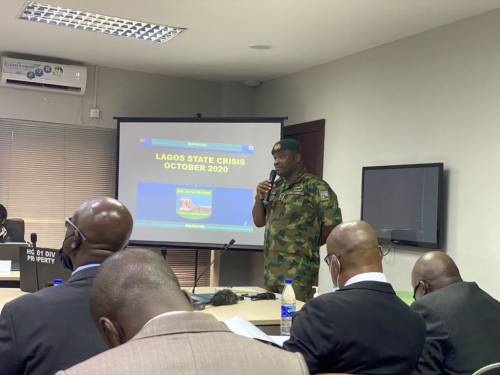
The 81 Division of the Nigerian Army, the formation involved in the October 20, 2020 Lekki shooting of peaceful protesters, has said that soldiers went to the toll gate with live ammunitions.

Ibrahim Taiwo, Commander of the division, disclosed this on Saturday while testifying before the panel the Lagos State Government set up to probe the incident.

While being cross examined by Olumide Fusika, a Senior Advocate of Nigeria (SAN), Taiwo insisted that no one was shot dead as soldiers only fired blank ammunition at the protesters and not live rounds.

He said that they were meant for the protection of the army team that was deployed to restore order in the state.

Despite evidence of people being killed and injured at the Lekki incident, the army representative said the soldiers only used blank bullets while their colleagues with live rounds were on ground to protect them from suspected hoodlums, who caused trouble.